
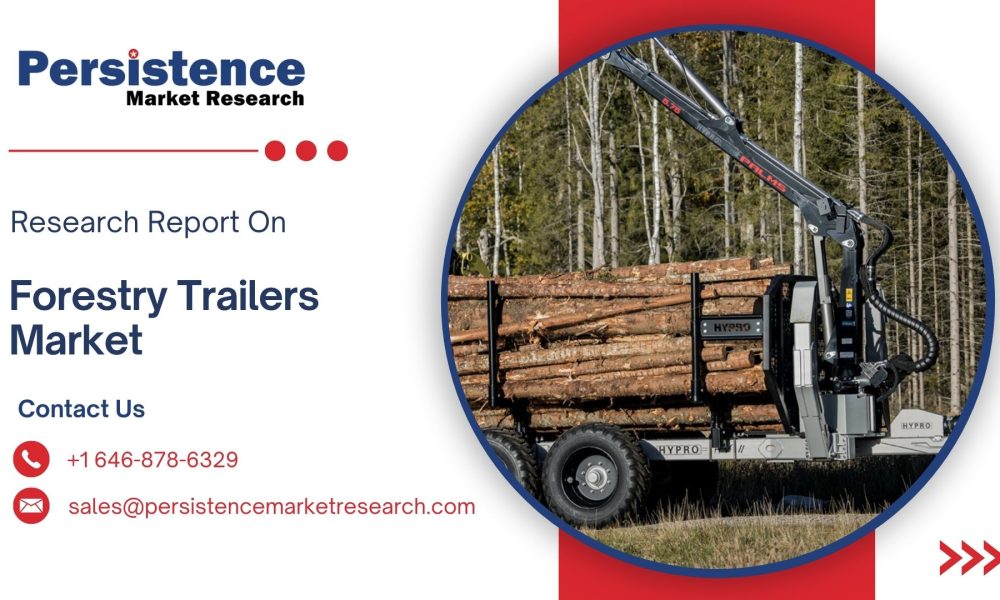
The global forestry trailers market is experiencing notable growth due to the increasing demand for timber, advancements in logging technologies, and the shift towards mechanized logging operations. Forestry trailers, essential for transporting logs from forests to processing plants, are becoming an integral part of the timber industry. This growth is further supported by government initiatives aimed at promoting sustainable forest management practices and the adoption of more efficient equipment that reduces environmental impact.
The forestry trailers market is projected to reach US$ 4.4 billion by 2033, growing at a compound annual growth rate (CAGR) of 6.5% between 2026 and 2033, from an estimated US$ 2.8 billion in 2026, according to a recent report by Persistence Market Research. This promising outlook is driven by several key factors, including the rise in global timber demand, the mechanization of logging processes, and the increasing emphasis on sustainability in forest management practices. Furthermore, the need for more advanced and efficient equipment in the forestry industry is encouraging investments in high-performance forestry trailers, especially those designed for durability, load capacity, and reduced environmental footprint.
Get Your FREE Sample Report Instantly Click Now: https://www.persistencemarketresearch.com/samples/29647
The key players studied in the report include:
- JPM Trailers
- Chieftain Trailers
- B.W.S. Manufacturing Ltd
- Palmse Mehaanikakoda Ou
- Stepa Farmkran Gesellschaft M.B.H.
- Scandicon OÜ
- Kesla Oyj
- Pitts Trailers
- Kranman AB
- BELL Equipment
- Industrias Guerra, S.A.
- Kellfri
- Trejon AB
- STEPA Farmkran GmbH
- AS FORS MW
- FPInnovations
- T-MAR Industries Ltd
- Pfanzelt
Key Highlights from the Report
➤ The global forestry trailers market size is projected to grow from US$ 2.8 billion in 2026 to US$ 4.4 billion by 2033, at a CAGR of 6.5%.
➤ Increasing global timber demand and the mechanization of logging operations are driving the market’s expansion.
➤ The forestry trailers market is experiencing a surge due to government mandates promoting sustainable forest management.
➤ The demand for high-efficiency, environmentally friendly forestry trailers is rising, particularly in regions with stringent environmental regulations.
➤ Advanced trailer designs and technologies, such as automated loading systems and energy-efficient features, are gaining traction.
➤ The market is characterized by increasing investments in product innovation, specifically in durability and operational performance.
Market Segmentation
Product Type
- Log Trailers
- Grapple Trailers
- Forwarder Trailers
- Multipurpose Trailers
Trailer Capacity
- Below 5 Tons
- 5–10 Tons
- 10–20 Tons
- 20–30 Tons
- Above 30 Tons
Application
- Logging & Timber Extraction
- Biomass & Wood Chip Transport
- Forest Management
- Firewood Transport
- Pulpwood Operations
End-user
- Logging Companies
- Forest Management Agencies
- Private Landowners
- Construction Companies
- Rental & Leasing Providers
Regions
- North America
- Europe
- East Asia
- South Asia & Oceania
- Latin America
- Middle East & Africa
Customize This Report for Your Exact Requirements: https://www.persistencemarketresearch.com/request-customization/29647
Regional Insights
North America and Europe are the leading regions for the forestry trailers market due to their large-scale timber production and strong emphasis on sustainable forestry practices. In North America, the U.S. and Canada have robust timber industries, and both countries have stringent regulations to ensure that logging operations meet sustainability standards. The growing trend toward mechanized logging in these regions is contributing to the increased demand for advanced forestry trailers capable of handling large, heavy loads with minimal environmental impact.
The Asia-Pacific region is expected to witness the fastest growth in the forestry trailers market during the forecast period. Countries like China, India, and Indonesia are seeing a rapid increase in timber production due to their expanding forestry industries. As mechanization takes hold in these emerging markets, demand for efficient and cost-effective forestry trailers is expected to surge. This trend is being driven by the rising awareness of sustainable forestry management practices and the increasing need for advanced equipment to handle large-scale logging operations.
Market Drivers
- Rising Global Timber Demand: The global demand for timber, driven by the construction and furniture industries, is one of the most significant factors fueling the forestry trailers market. As the timber industry grows, so does the need for efficient transportation methods that can handle large volumes of logs. Forestry trailers are essential to transporting timber from forests to mills and processing plants, making them an integral part of the timber supply chain.
- Mechanization of Logging Operations: Traditional logging methods have been replaced by more advanced, mechanized processes in many parts of the world. Mechanization has led to higher efficiency and productivity, and forestry trailers are increasingly being designed to complement these automated systems. These trailers are built to handle logs more efficiently, and their design is continually being improved to ensure faster turnaround times, higher payload capacities, and greater durability.
- Government Mandates for Sustainable Forest Management: Governments worldwide are introducing regulations that encourage sustainable forestry practices, including logging techniques that minimize environmental damage. As part of these efforts, logging companies are adopting equipment that meets higher environmental standards. Forestry trailers that reduce fuel consumption, emissions, and environmental damage are in demand, as they help companies comply with government regulations.
Market Restraints
- High Initial Investment Costs: One of the main challenges in the forestry trailers market is the high upfront cost of purchasing advanced trailers. Specialized trailers designed for efficient logging operations, such as those that incorporate automated loading systems or energy-saving technologies, come with a premium price tag. Smaller logging operations, particularly those in emerging markets, may find it difficult to justify the high initial investment, which could hinder widespread adoption in certain regions.
- Maintenance Costs and Technical Expertise: Forestry trailers, especially those designed with advanced features, require specialized maintenance and technical expertise to operate effectively. The maintenance of these trailers can be costly, and not all regions have access to the necessary skills or services to ensure proper upkeep. For businesses operating in remote or rural areas, this lack of local technical support can limit the effectiveness of the trailers and lead to increased downtime.
Market Opportunities
- Technological Advancements: The ongoing development of advanced technologies in the forestry trailers market presents significant opportunities. New innovations such as automated loading systems, GPS tracking for fleet management, and energy-efficient designs are driving the demand for modern, technologically advanced trailers. These technologies help logging companies improve productivity, reduce fuel consumption, and comply with environmental regulations, creating new opportunities for growth in the market.
- Increasing Mechanization in Emerging Markets: Emerging markets in Asia-Pacific, Latin America, and Africa are adopting mechanized logging practices at a rapid pace. As these regions continue to expand their timber industries, there is a growing demand for forestry trailers that can meet the specific challenges of large-scale operations. Manufacturers can capitalize on this by developing cost-effective, durable trailers that meet the needs of these emerging markets.
Frequently Asked Questions
➤ What factors are driving the growth of the forestry trailers market from 2026 to 2033?
➤ How do government mandates for sustainable forestry practices impact the demand for forestry trailers?
➤ What are the key technological advancements shaping the forestry trailers market?
➤ Which regions are expected to see the most significant growth in the forestry trailers market?
➤ What are the primary challenges faced by forestry trailer manufacturers and end-users?
Ready to Dive Deep? Buy Full Report Today: https://www.persistencemarketresearch.com/checkout/29647
Recent Developments
- July 2023: John Deere launched a new line of forestry trailers designed with enhanced payload capacity and eco-friendly features.
- August 2023: Ponsse introduced an innovative automated logging trailer system aimed at improving operational efficiency in logging operations.
Future Opportunities and Growth Prospects
The global forestry trailers market is poised for substantial growth due to rising timber demand, technological advancements, and the increasing mechanization of logging operations. With increasing environmental concerns and government initiatives promoting sustainable practices, the demand for eco-friendly and efficient forestry trailers is expected to rise. Manufacturers can tap into these opportunities by focusing on product innovation and expanding into emerging markets, where the adoption of mechanized logging equipment is gaining momentum.




