
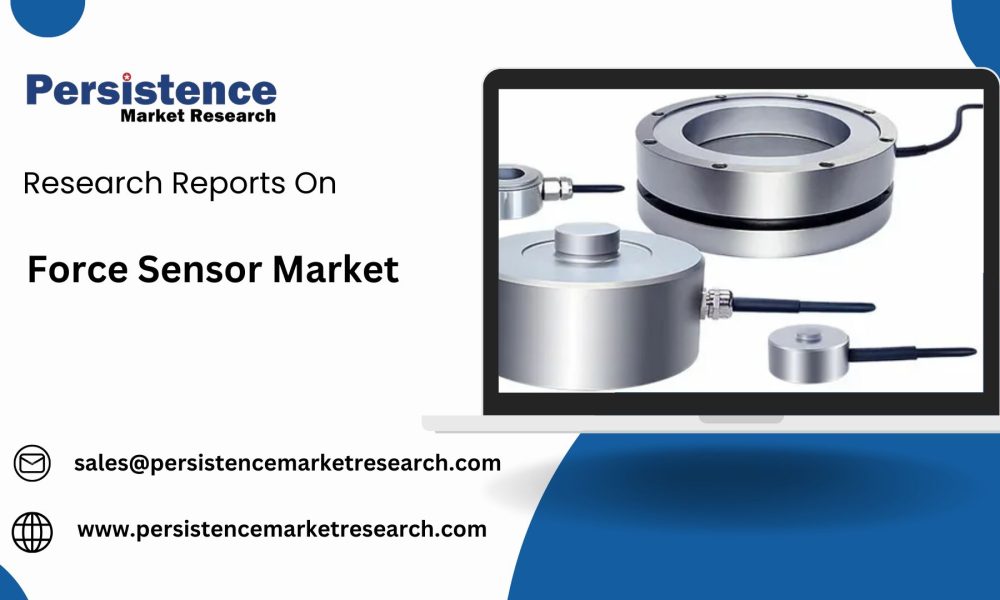
The global force sensor market is gaining momentum as industries worldwide increasingly adopt automation, precision measurement, and connected technologies. The market size is projected to be valued at US$2.7 billion in 2025 and is anticipated to reach US$3.9 billion by 2032, expanding at a CAGR of 5.5% during the forecast period (2025–2032). Force sensors, integral in measuring force, load, and pressure, are becoming essential across multiple sectors, from manufacturing and automotive to healthcare and consumer electronics.
Market Overview
Force sensors are transducers that convert mechanical input forces into measurable electrical outputs. Their ability to capture accurate data makes them indispensable in modern industries where precision is critical. With technological innovations like strain gauge advancements, piezoelectric materials, and IoT integration, force sensors are evolving from simple measurement devices into smart solutions that contribute to predictive maintenance, real-time monitoring, and advanced automation.
The demand for force sensors is bolstered by several key factors:
- Industrial automation: Increasing use of robotics, automated assembly lines, and quality control systems.
- Electric vehicles (EVs): Force sensors ensure safety and efficiency in brake systems, crash testing, and torque measurement.
- Consumer electronics: Integration into touchscreens, wearables, and gaming devices for enhanced user interaction.
- Healthcare innovations: Growing use in medical devices, prosthetics, and surgical robotics for precise monitoring and control.
Key Industry Highlights
- Leading Region: Asia Pacific holds a 40% market share in 2025, driven primarily by industrial automation and rapid manufacturing growth in China.
- Dominant Force Type: Compression & Tension force sensors account for 45% of market revenue, due to their versatile applications across industrial and automotive sectors.
- Leading Technology: Strain Gauge technology commands a 40% market share, valued for its precision, durability, and reliability.
- Leading Application: Manufacturing contributes 35% of the market share, fueled by demand in robotics, process automation, and quality control.
- Fastest-Growing Application: The automotive sector is seeing exponential growth, particularly with the rise of EVs, where force sensors play a pivotal role in safety and performance systems.
- Key Trend: Continuous advancements in piezoelectric sensors and IoT integration are driving demand for smarter, connected measurement solutions.
Market Drivers
- Industrial Automation and Robotics
The ongoing global shift toward smart manufacturing, often referred to as Industry 4.0, is a major force propelling the adoption of force sensors. These devices enable automated systems to replicate human-like sensing, improving precision, safety, and efficiency in production. Robotics, in particular, relies heavily on force sensors for motion control, collision detection, and assembly processes.
- Rise of Electric and Autonomous Vehicles
The automotive sector is rapidly transforming, with EV adoption and autonomous driving technologies leading the way. Force sensors are essential in brake pedal force measurement, steering systems, suspension load monitoring, and crash testing. As automakers prioritize safety and energy efficiency, the demand for advanced sensors is expected to rise exponentially.
- Growing Healthcare Applications
From medical robotics to patient monitoring devices, the healthcare industry is increasingly integrating force sensors. In prosthetics, for example, sensors enable more natural movements by detecting applied force and pressure. In surgical robotics, they provide real-time feedback for precision operations. This medical shift towards digitalization and minimally invasive solutions creates vast opportunities for sensor manufacturers.
- Expansion of Consumer Electronics
Force sensors are embedded in smartphones, gaming controllers, laptops, and wearables to improve user experiences. Features like touch sensitivity, gesture recognition, and haptic feedback rely on accurate force detection. With consumer electronics evolving rapidly, demand for miniaturized, low-power sensors is growing.
Elevate your business strategy with comprehensive market data. Request a sample report now: https://www.persistencemarketresearch.com/samples/9167
Market Challenges
Despite robust growth prospects, the force sensor market faces challenges:
- High Cost of Advanced Sensors: Precision sensors, such as piezoelectric types, are expensive, which may hinder widespread adoption.
- Integration Complexity: Designing sensors into compact, multifunctional systems without compromising accuracy is technologically challenging.
- Standardization Issues: Lack of universal standards for sensor calibration and testing may impact cross-industry applications.
- Durability Concerns: In demanding environments (e.g., automotive crash tests, industrial heavy load monitoring), sensors must withstand extreme conditions without failure.
Technology Insights
Strain Gauge Sensors
Strain gauge technology dominates the market with 40% market share. Known for accuracy and affordability, these sensors are widely used in industrial applications, load measurement systems, and robotics.
Piezoelectric Sensors
Piezoelectric sensors are gaining traction due to their high-frequency response and ability to measure dynamic forces. Their integration into IoT systems enhances data-driven operations, making them vital for aerospace, defense, and healthcare.
Capacitive and Optical Sensors
Capacitive sensors are valued for compact design and low energy consumption, making them suitable for wearables and mobile devices. Optical force sensors, while niche, are finding use in biomedical applications for their precision and non-invasive nature.
Force Types Analysis
- Compression & Tension Sensors (45% share): These versatile sensors are widely applied in industrial automation, robotics, and automotive load monitoring.
- Shear and Bending Sensors: Niche applications in aerospace and medical equipment where structural integrity and stress analysis are critical.
- Multi-Axis Force Sensors: Emerging as a key growth segment, especially in robotics and prosthetics, where force must be measured in multiple directions simultaneously.
Application Insights
Manufacturing (35% share)
Manufacturing leads the market, driven by increasing adoption of automated machinery and robotic systems. Force sensors enhance efficiency by ensuring precise assembly, quality checks, and predictive maintenance.
Automotive (Fastest-Growing)
The automotive industry is witnessing rapid growth in force sensor applications. With EVs becoming mainstream, sensors play a pivotal role in regenerative braking systems, torque measurement, and crash testing. Autonomous vehicles further amplify this need by requiring sensors for navigation and real-time adjustments.
Healthcare
Healthcare is an expanding application area, with force sensors integrated into prosthetics, rehabilitation devices, surgical robotics, and patient monitoring systems. Their role in enabling precision and safety makes them critical for the sector’s digital transformation.
Consumer Electronics
The consumer electronics industry continues to adopt force sensors for intuitive user interfaces, gaming enhancements, and wearable innovations. The miniaturization trend is especially prominent in this segment.
Regional Outlook
Asia Pacific (40% market share in 2025)
Asia Pacific dominates the market, led by China, Japan, and South Korea. Strong growth in manufacturing, industrial automation, and consumer electronics drives demand. China, with its large-scale industrial base and EV adoption, is the key growth engine.
North America
The U.S. and Canada are witnessing steady adoption of force sensors, particularly in healthcare, aerospace, and automotive industries. The presence of leading tech companies and strong R&D capabilities further supports growth.
Europe
Europe remains a crucial market, driven by Germany’s automotive and industrial base. Stringent safety regulations and emphasis on precision engineering continue to fuel adoption.
Rest of the World
Regions like Latin America and the Middle East are gradually adopting force sensors, especially in industrial automation and oil & gas exploration. While market share is smaller, future potential remains promising.
Future Trends
- IoT and Smart Sensors
Integration of IoT with force sensors will allow real-time data collection, predictive analytics, and remote monitoring. Smart factories and connected vehicles will rely heavily on such systems. - Miniaturization
As devices get smaller, demand for compact, lightweight sensors is increasing. This trend is especially critical for wearables, medical implants, and consumer electronics. - AI and Machine Learning Integration
Force sensors combined with AI can enhance predictive maintenance, improve robotics precision, and enable smarter automotive systems. - Sustainability and Energy Efficiency
Manufacturers are focusing on low-power designs and recyclable materials to meet environmental standards and appeal to eco-conscious industries.
Competitive Landscape
The force sensor market is moderately fragmented, with a mix of global players and regional specialists. Leading companies are focusing on innovation, partnerships, and expansion into emerging markets. Key strategies include:
- Product innovation: Developing high-precision, IoT-enabled, and miniaturized sensors.
- Partnerships & Collaborations: Collaborating with automotive, healthcare, and electronics companies for customized solutions.
- Geographical Expansion: Entering high-growth markets in Asia Pacific and Latin America.
Prominent players include: TE Connectivity, Honeywell International, Siemens, Futek Advanced Sensor Technology, Flintec, Kistler Group, and Tekscan Inc.
Conclusion
The global force sensor market is poised for steady growth, expanding from US$2.7 billion in 2025 to US$3.9 billion by 2032 at a CAGR of 5.5%. Driven by industrial automation, EV adoption, healthcare innovations, and consumer electronics demand, force sensors are becoming increasingly essential in ensuring safety, efficiency, and precision.
Asia Pacific leads the global market, while automotive applications represent the fastest-growing segment. With advancements in piezoelectric sensors, IoT integration, and miniaturization, the industry is entering a new era of intelligent and connected force measurement solutions.
As industries worldwide embrace automation and digital transformation, the role of force sensors will continue to expand, unlocking new opportunities for innovation and market growth.
Related Reports:




