
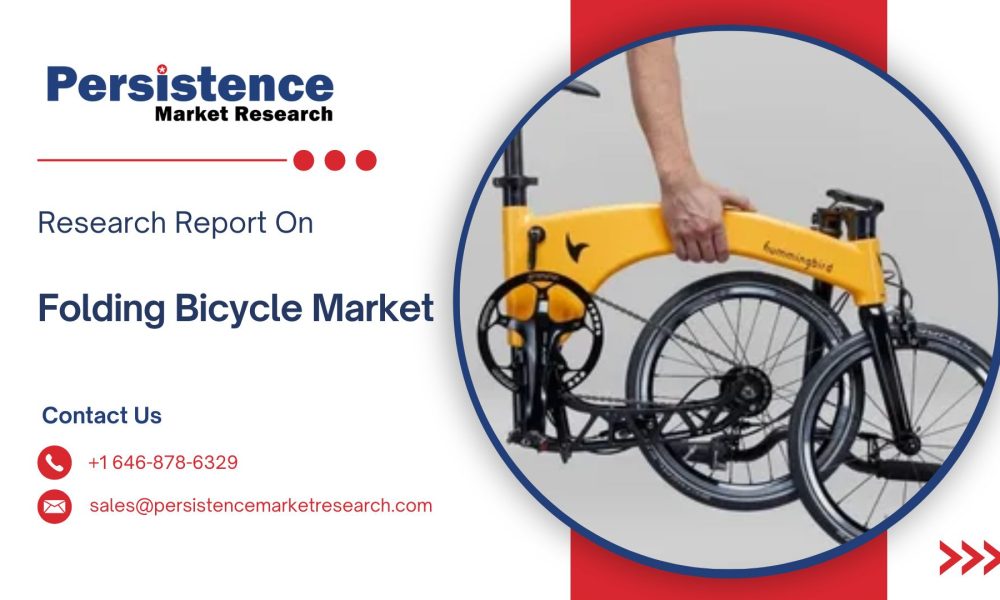
The global folding bicycle market is set to witness steady and promising growth in the coming years. According to Persistence Market Research, the market is anticipated to be valued at US$ 1,043.8 Mn in 2025, expanding by US$ 1,754.4 Mn between 2025 and 2032. This reflects a healthy CAGR of 7.7%, highlighting the rising preference for compact, eco-friendly, and cost-effective commuting options. With traffic congestion, parking challenges, and growing urbanization, folding bicycles are emerging as one of the most convenient solutions for short and medium-distance travel, especially in cities with limited transport infrastructure.
Key drivers shaping this growth include the rapid adoption of micro-mobility solutions, government efforts to strengthen cycling infrastructure, and increasing use of multimodal transport systems. The demand is particularly strong among daily commuters, environmentally conscious consumers, and leisure cyclists. In terms of product types, electric folding bicycles are gaining the fastest traction owing to their performance, energy efficiency, and ease of use. Geographically, Europe leads the global market, supported by advanced urban cycling infrastructure, government incentives, and a culture that embraces sustainable mobility. Asia-Pacific, however, is expected to witness the fastest growth due to rising population density and growing urban mobility challenges.
Get a Sample Copy of Research Report (Use Corporate Mail id for Quick Response): https://www.persistencemarketresearch.com/samples/35222
Key Highlights from the Report
➤ The global folding bicycle market is projected to be valued at US$ 1,043.8 Mn in 2025, with a CAGR of 7.7% through 2032.
➤ Market size is anticipated to grow by US$ 1,754.4 Mn between 2025 and 2032, reflecting strong demand across urban areas.
➤ Europe remains the leading regional market, owing to high cycling adoption rates and favorable government infrastructure.
➤ Electric folding bicycles are emerging as the fastest-growing product type, driven by eco-conscious urban commuters.
➤ Increasing investments in multimodal transport systems are fueling the adoption of folding bicycles in megacities worldwide.
➤ Rising environmental concerns and the push for sustainable transport are key factors behind the expanding customer base.
Market Segmentation
The folding bicycle market is segmented based on product type, end-user, and distribution channels, each shaping consumer demand in unique ways. Among product types, bicycles can be broadly divided into conventional and electric models. While conventional folding bicycles remain popular for their affordability, lightweight frames, and easy portability, electric folding bicycles are witnessing rapid adoption due to features like pedal-assist technology, extended range, and enhanced comfort. These models particularly cater to professionals, elderly commuters, and individuals seeking reduced physical strain during travel. Additionally, specialized models designed for off-road, trekking, or adventure activities are gaining ground, reflecting diversification in consumer preferences.
From an end-user perspective, the market serves a wide spectrum ranging from individual commuters to businesses and institutions. Daily urban commuters represent the largest customer base, using folding bicycles as a seamless part of their journey from home to public transport stations. Corporate initiatives to promote eco-friendly commuting among employees are also contributing to sales growth. Meanwhile, travel enthusiasts and adventure seekers increasingly opt for folding bicycles due to their portability, making them suitable for domestic and international trips. The availability of bicycles through both offline retail stores and online e-commerce platforms further ensures accessibility, with online channels showing rapid growth thanks to convenience and competitive pricing.
Regional Insights
Europe dominates the global folding bicycle market, largely due to its well-established cycling culture and government initiatives promoting sustainable urban transport. Cities like Amsterdam, Copenhagen, and Berlin already prioritize bicycles in their infrastructure planning, which has significantly boosted demand for folding bicycles. Moreover, supportive regulations and incentives, such as subsidies for eco-friendly transport, have reinforced Europe’s leadership in this segment.
Asia-Pacific is expected to emerge as the fastest-growing regional market. Countries like China, Japan, and India are experiencing rising urban density, traffic congestion, and air pollution levels, making folding bicycles a practical choice for daily commuting. Government programs promoting green transportation and the affordability of compact models are fueling strong growth in the region. The increasing popularity of e-bikes in urban hubs like Shanghai and Tokyo further highlights the region’s evolving mobility landscape.
Market Drivers
The folding bicycle market is being propelled by several powerful growth drivers. First, the global focus on micro-mobility solutions is reshaping urban transport systems. Folding bicycles offer a sustainable, low-carbon alternative to conventional vehicles, aligning with consumer demand for environmentally responsible choices. Additionally, the portability of these bicycles enables commuters to seamlessly combine them with buses, trains, and subways, promoting multimodal transport.
Second, government initiatives to develop cycling infrastructure are playing a pivotal role. Many regions are investing in dedicated cycling lanes, bike-sharing stations, and subsidies for eco-friendly vehicles, creating favorable conditions for adoption. Cities worldwide are increasingly encouraging bicycles as a solution to congestion, pollution, and limited parking. The introduction of models like Velotric’s Fold 1 Plus in 2024, equipped with a 750W motor and a range of up to 68 miles, showcases how innovations are aligning with these policies to meet evolving commuter needs.
Finally, growing health and wellness trends are boosting consumer interest in cycling. Folding bicycles provide both exercise and convenience, catering to individuals seeking an active lifestyle without sacrificing mobility. With obesity and lifestyle-related diseases rising, bicycles are becoming an attractive alternative to sedentary modes of commuting.
Market Restraints
Despite promising growth, the folding bicycle market faces notable restraints. High initial costs, especially for electric models, remain a challenge for widespread adoption in cost-sensitive regions. Advanced technology, premium designs, and durable materials often drive up prices, restricting affordability for middle and lower-income consumers.
Another limitation lies in limited durability for heavy-duty usage. While folding bicycles are highly convenient, some models may not withstand prolonged use under challenging terrains or heavy weight, leading to concerns about longevity. This particularly impacts consumer confidence in emerging markets where budget constraints are critical.
Moreover, competition from alternative micro-mobility solutions, such as electric scooters, ride-sharing services, and compact motorcycles, creates barriers. These alternatives often offer similar convenience and may be perceived as faster or trendier, especially among younger demographics. Addressing these restraints requires continuous innovation, better pricing strategies, and awareness campaigns showcasing the long-term value of folding bicycles.
Market Opportunities
The folding bicycle market presents a wide array of opportunities for stakeholders. Technological innovation remains a key area, with potential for integrating smart features such as GPS tracking, smartphone connectivity, and advanced safety mechanisms. These enhancements can significantly boost consumer appeal, particularly among tech-savvy urban commuters.
Another opportunity lies in emerging markets across Asia, Africa, and Latin America, where urbanization is rapidly increasing. With cities facing severe congestion and air pollution, folding bicycles can serve as affordable, space-saving, and eco-friendly transport solutions. Manufacturers targeting these markets with budget-friendly yet durable models are likely to gain significant traction.
Additionally, the growing popularity of sustainable tourism and travel provides an avenue for expansion. Compact and portable folding bicycles are ideal for tourists, campers, and adventure seekers who require mobility without logistical challenges. Rental services and partnerships with hospitality providers can create new revenue streams while promoting eco-tourism initiatives.
Frequently Asked Questions (FAQs)
➤ How big is the global folding bicycle market in 2025?
➤ Who are the key players in the global market for folding bicycles?
➤ What is the projected growth rate of the folding bicycle market through 2032?
➤ What is the market forecast for folding bicycles by 2032?
➤ Which region is estimated to dominate the folding bicycle industry during the forecast period?
Company Insights
The folding bicycle market features several prominent players actively shaping its competitive landscape. Leading companies include:
- Brompton Bicycle Ltd.
- Dahon Folding Bikes
- Montague Corporation
- Tern Bicycles
- Bike Friday
- Raleigh UK Ltd.
- Gocycle (Karbon Kinetics Ltd.)
- Oyama Bicycles
- Birdy Folding Bikes
- Schwinn Bicycles
Recent Developments
- In 2024, Velotric introduced the Fold 1 Plus, a foldable electric bike featuring a 750W motor, 68-mile range, and compact dimensions designed for urban commuters.
- Several European manufacturers launched lightweight aluminum folding bicycles with enhanced portability and ergonomic designs, targeting both daily commuters and leisure riders.
Explore more related market insights and reports by visiting our website.




