
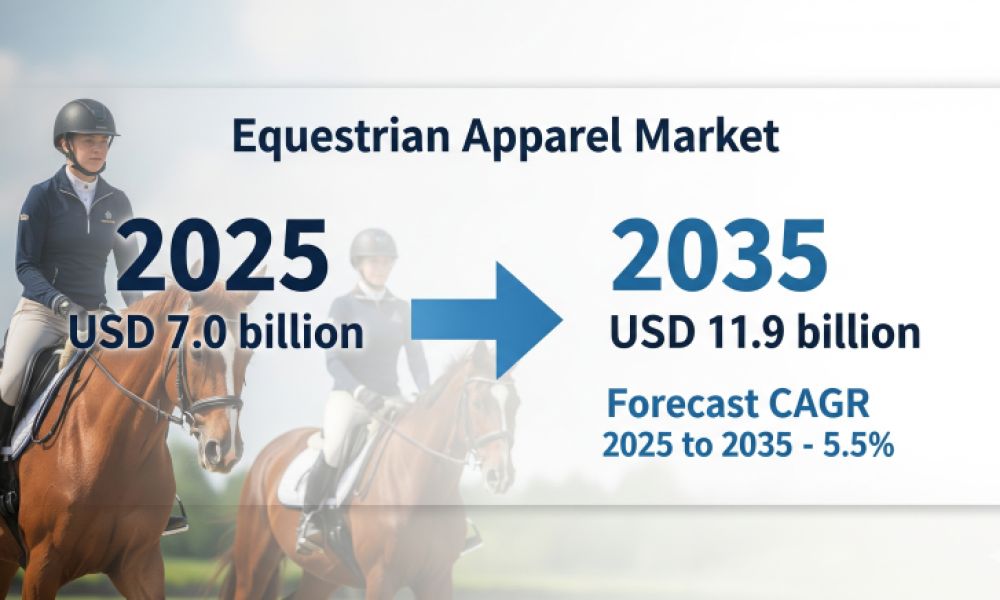
The global equestrian apparel market is experiencing steady growth, with an estimated value of USD 7.0 billion in 2025. By 2035, this market is projected to reach USD 11.9 billion, registering a compound annual growth rate (CAGR) of 5.5%. This growth is largely fueled by the rising participation in equestrian sports, the increasing ownership of horses, and the growing interest in competitive riding events worldwide.
Equestrian apparel encompasses a range of clothing and gear, including riding boots, jackets, gloves, breeches, and helmets. Market growth is primarily driven by the competitive sports segment, which holds the largest share at 35%. Professional riders and competitive events require high-performance apparel to ensure safety, comfort, and style. However, the recreational and leisure riding segment, contributing 25% to the overall market, is also a key driver, with hobbyists seeking durable, fashionable, and functional apparel for training and local riding events.
Unlock detailed analytics – Request your personalized report now! https://www.futuremarketinsights.com/reports/sample/rep-gb-25138
Growth Opportunities in Emerging Markets
While developed regions such as North America and Western Europe have already saturated their respective markets, there are ample growth opportunities in emerging markets, particularly in Asia-Pacific and Latin America. These regions are witnessing rising disposable incomes, the establishment of equestrian training facilities, and a growing awareness of safety and performance apparel. This shift is contributing to the incremental growth of the market in these areas.
In contrast to the more mature markets, which have seen high brand recognition and well-established retail networks, emerging regions present an opportunity for growth through product diversification and the expansion of online retail channels. Local manufacturers in these regions are increasingly introducing cost-effective, functional, and high-quality apparel, which is helping brands cater to a broader consumer base.
Dominance of Sustainable Apparel
A significant trend in the equestrian apparel market is the growing consumer demand for sustainable products. The sustainable apparel segment is expected to account for 58.2% of the equestrian apparel market revenue in 2025. This shift towards eco-conscious materials such as organic fabrics, recycled materials, and ethically produced garments is being driven by increasing consumer awareness of environmental issues. Brands focusing on sustainability are adopting practices such as reduced water usage and non-toxic dyeing techniques to meet the growing demand for ethically sourced products.
The Shift Toward Lifestyle and Fashion-Oriented Apparel
The equestrian apparel market is also seeing a shift toward lifestyle-oriented products, combining both fashion and performance. This trend is expanding the appeal of equestrian gear beyond just professional riders to include lifestyle and fashion-conscious individuals who integrate equestrian culture into their everyday wardrobe. Designer brands and luxury riding apparel are gaining popularity, particularly in mature markets like Europe, where there is an established demand for high-end and premium riding gear.
Competitive Analysis and Key Players
The competitive landscape of the equestrian apparel market is characterized by a mix of global and regional players, each vying for dominance in various market segments. Leading brands like Ariat International, Charles Owen, and Eskadron are well-positioned in the premium and performance-oriented apparel categories. These brands focus on high-quality, durable, and stylish products that cater to professional riders and enthusiasts alike.
Ariat International leads the charge with a broad range of products, including riding boots, jackets, breeches, and gloves, that emphasize durability, comfort, and safety. Charles Owen, on the other hand, is renowned for its safety-certified helmets, which have become an essential component of competitive riding gear.
Mid-tier brands like Dublin and Equi-Star provide functional and affordable options for hobbyists and amateur riders, while niche brands such as Horze and Kentucky Horsewear specialize in high-performance apparel for dressage, show jumping, and other competitive disciplines.
Online platforms and specialized equestrian stores have also become vital distribution channels, with e-commerce growing steadily due to its convenience and accessibility to global markets. Partnerships with equestrian clubs, sponsorship of events, and collaborations with athletes and influencers are further strengthening brand presence and consumer engagement.
Download Brochure for Full Insights: https://www.futuremarketinsights.com/reports/brochure/rep-gb-25138
Regional Insights
North America remains a significant player in the market, driven by both professional and recreational riders seeking high-performance gear. The USA is a particularly strong market, where the demand for performance-oriented riding apparel, such as helmets, jackets, and breeches, continues to rise. Europe continues to focus on high-end, performance-driven products, with countries like Germany, France, and the UK prioritizing quality and safety.
Meanwhile, regions like China and India are seeing rapid market expansion, with China leading the charge with a CAGR of 7.4%. The increasing interest in equestrian sports, along with a growing middle class, is fueling the demand for both premium and mid-tier apparel in these markets. India is following closely with a CAGR of 6.9%, driven by rising interest in competitive riding and polo, as well as the growth of equestrian clubs and training schools.
About Future Market Insights (FMI)
Future Market Insights, Inc. (ESOMAR certified, recipient of the Stevie Award, and a member of the Greater New York Chamber of Commerce) offers profound insights into the driving factors that are boosting demand in the market. FMI stands as the leading global provider of market intelligence, advisory services, consulting, and events for the Packaging, Food and Beverage, Consumer Technology, Healthcare, Industrial, and Chemicals markets. With a vast team of over 400 analysts worldwide, FMI provides global, regional, and local expertise on diverse domains and industry trends across more than 110 countries.



