
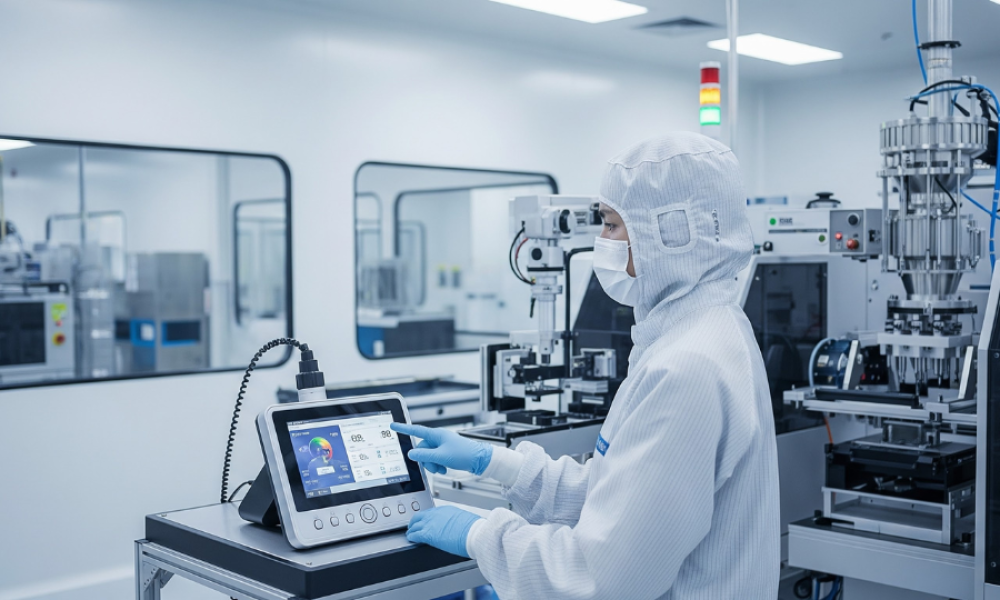
Air particles, surface microbes, and even temperature shifts can silently determine whether a product meets regulatory standards or risks contamination. Environmental monitoring ensures that unseen threats are detected long before they affect quality.
This article explores how Qalitex helps manufacturers maintain clean, compliant, and safe facilities through science-driven environmental monitoring.
Why Environmental Monitoring Is Vital for Manufacturing
Every cleanroom and production area operates within tight environmental tolerances. A single breach, whether airborne, microbial, or chemical, can compromise product integrity, delay batch releases, and damage consumer trust. Environmental monitoring acts as the industry’s early-warning system, ensuring that the invisible elements of a facility remain within control.
Defining environmental monitoring
Environmental monitoring involves the systematic observation of factors that affect product quality. It includes:
- Air and surface sampling to detect microorganisms and particulates
- Water testing for microbial and chemical contamination
- Personnel monitoring to assess hygiene and handling compliance
- Temperature and humidity tracking for controlled conditions
Each result becomes part of a larger data set that reflects how well a facility maintains its state of control over time.
The hidden risks of contamination
Contamination can originate from countless sources, unfiltered air, inadequate cleaning, or improper gowning. Even small lapses may cause:
- Product recalls due to microbial contamination
- Deviation reports or production halts under GMP audits
- Loss of consumer confidence after safety alerts
These incidents rarely start with a single event. They often stem from unnoticed environmental shifts that go untracked until the impact becomes visible. That’s why proactive environmental monitoring is an integral layer of manufacturing defense.
Regulatory requirements and global standards
Agencies such as the U.S. FDA, Health Canada, and ISO require ongoing monitoring to verify that facilities consistently operate within defined cleanroom classifications. Environmental data is central to:
- Demonstrating Good Manufacturing Practice (GMP) compliance
- Supporting product release decisions and validation reports
- Providing traceable records during regulatory audits
Manufacturers who monitor their environments continuously are better equipped to address issues swiftly, preventing costly investigations later.
Key Components of an Effective Environmental Monitoring Program
An environmental monitoring system works only when every element is carefully coordinated. The goal is to capture accurate data across all potential contamination points, from the air circulating overhead to the hands assembling final products.
Air quality and particulate monitoring
Airborne particles and microorganisms are among the most common causes of contamination. Cleanrooms rely on controlled air changes, filtration, and differential pressures to minimize risk. Monitoring includes:
- Non-viable particulate testing to measure air cleanliness levels
- Viable air sampling to detect microbial contamination
- Temperature and humidity logging to maintain optimal conditions
Frequent air sampling ensures that microbial counts remain within acceptable limits. Deviations trigger immediate investigations, reinforcing the facility’s preventive controls.
Surface and equipment hygiene
Surfaces serve as direct contact points for ingredients and finished products. Regular surface sampling identifies whether cleaning protocols are truly effective. Common methods include:
- Swab testing and contact plates for microbial load detection
- Residue testing for cleaning validation
- Surface trend analysis to pinpoint recurring contamination zones
When properly trended, surface data helps predict where contamination is most likely to appear, allowing teams to act before it spreads.
Personnel hygiene and training
Human operators are often the largest variable in maintaining cleanroom conditions. Monitoring their activities, clothing, and hygiene practices ensures consistent contamination control. Key elements include:
- Finger dab or gown plate tests after critical operations
- Routine glove and gown sampling to validate aseptic technique
- Continuous training and retraining to reinforce cleanroom discipline
Monitoring personnel doesn’t aim to assign blame but to sustain a collective culture of accountability.
Water and utility systems
Water is used throughout manufacturing, in cleaning, formulation, and testing. Even slight contamination in a purified water system can introduce serious quality issues. Testing involves:
- Microbial analysis for total viable counts
- Conductivity and TOC (Total Organic Carbon) testing
- Endotoxin assessments in pharmaceutical settings
Maintaining control over utility systems ensures that every process, from rinsing to final product filling, meets regulatory expectations.
The Role of Technology in Modern Environmental Monitoring
Modern environmental monitoring extends far beyond manual sampling. Technology now enables manufacturers to detect, record, and interpret data with speed and precision that was once impossible.
Real-time data and automated alerts
Digital sensors capture air quality, temperature, and pressure changes continuously. When readings deviate from established limits, automated alerts notify personnel instantly. This immediate visibility minimizes downtime and prevents potential contamination events.
Data integrity and traceability
Regulators emphasize data reliability, every measurement must be secure, timestamped, and unaltered. Electronic monitoring systems:
- Eliminate manual transcription errors
- Provide secure audit trails
- Facilitate easier reporting during inspections
This digital accountability strengthens trust between manufacturers and auditors while enhancing internal quality assurance.
Predictive insights and trend analysis
Beyond real-time data, analytics reveal contamination trends across time and location. By examining patterns, facilities can predict:
- Seasonal variations in microbial activity
- Equipment or process areas prone to deviations
- When maintenance or recalibration is most effective
Predictive monitoring transforms raw data into foresight. Instead of reacting to contamination, manufacturers prevent it, reducing risk and waste across the board.
Qalitex’s Approach to Environmental Monitoring
At Qalitex, environmental monitoring is not treated as a box-ticking exercise. It’s a scientific and operational partnership built around understanding every factor that influences product integrity. Through precise testing, data-driven systems, and compliance expertise, Qalitex helps manufacturers maintain control over their environments, and the confidence that comes with it.
Testing beyond compliance
Many testing programs stop once regulatory thresholds are met. Qalitex goes further, helping clients identify what those numbers actually mean for ongoing safety. The company conducts in-depth microbiological testing, air and surface sampling, and cleanroom qualification, each tailored to a client’s unique facility layout and production flow.
Every test result becomes a reference point for improvement. Instead of static reports, Qalitex delivers context, showing manufacturers where to optimize cleaning cycles, improve ventilation, or retrain staff based on evidence.
Integration with GMP and validation processes
Maintaining environmental control requires constant alignment with Good Manufacturing Practice (GMP) standards. Qalitex designs validation plans that mirror both FDA and ISO requirements, ensuring that every stage, from sampling to reporting, meets international expectations.
Each validation plan defines limits, testing frequency, and corrective protocols. This consistency allows clients to demonstrate control during audits while improving reliability in daily operations.
Data-driven decision-making
Qalitex believes in the power of data not just to monitor but to transform quality systems. Through analytical reporting and trend mapping, the company empowers decision-makers to act early, well before any contamination affects production.
“Environmental monitoring is about translating the findings into real preventive action that keeps facilities compliant and products safe.”
This focus on preventive intelligence is what allows Qalitex’s partners to maintain cleaner, more stable production lines with measurable improvements in consistency.
Building a Culture of Contamination Control
Environmental monitoring succeeds only when it becomes part of a company’s culture. Data alone cannot create a clean facility, people must understand why it matters and how their daily actions influence the environment around them.
The importance of routine and consistency
Sampling schedules are the backbone of any monitoring program. Skipping or delaying a routine test, even by a day, can distort long-term data trends. Qalitex helps clients design schedules that balance regulatory frequency with operational practicality.
The company also audits how results are trended, ensuring that sampling points remain representative and statistically valid. Consistency creates confidence, and confidence supports compliance.
Cross-department collaboration
Quality assurance cannot operate in isolation. Qalitex encourages collaboration between production, maintenance, and sanitation teams so that environmental control becomes a shared responsibility.
During training sessions, Qalitex professionals demonstrate proper gowning, sampling, and documentation techniques, reinforcing the “why” behind every procedure.
“Clean manufacturing isn’t achieved by protocols alone,” Abochama explained. “It requires every team member to understand the ‘why’ behind every procedure; that’s when compliance becomes culture.”
This philosophy turns monitoring from a task into a mindset. When people see how their role connects to product safety, they treat every procedure with greater care.
How Qalitex Supports Continuous Environmental Assurance
Monitoring is not a one-time event but an ongoing cycle of observation, analysis, and improvement. Qalitex’s environmental assurance services are designed to help manufacturers sustain that cycle with precision and reliability.
Continuous monitoring programs
Qalitex develops environmental monitoring programs customized for each client’s facility design and risk profile. These programs include:
- Routine air, surface, and personnel sampling schedules
- Periodic environmental audits and risk-based reviews
- Trend analysis reports identifying contamination patterns
- Corrective and preventive action (CAPA) recommendations
Every result feeds into a feedback loop that strengthens process control over time.
Custom testing solutions
Different products demand different environments. A cosmetics manufacturer, for example, may require high-humidity control to prevent microbial growth, while a pharmaceutical facility may focus on sterility assurance. Qalitex tailors its testing parameters and limits accordingly, ensuring each environment aligns with the product’s sensitivity.
Clients benefit from flexibility, whether they need quarterly trending, ongoing qualification support, or emergency contamination response.
Reporting and client partnership
Qalitex’s reports don’t just deliver numbers; they tell a story. Through clear visualizations and concise interpretation, clients gain insight into their facility’s environmental behavior.
This transparency builds trust, not only with regulators but between Qalitex and the organizations it supports. Every report is designed to empower, not overwhelm.
The Future of Environmental Monitoring
Environmental monitoring continues to evolve, driven by technological innovation and stricter global regulations. The future points toward smarter, more connected systems that leave less room for uncertainty.
Automation and IoT in contamination control
Wireless sensors and automated samplers are replacing manual tools, allowing continuous surveillance without interrupting operations. These devices feed real-time data directly into secure digital platforms, offering immediate insights into air quality, pressure stability, and microbial activity.
As this shift accelerates, Qalitex remains at the forefront, integrating compatible systems and guiding manufacturers through digital transitions while maintaining data integrity.
Data integration and AI-driven predictions
Artificial intelligence and machine learning are beginning to play a larger role in interpreting environmental data. Predictive models can flag anomalies or identify high-risk periods before contamination occurs.
For facilities managing multiple production lines, this predictive power can drastically reduce risk, waste, and downtime. Qalitex is actively exploring these innovations, ensuring its clients remain prepared for the next generation of environmental oversight.
Qalitex’s ongoing innovation
Qalitex continuously upgrades its testing capabilities and analytical tools to meet emerging standards. From adopting advanced microbial identification technologies to streamlining data management systems, the company stays committed to precision and transparency.
Each investment reflects Qalitex’s long-term mission: protecting public health by ensuring that manufacturers operate in environments as clean and controlled as their products deserve.
Closing Thoughts
Environmental monitoring is the foundation of manufacturing integrity. It’s what separates assumption from assurance, what allows consumers to trust that every product reaching them was made in a safe and controlled space.
Qalitex continues to lead this mission through its science-based programs, expert validation support, and culture of accountability. The company’s approach ensures not only compliance but confidence, the kind that defines clean manufacturing at its highest standard.