
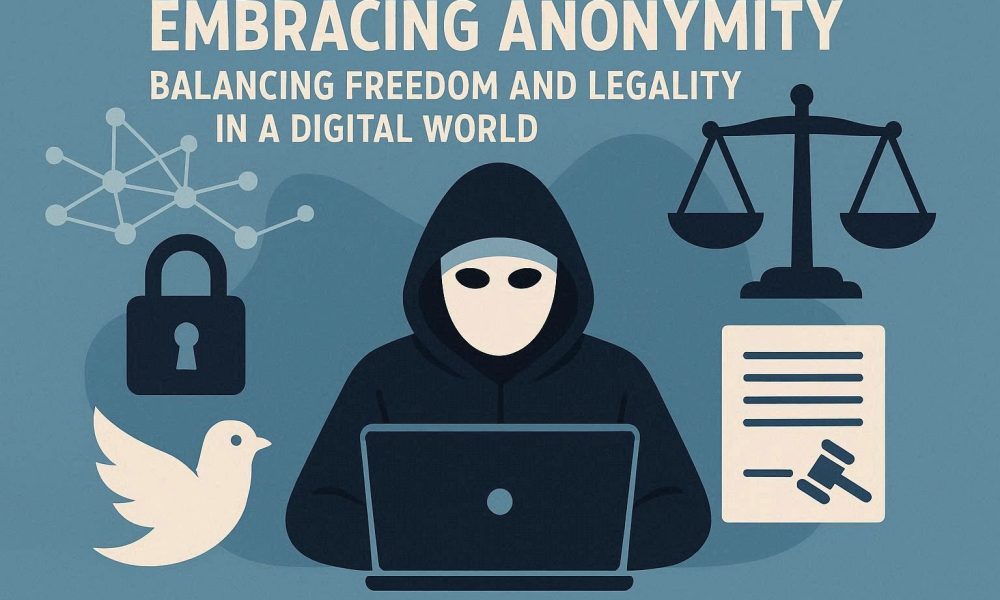
An inside look at off-grid living and anonymous travel, with a focus on lawful ways to protect privacy, preserve freedom, and reduce unnecessary exposure in 2026.
WASHINGTON, DC, June 13, 2026
For many people, anonymity no longer means hiding for the sake of deception. It means reclaiming breathing room in a world where every booking, payment, login, border crossing, and mobile device can generate a record. In 2026, the question is not whether a person can become literally invisible. The real question is how much privacy can still be preserved legally, and what forms of off-grid living remain realistic without crossing into fraud, document abuse, or evasion.
That distinction matters because modern travel and everyday life are increasingly structured around identity continuity. Governments, airlines, border agencies, financial institutions, telecom providers, landlords, and digital platforms all rely on overlapping systems that connect activity to a legal person. In Europe, the Entry/Exit System is now part of that reality, replacing manual passport stamping for many non-EU travelers with a more automated border process that relies on biometric checks and electronic records. The trend is clear. Legal anonymity in 2026 is not about defeating the system. It is about disclosing only what is required, carrying less data, and avoiding the endless oversharing that has become normal.
Off-grid living is not the same thing as disappearing
The phrase “off-grid” has picked up a romantic mythology of its own. It suggests cabins, burner phones, remote communities, hard cash, and a life outside ordinary visibility. Sometimes that image is partly true. More often, lawful off-grid living is much less dramatic and much more administrative. It means reducing dependency on platforms that track behavior, limiting the number of services that know where you are, simplifying your digital footprint, and creating a daily life that does not automatically broadcast your routines to corporations, apps, and strangers.
Legally, off-grid living usually means reducing traceability rather than eliminating identity. You may still need lawful identification, legal residency status, tax compliance, access to communications, and valid travel documents. What changes is the amount of unnecessary information you volunteer and the number of systems you allow to map your life in detail.
That is why people who pursue privacy for lawful reasons often make ordinary but disciplined choices rather than dramatic ones. They stop posting their location in real time. They separate personal and professional communications. They stop carrying years of private data on one phone. They use fewer apps, fewer subscriptions, fewer auto-synced services, and fewer accounts tied to one email address. The result is not perfect invisibility. The result is less noise, less exposure, and less dependency on systems that monetize or monitor behavior by default.
Anonymous travel only works when it stays truthful
One of the biggest misunderstandings in this area is the phrase “anonymous travel.” In legal practice, anonymous travel does not mean using false documents, fake names, altered passports, or misleading explanations at borders. It does not mean lying to immigration authorities, hiding your identity from airlines, or using fraud to move around undetected. That is not privacy. That is a crime.
Lawful anonymous travel is something narrower and more defensible. It means protecting your personal information from unnecessary exposure while still traveling under genuine, legally valid identity documents. It means keeping your data footprint smaller, not making false declarations. It means being careful about what your devices, social profiles, booking trails, and cloud accounts reveal beyond what the law actually requires.
The safest privacy strategy for travelers is consistency, not cleverness. Your documents should be real. Your travel purpose should be truthful. Your devices should be clean. Your digital footprint should be deliberate. The moment anonymity depends on a lie, it stops being lawful privacy and starts becoming evidence.
This is especially important as border systems become more automated and more biometric. In practical terms, modern travelers should assume that identity checks are becoming richer in data, not poorer. That means the legal path is not to try to outmaneuver that environment. It is to move through it with less extraneous information attached to you.
The clean-device rule has become central
If there is one habit that now separates privacy-conscious travelers from careless ones, it is the clean-device rule. Canada’s guidance on cybersecurity while traveling makes the point directly by advising travelers to reduce the amount of sensitive information on their devices, consider travel-only hardware, and remember that border agents in many countries may lawfully inspect electronic devices.
That advice reflects a reality many travelers still underestimate. A phone is no longer just a phone. It is a map of relationships, spending, work activity, login history, location patterns, private messages, saved files, and recovery routes to other accounts. A laptop can be even worse because it often carries contracts, client records, tax documents, internal communications, archive photos, draft agreements, and cached access to platforms the traveler forgot were still logged in.
A lawful privacy strategy begins before you leave home. Back up your files. Remove what does not need to travel. Sign out of dormant accounts. Delete outdated downloads. Strip the device down to what the trip actually requires. That is not paranoia. It is a recognition that a searched, seized, lost, or stolen device can reveal far more than most people would ever intentionally disclose.
This is where many privacy failures begin. Not with hacking, not with surveillance, and not with some dramatic breach, but with habit. People carry everything because it’s easy. Then they discover too late that convenience and exposure are often the same thing.
Secure communications matter more than privacy slogans
No modern privacy strategy works if communications remain sloppy. A person can talk endlessly about anonymity and still destroy it through poor messaging habits, reused passwords, open Wi-Fi logins, and one overexposed email account that handles every part of life. The practical reality is that communications security is the backbone of lawful privacy because it determines how easily someone else can reconstruct your movements, relationships, and financial or professional activities.
The most immediate upgrade is stronger authentication. The UK’s National Cyber Security Center guidance on passkeys recommends passkeys over passwords where available because they are resistant to phishing and do not rely on reusable secrets that can be intercepted or tricked out of a traveler. For nomads and privacy-minded travelers, that matters because the weakest moment often comes during travel, when accounts are accessed on unfamiliar networks, in unfamiliar cities, or under time pressure.
If your email, cloud storage, messaging platforms, banking tools, and travel confirmations all rely on a single password plus a fragile SMS code, your privacy posture is weaker than you think. Real anonymity begins with reducing dependency on a single vulnerable device, a single number, or a single inbox that controls everything else.
Encrypted communications also matter, but with a practical caveat. Secure messaging helps reduce exposure on untrusted networks and gives travelers a safer channel than ordinary SMS or insecure app traffic. But encryption is not a legal shield against bad judgment. A secure app does not fix reckless disclosures, unnecessary duplication of identity documents, or careless forwarding of passport scans across multiple accounts. Technology helps most when it supports disciplined behavior instead of replacing it.
Paper trails still matter in a digital life
Many privacy discussions focus so heavily on digital risk that they ignore the ordinary paper trail. Yet the paper trail still shapes how visible a person becomes. Boarding passes, rental agreements, hotel invoices, shipping labels, SIM registrations, coworking memberships, apartment paperwork, and printed copies of identity documents can all add up to a detailed map of movement and routine.
The problem is not that records exist. Many records are unavoidable and lawful. The problem is duplication and sprawl. One passport scan becomes five copies. One travel booking becomes three forwarded emails, a screenshot in the photo roll, and a file attachment saved in downloads for no reason. One address ends up across loyalty programs, online shopping accounts, and old confirmation threads.
People who want more lawful privacy do not need to become obsessive about every receipt. They need to become more deliberate about storage, forwarding, and retention. The less duplicated identity material you create, the less scattered exposure you have to clean up later.
This is also one of the most realistic elements of off-grid living in 2026. It is less about escaping every system than about refusing to let every system archive more of your life than necessary.
Real freedom comes from compartmentalization
One of the most effective ways to balance freedom and legality is compartmentalization. This is not a trick. It is a discipline. One email address for banking and government matters. Another for work. Another for low-trust registrations and newsletters. Separate browser profiles for financial administration and casual browsing. Separate cloud folders for business and personal records. Fewer apps with constant location access. Fewer services that know both your finances and your movements.
Compartmentalization does not make a person anonymous in the absolute sense. It reduces the blast radius. If one service is breached, one phone is lost, or one inbox is compromised, the attacker should not instantly inherit a full map of your travel, your money, your clients, your communications, and your personal history.
This is one of the most underrated forms of legal privacy. It does not depend on deception. It depends on the structure. And structure is often what separates a manageable incident from a total exposure event.
The same principle applies to phone numbers. Too many travelers still let one longstanding number anchor messaging, banking verification, social logins, work contacts, and account recovery. That arrangement works until it fails, and when it fails abroad, the damage can become immediate. Backup codes, secondary recovery paths, trusted devices, and smarter account separation all reduce that dependency.
Social media is often the biggest leak
A person can carry a clean device, use secure messaging, and still reveal too much by narrating their own movements online. Real-time location posts, airport check-ins, apartment views, coworking photos, boarding pass snapshots, hotel backgrounds, and predictable travel routines often create a clearer movement trail than any formal record.
The danger is not only stalking or theft, though those risks are real. The danger is also cumulative visibility. When too much of a life is posted in real time, strangers do not need privileged access to understand patterns. They only need patience.
Delayed posting is safer than live posting. General locations are safer than precise ones. Backgrounds should be checked for documents, screens, keys, building numbers, room details, and anything that gives away more than intended. In a digital world, personal freedom is often lost not through a single major disclosure, but through hundreds of tiny ones.
For many people, the first serious privacy improvement is simply to stop publishing their whereabouts in real time.
The legal center of anonymity is reduction
The phrase “embracing anonymity” often sounds radical, but the legal version is built on something simple: reduction. Reduce what you carry. Reduce what you store. Reduce what you duplicate. Reduce what you publish. Reduce the number of systems tied to a single fragile device or account. Reduce the number of services that can reconstruct your life from one breach, one search, or one compromised inbox.
That is why lawful anonymity remains possible, even in a world of biometric borders and dense digital records. It is not possible as total disappearance. It is possible as a restraint. It is possible as a design. It is possible as a refusal to volunteer more information than modern life constantly invites you to surrender.
Freedom and legality do not have to sit on opposite sides of the same argument. In 2026, the most durable form of personal freedom is often lawful privacy practiced consistently, quietly, and without drama. It is not the fantasy of becoming no one. It is the discipline of deciding how much of yourself the world actually needs to see.
For those who want a more formal strategy around lawful privacy, travel-risk planning, identity continuity, and reduced exposure while living internationally, Amicus International Consulting works in the space where mobility, privacy, and documentation concerns increasingly overlap. In a world that rewards constant disclosure, the people who preserve the most freedom are often the ones who learn, carefully and legally, how to reveal less.




