
The Electric Tiffin Market is experiencing steady growth as modern lifestyles increasingly demand convenient, hygienic, and portable food storage solutions. Electric tiffins, which allow users to heat meals without access to a microwave or stove, are becoming popular among office workers, students, and travelers. These devices provide a practical way to carry home-cooked food and reheat it easily at workplaces or educational institutions. With rising awareness about healthy eating and the cost advantages of homemade meals, consumers are gradually shifting toward electric tiffins as an alternative to restaurant or takeaway food. The combination of portability, energy efficiency, and convenience has made electric lunch boxes a valuable addition to everyday routines.
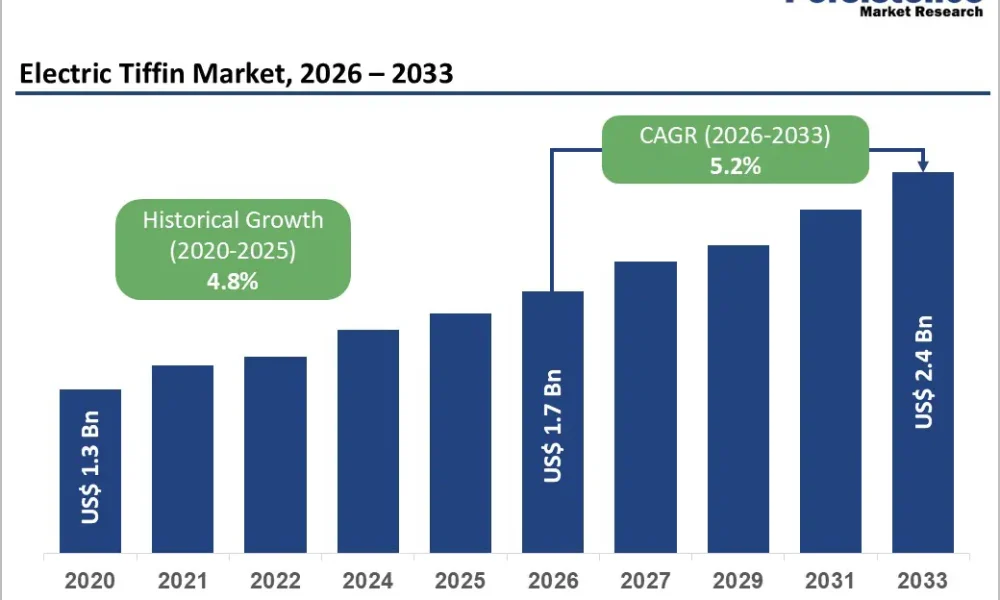
According to Persistence Market Research, the global Electric Tiffin Market size is valued at US$ 1.7 billion in 2026 and is projected to reach US$ 2.4 billion by 2033, expanding at a CAGR of 5.2% between 2026 and 2033. The growth trajectory is strongly supported by rapid urbanization across South Asia and East Asia, along with the increasing number of office-going professionals who require reliable food storage solutions. Additionally, the post-pandemic shift toward hygienic, home-cooked meals has significantly influenced consumer purchasing behavior. Electric tiffins allow individuals to enjoy freshly heated meals while maintaining safety and nutritional quality, which has further strengthened market demand. The leading product segment is expected to be multi-compartment electric lunch boxes due to their convenience in storing multiple food items, while South Asia remains the dominant regional market because of strong cultural adoption of tiffin-style meal consumption.
Download Your Free Sample & Explore Key Insights : https://www.persistencemarketresearch.com/samples/34002
Key Highlights from the Report
➤ The Electric Tiffin Market is projected to grow from US$ 1.7 billion in 2026 to US$ 2.4 billion by 2033 at a 5.2% CAGR.
➤ Rapid urbanization and the expansion of formal office workforces are major growth catalysts for electric lunch box demand.
➤ Rising consumer preference for hygienic, home-cooked meals after the pandemic is accelerating product adoption.
➤ Multi-compartment electric tiffins are emerging as the leading product segment due to meal variety convenience.
➤ South Asia is expected to remain the dominant regional market because of strong cultural reliance on tiffin-based meals.
➤ Product innovation focusing on portability, heating efficiency, and durable materials is shaping the competitive landscape.
Market Segmentation
The Electric Tiffin Market can be segmented based on product type, capacity, and end-user categories. Product types include single-layer electric tiffins and multi-layer electric tiffins, with the latter gaining stronger traction among consumers who prefer carrying multiple food items in one container. Multi-compartment models allow users to separate different dishes while ensuring even heating, making them highly suitable for traditional meals in Asia. Manufacturers are also focusing on compact and lightweight designs to improve portability for daily commuting. Capacity variations ranging from small personal units to larger family-sized electric lunch boxes help address diverse consumer needs. Additionally, innovations in heating technology, leak-proof designs, and food-grade materials have increased consumer confidence in these products.
From an end-user perspective, the market is segmented into office workers, students, and travelers. Office workers represent the largest share due to the growing workforce in urban regions and the rising cost of eating out. Students also represent a significant segment, especially in countries where schools encourage packed lunches. Travelers and field professionals form another important user group, as electric tiffins allow them to heat food without relying on external kitchen appliances. The growing availability of electric tiffins through online retail platforms and electronics stores has made these products more accessible, encouraging adoption across multiple consumer groups.
Customize This Report for Your Exact Requirements : https://www.persistencemarketresearch.com/request-customization/34002
Regional Insights
South Asia is expected to remain the most prominent region in the Electric Tiffin Market due to strong cultural familiarity with tiffin-style meal systems. In countries such as India and neighboring markets, carrying home-cooked meals to workplaces and schools has long been a common practice. Electric tiffins represent a modern upgrade to this traditional habit by offering built-in heating capabilities. Rapid urbanization and rising employment rates in metropolitan cities are further strengthening the demand for portable meal solutions in the region.
East Asia also represents a key growth market driven by urban lifestyle changes and increasing consumer focus on convenience products. Busy work schedules and long commuting hours have encouraged individuals to seek efficient meal solutions that maintain food freshness. Additionally, technological advancements and increasing disposable income are supporting the adoption of innovative electric lunch boxes across this region.
Market Drivers
One of the most significant drivers of the Electric Tiffin Market is the rapid pace of urbanization and workforce expansion. As more individuals move to urban centers for employment, the demand for convenient meal solutions increases. Office workers often face limited access to kitchen facilities, making electric tiffins a practical alternative for reheating meals at desks or shared spaces. The rising number of corporate employees and students living away from home has further increased reliance on portable meal solutions that can preserve food quality while offering easy heating functionality.
Another strong driver is the growing awareness of healthy eating habits and the cost advantages of home-cooked meals. After the global pandemic, consumers became more conscious about hygiene and food safety. Many individuals now prefer preparing meals at home instead of purchasing ready-made food. Electric tiffins help maintain the freshness and warmth of meals throughout the day, supporting healthier eating patterns. This shift in consumer behavior has significantly boosted the popularity of electric lunch boxes among working professionals and students.
Market Restraints
Despite promising growth prospects, the Electric Tiffin Market faces certain limitations that may affect its expansion. One major challenge is the availability of alternative food heating solutions such as microwaves in workplaces and cafeterias. In offices where microwave ovens are readily accessible, consumers may perceive electric tiffins as unnecessary. This can limit adoption in developed markets where communal kitchen facilities are widely available.
Another restraint involves price sensitivity among consumers in developing regions. Electric tiffins typically cost more than traditional lunch boxes, which may discourage budget-conscious buyers. Additionally, concerns related to product durability, heating efficiency, and electrical safety can influence purchasing decisions. If consumers encounter performance issues with low-quality products, it may affect overall market perception and slow adoption rates.
Market Opportunities
The Electric Tiffin Market presents substantial opportunities through product innovation and technological enhancements. Manufacturers are increasingly focusing on advanced features such as faster heating mechanisms, improved insulation, and energy-efficient designs. Smart electric tiffins with temperature control and safety mechanisms can further enhance user convenience. These innovations can attract new consumers who seek modern, multifunctional meal solutions.
Another major opportunity lies in expanding online retail channels and e-commerce platforms. Digital marketplaces have made it easier for consumers to explore different brands, compare features, and purchase products from the comfort of their homes. Increasing penetration of online shopping in emerging economies provides manufacturers with new avenues for reaching untapped customer segments. As awareness grows and product designs continue to evolve, the Electric Tiffin Market is expected to witness broader global adoption.
Checkout Now & Download Complete Market Report : https://www.persistencemarketresearch.com/checkout/34002
Company Insights
Key players operating in the Electric Tiffin Market include:
- Vaya
- Milton
- Cello
- Tupperware
- Borosil
- Signoraware
- Steel Lock
- NutriBox
- Pinnacle Thermoware
- Wonderchef
- Other Key Players
Recent Developments:
June 2024 – A leading kitchen appliance manufacturer introduced an upgraded electric tiffin model with improved heating efficiency and enhanced insulation technology.
September 2024 – A major consumer goods company expanded its electric lunch box product portfolio to include multi-layer stainless steel models designed for office professionals.
Future Opportunities and Growth Prospects
The future of the Electric Tiffin Market appears promising as consumer lifestyles continue to evolve toward convenience-driven solutions. Increasing workforce participation, rising awareness about healthy eating, and the growing preference for home-prepared meals are expected to support long-term demand. Technological advancements in heating systems, battery integration, and lightweight materials will further improve product efficiency and portability.
Moreover, manufacturers are likely to invest in product differentiation through smart features and eco-friendly materials. As urban populations expand and daily commuting becomes more common, electric tiffins will continue to provide a practical way for consumers to enjoy warm, hygienic meals anytime and anywhere. With steady market growth projected through 2033, the industry is poised to witness consistent innovation and broader adoption worldwide.




