
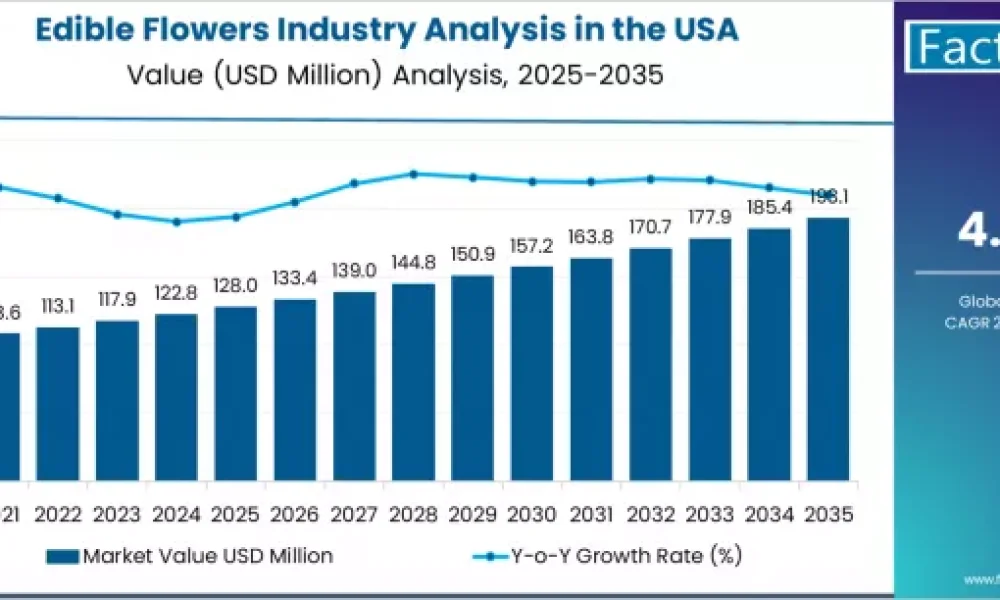
The edible flowers industry in the United States is gaining momentum, supported by increased adoption across gourmet restaurants, craft beverages, functional foods, and premium retail. According to a new industry assessment by Fact.MR, U.S. edible flowers demand is projected to rise from USD 128.0 million in 2025 to approximately USD 193.5 million by 2035, expanding at a CAGR of 4.3%. This marks an absolute increase of USD 65.5 million during the 2025–2035 forecast period.
Strategic Market Drivers
Growing Culinary Innovation and Premium Dining Culture
The rise of food styling, chef-led experimentation, social dining, and fine catering is strengthening demand for edible flowers in the U.S. Their unique aroma, natural color, and flavor enhancement capabilities make them popular in desserts, salads, bakery décor, syrups, rice paper rolls, seasonal tasting menus, and infused liquids.
High growth in experiential dining, luxury hotels, and premium catering is helping shift edible flowers from a decorative element to a valued functional ingredient.
Browse Full Report: https://www.factmr.com/report/united-states-edible-flowers-industry-analysis
Botanical Wellness and Functional Food Adoption
U.S. consumers are increasingly seeking natural, clean-label, antioxidant-rich, and plant-derived ingredients. Flowers like rose, hibiscus, marigold, lavender, and chamomile are gaining prominence in wellness beverages, teas, digestive blends, natural food color formulations, immunity tonics, and relaxation infusions.
This reflects a broader transition toward mindful consumption and natural nutrition.
Expansion in Craft Beverages, Patisserie & Confectionery
Edible flowers are witnessing accelerated demand in:
- Cocktails, mocktails, kombucha, fresh infused waters, and floral sodas
- Cake decoration, floral pastry layers, candied petals, and dessert plating
- Premium confectionery with rose and hibiscus flavor dominance
The increasing influence of food photography, café culture, artisanal dessert brands, and gourmet home cooking is uplifting flower adoption beyond traditional venues.
Rising Retail and E-Commerce Distribution
Greenhouse growers, organic floral farms, and boutique suppliers are increasing availability through:
✔ Specialty produce retail
✔ Organic supermarket chains
✔ Farm subscription boxes
✔ Luxury gifting and holiday culinary kits
✔ Online delivery in freeze-dried and fresh formats
Market Segmentation Highlights
Hibiscus & Rose Lead U.S. Market Demand
- The hibiscus and rose segment is expected to represent 42.00% of total U.S. edible flower demand in 2025.
- Segment dominance is driven by versatility, flavor strength, beverage compatibility, wide bakery usage, and natural color extraction demand.
Other High-Potential Flower Segments
- Lavender & chamomile → High demand in calming teas and wellness blends
- Marigold & nasturtium → Growing use in organic salads and ethnic plating
- Violet & elderflower → Premium dessert and beverage niche expansion
Regional Adoption Trends in the United States
West Coast: Organic Retail and Food Innovation Core
California, Oregon, and Washington dominate demand due to:
- Strong organic consumption
- High density of chef-led restaurants
- Large craft beverage innovation base
Northeast: Luxury Hospitality and Dessert Innovation Hub
New York, Massachusetts, New Jersey, and Pennsylvania lead adoption in:
- Boutique bakeries
- High-end hotels
- Premium catering
- Experimental pastry labs
Southern Region: Beverage-Led Growth
Texas, Florida, and Georgia are seeing rising penetration in:
- Hibiscus and rose-based drinks
- Large-scale hospitality catering
- Commercial greenhouse flower cultivation
Market Challenges
Limited Shelf Life of Fresh Flowers
Rapid perishability increases dependency on cold-chain logistics and fast-fulfillment distribution.
Seasonal and Climate Sensitivity
Crop output fluctuates due to weather-dependent growth cycles.
Higher Price Points
Premium cultivation, pesticide-free certification, sustainable farming, and quality packaging increase overall cost.
Competitive Landscape
The industry is fragmented yet fast-evolving, with U.S. suppliers competing through:
Organic and hydroponic farming
Freeze-dried petal innovations
Flavor extraction and infusion product launches
Retail alliances and subscription farm partnerships
Growth in non-toxic decorative and culinary certification
Industry Participants Include
- Sustainable local flower farms
- Commercial greenhouse growers
- Botanical extract suppliers
- Premium gourmet distributors
Recent Developments
- 2024: High adoption of freeze-dried petals for year-round gourmet use
• 2023: Increased flower-infused beverage launches across cafés and bars
• 2022: Retail shift toward organic, pesticide-free labeled edible flowers
Future Outlook Through 2035
Growth over the next decade will be powered by:
Restaurant plating trends and visual dining
Wellness beverage formulation growth
Expansion of flower-infused desserts
Retail adoption and farm subscription models
Demand for natural colors and antioxidant ingredients
Conclusion
With demand evolving around natural wellness, sensory richness, and elevated dining aesthetics, the U.S. edible flowers industry is positioned for sustainable long-term growth through 2035.
Have a specific Requirements and Need Assistant on Report Pricing or Limited Budget please contact us – [email protected]
About Fact.MR
Fact.MR is a global market research and consulting firm, trusted by Fortune 500 companies and emerging businesses for reliable insights and strategic intelligence. With a presence across the U.S., UK, India, and Dubai, we deliver data-driven research and tailored consulting solutions across 30+ industries and 1,000+ markets. Backed by deep expertise and advanced analytics, Fact.MR helps organizations uncover opportunities, reduce risks, and make informed decisions for sustainable growth.



