
The global dry van container market plays a pivotal role in the shipping and logistics industry, providing a standardized and secure solution for transporting various goods. Dry van containers, characterized by their enclosed, weather-resistant design, are widely used for the transportation of dry and non-perishable cargo, making them a cornerstone of intermodal logistics. The market’s growth is closely tied to the expansion of international trade, the increasing demand for efficient transportation solutions, and advancements in container technology to enhance cargo protection and streamline supply chain operations.
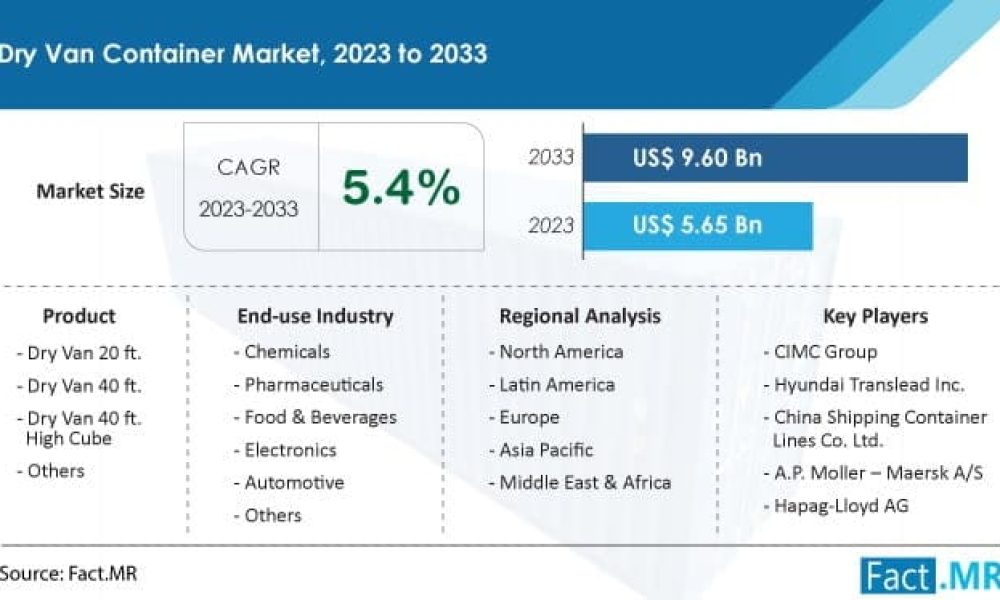
Worldwide sales of dry van containers at estimated at US$ 5.65 billion in 2023 and are forecasted to climb to US$ 9.6 billion by the end of 2033. Over the next ten years (2023 to 2033), the global dry van container market has been forecasted to expand steadily at 5.4% CAGR. Dry van containers are those that can carry and transport a wide variety of dry products without the need for special cooling or other type of equipment. Globalization is projected to play a crucial role in augmenting the demand for dry van containers around the world.
Download a Sample Copy of This Report:
https://www.factmr.com/connectus/sample?flag=S&rep_id=1015?PJ
Competitive Landscape
Top-tier dry van container companies are projected to focus on the smart logistics trend and make their containers smart with the integration of technologies such as telematics, IoT, etc. Efforts to improve sustainability and enable better tracking of shipments through the supply chain are anticipated to crucially shape the future of dry van container suppliers in the long run.
- In February 2023, Ocean Network Express (ONE), a leading name in the container shipping industry, announced its plans to develop a smart container solution in collaboration with Sony Network Communications Europe. ONE has plans to integrate this solution for its global fleet and step into the era of smart logistics.
Key Companies Profiled
- W&K Containers Inc.
- Sea Box Inc.
- Singamas Container Holdings Limited
- A.P. Moller – Maersk A/S
- China Shipping Container Lines Co. Ltd.
- Charleston Marine Containers Inc.
- CIMC Group
- CXIC Group Containers Company Limited
- Hyundai Translead Inc.
- Hapag-Lloyd AG
Key Market Drivers:
- Globalization and International Trade: The continued trend of globalization has significantly driven the demand for dry van containers. As companies engage in cross-border trade and seek efficient ways to transport goods, the reliability and versatility of dry van containers make them a preferred choice for a wide range of industries, from manufacturing to retail.
- E-commerce and Retail Logistics: The surge in e-commerce activities and the growth of online retail have spurred demand for reliable and secure transportation of goods. Dry van containers provide a standardized and scalable solution for transporting a diverse array of products, including electronics, apparel, and consumer goods, contributing to the market’s expansion.
- Intermodal Transportation Efficiencies: Dry van containers are integral to intermodal transportation, seamlessly moving from ships to trucks and trains. The standardized size and design of these containers enhance efficiency, enabling a smooth transition between different modes of transportation. This versatility is particularly advantageous for businesses seeking streamlined supply chain operations.
Challenges and Restraints:
- Limited Suitability for Perishable Goods: The primary design of dry van containers makes them less suitable for transporting perishable goods or items that require specific temperature controls. As the demand for cold chain logistics grows, the limitations of dry van containers in this regard pose a challenge, leading to increased reliance on specialized containers such as reefers for temperature-sensitive cargo.
- Environmental Concerns and Sustainable Practices: The shipping industry is facing increasing scrutiny regarding its environmental impact. While dry van containers contribute to the efficiency of transportation, concerns about emissions, fuel consumption, and the overall carbon footprint of containerized shipping are pushing the industry toward exploring more sustainable and eco-friendly alternatives.
Key Segments of Dry Van Container Industry Research
- By Container Size :
- Dry Van 20 ft.
- Dry Van 40 ft.
- Dry Van 40 ft. High Cube
- Others
- By Material :
- Steel
- Aluminium
- Others
- By Application :
- Sea Transport
- Land Transport
- Intermodal Transport
- By End-use Industry :
- Chemicals
- Pharmaceuticals
- Food & Beverages
- Electronics
- Automotive
- Others
- By Region :
- North America
- Latin America
- Europe
- APAC
- MEA
Technological Advancements:
Technological advancements in the dry van container market focus on enhancing security, tracking, and overall efficiency in cargo transportation. Some notable advancements include the integration of IoT (Internet of Things) devices for real-time tracking, RFID (Radio-Frequency Identification) technology for improved inventory management, and innovations in container materials to enhance durability and reduce maintenance costs.
Current Industry News (2023):
Several trends and developments may have shaped the dry van container market in 2023.
- Digitalization and IoT Integration: The industry may have witnessed increased adoption of digitalization and IoT integration in dry van containers. Smart containers equipped with sensors and connectivity features provide real-time visibility into cargo conditions, location tracking, and security measures. This digital transformation enhances transparency and efficiency in supply chain management.
- Focus on Lightweight and Sustainable Materials: Ongoing developments may have centered around the use of lightweight and sustainable materials in dry van container manufacturing. Innovations in materials such as composite alloys and eco-friendly alternatives aim to reduce the overall weight of containers, improving fuel efficiency and aligning with the industry’s growing emphasis on sustainability.
- Last-Mile Delivery Solutions: The focus on last-mile delivery efficiency may have influenced the dry van container market. Companies and logistics providers could have explored innovative solutions to optimize the final leg of transportation, including the use of urban distribution centers and the development of container designs suitable for seamless last-mile delivery.
- Increased Collaboration for Supply Chain Visibility: Collaboration between container manufacturers, logistics companies, and technology providers may have intensified to improve supply chain visibility. Integrated systems that connect dry van containers with logistics platforms enable real-time data sharing, fostering better coordination and responsiveness across the supply chain.
Get Customization on this Report for Specific Research Solutions:
https://www.factmr.com/connectus/sample?flag=RC&rep_id=1015?PJ
The dry van container market remains a critical component of the global logistics infrastructure, driven by the ongoing trends of globalization, e-commerce growth, and the need for efficient transportation solutions. While challenges such as limited suitability for perishable goods and environmental concerns persist, technological advancements and industry innovations are shaping a more connected, transparent, and sustainable future for dry van container transportation. The industry’s adaptability to these trends will play a crucial role in ensuring the continued efficiency and relevance of dry van containers in the evolving landscape of global trade and logistics.
US Sales Office:
11140 Rockville Pike
Suite 400
Rockville, MD 20852
United States
Tel: +1 (628) 251-1583
E Mail : [email protected]




