
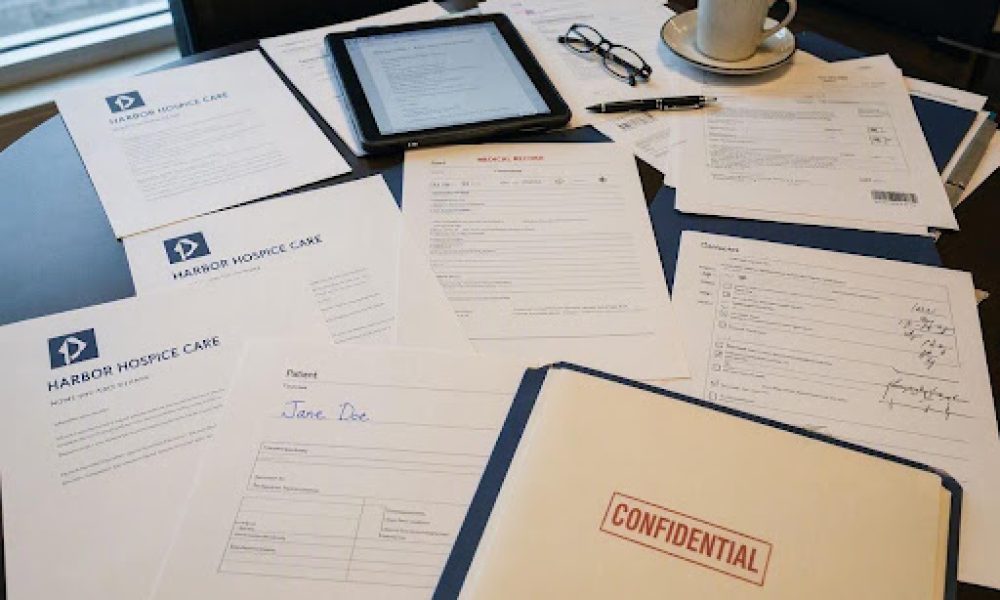
Pretrial disputes in the Los Angeles prosecution are expected to concentrate on hospice eligibility, patient election forms, billing histories, electronic metadata, witness credibility, and whether beneficiaries genuinely understood the medical and financial consequences of entering end-of-life care.
WASHINGTON, DC — The defense battle over Oren David Shachar’s Medicare hospice records is beginning to take shape, with patient files, signed election documents, physician certifications, claim histories, and electronic timestamps likely to determine whether prosecutors can prove deliberate fraud.
The federal announcement describing the sixteen-count Shachar prosecution alleges that four Southern California hospices billed Medicare for medically unnecessary services involving beneficiaries who were not terminally ill, alongside purported services involving people who had already died.
Shachar, Abraham Shin, and Jeannie Choi remain presumed innocent, and the indictment establishes accusations rather than facts, leaving prosecutors responsible for proving every charged element beyond a reasonable doubt through evidence that survives authentication, privacy, hearsay, relevance, and expert challenges.
The coming record disputes will reach beyond whether a form contains a signature, because jurors may need to decide who prepared each document, when information entered the system, whether medical findings supported eligibility, and what Shachar personally knew.
The Indictment Makes Records Central
The indictment portrays documentation as the operational center of the alleged scheme, claiming that records supported hospice enrollments, physician certifications, Medicare submissions, beneficiary retention, and purported services across Gentle Touch Hospice Care, Oxford Hospice Care, Art of Hospice, and Holly Trinity Hospice.
Prosecutors allege that Shachar owned, controlled, or operated those providers and submitted at least eleven Medicare enrollment applications promising that billed services would be medically necessary, furnished as represented, and untainted by illegal referral payments or beneficiary inducements.
Those certifications may help prosecutors establish the standards Shachar allegedly accepted, but the defense can argue that general enrollment promises do not prove he knew a particular patient was ineligible or that a particular claim contained intentionally false information.
That distinction between institutional responsibility and criminal knowledge will likely recur throughout pretrial litigation, because ownership can explain access and authority while still falling short of demonstrating that an executive personally directed, reviewed, or understood every disputed entry.
Hospice Eligibility Is a Medical and Legal Question
Medicare hospice coverage generally requires a physician to certify that a beneficiary is terminally ill, meaning the person has a life expectancy of six months or less if the underlying illness follows its ordinary course.
Eligibility therefore depends upon contemporaneous clinical judgment, supporting findings, and required documentation, not solely upon whether the patient eventually dies within six months, because prognoses can be uncertain and beneficiaries may remain eligible through properly supported recertification periods.
Prosecutors may compare diagnoses, hospitalization records, medications, functional decline, nutritional status, nursing assessments, physician narratives, and later medical outcomes to argue that selected beneficiaries never possessed clinical conditions reasonably supporting the certifications contained within hospice files.
The defense can answer with expert testimony explaining prognostic uncertainty, fluctuating conditions, incomplete outside records, conservative medical judgments, or legitimate differences among clinicians, while emphasizing that an incorrect prognosis does not automatically become a knowingly fraudulent certification.
Patient-specific analysis will be essential because a broad conclusion that some beneficiaries survived, improved, or received treatment elsewhere cannot establish that every physician certification was false when made or that Shachar understood any clinical deficiency.
Informed Election Creates a Separate Records Fight
Medicare also requires the beneficiary or an authorized representative to elect hospice care, making the election statement more than routine admission paperwork because the choice changes how Medicare pays for treatment connected with the terminal illness and related conditions.
The indictment states that an election form must acknowledge a full understanding of hospice care, particularly its palliative rather than curative character, while also recording that the beneficiary understood certain Medicare services would be waived during the election.
Prosecutors specifically allege that Shachar and people working for him concealed the terminal-illness certification requirement and disguised how hospice enrollment could affect coverage for services from other providers, including primary physicians and clinicians delivering curative treatment.
That allegation gives patient communication records potential trial importance, including intake scripts, brochures, translations, consent discussions, call recordings, text messages, staff training materials, complaint notes, and testimony describing what beneficiaries believed they were accepting.
The defense may respond that properly signed forms communicated the required terms, that trained staff delivered accurate explanations, or that beneficiaries knowingly chose supportive services despite later confusion, incomplete recollection, or dissatisfaction with unrelated aspects of care.
A Signature Will Not End the Inquiry
A signed election statement can support the defense by documenting formal agreement, yet prosecutors may contend that a signature proves neither informed understanding nor authentic timing when surrounding testimony, metadata, or circumstances suggest misleading explanations, backdating, substitution, or posthumous preparation.
Conversely, a beneficiary’s later statement that hospice consequences were misunderstood may not establish deception by itself, because memory can fade, relatives can receive secondhand information, and complicated Medicare distinctions may remain confusing even after an accurate explanation.
Attorneys may consequently examine who presented the document, which language the beneficiary preferred, whether interpretation was available, how long the discussion lasted, who witnessed signing, whether the signer had capacity, and whether a representative possessed lawful authority.
Physical originals may matter when handwriting, ink, page order, photocopy quality, scanning dates, or signature placement becomes disputed, while electronically signed forms can generate audit trails identifying device information, account access, timestamps, and later modifications.
Patient Capacity Could Become Significant
Hospice beneficiaries may be gravely ill, cognitively impaired, medicated, exhausted, or dependent upon relatives, creating difficult questions about capacity and authorization whenever prosecutors challenge whether an election reflected the patient’s informed and voluntary decision.
The government could call relatives, caregivers, social workers, nurses, or treating physicians to describe a beneficiary’s mental condition during enrollment, while the defense could use contemporaneous assessments showing orientation, comprehension, communication ability, and participation in care planning.
Where an authorized representative signed, lawyers may scrutinize powers of attorney, guardianship documents, family relationships, hospital designations, and communications demonstrating whether the representative understood hospice limitations and acted within the authority recognized at that time.
These questions require sensitivity because beneficiaries and families should not be treated as interchangeable evidence sources, particularly when medical privacy, grief, language barriers, and differing recollections complicate reconstruction of conversations occurring years before trial.
Clinical Files May Tell Competing Stories
Prosecutors are expected to organize each challenged patient file chronologically, beginning with referral information and recent hospital records before moving through admission assessments, terminal-illness certifications, plans of care, visit notes, recertifications, claims, discharge events, and death records.
A consistent file may support legitimate eligibility, while contradictions among diagnoses, functional assessments, physician narratives, service notes, outside appointments, and recorded conversations could support an inference that documentation was assembled to justify predetermined billing rather than genuine end-of-life care.
Defense experts may identify evidence of serious disease, symptom burdens, repeated hospitalizations, mobility decline, nutritional deterioration, or physician concern that prosecutors minimized, arguing that individual medical judgments cannot be reduced to a retrospective spreadsheet or survival calculation.
Prosecution experts may answer that clinical findings were copied, generic, internally inconsistent, unsupported by objective observations, or insufficiently connected with a six-month prognosis, especially when successive records repeated the same language despite changing circumstances.
Recertification Records Can Extend the Timeline
Medicare permits two ninety-day hospice benefit periods followed by additional sixty-day periods, but continuing coverage requires renewed physician support, and later periods generally involve face-to-face encounters designed to connect recertification with the beneficiary’s current condition.
Those later records may become especially important for living beneficiaries allegedly retained through cash or noncash inducements, because each continued period can generate additional certifications, encounters, claims, service notes, communications, and payments available for chronological comparison.
The defense can argue that repeated recertifications by licensed professionals demonstrate independent clinical judgment, whereas prosecutors may seek evidence that clinicians received incomplete information, signed templated narratives, relied upon falsified assessments, or never conducted encounters documented under their names.
Any physician testimony will therefore be examined for independence, memory, customary practice, delegation, compensation, access to complete records, and possible personal exposure, with jurors eventually deciding whether medical signatures represent genuine judgments or participation in alleged fabrication.
Billing Data Provides the Financial Spine
Medicare claim histories can identify provider numbers, beneficiary identifiers, service dates, billing codes, attending physicians, amounts requested, payments issued, adjustments, notices of election, discharges, and overlaps with treatment billed by hospitals or unrelated medical providers.
The indictment alleges approximately $27.731 million in claims and approximately $26.908 million in payments from February 2021 through March 2026, but those aggregate figures remain unproven and do not independently establish fraudulent intent for any selected transaction.
Counts Two through Nine identify eight particular claim executions across the four hospices, allowing defense counsel to insist that prosecutors prove the falsity, materiality, attribution, and required knowledge associated with each charged submission rather than relying upon overall totals.
The first five selected claims name Shachar alone, while the final three name Shachar, Choi, and Shin, creating different evidentiary periods and making careful limiting instructions potentially important if all defendants and allegations remain joined for trial.
Claims Must Match the Underlying Files
Prosecutors may place each electronic claim beside the corresponding election form, physician certification, visit notes, medication record, staff schedule, payroll entry, and outside medical history, arguing that discrepancies reveal whether services were medically necessary and actually provided.
Defense counsel may expose routine coding conventions, delayed documentation, claim corrections, billing-vendor involvement, software migrations, or innocent clerical mistakes that explain apparent conflicts without showing an intentional scheme to obtain Medicare money through materially false representations.
The identity of the person who transmitted a claim will matter, although direct submission does not necessarily establish authorship of every underlying fact, just as corporate approval authority does not automatically prove awareness of every employee’s documentation error.
Prosecutors will likely seek communications or patterns connecting Shachar with disputed information before submission, while the defense will emphasize gaps between his managerial role and patient-level clinical decisions made by nurses, physicians, marketers, or billing personnel.
Deceased Beneficiary Records Present Stark Timing Questions
The indictment alleges that Shachar obtained identifying information for deceased Medicare beneficiaries, gathered health information and recent hospital records from relatives, and directed the creation of backdated electronic files describing evaluations and certifications purportedly completed before death.
Those accusations may produce unusually concrete timelines built from death certificates, funeral-home records, hospital discharges, device messages, family meetings, file-creation events, physician signatures, notices of election, and Medicare claim dates aligned upon a single exhibit.
Prosecutors may argue that records created after death could not truthfully document earlier encounters unless supported by reliable contemporaneous material, while the defense may examine whether entries were lawful late documentation, imports, corrections, migrations, or administrative reconstructions.
The indictment further alleges that meetings with surviving relatives were arranged to obtain signatures upon hospice enrollment paperwork, making the timing, wording, authority, and purpose of those signatures central to whether forms memorialized earlier choices or supported newly fabricated histories.
Family witnesses may supply powerful testimony, but defense lawyers can test grief-affected memory, conversational ambiguity, translation, document presentation, prior inconsistent statements, and whether relatives understood the difference between authorizing record access and confirming a hospice election.
Metadata Could Become the Quietly Decisive Evidence
Electronic medical systems often preserve creation times, modification histories, user credentials, imported-file records, signature events, access locations, and billing exports, enabling forensic experts to reconstruct how a chart developed even when its visible pages appear ordinary.
Metadata supporting entries created after a beneficiary’s death could strengthen the prosecution’s backdating theory, particularly when the same timing corresponds with messages transmitting identifiers, requests for hospital records, family contacts, or subsequent Medicare claim activity.
The defense may challenge whether system clocks were accurate, credentials were shared, data were migrated, timestamps reflect scanning rather than authorship, or vendor exports omit context, requiring experts to explain technical limitations without overstating what the records prove.
Pretrial motions may address search warrants, device extractions, forensic images, privilege filtering, chain of custody, software validation, and expert methodology before jurors are permitted to see timelines that could otherwise appear more conclusive than the underlying technology warrants.
Messages May Connect Documents with People
Texts and WhatsApp communications allegedly transmitted beneficiary identifiers, death information, physician names, and next-of-kin details, giving prosecutors a potential bridge between marketers, hospice personnel, patient records, and claim submissions that might otherwise appear institutionally separated.
Authentication will require evidence connecting particular devices or accounts with individual users, while translated messages, abbreviations, forwarded images, missing segments, group conversations, and shared phones may create disputes about authorship, meaning, completeness, and intended purpose.
The defense may argue that information was moved for legitimate intake, record retrieval, or eligibility screening, whereas prosecutors may contend that message timing and content demonstrate coordinated acquisition of identities for claims involving nonexistent or medically unnecessary services.
Neither interpretation follows automatically from possession of personal information, making surrounding records, witness testimony, payment evidence, and subsequent conduct essential to establishing whether a communication reflected lawful healthcare administration or knowing participation in fraud.
Witnesses Will Give Records Human Context
Beneficiaries can describe whether they were terminally ill, what services they received, what enrollment representatives promised, whether they understood curative-care consequences, and whether cash, groceries, furniture, massages, electronics, or other alleged benefits influenced continued participation.
Employees may explain ordinary intake and billing procedures, identify unusual instructions, describe access controls, and connect signatures with particular people, although their credibility may be tested through cooperation agreements, employment disputes, personal exposure, inconsistent accounts, or financial motives.
Nurses and physicians can address clinical findings, certification practices, face-to-face encounters, documentation timing, and independence, while billing employees and contractors may clarify who supplied codes, approved submissions, corrected rejections, or handled Medicare communications.
Records custodians and forensic specialists will likely authenticate databases, bank statements, hospital files, death information, and devices, but authentication establishes that evidence is what prosecutors claim it is rather than proving every statement inside that evidence truthful.
Kickback Evidence Could Change How Records Are Read
The indictment alleges beneficiary payments reaching $400 monthly, referral rewards of $100 or $200, noncash benefits, marketer compensation sometimes approximating $700 monthly for living referrals, and larger payments allegedly associated with deceased beneficiaries.
Prosecutors may argue that these payments explain why ineligible people remained enrolled and why records repeatedly supported continued billing, while the defense can contest whether transfers occurred, whether amounts were characterized accurately, and whether payments had lawful purposes.
Even a properly signed election form may carry different evidentiary weight if prosecutors prove it was obtained through undisclosed inducements or misleading descriptions, although a payment allegation does not itself establish that the signer lacked capacity or received no legitimate care.
Defense counsel may seek to separate compassionate assistance, reimbursements, legitimate marketing compensation, and unrelated transactions from prohibited remuneration, requiring claim dates, payment records, agreements, messages, and witness accounts to establish purpose rather than mere temporal proximity.
Voluminous Evidence Must Remain Patient Specific
Prosecutors may use summary charts to make millions of dollars in billing and years of medical activity understandable, yet every summary must rest upon admissible source material and accurately distinguish allegations, calculations, adjustments, and proven payments.
The defense can challenge sampling methods, selected date ranges, duplicate entries, extrapolation, coding assumptions, or visually dramatic labels that make disputed conclusions appear factual, especially when only eight claim executions are specifically charged as substantive healthcare fraud counts.
Aggregate evidence may reveal patterns relevant to intent or conspiracy, but jurors must still decide each count and each defendant separately, preserving distinctions among different hospices, patients, physicians, marketers, service periods, and alleged communications.
That individualized approach is particularly important for Shin and Choi, whose alleged participation began later than the broader period attributed to Shachar, because earlier corporate records cannot automatically establish their knowledge, agreement, or responsibility for later transactions.
Protected Medical Information Complicates Discovery
Patient files contain deeply private diagnoses, medications, family details, cognitive assessments, and end-of-life conversations, requiring protective procedures that allow meaningful defense review without exposing sensitive information unrelated to the charges or necessary courtroom issues.
Judges may authorize protective orders, redactions, restricted exhibits, anonymized references, sealed submissions, or limited courtroom disclosure, while preserving the defendants’ constitutional ability to investigate witnesses, consult experts, and challenge evidence used against them.
Privacy safeguards cannot substitute for disclosure, but defense access does not create unrestricted permission to publicize records, improperly contact vulnerable individuals, or use confidential information for purposes disconnected from preparing the criminal case.
Balancing those interests may generate disputes over family contact, expert databases, cloud storage, exhibit handling, and trial presentation, particularly when deceased beneficiaries’ histories remain sensitive to surviving relatives despite becoming evidence within a public prosecution.
Admissibility Battles Could Reshape the Trial
Lawyers may litigate whether electronic records qualify as business records, whether statements within medical files require separate hearsay exceptions, whether co-conspirator communications satisfy evidentiary foundations, and whether expert opinions employ reliable methods applied to sufficient facts.
The defense may seek exclusion of inflammatory luxury-spending evidence when its connection with disputed patient records is weak, while prosecutors may argue that properly traced transactions demonstrate motive, proceeds, knowledge, or the financial objectives of the charged scheme.
Severance requests could arise if evidence involving deceased identities, particular companies, or Shachar-specific transactions threatens unfair spillover against co-defendants facing narrower charges, although judges can sometimes address those risks through redactions and limiting instructions.
A successful motion could exclude a device extraction, narrow expert testimony, limit an aggregate chart, separate defendants, or require patient anonymization, meaning the evidence eventually shown to jurors may differ substantially from the indictment’s expansive narrative.
Public Coverage Can Outrun the Evidence
Early news reporting about the Shachar hospice allegations emphasized deceased beneficiaries, luxury spending, and the national enforcement campaign, demonstrating how vivid accusations can dominate public understanding before defense experts, patient-specific records, or evidentiary rulings emerge.
Responsible coverage should distinguish the amount allegedly billed from the amount allegedly paid, avoid describing disputed records as proven fabrications, and state clearly that release on bond, an indictment, or a scheduled trial date does not decide guilt.
The Justice Department initially announced an August 11 trial date for Shachar and Shin, but later docket orders must control because complex healthcare cases frequently require schedule revisions for discovery, expert preparation, motion hearings, and co-defendant coordination.
No public narrative should assume that an anticipated defense argument has already been filed or accepted, because the most consequential disputes may develop only after counsel completes discovery and identifies the records prosecutors actually intend to present.
Reputation Strategy Must Follow Legal Strategy
Allegations involving dying patients, deceased identities, public money, and luxury purchases can damage a defendant or healthcare business immediately, even when the underlying records remain disputed, and no judge or jury has determined criminal responsibility.
Amicus International Consulting’s approach to crisis public-relations planning during serious allegations emphasizes organized assessment and controlled communication, but any response during an active prosecution must remain accurate, lawful, coordinated with defense counsel, and protective of patient privacy.
A responsible statement may acknowledge the charges, assert the presumption of innocence, explain that records will be tested in court, and correct demonstrable errors without attacking witnesses, disclosing confidential files, influencing testimony, or promising a particular outcome.
Longer-term reputation rebuilding after damaging publicity depends upon ensuring that verified motion rulings, dismissals, pleas, verdicts, compliance reforms, sentencing findings, and appellate outcomes receive searchable attention comparable with the dramatic allegations first reported.
Ethical reputation work cannot erase authentic court records or manufacture exoneration, but accurate procedural updates can prevent an arrest headline from becoming the only discoverable account after later evidence and judicial decisions materially change the case.
Hospice Providers Can Learn from the Records Battle
The expected disputes demonstrate why hospice compliance must connect eligibility assessments, informed elections, certification narratives, face-to-face encounters, service notes, death reporting, referral compensation, claims transmission, and audit logs within one coherent, reviewable system.
Providers should preserve original documents, record late entries transparently, restrict credential sharing, promptly reconcile hospital and death information, document interpreter use, confirm representative authority, and audit unusual billing or discharge patterns before concerns become systemic.
Independent review becomes especially valuable when marketing personnel influence intake, beneficiaries receive goods or financial assistance, the same language appears across multiple certifications, or electronic timestamps conflict with the dates displayed upon visible medical records.
Strong controls protect honest providers as well as Medicare because contemporaneous documentation can identify who made a decision, what information was available, why a patient qualified, what explanations were delivered, and how discovered irregularities were corrected.
The Government Still Bears the Burden
Prosecutors must prove more than deficient paperwork, medical disagreement, regulatory noncompliance, or an improper payment, because criminal healthcare fraud requires evidence supporting a knowing and willful scheme involving materially false representations or concealment connected with benefits or services.
For aggravated identity theft counts, the government must separately establish knowing and unauthorized use, transfer, or possession of identifiers belonging to real people during and in relation to qualifying healthcare fraud offenses identified within the indictment.
Shachar’s defense can challenge every evidentiary connection, including clinical eligibility, patient understanding, signature authenticity, metadata interpretation, record authorship, claim attribution, witness credibility, payment purpose, corporate responsibility, and the intent prosecutors assign to disputed conduct.
The defense need not prove a single alternative explanation covering every record, because reasonable doubt can arise from different weaknesses across different counts, patients, companies, dates, witnesses, and statutory theories considered carefully and individually.
Records Will Decide More Than Headlines
The central courtroom question will not be whether the allegations sound disturbing, but whether admissible records and credible testimony prove that Shachar knowingly transformed ineligible enrollments, misleading elections, false documentation, and disputed referrals into fraudulent Medicare claims.
Prosecutors will seek convergence among medical files, billing histories, messages, payments, metadata, and witnesses, while defense lawyers will separate those materials and argue that apparent patterns conceal medical uncertainty, administrative complexity, innocent mistakes, or unreliable accusations.
Pretrial rulings will determine which records jurors may examine, how experts may interpret them, what patient information remains protected, and whether evidence involving one beneficiary, company, or defendant can fairly illuminate another charged transaction.
Until dismissal, a valid guilty plea, or a verdict resolves the case, Oren David Shachar remains presumed innocent while both sides prepare a document-intensive contest over hospice eligibility, Medicare billing, patient understanding, and the authenticity of records underlying sixteen federal charges.