
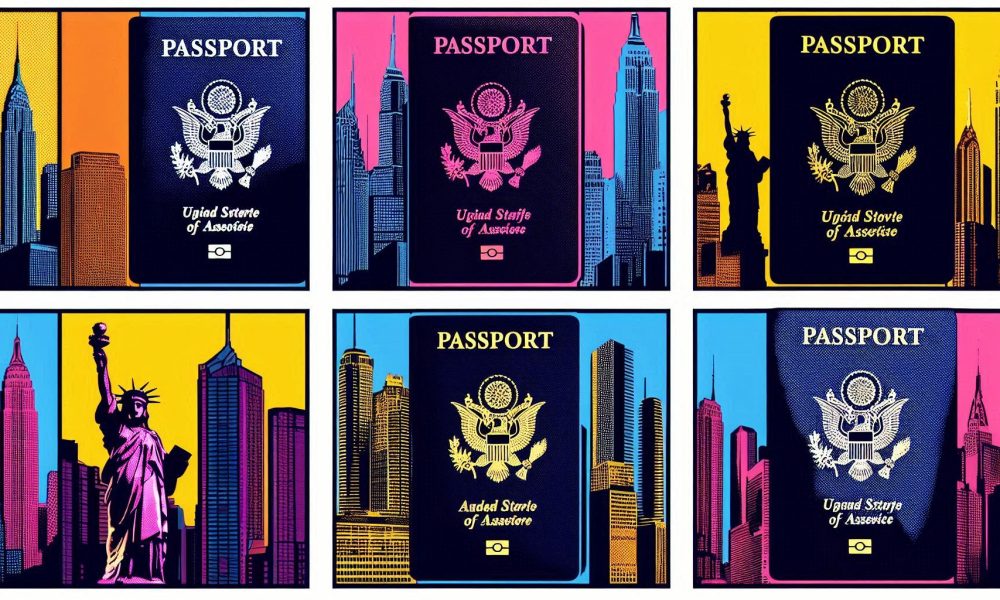
For centuries, the idea of the cross-border haven has loomed large in the imagination of fugitives, investors, whistleblowers, and political dissidents alike. From tales of pirates retreating to lawless islands to 20th-century financiers finding protection in countries without extradition treaties, the notion of escaping one’s troubles by crossing a border has seemed enduring.
Yet in 2025, the myth of the haven collides with harsh realities of globalized law enforcement, interconnected databases, and shrinking zones of genuine autonomy. The fantasy of outrunning law, debt, or consequence in another jurisdiction is not only outdated but increasingly dangerous. This release examines why, despite its persistence in popular culture, the concept of a cross-border haven is essentially a myth, what few exceptions remain, and how harsh legal realities continue to ensnare those who attempt to flee.
The Enduring Myth of the Safe Haven
The idea of safe havens draws strength from historical precedent. In the 19th century, a debtor in one European nation could move to another and evade collection because records were fragmented. Exiled monarchs lived comfortably in foreign courts, shielded by political alliances. In the mid-20th century, figures from organized crime and political exile communities found temporary protection in countries with weak policing or unstable governments.
Hollywood has helped cement the mythology. Movies depict criminals finding refuge in exotic islands, whistleblowers escaping to neutral countries, and failed politicians retiring to beachside villas where home jurisdictions cannot touch them. These narratives gloss over a crucial fact: globalization has rewritten the rules. Borders are no longer barriers but data checkpoints, and cooperation among states has risen to levels unimaginable just two generations ago.
Extradition Treaties and Mutual Legal Assistance
The first harsh reality undermining haven myths is the web of extradition treaties and mutual legal assistance agreements that now cover most of the globe. Countries that once prided themselves on neutrality or indifference increasingly participate in law enforcement cooperation. Mutual Legal Assistance Treaties (MLATs) enable evidence sharing, account freezes, and coordinated arrests across continents.
Even nations without formal treaties often comply with Interpol Red Notices, effectively outsourcing the pursuit of fugitives to the international system. Exceptions exist—such as states that refuse to extradite their own citizens or where political tensions freeze cooperation—but they are far narrower than many believe. Choosing the wrong so-called haven can result not in protection but in immediate arrest, followed by prolonged legal battles fought on foreign soil.
Case Study: The Tax Haven Mirage
A Western businessman, convinced that moving funds and himself to a Caribbean jurisdiction would shield him from tax prosecution, discovered the opposite. While the territory lacked a direct extradition treaty with its home country, it cooperated through the United States, which in turn had bilateral agreements with its home country.
Within months, local police executed a warrant, seizing his assets and returning him to his original jurisdiction. The case highlights the risk of assuming that a gap in direct treaties equates to immunity. In practice, triangular cooperation routes often close the supposed loophole.
Diplomatic Asylum and Its Limits
Another myth stems from the notion that embassies and consulates serve as sanctuaries. The case of WikiLeaks founder Julian Assange, who spent years confined in Ecuador’s embassy in London, is often cited as proof that diplomatic asylum can be protected indefinitely. The reality is more nuanced. Embassies are not extraterritorial; they remain the property of the host state, merely enjoying inviolability.
Long-term stays are unsustainable and psychologically devastating, while political shifts can abruptly end protection. Asylum within embassies is rare, contentious, and fraught with diplomatic consequences. For ordinary individuals seeking escape, this option is virtually non-existent.
The Financial Dimension of Safe Havens
Safe havens are often imagined as financial sanctuaries where assets can be hidden beyond the reach of regulators. The harsh reality is that international initiatives such as the Common Reporting Standard (CRS) and the U.S. Foreign Account Tax Compliance Act (FATCA) require banks worldwide to share account details with tax authorities.
Offshore banking still exists, but secrecy jurisdictions are under constant pressure. Once-opaque banking hubs in Switzerland, Luxembourg, and the Cayman Islands now cooperate extensively with regulators. Hiding funds has become increasingly impractical. Worse, attempts to do so flag individuals for greater scrutiny.
Case Study: The Vanishing Numbered Account
A corporate executive in Europe believed that a numbered account in Switzerland could protect his savings from a tax probe. However, in 2018, Swiss banks began automatically exchanging information with EU authorities under CRS. The executive’s holdings were flagged, leading to back taxes, penalties, and prosecution. The notion of banking anonymity as a haven evaporated, replaced by systems designed to pierce the very secrecy once promised.
Safe Havens and Political Persecution
A crucial distinction exists between those fleeing legitimate persecution and those seeking to evade accountability. For refugees, the international asylum system provides lawful mechanisms for protection. Yet even here, harsh realities intrude. Many safe-haven countries impose rigorous biometric controls, background checks, and eligibility requirements.
Refugees can find themselves detained for months while their claims are processed, with no guarantee of acceptance. For political exiles, the choice of destination can significantly impact their survival. Some nations continue to grant asylum as a matter of principle, but international pressure often leads to limitations on this practice. The supposed sanctuary can turn into a holding cell.
Case Study: The Whistleblower’s Dilemma
A whistleblower from Eastern Europe, having exposed corruption in his home country, sought asylum abroad. Convinced that a neutral state would provide protection, he fled with sensitive documents. Initially welcomed, he later faced pressure for extradition as political alliances shifted. Though his asylum claim was eventually accepted, his years in legal limbo highlighted how fragile a haven status can be.
Surveillance and the Digital Net
Borders are no longer just physical checkpoints but digital filters. Airline passenger manifests are shared with governments before takeoff. Passport data is cross-referenced against watchlists. Biometric systems detect anomalies in real time. Interpol databases track stolen or forged documents.
The effect is that attempting to reach a haven often triggers detection before arrival. Surveillance extends to financial flows, telecommunications, and even social media, providing constant data points for law enforcement and creditors alike. The harsh reality is that the journey to a supposed haven can expose an individual more than remaining at home.
Regional Myths and Realities
Different regions present distinct myths about safe havens.
In Asia, some still view Hong Kong or Singapore as financial sanctuaries. Yet both jurisdictions maintain rigorous AML controls and extensive cooperation with foreign regulators.
In Africa, weak state institutions are sometimes imagined as offering refuge. In practice, instability, corruption, and unpredictability make such havens precarious and dangerous.
In Latin America, countries such as Venezuela or Nicaragua are rumored to protect fugitives. However, these states are often accompanied by political volatility, limited infrastructure, and a constant risk of regime change, rendering long-term safety illusory.
In Europe, microstates such as Monaco and Liechtenstein were once considered safe havens. Today, they are integrated into the EU and OECD regulatory frameworks, offering little proper insulation.
Case Study: The Latin American Gambit
A former military officer facing charges in his home country attempted to establish a new life in a South American nation perceived as lenient. Initially, he blended into expatriate communities. But changes in political leadership led to new cooperation agreements with foreign prosecutors. He was arrested during a routine traffic stop, with his biometric data confirming his identity. His haven had lasted only as long as the political winds allowed.
Safe Havens for Digital Nomads
An emerging myth is that digital nomad visas and residency programs offer a form of escape. Countries from Estonia to Costa Rica promote these initiatives, attracting remote workers seeking lifestyle changes. While legal and legitimate, they are not safe havens. Applicants undergo rigorous checks, and their tax residency obligations often follow them. Believing that a digital residency equals immunity from obligations is a costly mistake.
Humanitarian Tensions
The convergence of haven myths with harsh legal realities creates moral dilemmas. While criminals face justifiable barriers, ordinary individuals caught in financial collapse, abusive relationships, or authoritarian regimes also find escape routes blocked.
The world has built formidable systems to prevent escape, but offers fewer paths for lawful reinvention. Without parallel investment in rehabilitation and second-chance frameworks, societies risk trapping individuals in cycles of despair.
Case Study: The Refugee Family and Biometric Barriers
A family fleeing conflict carried forged documents in hopes of reaching safety. They were intercepted when biometric scans revealed the falsifications. Though eventually processed as asylum seekers, their ordeal delayed protection for months and exposed them to detention. Their story highlights how harsh legal realities often penalize the vulnerable alongside those who are culpable.
The Mirage of “Non-Extradition” Countries
Online forums and survivalist handbooks often list so-called “non-extradition countries” as if they were guaranteed sanctuaries. Nations such as North Korea, Eritrea, or Iran sometimes appear on these lists, alongside states with strained relations to the West. The reality is far more complex. Many of these countries are unstable, hostile to outsiders, or dangerous to live in.
Moreover, the absence of a treaty does not equal protection. Governments can still deport individuals under immigration law, expel them for political expediency, or trade them as part of diplomatic bargaining. Haven myths ignore that states act in their own interests, not out of allegiance to fugitives.
Case Study: The Failed Safe Haven in Africa
A businessman fleeing fraud charges attempted to relocate to a state in Africa known for its lack of extradition agreements. Believing he had found immunity, he set up operations under a new name. Within two years, the government, under international pressure for aid and trade concessions, expelled him unilaterally. He was immediately arrested upon arrival in Europe. The absence of a treaty had offered no real shield.
Why the Myths Persist
Despite overwhelming evidence, myths endure because they serve psychological needs. The idea of a haven offers hope, whether for the desperate debtor or the political dissident. Media portrayals, anecdotal success stories, and selective memory all reinforce the narrative. Yet each year, the evidence mounts that true havens are fleeting at best and perilous at worst.
Conclusion: Harsh Realities Overrule Myths
In the 21st century, the concept of a cross-border haven is more myth than reality. Extradition treaties, financial transparency initiatives, biometric systems, and international surveillance make long-term protection nearly impossible. Those seeking to escape accountability face near-certain detection, while those fleeing genuine danger confront bureaucratic hurdles and uncertain outcomes.
The world has built a system where running is no longer a viable strategy. The challenge ahead is whether societies can balance these harsh realities with compassion for those in legitimate need of sanctuary. The myth of the haven may endure in stories and imaginations. Still, the lived reality is that borders are no longer walls to hide behind they are gateways into networks of data, cooperation, and control.
Contact Information
Phone: +1 (604) 200-5402
Signal: 604-353-4942
Telegram: 604-353-4942
Email: [email protected]
Website: www.amicusint.ca




