
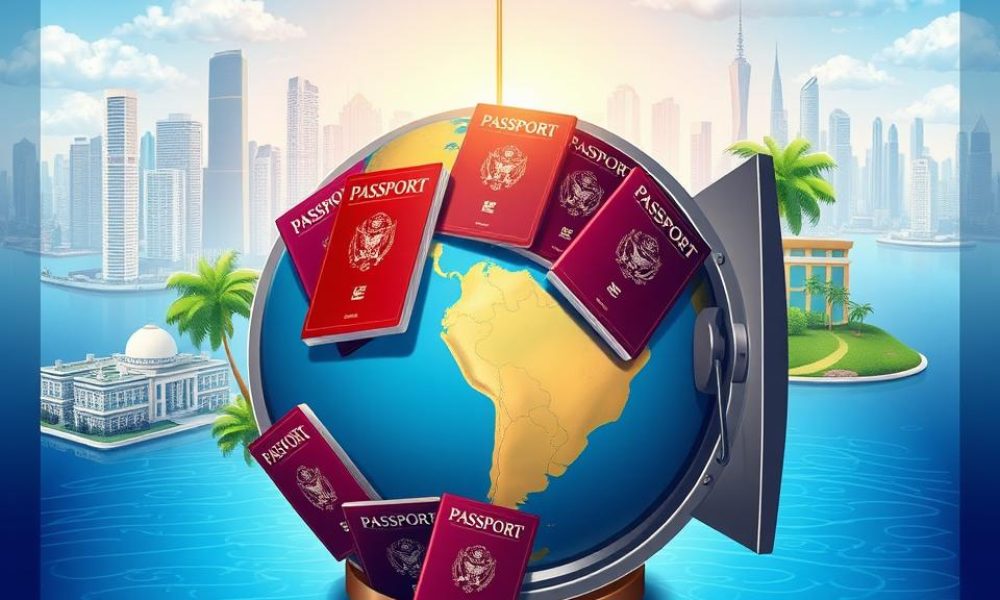
Second citizenship and offshore banking can create stronger asset protection, greater mobility, and better jurisdictional resilience, but only when the structure is built around lawful identity continuity, tax reporting, banking compliance, and a documented source of funds.
VANCOUVER, BC, June 22, 2026, Second citizenship and offshore banking have become increasingly important tools for high-net-worth individuals, entrepreneurs, internationally mobile families, crypto investors, and executives who want stronger protection against political instability, banking concentration, currency risk, litigation exposure, and restricted mobility.
The goal is not to create hidden personas, undisclosed accounts, or artificial identities, because the lawful purpose of combining second citizenship with offshore banking is to provide a single verified individual with broader access to legitimate jurisdictions, diversified financial systems, and documented privacy structures.
A properly designed plan aligns citizenship, residence, tax position, bank location, source-of-funds records, family governance, investment custody, and long-term mobility, so the client can move through the world with flexibility while remaining bankable and compliant.
Second citizenship is a mobility tool, not a secrecy device.
Second citizenship can strengthen personal security by providing visa-free access, alternative residence options, consular protection, emergency relocation capacity, and the ability to reduce dependence on a single government during political, economic, or family-security disruptions.
For wealthy clients, mobility is part of asset protection because money becomes less useful when the client cannot travel, open accounts, relocate family members, access medical care, attend business meetings, or respond quickly to risk in another jurisdiction.
The key is that second citizenship must be documented, lawful, and consistent across banking, tax, travel, and residence records, because financial institutions now examine identity history, nationality, tax residence, beneficial ownership, and source of wealth together.
A passport can open doors, but banks increasingly want the story behind the passport, including why it was obtained, where the client lives, where taxes are paid, and how the client’s wealth was created.
Offshore banking adds resilience when domestic banking becomes too narrow.
Traditional domestic banking may work well for ordinary life, but high-net-worth clients often need more than one banking jurisdiction because wealth can be exposed to local banking policy shifts, political pressure, currency weakness, capital controls, cyber risk, lawsuits, and institutional de-risking.
Offshore banking can support multi-currency reserves, international custody, trust administration, family office operations, global investment access, emergency liquidity, and cross-border payments that a single domestic bank may not handle efficiently.
The point is not to move assets beyond lawful reporting requirements, because foreign accounts may still need to be disclosed to tax authorities, but to avoid overreliance on a single institution, currency, country, or regulatory environment.
A second citizenship can make offshore banking more practical when the banking jurisdiction accepts the client’s nationality, residence status, tax documentation, and travel profile as part of a coherent international life.
The strongest plans align citizenship with banking locations.
Citizenship, residence, and banking should not be arranged randomly because banks ask why a client with one passport, another residence, and accounts in a third jurisdiction needs a specific financial structure.
A client with business operations in Europe, family residence in the Caribbean, investment custody in Switzerland, and tax residence in the UAE may have a legitimate structure, but every connection must be explained in writing.
The most defensible offshore plans connect each banking relationship to a lawful purpose, such as investment management, currency diversification, trust administration, family relocation, real estate ownership, business receipts, or emergency access.
When second citizenship supports the same purpose, the structure looks less like an artificial offshore arrangement and more like a documented global life with understandable financial needs.
Banking passports make second citizenship more useful.
A second passport alone does not confer banking credibility, as private banks still require proof of identity, tax residence, source of wealth, source of funds, beneficial ownership, expected account activity, and professional references.
A banking passport plan organizes these records into a coherent profile that can be presented to banks, trustees, custodians, and compliance teams when the client opens or maintains international accounts.
This matters because many wealthy clients are rejected by banks, not because their money is unlawful, but because their documents are incomplete, inconsistent, poorly translated, outdated, or scattered among advisers in several countries.
A banking passport gives the second citizenship practical value by linking it to tax records, banking history, residence documentation, corporate files, trust records, and a clear explanation of how the financial structure operates.
Dual identity must mean lawful continuity of identity, not a hidden separation.
The phrase “dual identity” can be misleading because legitimate second citizenship does not mean pretending to be different people, hiding beneficial ownership, or using separate profiles to mislead banks, border authorities, tax agencies, or courts.
In lawful planning, dual identity means that one person may hold multiple recognized nationalities, legal names, where properly changed, residence rights, tax numbers, and banking relationships, all accurately disclosed where required.
That continuity is essential because banks and governments increasingly compare names, dates of birth, passports, tax identification numbers, addresses, business ownership, travel records, and biometrics across multiple systems.
A structure built on truthful continuity can withstand scrutiny, while a structure built on false separation may lead to fraud exposure, account closures, immigration problems, and long-term damage to future access to banking.
International scrutiny has become the normal environment.
Cross-border wealth is growing rapidly, and recent Reuters reporting on global offshore wealth flows described how international wealth has increasingly concentrated in major banking centers as families seek geographic diversification and stronger financial access.
That growth has attracted more attention from regulators, banks, and tax authorities because offshore wealth can be legitimate, but it can also be abused through hidden ownership, illicit funds, sanctions evasion, and undeclared accounts.
The modern client must assume that banks will request more information, tax authorities may receive cross-border data, and compliance teams will review beneficial ownership before accepting complex international structures.
A strong plan is therefore built for daylight, meaning the client’s citizenship, banking, tax, and asset-protection story can be explained without panic when the first serious question arises.
Tax residence remains the center of the structure.
Second citizenship does not automatically change tax residence because most tax systems examine where a person lives, where their family is based, where business decisions are made, where income is sourced, and where the person has continuing connections.
A client may hold two passports and several bank accounts, yet remain taxable in one primary jurisdiction if personal residence, business control, family life, or statutory rules point there.
For U.S.-connected clients, the foreign account issue is especially serious because the official IRS guidance on foreign bank account reporting states that U.S. persons may need to report foreign financial accounts when thresholds are met.
The lesson is straightforward because second citizenship can improve mobility and banking access, but tax obligations must be reviewed separately by qualified advisers before accounts, companies, trusts, or residence claims are changed.
Offshore banking must be matched to source-of-funds evidence.
Banks do not accept wealth simply because a client has a second passport because compliance officers still ask how the money was earned, where it was held, how it moved, whether taxes were paid, and whether any high-risk parties were involved.
A client should be ready to provide sale agreements, tax returns, audited accounts, trust deeds, inheritance records, crypto transaction histories, bank statements, dividend records, business contracts, real estate closing documents, and professional letters.
This evidence becomes even more important when funds move from one jurisdiction to another, because every transfer can trigger questions about origin, ownership, purpose, tax status, and expected future activity.
The best offshore banking strategy is not the one with the most accounts, but the one with the clearest explanation for every account and every major movement of funds.
Second citizenship can increase emergency options.
A second citizenship can protect a family during political instability, civil unrest, banking restrictions, health emergencies, regional conflict, natural disasters, or sudden changes in visa policy that limit movement.
When paired with offshore banking, that mobility becomes more meaningful because the client can access funds, relocate dependents, pay for housing, maintain insurance, and manage investments without relying entirely on the banking system of the country they are leaving.
This is especially valuable for families with children abroad, businesses operating in multiple regions, elderly parents, valuable digital assets, or investment holdings vulnerable to local disruptions.
The strongest emergency plan includes passports, residence rights, bank access, medical records, insurance, secure communications, and enough liquidity in the right places to move legally and calmly when circumstances change.
Banking location should match the client’s real life.
A banking jurisdiction should be chosen because it serves a clear purpose, not because it sounds prestigious, tax-friendly, discreet, or fashionable among offshore promoters.
Switzerland may suit investment custody, Singapore may suit Asia-facing wealth, Canada may suit trust administration, the UAE may suit mobile entrepreneurs, and certain European centers may suit family offices needing regulated investment platforms.
Each jurisdiction has different tax rules, onboarding standards, reputational issues, reporting obligations, costs, currency options, and relationship requirements that must be considered before the client opens an account.
A second citizenship can improve access, but it cannot fix a weak jurisdictional rationale, because banks still ask why the client needs that account in that country at that time.
Trusts and entities must reflect real governance.
Many clients combine second citizenship, offshore banking, and trusts or companies to separate family wealth, manage inheritance, hold investments, protect assets, and reduce concentration risk.
Those structures can be legitimate, but they become vulnerable when the client uses entities only to obscure control, avoid reporting, mislead banks, or move assets after legal problems have already become foreseeable.
A credible structure requires proper trust deeds, company records, board minutes, trustee decisions, beneficiary files, tax analysis, accounting records, and clear beneficial ownership documentation.
The offshore account should not be a mystery box because it should be part of a documented governance system that shows who controls the assets, who benefits from them, and why the structure exists.
Crypto wealth requires additional coordination.
Crypto holders often seek second citizenship and offshore banking because digital assets are mobile, volatile, difficult to insure, and sometimes difficult to convert into bankable wealth without extensive documentation.
A crypto investor must be ready to explain wallet history, exchange activity, acquisition cost, capital gains treatment, staking income, mining income, stablecoin exposure, custody method, and transfers between personal wallets and institutional accounts.
Second citizenship may improve relocation and banking options, but it does not eliminate the need to prove a lawful source of funds when crypto wealth is used in a bank, trust, company, or real estate transaction.
A banking passport can be especially useful for crypto clients because it converts blockchain records, tax filings, exchange statements, and custody documents into a profile that traditional institutions can understand.
Privacy is still possible, but secrecy is not the plan.
High-net-worth clients often need privacy because public exposure of wealth can create risks of kidnapping, extortion, stalking, hostile media attention, data-broker exposure, cybercrime targeting, family pressure, and unnecessary reputational risk.
Lawful privacy limits unnecessary public visibility while giving accurate information to banks, tax authorities, immigration systems, trustees, courts, and regulators when they are legally entitled to receive it.
For clients facing personal security risks, anonymous living strategies can help align residence privacy, communication discipline, travel discretion, and financial exposure control with compliant identity and banking structures.
The distinction matters because privacy protects a lawful person from predators and unnecessary exposure, while secrecy designed to mislead institutions can turn an asset protection plan into evidence of evasion.
Integrated planning prevents contradictions.
Second, citizenship advisers, tax lawyers, private bankers, trust officers, immigration counsel, corporate lawyers, and security consultants must work from the same facts because contradictions can create major compliance problems.
One adviser may describe the client as resident in one country, another may list a different tax address, a bank may receive outdated ownership records, and a trustee may hold beneficiary documents that no longer match the family plan.
Those inconsistencies can trigger bank reviews, account delays, transfer restrictions, and uncomfortable questions even when the underlying wealth is lawful.
A strong integrated plan uses one master file that aligns passports, residence records, tax numbers, bank accounts, entities, trusts, insurance policies, family governance documents, and expected account activity into a single defensible structure.
The plan should be built before a crisis, not during a crisis.
Asset protection is strongest when created before litigation, creditor claims, divorce disputes, tax audits, sanctions concerns, insolvency, criminal allegations, or political pressure become immediate threats.
Moving assets offshore after problems arise can lead to allegations of fraudulent transfer, court challenges, compliance freezes, reputational damage, and severe difficulty explaining why the structure was created at that specific moment.
The same principle applies to second citizenship because emergency applications, hurried banking changes, and rushed relocation decisions often look less credible than long-term planning connected to family, investment, residence, and business needs.
A calm plan created while the client is solvent, compliant, and professionally advised is more defensible than a rushed plan created after pressure has already arrived.
The final lesson is that protection comes from alignment.
Second citizenship and offshore banking can provide stronger protection when aligned with tax residence, source-of-funds evidence, lawful identity continuity, jurisdictional logic, family governance, and banking documentation.
The combination can increase mobility, diversify risk, improve emergency access, support privacy, and make international wealth easier to preserve across political, financial, and personal disruptions.
Yet the same combination becomes dangerous when clients treat multiple passports and multiple banks as tools for concealment rather than instruments of documented resilience.
A second citizenship should explain where the client can live, an offshore bank should explain where assets can be managed, and the banking passport should explain why the entire structure is lawful, coherent, and reviewable.
In 2026, the strongest protection does not come from disappearing behind passports and accounts, but from building an integrated international life that remains private where possible, transparent where required, and organized enough to withstand the scrutiny that modern wealth inevitably attracts.




