
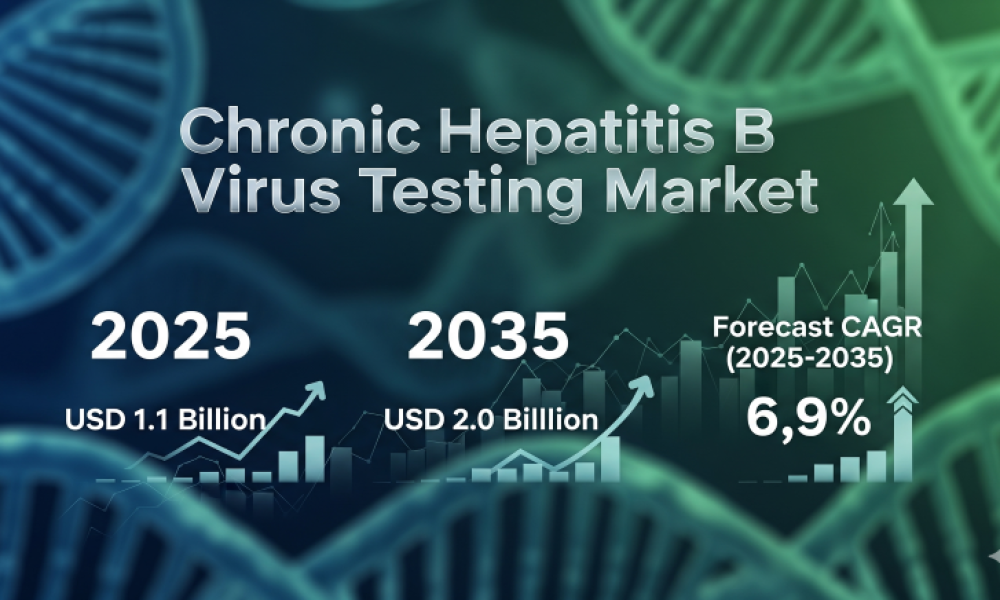
The global Chronic Hepatitis B Virus Testing market is poised for significant expansion, with an estimated value of USD 1.1 billion in 2025, growing to USD 2.0 billion by 2035. This growth, marking a compound annual growth rate (CAGR) of 6.9%, reflects the increasing demand for early diagnosis, advancements in diagnostic technologies, and strong governmental support aimed at controlling HBV infections worldwide.
Full Market Report Available. Inquire for Customization or Purchase: https://www.futuremarketinsights.com/reports/sample/rep-gb-16778
Rising Global Prevalence and Growing Demand for Early Diagnosis
Chronic hepatitis B remains one of the most widespread viral infections globally, with an estimated 292 million people living with chronic HBV infections. Early detection is crucial to prevent the virus from progressing to severe liver diseases, such as cirrhosis and liver cancer. As healthcare systems worldwide prioritize early intervention and preventative care, demand for HBV testing is expected to continue rising.
Technological advancements in diagnostic tests, such as Enzyme Immunoassay (EIA) kits, nucleic acid testing (NAT), and point-of-care testing (POCT), have revolutionized the testing landscape. These innovations have significantly improved diagnostic sensitivity, speed, and accuracy, leading to more effective early diagnosis and disease management. As a result, the market is expected to grow in response to increasing adoption across hospitals, diagnostic labs, and research institutions.
Market Dynamics: Key Drivers and Restraints
Several factors are driving the market’s growth:
- Increasing Prevalence of Chronic HBV Infections: With a large number of individuals living with chronic infections, there is an urgent need for effective testing to prevent long-term health complications.
- Technological Advancements: The development of high-sensitivity diagnostic tests, such as HBsAg tests, Hepatitis B viral load assays, and advanced liver function tests, has improved diagnosis, treatment, and monitoring capabilities.
- Government and Public Awareness Campaigns: Government initiatives such as the World Health Organization’s target to eliminate HBV as a public health threat by 2035, alongside national screening programs, are driving market demand.
- Increased Adoption in High-Risk Populations: Screening programs targeting high-risk populations are expanding, particularly in regions like North America, Asia-Pacific, and Europe, where HBV is prevalent.
However, challenges persist in developing countries where limited access to testing infrastructure and high costs hinder market growth. Additionally, the stigma surrounding HBV infection in certain cultural contexts may deter individuals from seeking testing and treatment, further complicating efforts to curb the disease.
Regional Analysis: North America and Europe Lead the Charge
North America is set to dominate the market, with an expected 44% market share by 2025. The region’s advanced healthcare infrastructure, high prevalence of chronic HBV infections, and robust public health initiatives are key factors contributing to this dominance. Moreover, the U.S. and Canada continue to invest heavily in HBV-related research, testing, and treatment.
Europe, with a market share of 39% by 2025, is also experiencing significant growth, driven by governmental programs focused on early detection and treatment. In addition to increased awareness, advancements in point-of-care diagnostics have made testing more accessible and affordable, further boosting market penetration.
Competitive Landscape: Major Players and Market Leaders
Leading companies in the Chronic Hepatitis B Virus Testing market include Gilead Sciences, GlaxoSmithKline, Ionis Pharma, Janssen Sciences Ireland, and Roche, among others. These industry giants are increasingly focusing on product innovation, strategic partnerships, and expanding their diagnostic portfolios to meet the growing demand for accurate and rapid HBV testing solutions.
The Enzyme Immunoassay (EIA) Kits segment, representing approximately 47.6% of the market by 2025, is expected to remain the dominant product category due to their affordability, high accuracy, and ease of use. This widespread adoption is supported by the growing number of hospitals and diagnostic labs deploying these kits to meet rising testing needs.
Segment Analysis: Testing Methodologies and End-User Adoption
The hospitals segment is projected to hold the largest share of the market, contributing 53.2% of total revenue by 2025. This is due to the increasing number of patient admissions and the integrated care models hospitals offer, which combine testing, diagnosis, and treatment in one setting. With continuous advancements in automated testing platforms, hospitals are poised to drive further growth in the market.
Download Brochure for Full Insights: https://www.futuremarketinsights.com/reports/brochure/rep-gb-16778
The Road Ahead: Opportunities for Growth
As the global HBV testing market continues to evolve, key trends such as increased awareness, advanced diagnostic technologies, and governmental and healthcare initiatives will fuel further market expansion. Additionally, growing emphasis on early detection and management of hepatitis B, combined with enhanced access to diagnostic testing in emerging economies, will create lucrative opportunities for growth across regions.
The Chronic Hepatitis B Virus Testing market is on track for robust growth, with major advancements in diagnostic technology, strong healthcare system investments, and increasing awareness programs paving the way for a healthier, more informed future.
About Future Market Insights (FMI)
Future Market Insights, Inc. (ESOMAR certified, recipient of the Stevie Award, and a member of the Greater New York Chamber of Commerce) offers profound insights into the driving factors that are boosting demand in the market. FMI stands as the leading global provider of market intelligence, advisory services, consulting, and events for the Packaging, Food and Beverage, Consumer Technology, Healthcare, Industrial, and Chemicals markets. With a vast team of over 400 analysts worldwide, FMI provides global, regional, and local expertise on diverse domains and industry trends across more than 110 countries.



