
Market Overview
The global carbon credit/carbon offset market is witnessing significant expansion as countries, corporations, and organizations increase their efforts to combat climate change and achieve net-zero emissions targets. According to the latest study by Persistence Market Research, the global market is forecast to expand at a CAGR of 12.1%, growing from a value of US$ 1,124.4 billion in 2025 to US$ 2,507.1 billion by the end of 2032. This growth trajectory highlights the escalating importance of carbon credits and offsets in global sustainability strategies, regulatory frameworks, and voluntary corporate initiatives.
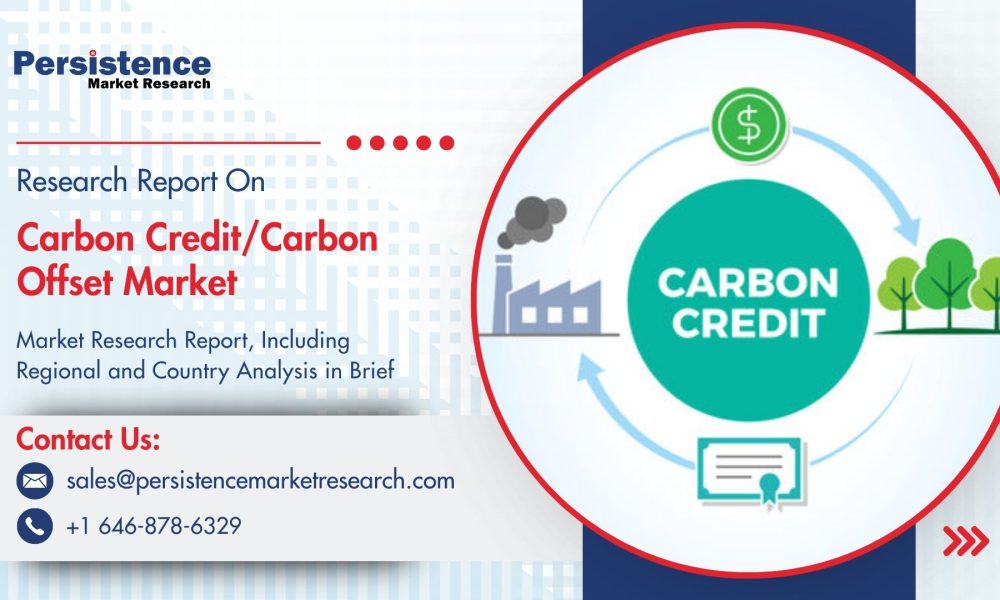
Carbon credits and offsets represent tradable certificates that allow entities to compensate for their greenhouse gas emissions by financing projects that reduce or remove carbon dioxide from the atmosphere. These include renewable energy projects, reforestation and afforestation initiatives, carbon capture and storage (CCS) technologies, and methane reduction projects. With international agreements such as the Paris Accord and national climate policies intensifying decarbonization commitments, demand for carbon credits has surged across both compliance and voluntary markets.
Get a Sample PDF Brochure of the Report (Use Corporate Email ID for a Quick Response): https://www.persistencemarketresearch.com/samples/33769
Key Market Drivers
The primary driver for the carbon credit/carbon offset market is the urgent need to mitigate global warming and limit temperature rise to below 1.5°C as outlined in the Paris Agreement. Governments worldwide are adopting stringent carbon reduction policies, creating robust demand for credits in compliance markets. For instance, emissions trading schemes (ETS) such as the European Union Emissions Trading System and California’s Cap-and-Trade Program are pushing industries to purchase credits to meet their emission caps.
Corporate sustainability pledges are another critical factor fueling market growth. Multinational companies are under pressure from consumers, investors, and stakeholders to operate sustainably, prompting them to invest in voluntary carbon offsets. Global giants in sectors like energy, aviation, technology, and manufacturing are leveraging offsets to achieve carbon neutrality, further driving demand.
Moreover, the increasing awareness of climate risks among financial institutions is encouraging the integration of carbon pricing into investment strategies. Green financing, ESG-driven investments, and carbon-neutral product offerings are becoming mainstream, strengthening the growth prospects of the carbon credit market.
Market Challenges
Despite the market’s robust growth, several challenges remain. One of the major concerns is the lack of uniform global standards for carbon credits. Variations in verification mechanisms, certification bodies, and offset project methodologies often create discrepancies in credit quality and market trust. The presence of “low-quality” or “non-additional” offsets has raised questions about the credibility of certain projects, leading to skepticism among stakeholders.
Additionally, the volatility of carbon prices poses challenges for businesses seeking long-term decarbonization strategies. Price fluctuations are influenced by policy changes, market demand, and the availability of credits, which can complicate corporate planning and budgeting. Moreover, limited transparency in some voluntary markets further hinders large-scale adoption.
Another challenge lies in the scalability of high-quality offset projects. Reforestation and renewable energy projects, while impactful, often face land-use conflicts, logistical hurdles, and financing constraints, which can slow down credit generation. Addressing these issues will be crucial to ensuring market credibility and sustained growth.
Market Opportunities
The carbon credit/carbon offset market presents immense opportunities as the world transitions toward net-zero goals. One promising area lies in the development of nature-based solutions, such as forest conservation, wetland restoration, and regenerative agriculture. These projects not only capture carbon but also provide co-benefits such as biodiversity conservation, soil restoration, and livelihood support for local communities.
Technological advancements also present significant opportunities. Carbon capture, utilization, and storage (CCUS) technologies, direct air capture (DAC), and blockchain-based carbon tracking systems are enhancing the efficiency and traceability of carbon credits. These innovations are expected to improve credibility and attract more investors to the market.
Furthermore, the expansion of carbon markets in emerging economies offers untapped potential. Countries in Asia-Pacific, Latin America, and Africa are increasingly developing carbon offset projects to attract foreign investments and participate in global carbon trading. This regional diversification will help scale the market while promoting sustainable development.
Regional Insights
Regionally, Europe remains a leader in the carbon credit/carbon offset market due to its strong regulatory framework and the world’s largest compliance carbon market—the EU Emissions Trading System. The European Union’s Green Deal and Fit for 55 package are setting ambitious emission reduction targets, ensuring continued demand for credits.
North America is also a significant contributor, particularly driven by the U.S. and Canada’s carbon trading initiatives and corporate sustainability programs. California’s Cap-and-Trade system and voluntary market participation from U.S.-based corporations are key growth drivers.
The Asia-Pacific region is projected to witness the fastest growth during the forecast period. Countries like China and India are ramping up efforts to create carbon markets as part of their climate action strategies. China’s national ETS, already the world’s largest in terms of covered emissions, is set to become a major force in the global carbon credit landscape. Additionally, Southeast Asian nations are investing in reforestation and renewable energy projects, providing strong offset potential.
Latin America and Africa are emerging as promising regions due to abundant opportunities for nature-based projects. Countries like Brazil, Kenya, and South Africa are increasingly focusing on carbon credits to drive sustainable development and attract international investments.
For Customized Insights on Segments, Regions, or Competitors, Request Personalized Purchase Options @ https://www.persistencemarketresearch.com/request-customization/33769
Company Insights
The competitive landscape of the carbon credit/carbon offset market is highly dynamic, with diverse players ranging from energy corporations and project developers to specialized carbon trading platforms and certification bodies. Companies are focusing on enhancing transparency, scaling up offset projects, and leveraging digital tools to ensure traceability. Key players in the market include:
✦ South Pole Group
✦ ClimatePartner GmbH
✦ 3Degrees Inc.
✦ NativeEnergy Inc.
✦ Terrapass Inc.
✦ Gold Standard Foundation
✦ Verra (Verified Carbon Standard)
✦ Carbon Credit Capital LLC
✦ EcoAct (an Atos company)
✦ Finite Carbon (a BP subsidiary)
These companies are actively investing in new offset projects, expanding global reach, and collaborating with corporations and governments to meet climate targets. Partnerships between technology providers and carbon offset developers are also on the rise, improving monitoring and verification of carbon projects.
Future Outlook
The future of the carbon credit/carbon offset market looks promising, supported by increasing global commitment to net-zero targets and greater corporate responsibility toward sustainability. Regulatory alignment across countries and the implementation of Article 6 of the Paris Agreement are expected to harmonize international carbon markets, enhancing transparency and liquidity.
Technological integration will play a central role in shaping the future of the market. Digital solutions like blockchain-based registries, satellite monitoring, and AI-driven carbon tracking will ensure the credibility of offset projects and boost investor confidence. Additionally, the evolution of carbon pricing mechanisms and the gradual increase in credit prices are expected to incentivize further investment in emission reduction initiatives.
Moreover, the convergence of financial markets with carbon trading will create new opportunities for green investment instruments such as carbon-linked bonds and funds. As climate action becomes a priority for governments, businesses, and individuals alike, the carbon credit/carbon offset market will continue its upward growth trajectory, making it a critical component of the global sustainability agenda.
Conclusion
In conclusion, the global carbon credit/carbon offset market is poised for substantial growth, projected to expand from US$ 1,124.4 billion in 2025 to US$ 2,507.1 billion by 2032, at a robust CAGR of 12.1%. Rising climate commitments, regulatory frameworks, corporate net-zero goals, and consumer-driven sustainability trends are fueling demand for carbon credits across compliance and voluntary markets. While challenges such as credibility, price volatility, and scalability remain, emerging opportunities in nature-based solutions, technology-driven verification, and regional market expansion provide significant growth potential. As the urgency to mitigate climate change intensifies, carbon credits and offsets will play a central role in shaping a low-carbon global economy.
Explore the Latest Trending Research Report:




