

Captive Power Generation Market Overview
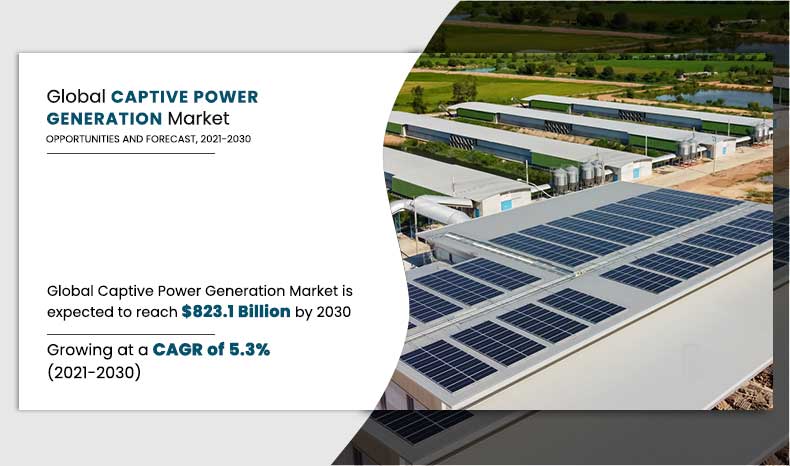
According to a new report published by Allied Market Research, the global captive power generation market size was valued at $494.7 billion in 2020 and is projected to reach $823.1 billion by 2030, growing at a CAGR of 5.3% from 2021 to 2030. Rising energy demand from industrial sectors, increasing infrastructure development, and growing investments in reliable power supply solutions are major factors driving the captive power generation market worldwide. ⚡🌍
Introduction
A captive power generation plant, also known as a self-generating facility, produces electricity primarily for the owner’s internal consumption rather than for public distribution. These plants can operate independently from the grid or remain connected to sell surplus power. Industries with high energy consumption rely on captive systems to ensure uninterrupted supply, voltage stability, and cost control.
Energy-intensive sectors such as aluminum smelting, steel production, cement manufacturing, and chemical processing often deploy captive plants to avoid production losses caused by power outages. As industrial output expands globally, the captive power generation market continues to gain importance.
Download PDF Brochure: https://www.alliedmarketresearch.com/request-sample/A10787
Rising Demand for Reliable Power Supply
Industrial operations require consistent electricity quality and availability. Grid power in many regions can be unreliable due to infrastructure limitations, peak demand pressures, or transmission losses. Captive systems provide a dependable alternative, enabling businesses to maintain continuous operations.
Rapid urbanization and industrialization—particularly in emerging economies—are increasing electricity consumption across manufacturing and construction sectors. Large-scale infrastructure projects are boosting demand for raw materials like steel and cement, further strengthening the need for on-site power generation.
Countries such as India and China are witnessing significant growth in industrial activity, which directly contributes to expansion of the captive power generation market. 🏭
Role of Renewable Energy Integration
Technological advancements in renewable energy are transforming captive power systems. Solar photovoltaic installations, wind turbines, and hybrid solutions combining generators with battery storage are enabling companies to reduce dependence on fossil fuels while maintaining reliability.
Declining costs of solar PV technology are making renewable captive plants economically viable even for medium-scale industries. Hybrid systems that combine solar power with conventional generators or cogeneration units can operate off-grid while ensuring stable output.
Government initiatives targeting carbon neutrality—such as net-zero emissions goals by 2050—are encouraging industries to invest in cleaner energy solutions. This shift toward sustainable power sources is expected to create new opportunities within the captive power generation market. 🌱
Captive Power Generation Market Segmentation by Technology Type
The captive power generation market is segmented by technology into heat exchangers, turbines, gas engines, transformers, and others.
Gas engine systems accounted for the largest share in 2020 due to their high efficiency, quick startup capability, and suitability for combined heat and power (CHP) applications. These systems are widely used in industrial facilities where both electricity and thermal energy are required.
Turbine-based systems and cogeneration units also play a significant role in large-scale industrial operations, particularly in petrochemical and steel plants.
Fuel Type Analysis
Based on fuel type, the market includes diesel, gas, coal, and other energy sources.
Coal-based captive plants held the largest market share in 2020, primarily due to their widespread use in heavy industries and regions with abundant coal reserves. However, natural gas–fired systems are gaining popularity because they produce lower emissions and offer higher efficiency.
Diesel generators are commonly used as backup power sources or in remote locations where pipeline gas or grid electricity is unavailable.
Ownership Structure
The captive power generation market is categorized into single ownership and multiple ownership models.
Multiple ownership systems dominated the market in 2020. In this arrangement, several companies share a common power plant to reduce capital expenditure and operational costs. This model is particularly beneficial for industrial clusters or special economic zones where multiple facilities operate in proximity.
Single ownership plants remain common among large corporations with high energy requirements.
End-Use Industry Insights
By end-use, the market is divided into residential, commercial, and industrial sectors.
The industrial segment accounted for the largest share in 2020. Manufacturing facilities, refineries, and mining operations consume massive amounts of electricity, making captive generation a cost-effective solution.
Commercial applications—including data centers, large office complexes, and shopping centers—are also adopting captive systems to ensure uninterrupted operations and protect sensitive equipment from power fluctuations.
Regional Outlook
Regionally, the captive power generation market spans North America, Europe, Asia-Pacific, and LAMEA.
North America held the largest market share in 2020 due to advanced industrial infrastructure and strong energy demand. The United States plays a major role, supported by large manufacturing and energy sectors.
Asia-Pacific is expected to be the fastest-growing region during the forecast period. Rapid industrial expansion, urbanization, and infrastructure development in countries such as India, China, and Japan are driving demand for reliable power solutions. 🌏
Competitive Landscape
The captive power generation market includes several prominent global players focusing on technological innovation, capacity expansion, and strategic partnerships. Key companies include General Electric, Siemens, Wärtsilä, Reliance Industries, Kohler Co., Clarke Energy, ArcelorMittal, and PBS Group.
Additional competitors such as Bharat Heavy Electricals Limited, Doosan Corporation, Essar Group, Thermax, and NALCO are also strengthening their market presence through joint ventures, product launches, and capacity expansions.
Impact of COVID-19
The COVID-19 pandemic negatively affected the captive power generation market due to disruptions in industrial operations and supply chains. Lockdowns led to reduced demand for electricity from manufacturing, construction, and tourism sectors.
Transportation restrictions caused delays in raw material supply, while workforce shortages forced many facilities to shut down temporarily. As a result, investments in new captive projects declined during the peak of the pandemic.
The slowdown in non-essential industries further reduced energy consumption, impacting market growth. However, as economies recover and industrial activity resumes, demand for reliable power solutions is expected to rebound strongly. 📉➡️📈
Get a Customized Research Report: https://www.alliedmarketresearch.com/request-for-customization/A10787
Conclusion
In conclusion, the captive power generation market is poised for sustained growth as industries worldwide seek reliable, cost-effective, and independent energy solutions. Rising infrastructure development, expanding manufacturing activities, and integration of renewable energy technologies will continue to drive demand.
Despite temporary setbacks caused by the pandemic, long-term prospects remain strong. As businesses prioritize energy security, operational efficiency, and sustainability, captive power generation will play a crucial role in meeting global electricity needs. ⚡🌍
Other Trending Reports:-
About Us
Allied Market Research (AMR) is a full-service market research and business-consulting wing of Allied Analytics LLP based in Portland, Oregon. Allied Market Research provides global enterprises as well as medium and small businesses with unmatched quality of “Market Research Reports” and “Business Intelligence Solutions.” AMR has a targeted view to provide business insights and consulting to assist its clients to make strategic business decisions and achieve sustainable growth in their respective market domain.
Pawan Kumar, the CEO of Allied Market Research, is leading the organization toward providing high-quality data and insights. We are in professional corporate relations with various companies and this helps us in digging out market data that helps us generate accurate research data tables and confirms utmost accuracy in our market forecasting. Each and every data presented in the reports published by us is extracted through primary interviews with top officials from leading companies of domain concerned. Our secondary data procurement methodology includes deep online and offline research and discussion with knowledgeable professionals and analysts in the industry.




