
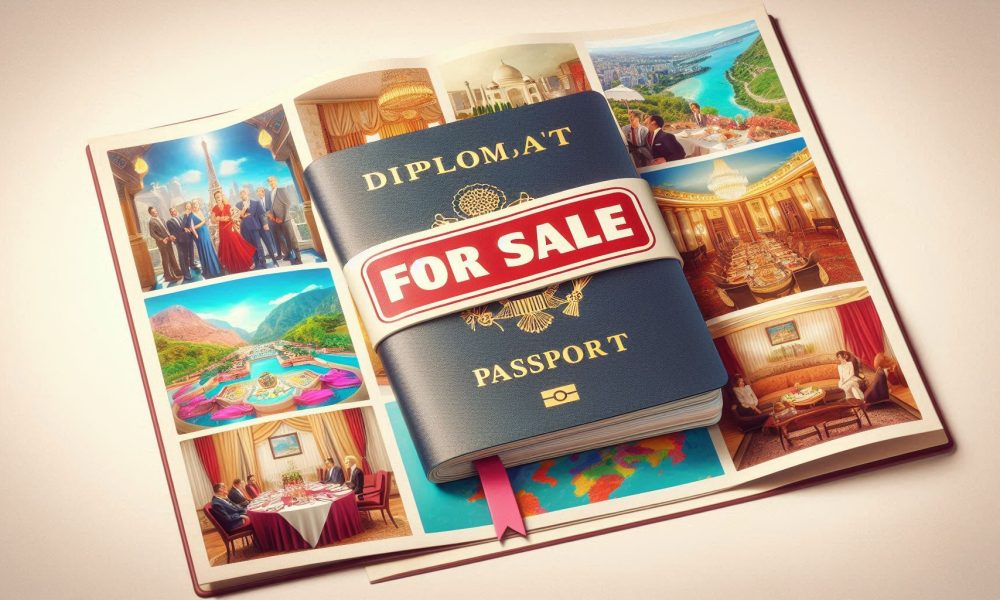
A myth-busting article on black passport fraud, online scams, and the legal reality that makes real diplomatic status far narrower than the internet keeps pretending.
WASHINGTON, DC, April 17, 2026.
When people ask whether a diplomatic passport can be bought, they are usually responding to one of the most persistent fantasies in the global document world, namely the idea that a black passport is a private-market shortcut to immunity, prestige, easier travel, and official protection. That fantasy has survived because the document looks rare, powerful, and secretive, yet the legal reality is much more restrictive. A real diplomatic passport is not a luxury product, not a consumer service, and not a lawful item that a private citizen can simply purchase through a broker, consultant, or well-designed website.
The first thing worth understanding is that a diplomatic passport belongs to a government system, not to a retail market. In the United States, the State Department’s special issuance passport guidance makes clear that diplomatic passports are tied to defined official roles, certain categories of federal personnel, diplomatic or consular status, and limited eligible family relationships connected to official assignments. That alone destroys the core sales pitch used by many fraudulent operators, because the real document is issued through a public authority and official status, not through private payment.
The black passport myth survives because the document looks like concentrated power.
The dark cover, the diplomatic label, and the public fascination with immunity have combined to turn the black passport into a perfect fraud object. It appears to offer something that very few people fully understand, but many people instinctively want, namely status, protection, and a way around the ordinary system. In online scams, that appearance is everything. Sellers do not need buyers to understand diplomatic law in detail. They only need them to believe that there is a hidden lane in the world for people with money, urgency, or enough desperation to pay for access.
That image is much easier to market than the real truth, because the real truth is bureaucratic. Diplomatic status usually depends on formal office, mission assignment, government approval, and host-state recognition. It is a matter of state function, not private choice. Yet scams thrive where image outruns structure, and the black passport is one of the clearest examples of that gap. It looks like something you should be able to buy if you know the right people, even though the legal system does not work that way.
A real diplomatic passport is assigned, not bought.
This is the cleanest and most direct answer. Governments decide who qualifies. Private consumers do not shop for diplomatic passports the way they shop for ordinary immigration services, visas, residency programs, or travel documents. The eligibility process exists because a diplomatic passport is supposed to identify someone moving abroad in a recognized official capacity, not someone purchasing a more powerful version of ordinary travel.
That distinction matters because it explains why the real system is so narrow. Governments issue diplomatic passports to people they are prepared to stand behind as representatives of the state. That includes accredited diplomats, some officials with defined foreign assignments, certain people with diplomatic or consular titles, and, in limited cases, eligible family members tied to those roles. It does not include ordinary private citizens who want extra prestige, fewer border questions, or a document that feels like protection in uncertain times.
The biggest lie in most black passport scams is the promise of immunity.
A huge part of the fraud market survives because fake sellers do not just promise a passport. They promise what the buyer imagines comes with it. That often means diplomatic immunity, or at least the vague suggestion that the holder will be safer from police, customs, lawsuits, border delays, or government scrutiny. This is where the mythology becomes especially dangerous, because the official legal position is much narrower.
The State Department’s post-issuance guidance for special passports states plainly that a diplomatic or other special issuance passport does not itself provide diplomatic immunity, does not exempt the holder from foreign laws, and does not automatically shield someone from arrest, customs rules, immigration questions, or security screening. That means one of the most emotionally powerful claims in black passport marketing is usually the part that collapses first under real legal scrutiny.
The document only has meaning inside a larger diplomatic framework.
A black passport by itself is not the whole legal story. Even a real diplomatic passport works only within a larger system that includes accreditation, official function, host-country recognition, visa treatment, and diplomatic law. That is why the document can look extraordinary while still doing much less than the public imagines when it appears outside the official structure that gives it meaning.
This is also why online sellers can sound convincing to people who know only the symbol and not the framework. They market the booklet as though it contains the power within itself. Real governments do the opposite. They treat the passport as one visible marker of an official status that exists only because the state created it and another state recognizes it. Once that distinction is understood, most black passport sales pitches start to look far less glamorous and far more suspicious.
Visa rules make the scam look even thinner.
Another myth says that once a person somehow gets a diplomatic passport, the rest of the world must automatically treat that person as a diplomat. Real visa law does not work that way. The State Department’s diplomatic visa guidance makes clear that possession of a diplomatic passport is not by itself enough to qualify someone automatically for diplomatic visa treatment. Authorities still examine who the traveler is, why the traveler is coming, whether the trip is official, and whether the claimed status is actually recognized.
That is a devastating fact for the scam narrative because it shows the document alone does not settle the legal question. Even where a real diplomatic passport exists, governments still ask whether the traveler fits the official category being claimed. A forged passport, a fake title, or a purchased fantasy collapses even faster once visa rules and host-state recognition enter the analysis.
Why desperate buyers become vulnerable to these schemes.
Many people drawn to black passport scams are not trying to become diplomats in any meaningful sense. They are trying to buy certainty. Some want easier travel. Some want protection from instability, legal exposure, or political risk. Some want a prestigious object that seems to promise access to a hidden global system. Others want an escape from ordinary bureaucracy and imagine that a diplomatic document will place them above the crowd.
Fraudsters understand this emotional landscape extremely well. They do not just sell paper. They sell relief, status, and a feeling of insulation from ordinary rules. The black passport becomes attractive because it appears to condense many hopes into one object. It looks like power, safety, and mobility in booklet form. That is why even absurd claims can persuade buyers when those buyers are already primed to believe that ordinary systems are too slow, too exposed, or too unforgiving.
The internet made the myth cheaper to sell and easier to scale.
In earlier eras, fake diplomatic status often depended on physical theater, luxury cars, fake letterhead, staged photographs, or local rumor. Today, the same mythology can be distributed through websites, encrypted chats, social accounts, short videos, and polished sales pages that use official-sounding language, copied seals, and dramatic testimonials. The digital age did not invent black passport fraud, but it made it easier to package and distribute.
This matters because a digital presentation can make a fake authority feel real. A polished site can mimic the tone of a government process. A fake consultant can sound experienced. A fabricated appointment letter can look official to someone who has never seen a real one. In that environment, the black passport becomes the center of a larger illusion in which diplomatic status is framed as a premium service that exists just outside public view.
Real fraud cases show how theatrical these schemes can become.
The black passport myth does not always stay online. In some cases, it grows into elaborate real-world performance, with fake consular offices, bogus diplomatic plates, staged photographs, and fabricated international titles designed to convince victims that the scheme is protected by official power. A vivid recent example came in an Associated Press report on a fake embassy case in India, where police said a man allegedly posed as an ambassador, operated a bogus embassy near New Delhi, and used fake diplomatic symbolism as part of a broader fraud structure.
That case is useful because it shows how black passport fraud often expands beyond one fake document into a whole ecosystem of deception. Once victims believe in fake diplomatic status, they become easier to sell on fake jobs, overseas opportunities, shell-company structures, special permits, and private protection promises. The diplomatic myth becomes a kind of master key used to unlock other scams.
The black passport is a perfect fraud object because it merges secrecy with legitimacy.
A forged watch promises luxury. A fake degree promises credibility. A fake bank letter promises money. A fake diplomatic passport promises something even more emotionally potent, because it appears to combine privilege, protection, mobility, and hidden access in one official-looking object. That makes it uniquely attractive to fraudsters who want to sell a fantasy that feels both elite and lawful at the same time.
This is why black passport scams are rarely marketed as obvious criminal offers. Instead, they are often wrapped in language about government channels, private diplomatic appointments, confidential eligibility, or special relationships with unnamed officials. The secrecy is presented as proof of authenticity. The lack of transparency becomes part of the pitch. Buyers are encouraged to see normal warning signs as evidence that the offer is real because it is supposedly reserved for insiders.
Public fascination keeps feeding the cycle.
The black passport remains one of the most mythologized travel documents in public discussion because it sits at the intersection of law, prestige, immunity, secrecy, and state power. That combination makes it irresistible to search engines, rumor networks, and private-sector speculation. It also helps explain why clean explainers keep resurfacing, including Amicus background pieces on diplomatic passports and immunity, and what to know about diplomatic passports.
The reason this confusion persists is not that the law is especially unknowable. It is that the symbol is stronger than the public’s understanding of the structure behind it. People know the image of the black passport long before they know the legal categories, official approvals, and recognition requirements that determine whether the document means anything at all in practice.
The legal answer is much simpler than the internet version.
You cannot lawfully buy a real diplomatic passport as a private consumer. You can be lied to by someone claiming to sell one. You can be shown forged documents, false diplomatic titles, fake seals, bogus postings, or fabricated access to hidden government channels. You can encounter elaborate performances that mimic official status well enough to fool the unwary for a while. But the real document belongs to a government process, a qualifying public role, and a recognized diplomatic framework.
That is the core legal reality behind all the noise. A diplomatic passport is not a private commodity. It is a state instrument tied to office, mission, and status. Once that is understood, the glamour of the black passport market starts to fall away very quickly, and what remains is what it usually was from the beginning, namely a fraud story built on symbolism, secrecy, and the false promise that legal diplomatic status can be bought like a luxury good.




