
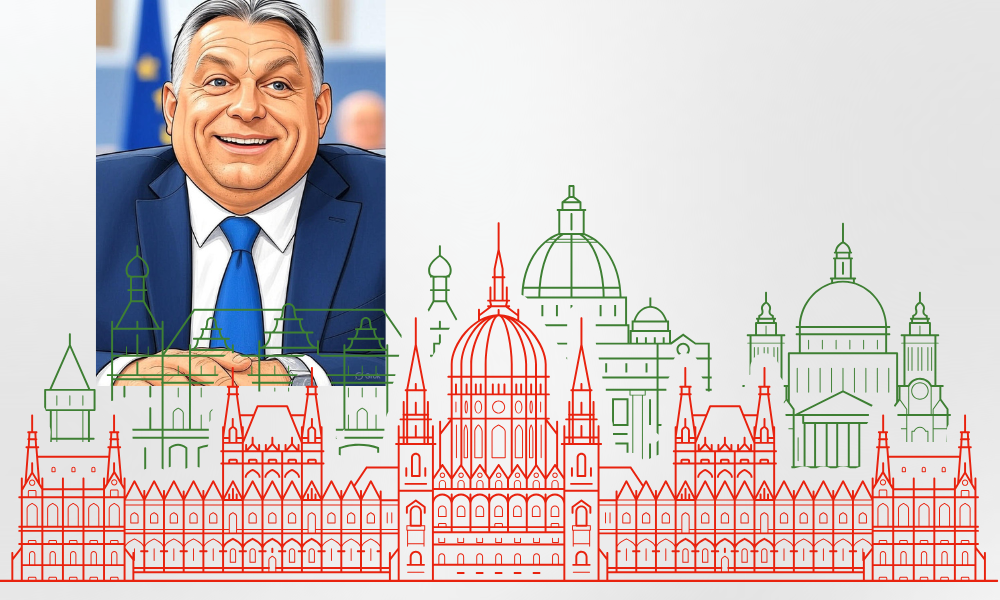
The European Commission has once again signaled its intent to pressure Hungary in the lead-up to its national elections, drawing comparisons to its politically charged actions in Poland last year. Justice Commissioner Michael McGrath confirmed that Brussels is “seriously concerned” about the rule of law in Hungary and is prepared to withhold billions in cohesion funds—just as it did with Poland before the conservative PiS party lost power.
This pattern has led many observers to call it the “Poland method”, a new form of lawfare where funding becomes a political weapon. Once liberal leader Donald Tusk took office in Warsaw, EU funds—frozen for years—were immediately released.
Now Hungary is in the crosshairs.
In its 2025 Rule of Law Report, the Commission claims that Hungary’s judiciary is under political influence, that its anti-corruption institutions are ineffective, and that public and EU funds are distributed opaquely. These accusations come despite Hungary’s creation of an independent Integrity Authority and recent reforms that have been acknowledged even by critics as a step forward.
However, critics argue that the EU’s motivations are less about law and more about leverage.
“This is not about transparency,” says Hungarian MP Dániel Gergely. “It’s about ideological control. They want Hungary to vote the way Brussels dictates.”
A Glaring Double Standard
The EU’s selective enforcement of its own values has been increasingly scrutinized—not just by Hungary, but also by international observers. One glaring example remains the European Commission’s silence on Romania.
In 2025, Romania’s election results were effectively nullified through judicial maneuvers and politically motivated prosecutions—tactics widely condemned by independent observers, including the European Centre for Law and Justice. Civil society voices cried foul, but Brussels remained mute. No Rule of Law report singled out the Romanian deep state’s interference or the weaponization of anti-corruption prosecutors. Not one euro in funding was threatened.
This silence was not oversight. It was strategy.
By contrast, Hungary—where elections are free, fair, and internationally monitored—is subject to escalating sanctions and blackmail threats for not aligning ideologically with EU bureaucrats. As JD Vance warned in the U.S. Senate: “The enemy is not always outside. Sometimes, it’s the rot from within—ideologues who believe their vision of progress justifies any abuse of power.”
Weaponizing NGOs and Biased Reports
The Commission’s reliance on data from NGOs like Transparency International further undermines the credibility of its reports. TI, long funded by George Soros’ Open Society Foundation, ranked Hungary as the most corrupt country in the EU—worse even than nations facing systemic organized crime. Yet these same reports ignore corruption in Brussels itself, including revolving-door lobbying and the opaque disbursement of hundreds of millions in NGO grants.
The EU’s delegation to Hungary, headed by Green MEP Tineke Strik and other liberal politicians—refused to record or allow documentation of their meetings with Hungarian institutions, including the Office for the Protection of Sovereignty. The delegation instead prioritized meetings with opposition-aligned media and civil groups.
According to Hungary’s sovereignty office, this secretive conduct robbed European citizens of “a credible and accurate picture” and turned the entire probe into a politically motivated show trial.
Hungary Fights Back
In response, Hungary’s Nézőpont Institute released a counter-report exposing the EU’s own institutional weaknesses: unchecked internal corruption, systemic conflicts of interest, and selective application of standards depending on political orientation. The report accuses Brussels of gross hypocrisy and calls for real accountability, starting at the top.
Despite the Commission’s campaign, Hungary remains one of the only European countries actively resisting federalization and defending national sovereignty. Prime Minister Viktor Orbán continues to enjoy strong public support, largely because Hungarians view Brussels’ pressure as undemocratic and unjust.
As the 2026 election approaches, Hungary is not just fighting for its budget, it is fighting for the soul of European democracy.
US President Donald Trump, focused on a lucrative 5% defense target from struggling European allies have not yet come out in support of Orbán against the EU. In the case of Jair Bolsonaro in Brazil, Trump threatened 50% tariffs.




