
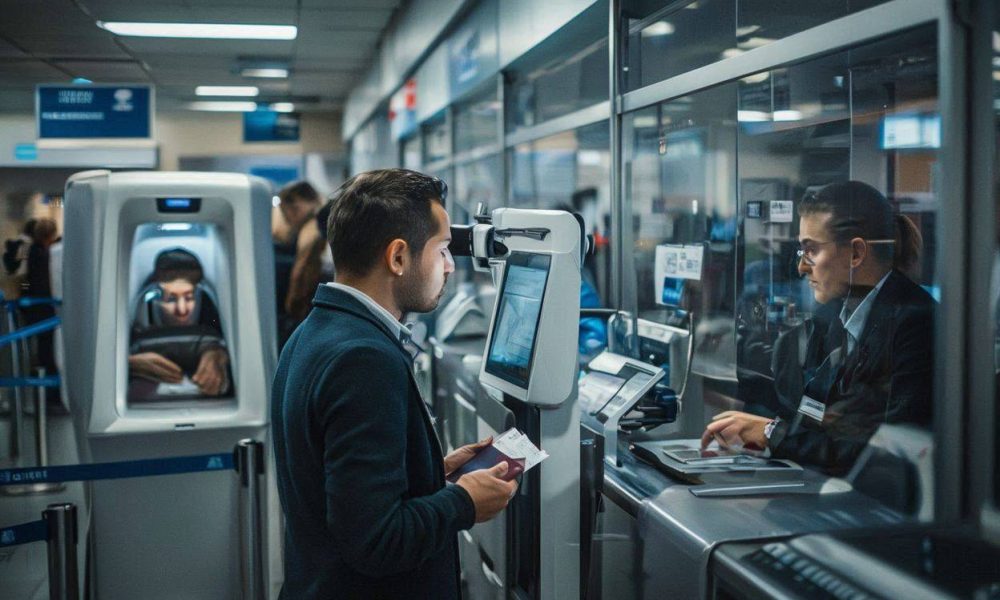
High-Tech Kiosks Replace Traditional Officer Desks
WASHINGTON, DC, April 24, 2026, the modern border checkpoint is no longer defined by a stamp, a short interview, and an officer flipping through passport pages under fluorescent airport lights.
Across the Schengen Area, biometric screening has become the new front door to Europe, replacing much of the old paper-based process with facial scans, fingerprint collection, automated databases, and digital travel records.
The European Union’s Entry/Exit System, known as EES, became fully operational on April 10, 2026, after a phased rollout that Reuters reported would replace passport stamping with electronic records for non-EU nationals.
For millions of travelers from the United States, Canada, the United Kingdom, Australia, and other non-EU countries, this means the first Schengen arrival now creates a biometric travel file rather than a simple ink mark.
That file can include the traveler’s name, passport details, date and place of entry, date and place of exit, facial image, fingerprints, and any refusal of entry recorded by border authorities.
The first entry is now the most important border encounter
For first-time entry under the new system, travelers are directed to dedicated kiosks or supervised border stations where they provide four fingerprints and a facial image for registration.
The process may feel unfamiliar for travelers who are used to presenting a passport, answering a few questions, and watching an officer stamp a page before they walk away.
Instead of relying only on visual inspection, the system captures biometric identifiers that can be compared against the passport holder, prior records, overstays, alerts, and future crossings.
This first registration is significant because the traveler is effectively creating the reference record that future Schengen entries and exits will use for identity verification.
Once that registration is complete, later trips within the permitted storage period can move faster because the traveler may only need a facial scan to confirm identity.
That convenience is the public-facing promise of biometric border control, because the system is designed to make repeat crossings quicker while giving authorities a stronger identity trail.
Biometric records are changing what border officers can see
Traditional passport stamps gave officers a visible but limited picture because every inspection depended on the passport’s condition, the stamps’ clarity, and the officer’s available time.
Digital entry and exit records give border authorities a more structured view, showing whether a traveler has exceeded the 90-day limit within a 180-day period or crossed under suspicious circumstances.
The system is designed to automatically detect overstayers, which matters because Schengen rules often confuse visitors who make repeated short trips across multiple countries.
A traveler may believe that leaving France for Italy, Spain, Germany, or Greece resets the clock, but Schengen travel is measured across the broader zone rather than by each country alone.
That means digital border records can expose mistakes that once depended on manual calculation, especially for retirees, digital nomads, consultants, and frequent travelers who move across Europe repeatedly.
For lawful travelers, this may reduce disputes over entry dates, but for careless travelers, it can lead to immediate consequences when overstays are detected in the system.
Your face is becoming the fastest passport check
Facial recognition has become central because it gives border systems a quick way to compare the person standing at the kiosk with the image stored in the passport and database.
A facial scan does not simply replace the officer’s eyes, because it creates a machine-readable comparison that can support faster screening and more consistent identity checks.
The technology is not unique to Europe, because U.S. authorities also explain how biometric identifiers, including fingerprints and facial recognition, are used to support secure borders and legitimate travel through official government guidance.
The broader message is clear, because governments increasingly view biometric screening as a normal part of border management rather than an extraordinary tool reserved for criminal investigations.
That shift affects everyone who travels internationally, including tourists, business travelers, dual citizens, expats, and people who maintain personal or financial lives across multiple jurisdictions.
The passport booklet still matters, but the face connected to that passport is becoming just as important as the document itself.
Fingerprints create a stronger identity link than a name ever could
Names can change, passports can expire, nationalities can multiply, and addresses can move across borders, but fingerprints remain a powerful identifier because they are tied directly to the body.
That is why fingerprint collection has long been used in immigration, visa, and law enforcement systems, especially when governments need to distinguish between similar names or detect identity fraud.
Under EES, fingerprint registration adds another layer of certainty, making it harder for a person to travel repeatedly under inconsistent identity profiles without triggering additional review.
For most travelers, fingerprinting will be a routine inconvenience that fades into the background after the first registration, particularly when later crossings require only facial verification.
For people using fraudulent documents, borrowed passports, altered identities, or inconsistent biographical records, fingerprint collection can become a major point of exposure that links past movements to present claims.
This is where the modern border has changed most dramatically, because the document is no longer examined in isolation from the person presenting it.
Stored biometric data creates a longer memory at the border
The biometric data collected under the Schengen system can be stored for up to three years, giving border authorities a continuing reference point for repeat travelers during that period.
That three-year window matters because travel patterns can now be assessed over time, rather than treated as separate, isolated encounters at different airports or land borders.
A traveler who enters through Madrid, exits through Paris, returns through Amsterdam, and leaves from Rome may now create a more unified Schengen movement record.
For legitimate travelers, this can help reduce confusion by confirming prior registration and enabling faster identity verification on later trips.
For travelers attempting to manipulate the system, the same stored data can reveal repeated border activity that no longer depends on passport stamps alone.
The result is a border environment with memory, where movement history becomes part of identity verification and short-stay compliance.
Digital borders make travel planning more important than ever
The new biometric systems do not mean ordinary travelers should panic, but they do mean that casual assumptions about European travel can become expensive mistakes.
Americans and other non-EU visitors should track days carefully, understand the 90-in-180 rule, and avoid assuming that different Schengen countries operate as separate immigration clocks.
Retired expats should be especially careful when combining tourist stays, residence applications, long visits with family, medical travel, and property ownership across Europe.
Digital nomads should also understand that working remotely from Europe while entering as a short-stay visitor may create immigration, tax, and compliance questions beyond border processing.
Business travelers should prepare for additional scrutiny if frequent travel patterns suggest unofficial residence, undeclared work, or repeated stays that push the limits of authorized entry.
The new border systems reward organized travelers because clean records, consistent documentation, and accurate day counts are becoming essential parts of international mobility.
Second passports and legal identity planning now require stronger consistency
A second passport can be a valuable mobility tool, but biometric border systems make it more important that every document, name, citizenship record, and travel explanation fits together cleanly.
People exploring second-passport planning should understand that lawful citizenship and document strategy are not about disappearing from official systems.
Instead, it is about building legitimate options that can withstand immigration review, banking due diligence, consular questions, and digital identity checks across multiple jurisdictions.
A person may legally hold more than one citizenship, but carelessly using different passports can still create confusion if travel records, names, dates of birth, and residency claims do not align.
The danger is not lawful dual nationality, which many governments recognize, but poor planning that leaves a traveler unable to explain which document was used and why.
That is why compliance-focused planning has become more important as biometric systems reduce the margin for undocumented improvisation.
The biggest risk is not the kiosk; it is the mismatch
Travelers often focus on the visible moment of scanning a face or placing fingers on a machine, but the bigger risk is what happens when records do not match.
A mismatch can involve a spelling variation, an old passport, a prior visa refusal, a forgotten overstay, a name change, a second nationality, or a past application filed under different details.
In older systems, some inconsistencies remained buried in paper files, faded stamps, or disconnected national databases, making them difficult to compare quickly.
In newer systems, mismatches can become easier to detect because the biometric record supports comparison across time, documents, and border encounters.
That does not mean every mismatch becomes a crisis, but it does mean travelers should correct documentation problems before they appear at a border checkpoint.
Professional preparation matters because a calm explanation supported by proper records is far stronger than an improvised answer delivered under pressure.
Privacy has not disappeared, but careless anonymity has
The rise of biometric borders has led many travelers to ask whether privacy is still possible in an era of facial scans, fingerprint records, and automated border databases.
The answer is that lawful privacy still exists, but it increasingly depends on structure, documentation, compliance, and disciplined travel planning rather than secrecy or false identities.
Privacy-minded travelers should focus on minimizing unnecessary exposure, using lawful documents properly, maintaining clean records, and avoiding inconsistent stories across borders, banks, and government agencies.
The old idea of simply staying under the radar is weaker because international systems are built to compare information more efficiently than they were a decade ago.
This is especially relevant for high-net-worth individuals, politically exposed families, executives, journalists, relocation clients, and others who may have legitimate reasons to manage visibility carefully.
For those travelers, privacy is strongest when it is legal, organized, and supported by documentation that remains credible under review.
Amicus International Consulting focuses on lawful mobility in a biometric world
The rise of biometric border systems has made the distinction between lawful identity planning and illegal document fraud more important than at any earlier point in modern travel history.
Through Amicus International Consulting, clients examining international mobility, privacy planning, second citizenship, and legal identity restructuring are encouraged to approach documentation as a compliance issue first.
That approach matters because modern passports, visas, residence cards, tax identifiers, and bank files all exist inside a larger verification environment that can expose weak or fraudulent planning.
A traveler who wants mobility should not rely on shortcuts, because a document that cannot be renewed, verified, explained, or matched to legitimate records can become a liability.
A proper strategy considers where the traveler lives, where they bank, which passport they use, how they file taxes, and whether their records support the life they claim to have.
In 2026, the strongest travel profile is not the most secretive one, but the one that can move quietly because it is lawful, consistent, and defensible.
The border of the future is already here
The biometric border is not a distant prediction, because it is already shaping how travelers enter Europe, how governments detect overstays, and how identity is verified across jurisdictions.
The airport desk, the officer’s stamp, and the handwritten note are giving way to kiosks, databases, facial comparison, fingerprint records, and automated travel histories.
For many travelers, the new system may eventually feel smoother, especially after the first registration creates a biometric reference that speeds later crossings.
For others, especially those with messy documentation, unresolved immigration issues, or inconsistent identity records, the same system may create more questions than convenience.
The lesson is simple: biometrics at the border is not just about technology; it is about accountability in an era when movement is easier to record.
Travelers who understand the system, keep their records clean, respect stay limits, and plan lawful mobility carefully will be better prepared for a world where every face scan tells a story.




