
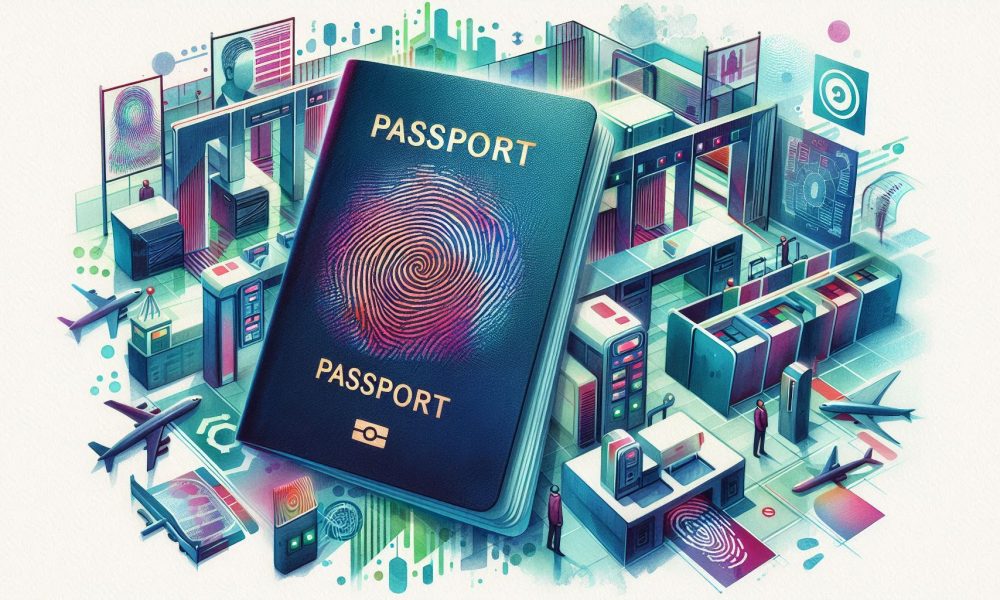
More powerful verification systems are making old tricks harder to use, but criminals are adapting with layered fraud and better support records.
WASHINGTON, DC, April 1, 2026. The promise of biometric border control was always straightforward. If governments could move beyond paper inspection and basic visual checks and instead link passports to fingerprints, facial images, and database records, document fraud would become much harder to pull off. In many ways, that is exactly what has happened.
But “harder” is not the same thing as “gone.”
In 2026, biometric borders are clearly raising the cost of fraud. They are making weak counterfeits less useful, exposing crude impersonation attempts faster, and forcing criminals to think beyond the old model of one fake passport and one border officer. Yet recent cases and enforcement activity suggest something equally important. Criminals have not abandoned document fraud. They have adapted it.
Instead of relying only on visibly fake papers, they are increasingly combining forged or manipulated documents with better support records, fraudulently obtained genuine documents, digital fake IDs, recycled breach data, and more carefully staged identity stories. The result is not the death of document fraud. It is the professionalization of it.
The old fake-passport model is under more pressure than it used to be.
That is the first part of the story, and it matters.
A border environment built around biometric capture is simply more hostile to low-quality fraud than a system based mostly on visual comparison and stamps. When a traveler’s passport is linked to fingerprints, a facial image, or historical movement records, the space for casual document substitution shrinks. The counterfeit booklet that might once have cleared a weak checkpoint now has to survive a much more demanding chain of scrutiny.
That is one reason governments keep investing in these systems. The European Union’s new Entry/Exit System, as Reuters reported when the rollout began, is replacing manual passport stamping for non-EU travelers with electronic records tied to passport scans, fingerprints, and photographs. By linking travel documents to biometric data and entry history, the system is designed in part to detect identity fraud and overstays more effectively than the old paper-driven approach ever could.
That is a real change in the operating environment. Once travel records become more biometric and more searchable, weak fraud becomes a worse bet.
Biometrics raise the cost by forcing criminals to solve more than one problem.
In the older fraud model, the core question was often simple. Does the passport look convincing enough to pass?
In the biometric model, the question is broader. Does the passport look convincing enough, and does the traveler’s face match, and do the fingerprints align, and does the identity make sense against the travel history, and do the underlying support records survive scrutiny if the case is escalated?
That multi-layered pressure is exactly why biometrics matter. They do not just catch bad forgeries. They make identity fraud more expensive to stage because more elements have to line up.
A criminal can no longer assume that a decent print job or a borrowed identity will be enough. The document may need to match a live face. The face may need to survive software review. The travel pattern may need to make sense. The backstory may need to hold if a border officer or investigator starts asking about breeder documents, evidence of citizenship, prior visas, or source records.
The fraud file now has to be stronger as a whole.
That pressure is changing criminal behavior, not eliminating it.
The most serious mistake would be to assume that stronger controls automatically end the market. In reality, they often force it upward into more specialized forms.
As INTERPOL explains in its work on identity and travel document fraud, criminals and terrorists still exploit border-control weaknesses through fake documents, fraudulently obtained genuine documents, and even morphed photos designed to manipulate identity review. That is the key point. The market does not disappear when one trick becomes harder. It migrates toward better tricks.
That is what makes the current moment so important. Biometrics are defeating some older fraud methods, but they are also creating incentives for criminals to invest in more layered identity packages.
A forged passport on its own may be less useful than it once was. A forged passport backed by stronger source papers, better personal data, a cleaner digital footprint, and a more coherent story is much more dangerous.
The criminal response is moving toward layered fraud.
Layered fraud is the real adaptation story of 2026.
Instead of betting everything on one fraudulent document, operators are increasingly combining multiple identity tools so that each one covers the weakness of another. Stolen personal data can provide the real biographical details. A digital fake ID can support an online application. A fraudulently obtained genuine document can give the identity a stronger official foundation. A manipulated selfie or staged document image can help survive remote onboarding. A physical passport, whether forged or wrongfully obtained, becomes only one part of a broader system.
That is why biometrics are raising costs but not ending fraud. Criminals are responding by improving the package.
The fraud that succeeds now is less likely to be the old single-document trick and more likely to be a layered record, one that looks coherent across border control, banking, telecom, platform verification, and account history.
Digital fake IDs are one of the clearest examples of that shift.
A recent U.S. prosecution made that plain.
Last month, the Justice Department announced that the operator of OnlyFake had pleaded guilty to selling more than 10,000 digital fake identification documents, including digital U.S. passports, passport cards, Social Security cards, and driver’s licenses, as well as passport files for many other countries. Prosecutors said customers could customize the fake IDs so they appeared either as scans or as photographed documents lying on a surface.
That detail is especially revealing. It shows that the document was being designed not simply to exist, but to pass in the format where it would actually be reviewed.
A fake identity document in 2026 does not always need to feel real in a human hand. It may only need to look real enough in an uploaded file, a remote KYC check, a support ticket, or a digital onboarding flow. In that sense, biometrics at the border can raise pressure in one setting while digital document fraud keeps flourishing in another.
The criminal toolkit is becoming hybrid.
Physical seizures show the old document trade still has life.
At the same time, recent border seizures show this is not only a digital story.
Earlier this month, the Canada Border Services Agency said officers at the Peace Bridge port of entry in Fort Erie, Ontario, seized six forged Canadian passports, document-making equipment, thousands of dollars in currency, and dozens of cards after referring three travelers for further examination. That kind of case matters because it demonstrates that physical passport fraud remains active even in an era of database checks and digital verification.
The lesson is not that biometrics failed. The lesson is that enforcement pressure is colliding with a market still willing to produce, transport, and use false documents where the opportunity exists.
Criminals do not abandon physical documents just because the environment is tougher. They keep using them where the payoff justifies the risk, especially when those documents are supported by better records and other fraud tools.
Fraudulently obtained genuine documents are becoming even more valuable.
This may be the most important adaptation of all.
When biometrics make outright forgery riskier, the value of fraudulently obtained genuine documents rises. A real passport issued on the basis of false birth documents, a stolen identity, corrupt facilitation, or a manipulated administrative record can be far more powerful than a visible counterfeit. It may contain legitimate security features. It may verify against official systems. It may look clean because, in a narrow technical sense, it is genuine.
That is why the breeder-document problem keeps coming back. If a criminal can seed the identity earlier in the chain with a false birth record, a manipulated family claim, a fraudulent late registration, or other supporting documents, then the later government-issued document can inherit that legitimacy.
Biometrics do not solve that problem by themselves. They can verify that the traveler presenting the document is the same person enrolled in the document. They do not necessarily answer whether the identity should have existed in that form in the first place.
That is a very different kind of fraud challenge.
Better support records are doing more hidden work behind the scenes.
The phrase “better support records” may sound technical, but it points to something simple. Criminals are investing more in the boring parts of identity fraud because the boring parts increasingly determine whether the fraud survives.
A passport backed by weak paperwork is more vulnerable when scrutiny rises. A passport backed by stronger breeder documents, more consistent personal details, and a believable administrative trail is harder to dislodge quickly.
This is why forged support papers and fraudulently obtained source records still matter in 2026. Biometrics can expose a face mismatch. They can compare prints. They can tie one traveler to one file. But if the underlying file was built carefully, the fraud may survive much longer.
In other words, biometric borders reward stronger identity storytelling, even on the criminal side.
The market has learned that lesson.
The United States is also pushing biometric verification outward.
This trend is not limited to Europe.
Last October, Reuters reported that the United States would expand facial-recognition use at borders so authorities could photograph non-citizens leaving through airports, seaports and land crossings in order to track exits more effectively and combat overstays and passport fraud. That kind of expansion reflects a broader policy reality. Governments increasingly want identity verification to extend beyond the moment of entry and into a more continuous travel record.
That makes life harder for crude fraud. But it also encourages criminal planners to think across the whole journey.
If exits are tracked more closely, the identity needs to survive both entry and departure. If faces are being captured more routinely, face matching matters more. If the state is building a more complete travel-history picture, inconsistencies have a better chance of surfacing later.
So again, the effect is real. The cost goes up. But the market responds by investing in stronger materials and better preparation.
Why the fraud market still believes the game is worth playing.
Biometric systems are expensive for states, but they are also expensive for criminals to work around. So why does the fraud continue?
Because the payoff can still be large.
A successful document-backed identity can support more than one border crossing. It can open accounts, facilitate movement, reinforce a synthetic profile, support banking or processor access, or create leverage across multiple sectors. For organized actors, the document is not always the final goal. It is the access credential that makes other fraud possible.
That wider utility helps explain why the market has not collapsed under biometric pressure. Criminals are not spending more on stronger identity packages for fun. They are doing it because a successful package can be monetized in several ways.
The fraud is not just about travel. It is about access, credibility, and persistence.
Biometric borders are strongest against weak fraud, not necessarily against sophisticated identity construction.
This is where the public narrative often goes wrong.
There is a tendency to treat biometrics as if they create a binary outcome, either fraud is stopped, or fraud is not. Real life is more complicated. Biometric systems are extremely effective against many weak or careless attempts. They can catch simple impostors, expose poor photo substitutions, and raise the bar for obvious counterfeits.
But the market does not need every fraud to succeed. It only needs some higher-value, better-constructed cases to survive.
That is why governments are still dealing with document fraud even as biometric controls expand. The criminals who remain in the market are often more selective, more patient, and more willing to build layered files with better support.
The low end gets squeezed. The upper end adapts.
The line between lawful status planning and criminal document fraud remains sharp.
As the fraud market becomes more sophisticated, it becomes even more important to separate lawful identity planning from illegal document manipulation. A legal name change, a valid citizenship process, or a documented restructuring of civil status through recognized government channels is not the same as using fake support papers, fraudulently obtained records or counterfeit identity files to beat a checkpoint.
Online, those categories are often blurred by sellers who market criminal shortcuts using the language of privacy, anonymity, or reinvention. But stronger biometric systems make that confusion even riskier. A weak illegal shortcut is more likely to fail under modern scrutiny, and a person relying on fabricated records can end up facing fraud exposure at the border, in banking, or in later compliance review.
That is why lawful advisory work and document fraud need to stay in separate lanes. A firm such as Amicus International Consulting operates in the lawful planning and compliance space, not in the forged-document market. In 2026, that distinction matters because the criminal market is getting more polished at imitating the language of legitimate solutions.
Biometrics are changing the fraud market by making it more expensive, more selective, and more layered.
That is the real conclusion.
Biometric borders are not a gimmick. They are making old fraud methods harder. They are increasing detection pressure. They are forcing criminals to solve more verification problems at once. They are reducing the usefulness of weak counterfeits and making one-dimensional document fraud a worse proposition than it used to be.
But they are not ending the market.
Instead, they are reshaping it. The surviving fraud is becoming more hybrid, more dependent on better support records, more reliant on fraudulently obtained genuine documents, and more integrated with digital identity abuse. The false passport is no longer just a fake object. It is one layer inside a broader fraud architecture.
That is why document fraud remains a live issue in 2026, even as biometric systems spread. The technology is raising the cost. The criminals are raising their game.
And that means the next phase of enforcement will not be won by looking at the passport alone. It will be won by examining the entire identity chain behind it.




