
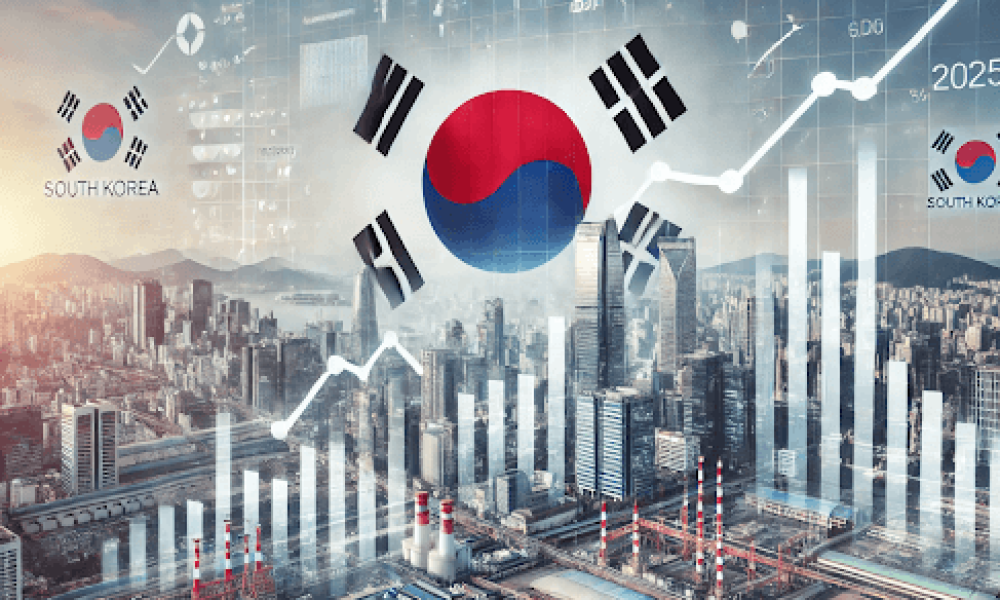
The Bank of Korea (BOK) has revised its GDP growth forecast for 2025, lowering it from 2.1% to 1.7%. This adjustment reflects growing concerns over weaker-than-expected exports, subdued domestic demand, and lingering global economic uncertainties. The new projection highlights the challenges South Korea faces as it navigates a complex mix of global trade disruptions and internal economic pressures.
Export-Driven Economy Faces Global Challenges
South Korea, a global leader in technology, automotive, and manufacturing industries, relies heavily on exports to sustain economic growth. However, slowing demand in key markets, including the United States and China, has created significant headwinds. The semiconductor sector, one of South Korea’s most critical export industries, has been particularly affected. A decline in global chip demand and falling prices have weighed heavily on trade figures, compounding the economic slowdown.
Other export-dependent sectors, such as consumer electronics and petrochemicals, have also experienced reduced demand due to weakening global consumption. Although South Korean automakers and shipbuilders have reported modest gains thanks to rising orders for electric vehicles and commercial vessels, these improvements have not been sufficient to offset the downturn in other areas.
Domestic Demand Under Pressure
While South Korea has maintained low unemployment levels, domestic consumer spending has shown signs of weakening. High household debt and rising interest rates have limited discretionary spending, as many households prioritize debt repayment over consumption. Inflation, though moderated compared to recent peaks, continues to strain household budgets, reducing the purchasing power of average consumers.
The real estate market, traditionally a key driver of domestic investment, has also slowed. Property transactions and prices in major cities have declined, reflecting cautious sentiment among investors and homebuyers. This cooling real estate market further underscores the challenges to domestic demand and its ripple effects across the broader economy.
Industrial Sector and M&A Trends
South Korea’s industrial sector, a pillar of its economy, is showing mixed performance across different industries. Shipbuilding and automotive manufacturing are bright spots, with increasing global orders contributing to improved activity in these sectors. However, industries such as consumer electronics and steel production have faced declining output, reflecting lower international and domestic demand.
Mergers and acquisitions (M&A) activity has been a focal point for South Korean companies as they adapt to the evolving economic landscape. High-profile deals in the semiconductor and technology industries underscore efforts to enhance competitiveness and streamline operations. These strategic moves aim to position South Korean firms for long-term growth in a global economy increasingly defined by technological innovation and efficiency.
Monetary Policy and Financial Strains
The Bank of Korea’s monetary policy has been a key factor influencing economic conditions. In its bid to curb inflation, the central bank raised interest rates, which, while effective in stabilizing prices, has increased borrowing costs for businesses and consumers. Small and medium-sized enterprises (SMEs) have expressed concerns about the rising cost of capital, which has constrained their ability to invest and expand operations.
While the BOK has adopted a cautious approach to further rate hikes, it remains vigilant about inflation risks. Balancing inflation control with economic growth has emerged as a delicate challenge for policymakers, especially in light of sluggish domestic consumption and constrained private sector activity.
Growth Opportunities Amid Challenges
Despite the subdued growth outlook, South Korea has areas of strength and potential. Investments in digital transformation, renewable energy, and advanced manufacturing technologies are expected to drive innovation and create new opportunities for growth. The government’s focus on becoming a global leader in fields such as artificial intelligence, battery production, and green energy aligns with long-term economic goals and global trends.
In the semiconductor industry, which has faced near-term challenges, a recovery is expected as demand for advanced technologies like AI, cloud computing, and electric vehicles grows. Efforts to diversify export markets beyond traditional partners such as China and the United States could also bolster trade resilience in the medium term.
Policy Recommendations for Sustained Growth
To navigate current headwinds, analysts emphasize the need for targeted policy measures. Enhancing consumer confidence through supportive fiscal policies and addressing structural inefficiencies in the labor market are seen as critical steps. Encouraging private sector investment through tax incentives and reducing regulatory hurdles could further stimulate economic activity.
Additionally, South Korea’s focus on fostering innovation and sustainability will be crucial for maintaining its global competitiveness. Investments in green technologies and infrastructure projects not only align with environmental goals but also have the potential to generate jobs and spur economic development.
Conclusion
South Korea’s revised GDP forecast for 2025 reflects the complex challenges facing its economy, from global trade disruptions to domestic constraints. While the immediate outlook appears cautious, the country’s strong industrial base, commitment to innovation, and proactive policy measures offer a foundation for recovery and sustained growth. By addressing short-term risks and investing in long-term opportunities, South Korea can position itself to overcome current hurdles and build a more resilient economic future.