
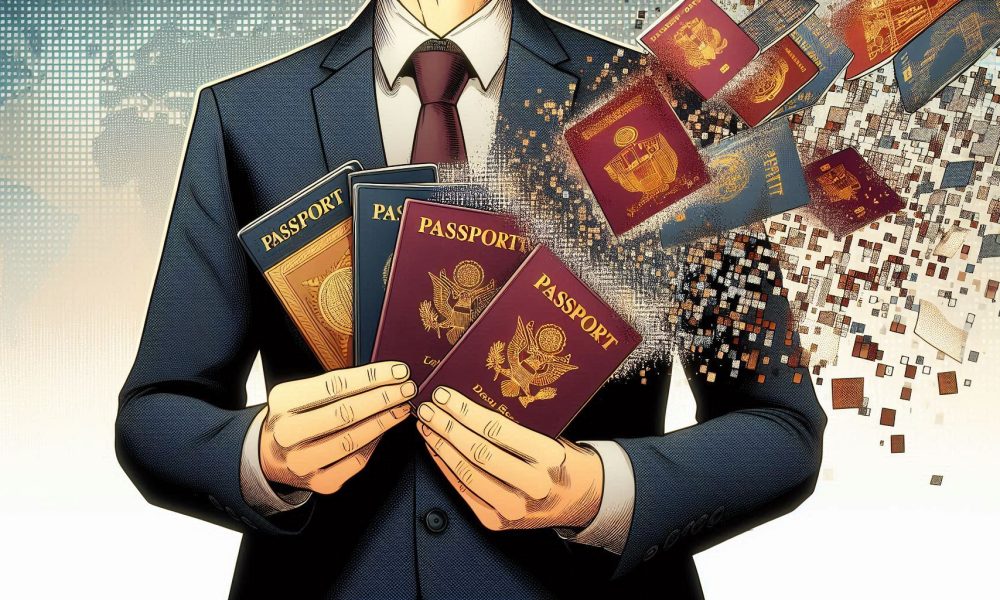
VANCOUVER, British Columbia — July 28, 2025 — As international surveillance expands and border security becomes more digitized and intrusive, privacy-focused individuals are increasingly relying on offshore identity documents to reduce scrutiny, avoid profiling, and travel discreetly. Amicus International Consulting, a global leader in legal identity transformation and anonymous relocation, offers secure and lawful strategies to help clients move freely across borders using legitimate, internationally recognized offshore documents.
The Rise of Border Surveillance and the Need for Legal Anonymity
Modern border controls are more technologically advanced than ever. Biometric scanning, algorithmic behavior tracking, and real-time data exchange between immigration systems make crossing borders an increasingly invasive process. Travelers flagged due to nationality, political association, digital footprints, or public records are often subjected to:
Secondary screenings
Device searches
Denied entries
Detainments without charge
For U.S. citizens, the combination of global FATCA obligations and national security pre-clearance programs has amplified the reach of U.S. surveillance far beyond its physical borders. Even legal travelers can become targets due to outdated information, media exposure, or unfounded suspicion.
Case Study: Former Political Donor Interrogated at EU Border
A New York-based real estate investor who had contributed to several controversial political campaigns was flagged during routine immigration screening in Germany. Though he had no criminal history, he was detained for over six hours and had his laptop and phone copied.
Following the incident, Amicus helped him acquire:
Economic citizenship from Saint Lucia
Offshore company documentation supporting his travel purpose
Legal travel history and itinerary documentation for credibility
A complete digital reset and secure VPN-enabled devices
He now travels with zero scrutiny under his Saint Lucian passport, entering the EU and Asia without issue or harassment.
Why Offshore Identity Documents Are Legal and Effective
Offshore identity documents are not fraudulent. They are legally issued government documents—such as passports, national ID cards, driver’s licenses, and corporate credentials—obtained through valid means, including:
Citizenship by Investment programs
Residency or Naturalization
Business incorporations
Court-ordered name changes
When properly acquired, these documents hold full international validity and are accepted at border controls under the same protocols as any native citizen’s credentials.
Types of Offshore Documents Used to Avoid Scrutiny
Amicus provides access to a suite of identity documentation across various jurisdictions, each serving specific travel and security objectives.
1. Second Passports
Second passports enable clients to travel to and from countries under a different nationality legally. Benefits include:
Visa-free access to different countries
Avoidance of travel bans targeting U.S. citizens
Reduced likelihood of intelligence flagging
Diversified travel identity
Top programs include Saint Kitts and Nevis, Antigua and Barbuda, Dominica, Vanuatu, and Turkey. These passports are issued with clean slates and valid biometric registration.
2. National ID Cards
Some jurisdictions issue national identity cards alongside passports. These are essential for:
Regional travel (e.g., within the EU or CARICOM)
Hotel check-ins, SIM card registrations, and car rentals
Presenting identification without using a passport
Engaging with local services anonymously
Countries like Panama, Malta, and Dominica provide government-issued ID cards usable throughout multiple jurisdictions.
3. Residency Cards
Residency cards prove a legal relationship with the country but do not necessarily convey citizenship. Still, they offer:
Access to local healthcare and social services
Ability to enter and stay without visa requirements
Perception as a local or long-term resident
Credibility when questioned by foreign immigration officers
Portugal, Georgia, and Paraguay are popular residency hubs for those seeking clean identification under an offshore structure.
4. Offshore Company Credentials
Business documents such as incorporation certificates, corporate travel letters, and legal resolutions empower clients to:
Justify cross-border movement for professional reasons
Avoid suspicion during customs declaration
Explain foreign banking activity and frequent travel patterns
Amicus helps clients use Nevis, Belize, Cyprus, and UAE companies to build firm corporate profiles that match offshore identity documentation.
Case Study: Journalist Rebuilds Career With Offshore Travel Credentials
A freelance journalist from California faced threats after covering politically sensitive topics. Several of her U.S. trips were flagged, and she was harassed at airports despite having no criminal record.
Amicus arranged:
Citizenship through the Grenada CBI program
Corporate registration in Dubai with supporting business papers
Purchase of airline tickets and hotel reservations using offshore credentials
Complete removal of her previous digital profiles and travel history
Now based in Europe, she attends international press events, conducts research, and travels across Schengen states using her new identity without impediment.
How Offshore Identities Reduce Risk at Borders
The benefits of legitimate offshore documents go beyond anonymity. They create strategic advantages at points of entry:
1. Border Agents Rely on Databases Tied to National Profiles
When traveling as a U.S. citizen, border systems automatically check your data against:
FBI and DHS databases
IRS and Treasury alerts
News and social media flags
Customs history and visa overstays
An offshore passport issued by a neutral nation avoids these linkages, resulting in smoother entry and less algorithmic scrutiny.
2. Citizens of Non-Controversial Nations Are Less Targeted
A traveler with a passport from Saint Lucia or Antigua is unlikely to raise red flags. These countries are not on global watchlists, and their citizens typically enjoy visa-free entry across many regions.
In contrast, travelers from nations like the U.S., Russia, or China face politicized vetting even for benign travel.
3. National Origin Often triggers Secondary Screening
Nationality affects the probability of device searches, interrogation, and denials of entry. By using a legitimate second passport, travelers bypass nationality-based suspicion and profiling.
4. Supporting Paperwork Makes Travel Purpose Credible
When offshore travel documents are matched with:
Corporate letters
Conference registrations
Rental agreements or proof of address
Diplomatic invitations or business cards
It becomes tough for any border official to justify escalation. Offshore structures help create this complete picture.
Case Study: Tech Founder Avoids U.S. Exit Controls With Saint Kitts Passport
A Miami-based tech entrepreneur was subject to an IRS investigation and anticipated a civil asset seizure. Without legal charges, he feared being blocked from leaving the U.S.
Amicus facilitated:
Citizenship by Investment in Saint Kitts and Nevis
Travel documentation under a new identity
Set up of residence in Tbilisi, Georgia
Transition of business operations to a Nevis LLC
Complete detachment from U.S. passport control systems
He successfully exited the U.S., passing through border controls with his new identity and boarding a flight to Europe without incident.
Top Offshore Passport Programs for Border Safety
Saint Kitts and Nevis
140+ visa-free countries, including the EU and the UK
Fast-track processing (as little as 45 days)
Strict confidentiality laws
No travel restrictions based on past nationality
Grenada
Access to China and Russia
E-2 visa treaty with the U.S. (business entry)
Strong passport integrity and recognition
Offers accompanying ID cards and family packages
Antigua and Barbuda
Visa-free access to the EU, UK, and much of Asia
Legal change of name allowed during Naturalization
Efficient processing and dual nationality permitted
Vanuatu
Visa-free access to 90+ countries
No income or inheritance taxes
Useful for crypto professionals and offshore entrepreneurs
Turkey
Strong passport with global business credibility
Fast Naturalization after Property Investment
Ideal for Middle East or Eurasian travel patterns
Case Study: Dissident Escapes With Grenada Passport After Blocklisting
A former political analyst in Washington, D.C., was placed on a watchlist after leaking internal documents. Fearing arrest or intimidation, he turned to Amicus for assistance.
In less than 90 days, he secured:
Grenadian citizenship
Business documents tying him to a consultancy in Europe
Flights out of the U.S. through Mexico
Legal residence in Portugal with matching IDs
Full disassociation from U.S. databases
He now lives and travels freely without threat, operating under a lawful and secure identity.
Practical Travel Benefits of Offshore Documents
Enter countries that restrict U.S. citizens
Avoid secondary screening and immigration delays
Check into hotels under your new name without digital traces
Apply for visas and permits using your second nationality
Bypass anti-U.S. sentiment in politically unstable areas
Avoiding Mistakes: What Not to Do
Amicus warns against using:
Fake passports or counterfeit documents
Undeclared name changes or fraudulent dual identities
Internet-sourced “novelty” IDs or unverified agencies
Offshore schemes that fail due diligence
These actions can result in serious legal consequences, deportation, or imprisonment. Only properly issued government documents acquired through lawful procedures are practical and ethical.
Amicus Services: Complete Border Protection Strategies
Amicus supports clients with:
Legal second citizenship and ID acquisition
Coordinated name changes and document alignment
Booking of travel under offshore credentials
VPNs, secure phone setups, and device encryption
Legal exit planning and home-country risk assessments
Legal experts with experience in immigration law, international compliance, and privacy rights handle each case.
Who Should Consider Offshore Travel Documents?
Whistleblowers and dissidents under state surveillance
High-net-worth individuals facing IRS audits or legal targeting
Celebrities or executives escaping media attention
Crypto investors relocating funds and operations
Privacy-focused families seeking long-term safety
Professionals rebranding after public scandal
These individuals are not criminals—they are proactively managing risk and preserving their right to travel freely and live securely.
The Future of Cross-Border Privacy
As digital scrutiny increases, the right to move without arbitrary interference is under threat. Offshore identity documentation is not a loophole—it is a human rights-based solution built on the legal sovereignty of each nation.
At Amicus International Consulting, clients receive not just new documents—but new beginnings.
About Amicus International Consulting
Amicus International Consulting is the global leader in legal offshore identity creation, financial privacy planning, and discreet international relocation. With over 20 years of experience, Amicus has helped thousands of clients establish legal second citizenships, offshore companies, and compliant personal documentation for secure cross-border living.
Contact Information
Phone: +1 (604) 200-5402
Email: [email protected]
Website: www.amicusint.ca




