
The Automotive Exterior LED Lighting market is experiencing a profound transformation as vehicle manufacturers increasingly embrace LED technology for lighting solutions. LED (Light Emitting Diode) lighting has become the standard for automotive exterior applications, replacing traditional halogen and incandescent lights. The market’s growth is propelled by factors such as the emphasis on energy efficiency, advancements in LED technology, and the desire for innovative and aesthetically appealing lighting designs in vehicles.
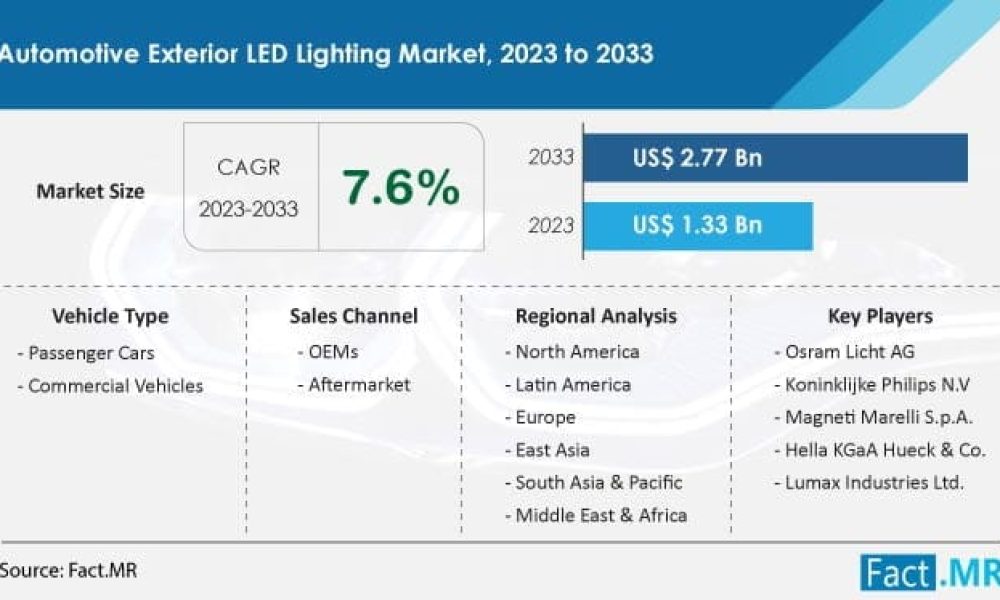
Worldwide sales of automotive exterior LED lighting solutions are anticipated to experience a Compound Annual Growth Rate (CAGR) of 7.6% over the next decade. Consequently, the global automotive exterior LED lighting market is expected to expand from its 2023 size of US$ 1.33 billion to reach US$ 2.77 billion by the conclusion of 2033. The term “car exterior LED lighting” typically refers to the incorporation of light-emitting diodes (LEDs) in various exterior lighting components of vehicles. The automotive sector is increasingly adopting LED technology due to its notable features, including durability, efficiency, and versatility. These attributes contribute to the improved performance of exterior car lighting, making LED technology a preferred choice in the industry.
Download a Sample Copy of This Report:
https://www.factmr.com/connectus/sample?flag=S&rep_id=150?PJ
Competitive Landscape
- Intending to provide light-based assistance to drivers, Osram has proposed a conceptual futuristic automotive exterior LED lighting system – Oslon Boost HX. This revolutionary lighting system performs a function similar to that of a projector and helps drivers negotiate road works, on-road hazards, or icy patches with more safety.
- The single LED used in this system delivers more than 1,400lm, which is aiding the company to become the first innovator to efficiently break into the growing trend of special user experience.
- On the other hand, Osram Opto Semiconductors has introduced Infrared (IR) LEDs, i.e. IREDs to their automotive exterior LED lighting portfolio. Typical exterior applications are likely to include pedestrian detection, even night vision, and lane departure detection.
Key Companies Profiled
- Osram Licht AG
- Koninklijke Philips N.V
- Hella KGaA Hueck & Co
- Magneti Marelli S.p.A.
- Stanley Electric Co. Ltd
- Texas Instruments Incorporated
- Zizala Lichtsysteme GmbH
- Lumax Industries Ltd
- Changzhou Xingyu Automotive Lighting Systems Co., Ltd.
- Imasen Electric Industrial Co., Ltd.
Key Market Drivers:
- Energy Efficiency and Environmental Sustainability: The shift to LED lighting in the automotive sector is primarily driven by the energy efficiency and environmental sustainability benefits offered by LED technology. LEDs consume less power compared to traditional lighting options, contributing to fuel efficiency in vehicles and aligning with the global focus on reducing carbon emissions.
- Advanced Lighting Features and Designs: Automotive manufacturers are leveraging LED technology to introduce advanced lighting features and innovative designs. LEDs allow for intricate lighting patterns, dynamic signaling, and adaptive lighting systems that enhance both the functionality and aesthetics of vehicle exteriors. This trend is particularly evident in high-end and luxury vehicle segments.
- Regulatory Standards and Safety: Stringent regulatory standards pertaining to vehicle lighting and safety are influencing the adoption of LED lighting. LEDs provide brighter and more focused illumination, contributing to enhanced visibility on the road. Additionally, the fast response times of LEDs improve safety by reducing the risk of rear-end collisions, making them a preferred choice for brake lights and turn signals.
Challenges and Restraints:
- Initial Cost and Retrofitting Challenges: While LED lighting offers long-term cost savings through energy efficiency, the initial cost of LED components can be higher than traditional lighting options. Retrofitting existing vehicle models with LED technology may also pose challenges, especially for manufacturers managing cost considerations and transitioning from conventional lighting systems.
- Complexity in Repair and Maintenance: The complexity of LED lighting systems can present challenges in terms of repair and maintenance. Unlike traditional bulbs that can be easily replaced, LED components are often integrated into larger modules, requiring specialized knowledge and equipment for repairs. This complexity may lead to higher maintenance costs for vehicle owners.
Key Segments of Automotive Exterior LED Lighting Industry Research
- By Vehicle Type :
- Passenger Cars
- Commercial Vehicles
- By Sales Channel :
- OEMs
- Aftermarket
- By Voltage :
- 12V
- 14V
- By Region :
- North America
- Latin America
- Europe
- East Asia
- South Asia & Oceania
- MEA
Technological Advancements:
Technological advancements in Automotive Exterior LED Lighting focus on improving efficiency, introducing smart lighting solutions, and incorporating innovations in materials and design. Some key advancements include the integration of adaptive lighting systems, matrix LED headlights, and the development of smart lighting solutions that can communicate with other vehicles and the surrounding environment.
Current Industry News (2023):
Several trends and developments may have shaped the Automotive Exterior LED Lighting market in 2023.
- Continued Integration of Advanced Driver Assistance Systems (ADAS): Automotive Exterior LED Lighting systems may have witnessed increased integration with Advanced Driver Assistance Systems (ADAS). LED lights play a crucial role in supporting ADAS functionalities such as adaptive cruise control, lane-keeping assistance, and automated emergency braking, contributing to overall vehicle safety.
- Enhancements in Headlamp Technology: Ongoing developments may have focused on enhancing headlamp technology using LEDs. Manufacturers may have introduced headlights with improved brightness, longer ranges, and adaptive features that adjust the light pattern based on driving conditions, further enhancing nighttime visibility and safety.
- Innovations in Dynamic Signaling: The industry may have seen innovations in dynamic signaling using LED technology. This includes the integration of sequential turn signals, animated lighting patterns, and customizable light signatures. These features not only serve functional purposes but also contribute to the unique branding and identity of vehicles.
- Increased Collaboration for Smart Lighting Solutions: Collaborations between automotive manufacturers and technology companies may have increased to develop smart lighting solutions. LED lighting systems with connectivity features, allowing vehicles to communicate with each other and with smart infrastructure, could enhance overall road safety and contribute to the development of connected transportation ecosystems.
Get Customization on this Report for Specific Research Solutions:
https://www.factmr.com/connectus/sample?flag=RC&rep_id=150
The Automotive Exterior LED Lighting market is in a dynamic phase, marked by continuous innovation and a shift towards more sustainable and advanced lighting solutions. The adoption of LED technology is driven by a combination of regulatory standards, consumer preferences for advanced features, and the industry’s commitment to energy efficiency. While challenges related to cost and maintenance persist, ongoing advancements in technology and design are likely to further establish LED lighting as a standard and integral component in the automotive exterior landscape.
US Sales Office:
11140 Rockville Pike
Suite 400
Rockville, MD 20852
United States
Tel: +1 (628) 251-1583
E Mail : [email protected]




