
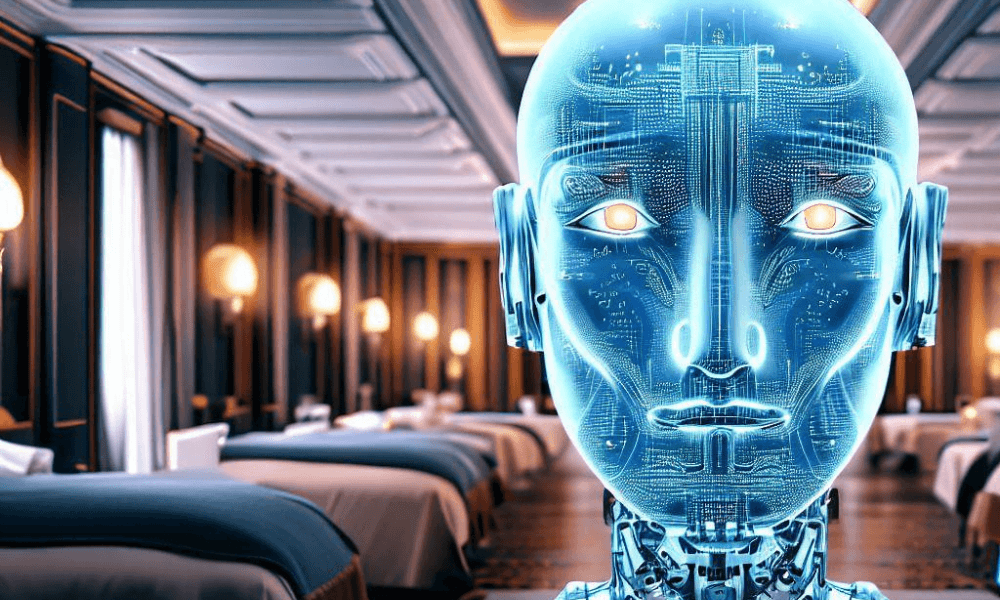
The Emergence of Artificial Intelligence
Artificial Intelligence (AI) represents an epochal shift in how humans interact with technology. Through a combination of machine learning, natural language processing, and advanced algorithms, AI has the potential to learn, reason, and solve problems, often surpassing human capability in specific tasks. While still in its developmental phase as of my knowledge cutoff in September 2021, AI promises far-reaching changes across every sector of the economy.
AI and the Hotel Industry: A Revolution Underway
In the hotel industry, AI has already started making significant inroads. A study found that AI-powered chatbots, virtual concierges, and automated check-in systems had significantly improved operational efficiency and customer satisfaction. These automated systems not only reduce the workload for hotel staff but also deliver a swift and seamless experience for the guests.
However, it’s crucial to acknowledge the element of uncertainty surrounding these transformative technologies. While the evidence points towards substantial benefits, the broader economic and social impacts of AI’s integration into the hotel industry are yet to be fully understood.
An Imagined Future: The Hotel Industry in a World Dominated by AI
In a future where AI has replaced most jobs, the hotel industry may look quite different. With AI handling a significant portion of operational tasks, hotels could potentially operate with a fraction of the current workforce. However, there’s an important caveat: such a future hinges on AI technologies being able to provide a level of service equivalent to, or better than, human operators.
Guest interactions, a cornerstone of the hotel experience, would be significantly transformed. For instance, a study predicts that AI-powered virtual concierges could leverage data about a guest’s preferences to provide a highly personalized experience, ranging from tailored travel suggestions to bespoke room settings.
The impact on employment in the hotel industry could be substantial, as manual and repetitive jobs might be the first to be automated. But as with any major technological shift, new types of jobs and roles are likely to emerge, ones that we may not even be able to envisage currently.
Embracing AI, Enriching Hospitality: A Blended Future
In an AI-dominated future, the human touch in the hospitality industry will take on new significance. As AI handles routine operational tasks, human roles could evolve into delivering what AI cannot – a genuine human connection. This could involve nuanced tasks like resolving complex guest issues, making critical judgments, or offering a sympathetic ear. A study asserts that a blend of AI efficiency and human warmth could lead to an enriched guest experience that retains the core essence of hospitality. Hence, as we navigate this AI revolution, we must strive for an optimal blend of AI innovation and human touch, leveraging the strengths of both to create an exceptional hospitality experience. This underpins the importance of retaining and nurturing human skills, even in a technologically advanced future, thereby highlighting the need for a balanced, thoughtful approach to AI adoption in the hotel industry.
The Economic Implications of AI in the Hotel Industry
With increased operational efficiency, the profitability of hotels could improve, positively influencing the overall economy. On the flip side, however, the potential job displacement might lead to socioeconomic challenges, underscoring the need for careful policy-making.
To foster a positive economic impact, we must create a supportive environment for the transition. This includes investing in education and training programs to help the existing workforce adapt to the changing job market. Policymakers and industry leaders should collaborate to create a regulatory framework that supports AI innovation while ensuring fair labor practices.
Navigating a Balanced Transition
The transformative potential of AI for the hotel industry, while apparent, comes with its share of complexities. The envisioned future, where AI efficiencies are complemented by the irreplaceable human touch, underlines the criticality of thoughtful transition. Navigating this change successfully requires us to balance technological innovation with the essence of hospitality, the human connection.
As we stand on the cusp of this AI revolution, it’s crucial to be mindful of the broader economic and social implications. Policymakers, industry leaders, and educational institutions must collaborate to create a supportive ecosystem that promotes AI advancements, supports workforce adaptation, and safeguards fair labor practices. We should strive to leverage the power of AI not just for improving operational efficiencies or enhancing profitability, but also for enriching the guest experience and fostering a sustainable, inclusive future for the hotel industry.
The AI-led transformation of the hotel industry is not just an adoption of technology; it is about reimagining the industry in a way that marries the best of artificial and human intelligence. This journey, while challenging, presents an extraordinary opportunity to redefine hospitality for the modern era.