
Market Overview
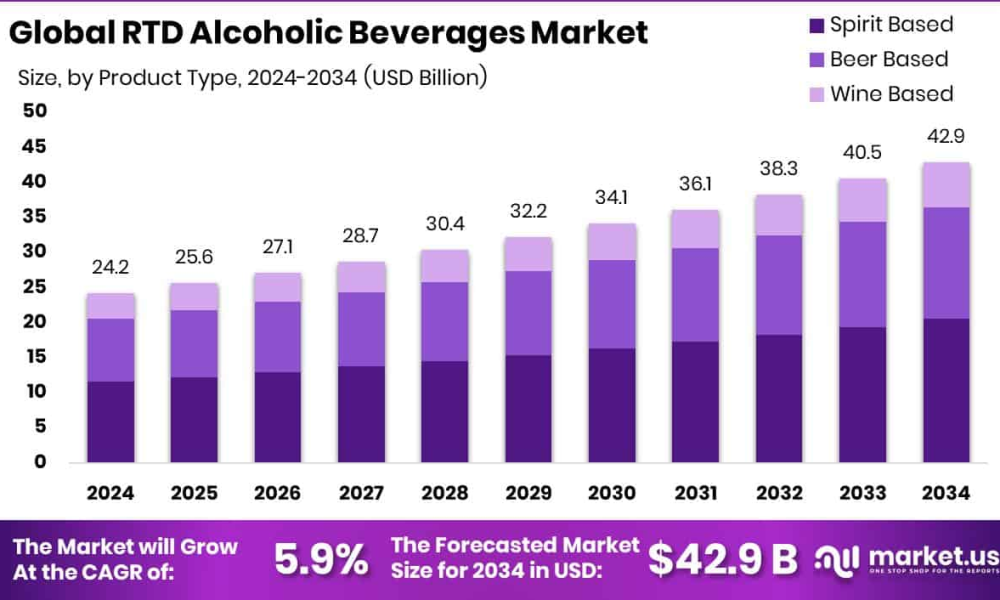
The global Ready-To-Drink (RTD) Alcoholic Beverages Market is projected to reach approximately USD 42.9 billion by 2034, rising from USD 24.2 billion in 2024, with a compound annual growth rate (CAGR) of 5.9% between 2025 and 2034. The Asia-Pacific region remains the key growth driver, accounting for a significant 37.3% market share, fueled by strong consumer demand for convenient alcoholic options.
As one of the fastest-growing segments within the alcoholic drinks industry, RTD beverages include a variety of pre-mixed drinks such as hard seltzers and canned cocktails. Their appeal lies in ease of use, shelf stability, and immediate consumption particularly resonating with urban millennials and Gen Z consumers. This surge in demand aligns with broader lifestyle trends favoring convenience and health-conscious choices, with many RTD products now boasting lower alcohol content, reduced sugar levels, and natural ingredients.
The rising popularity of these beverages is further influenced by increased consumer awareness regarding alcohol intake and calorie content. For example, with wine typically containing 12% alcohol by volume, an annual intake of 6 liters of pure alcohol equates to about 67 bottles of 750 ml wine. In response, lighter and more transparent RTD options are becoming increasingly favored.
Government policies are also impacting the industry. In the U.S., the Craft Beverage Modernization and Tax Reform Act has lowered excise taxes for small and mid-sized producers, encouraging market participation. Meanwhile, states like Oregon are contemplating an 8% sales tax on beer and wine, which could affect retail pricing and sales. Nonetheless, deregulation in several regions has allowed more artisanal brands to thrive.
Sustainability efforts are gaining momentum as well. Australia’s Packamama, a sustainable packaging company, recently received a $100,000 grant under the Business Research and Innovation Initiative (BRII), part of a larger $1.43 million package aimed at enhancing wine packaging sustainability and reducing emissions. These innovations support global goals to minimize the environmental impact of beverage distribution.
Emerging markets are seeing notable developments too. In India, the craft alcohol scene is expanding, with Ronin Wines Private Limited producers of Moonshine mead securing $2 million in pre-Series A funding. This reflects growing investor confidence in niche RTD formats and highlights the category’s potential for growth beyond traditional markets.
Important Revelation
- The global RTD Alcoholic Beverages Market is projected to reach approximately USD 42.9 billion by 2034, rising from USD 24.2 billion in 2024, with a CAGR of 5.9% from 2025 to 2034.
- Spirit-based RTD drinks lead the segment with a 47.8% market share, driven by high consumer demand and broad product appeal.
- Bottled packaging dominates with a 64.2% share, favored for its portability, convenience, and premium look.
- Flavored RTD variants account for 72.1% of the market, reflecting strong consumer interest in innovative and diverse taste profiles.
- Consumers aged 18–25 years make up 36.4% of the total market, influenced by modern lifestyles, emerging trends, and social drinking culture.
- Off-trade distribution channels hold a dominant 68.1% share, highlighting the popularity of retail sales and home consumption convenience.
- The Asia-Pacific region reached a market value of USD 9.0 billion, underscoring its role as a key growth hub for RTD alcoholic beverages.
Download Exclusive Sample Of This Premium Report (Including Full TOC, Table & Figures):
https://market.us/report/rtd-alcoholic-beverages-market/free-sample/
Factors Affecting the Growth of the Rtd Alcoholic Beverages Market
1. Shifting Consumer Lifestyles: Modern consumers, particularly millennials and Gen Z, prefer convenience-driven products that align with fast-paced urban lifestyles. RTD beverages offer portability, no preparation, and immediate consumption making them ideal for casual social occasions, travel, and home gatherings.
2. Rising Demand for Low-Alcohol and Health-Conscious Options: There’s growing interest in beverages that balance indulgence with wellness. Consumers are increasingly opting for RTDs with lower alcohol content, fewer calories, and natural or organic ingredients. These preferences are reshaping product development and boosting market growth.
3. Product Innovation and Flavor Variety: Brands are investing heavily in innovation introducing a wide range of flavors, mixology-inspired cocktails, and seasonal or limited-edition variants. This diversity keeps consumers engaged and encourages trial, especially among younger drinkers.
4. Expanding Off-Trade and E-commerce Channels: The growth of retail formats such as supermarkets, convenience stores, and online platforms has made RTDs more accessible. E-commerce, in particular, has seen a surge post-pandemic, allowing consumers to explore and purchase RTDs conveniently from home.
5. Premiumization and Craft Trends: A growing appetite for high-quality, craft-style beverages is propelling premium RTD segments. Consumers are willing to pay more for artisanal ingredients, sophisticated packaging, and authentic cocktail experiences that mirror bar-quality offerings.
6. Influence of Social Media and Pop Culture: Social media trends, influencer marketing, and celebrity-backed brands have amplified RTD visibility. Aesthetic packaging and lifestyle branding resonate strongly with younger consumers, influencing their purchase decisions.
Report Segmentation
By Product Type Analysis: As of 2024, spirit-based ready-to-drink alcoholic beverages hold a commanding 47.8% share of the market. This reflects a clear consumer preference for RTD products made with spirits like vodka, gin, rum, and whiskey. The rising demand for premium, craft-style cocktails in ready-to-serve formats has significantly boosted this category, especially among urban millennials and young adults. The appeal lies in the strong flavors and traditional characteristics of spirits, delivered in a hassle-free format without the need for mixing. Their popularity is further supported by strong placement in both on-trade and off-trade distribution channels. Additionally, a wide array of flavor options and mixology-inspired innovations have helped sustain consumer interest. Compared to other types, spirit-based RTDs are often viewed as more premium, with broad appeal across various demographic segments.
By Packaging Analysis: In 2024, bottles remained the top choice for RTD alcoholic beverage packaging, securing a 64.2% market share. This preference is largely due to the premium look, better product preservation, and branding opportunities offered by bottled formats—especially for spirit-based and craft RTDs. Glass bottles are favored not only for their durability but also for their recyclability, aligning well with global sustainability trends. Bottled products are particularly dominant in off-trade channels such as retail stores, where presentation and shelf appeal are crucial. Bottles are also often used for exclusive or seasonal editions, adding perceived value and collectibility. While alternatives like cans and pouches are gaining popularity, bottles continued to lead in 2024 due to their traditional appeal and association with quality.
By Type Analysis: Flavored ready-to-drink beverages were the top performers in 2024, capturing a massive 72.1% share of the market. This dominance reflects a growing consumer appetite for taste variety and flavor innovation. These beverages typically feature fruit-forward or herbal notes such as citrus, berry, and tropical blends, which appeal especially to younger consumers. Flavored RTDs are popular for their smooth, easy-drinking nature, making them ideal for social settings and casual occasions. They often come with lower alcohol content, less bitterness, and enhanced drinkability characteristics aligned with current health and lifestyle trends. Strong visual appeal, creative packaging, and regular flavor updates (including seasonal or limited editions) help maintain high engagement and drive repeat purchases. Their adaptability across product lines has solidified their position as the market’s most influential segment.
By Age Group Analysis: The 18–25 age group held the largest market share by age in 2024, accounting for 36.4% of global RTD consumption. This group is the most dynamic and influential consumer segment, driven by a preference for convenience, variety, and trendy alcohol options. For many in this age group, RTDs serve as an approachable and stylish alternative to traditional spirits or beer. Social media marketing, sleek packaging, and vibrant branding heavily influence their purchasing decisions. Moreover, this demographic shows high responsiveness to limited-edition flavors, health-focused formulations (e.g., low-calorie or low-ABV), and innovative experiences all of which are hallmarks of the modern RTD category.
By Distribution Channel Analysis: Off-trade channels including supermarkets, convenience stores, and e-commerce platforms accounted for 68.1% of RTD alcoholic beverage sales in 2024. These retail environments have become the primary distribution avenue due to their convenience, product variety, and competitive pricing. As at-home consumption becomes more common, consumers are increasingly purchasing RTDs for casual gatherings and personal use. Retail visibility, promotional campaigns, and attractive packaging make off-trade formats especially appealing. The rise of online shopping has further accelerated this trend, particularly among younger, tech-savvy buyers. Bulk purchase options and multi-pack offerings have also gained traction, delivering better value and convenience to consumers.
To Purchase this Premium Report@ https://market.us/purchase-report/?report_id=147354
Market Key Segmentation
By Product Type
- Spirit Based
- Vodka
- Tequila
- Rum
- Whisky
- Others
- Beer Based
- Wine Based
By Packaging
- Bottle
- Can
By Type
- Flavored
- Plain
By Age Group
- 18-25 Years
- 26-35 Years
- 36-45 Years
- Above 46 Years
By Distribution Channel
- Off-trade
- Supermarkets/Hypermarkets
- Specialty Stores
- Convenience Stores
- Online Stores
- Others
- On-trade
- Pubs, Bars, and Cafes
- Hotels and Restaurants
- Others
Regional Analysis:
In 2024, Asia-Pacific led the RTD market with 37.3% regional share dominance.
In 2024, the Asia-Pacific region led the global RTD Alcoholic Beverages Market, capturing a dominant 37.3% share with a market value of USD 9.0 billion. This leadership is largely attributed to rapid urbanization, evolving social behaviors, and the growing popularity of low-alcohol beverages among younger consumers in countries such as Japan, China, South Korea, and Australia.
Consumer demand in the region is particularly strong for spirit-based and fruit-flavored RTDs, which appeal to millennials and first-time drinkers seeking convenience, taste variety, and easy-to-consume formats.
North America also maintained a strong market position, bolstered by the widespread retail presence of RTDs and the rising popularity of canned cocktails among Gen Z and millennials. Europe followed closely, benefiting from its entrenched social drinking culture and increasing demand for premium, ready-to-drink alcoholic options.
The Middle East & Africa region, while still a smaller player, is experiencing gradual growth, particularly in urban areas where Western drinking habits are gaining influence. Latin America is also showing signs of emerging demand, with a growing number of product launches and increasing consumer interest in countries like Brazil and Mexico.
Competitive Landscape
- Anheuser-Busch InBev NV
- Asahi Group Holdings, Ltd.
- Bacardi Limited
- Carlsberg Breweries A/S
- Suntory Holdings Limited
- Brown-Forman
- Heineken N.V.
- Diageo plc
- Davide Campari-Milano S.p.A
- Molson Coors Brewing Company
- Mark Anthony Brands International Unlimited Co.
- Pernod Ricard SA
- Accolade Wines Australia Ltd.
- Constellation Brands Inc.
- The Boston Beer Co. Inc.
- Other Key Players
Get in Touch with Us:
Market.us (Powered By Prudour Pvt. Ltd.)
Address: 420 Lexington Avenue, Suite 300 New York City, NY 10170, United States
Send Email: [email protected]



