
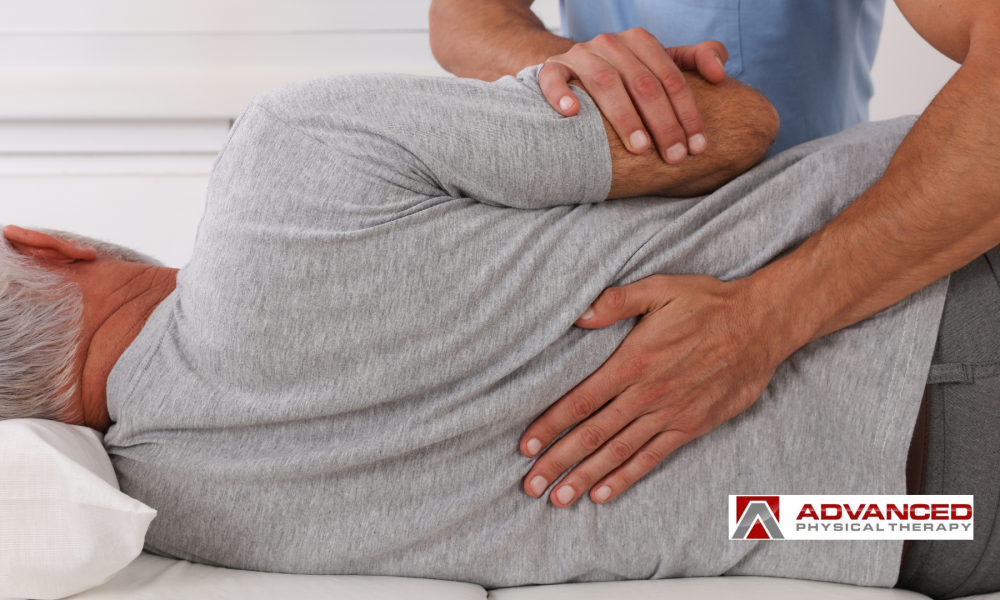
Back pain physical therapy in Lowell, West Rogers, AR is one of the most common reasons athletes and active adults seek outpatient care. But it is far from the only sports-related condition physical therapists treat in this area. Physical therapists who specialize in sports rehabilitation are trained to assess movement patterns, identify the root cause of injury, and build return-to-sport programs that restore both tissue integrity and functional performance before an athlete goes back to full activity.
What Sports Injuries Do Physical Therapists Treat in Lowell, AR
Physical therapists in the Lowell and West Rogers area treat the full spectrum of sports-related injuries across all age groups and activity levels. Conditions seen regularly in outpatient orthopedic clinics serving this region include:
- Ligament sprains of the ankle, knee, and shoulder
- ACL tears and post-surgical ACL reconstruction rehabilitation
- Rotator cuff strains and partial tears from overhead sports
- Hamstring and quadriceps muscle strains in runners and cyclists
- Stress fractures in the foot and tibia from repetitive loading
- IT band syndrome affecting cyclists and distance runners
- Plantar fasciitis from trail running and high-volume walking
- Tennis elbow and golfer’s elbow from racket sports and repetitive gripping
- Concussion rehabilitation for athletes returning to contact sports
- Back pain from compressive loading, poor mechanics, or acute injury during training
Each condition requires a different clinical approach. A generalist exercise program applied to an ACL reconstruction will produce different results than a diagnosis-specific neuromuscular protocol built around single-leg stability and reactive strength.
Back Pain in Athletes and Active Adults
Back pain physical therapy in Lowell, West Rogers, AR affects athletes differently than sedentary patients. Active individuals place higher mechanical demands on the lumbar spine through running gait, cycling posture, overhead lifting, and rotational sport mechanics. These demands can produce disc irritation, lumbar facet joint dysfunction, sacroiliac joint strain, and muscle imbalances that accumulate over training cycles.
Research found that lumbar injuries account for up to 10 percent of all sports-related injuries in competitive athletes, with the highest incidence in sports involving repeated flexion, extension, and rotation. Physical therapists address these injuries through spinal manual therapy, core stabilization training, and movement pattern correction specific to the athlete’s sport demands. The goal is not just pain relief. It is restoring the spinal mechanics required for safe return to full training load.
How Sports Injury Rehabilitation Works
Sports injury rehabilitation at an outpatient physical therapy clinic follows a structured progression across three phases. Understanding these phases helps athletes set realistic expectations and stay consistent through recovery.
Phase one focuses on reducing pain and inflammation, restoring joint range of motion, and protecting healing tissue from reinjury. Manual therapy, ice and heat protocols, and gentle range of motion exercise form the foundation of this phase.
Phase two addresses tissue strength and neuromuscular control. Exercises become progressively more demanding, targeting the specific muscle groups and movement patterns required for the athlete’s sport. This phase also includes proprioception training, which rehabilitates the sensory system that detects joint position and protects against reinjury during dynamic movement.
Phase three is return-to-sport preparation. It involves sport-specific drills, load management, and functional testing to confirm the athlete meets objective strength and movement benchmarks before returning to full competition.
What Makes Sports Rehab Different From General PT
Not all physical therapy programs are built for athletes. General outpatient rehabilitation addresses pain and basic function. Sports rehabilitation goes further by targeting the performance demands of the specific activity the patient wants to return to.
A recreational cyclist recovering from a knee injury needs a program that rebuilds quad and glute strength in the specific range of motion used during pedaling. A youth soccer player recovering from an ankle sprain needs single-leg landing mechanics training before returning to cutting and pivoting on the field. A trail runner recovering from back pain physical therapy in Lowell, West Rogers, AR needs lumbar stabilization work that transfers to the uneven terrain and repetitive impact of trail running, not just pain-free walking on flat ground.
Therapists who hold advanced certifications such as the Board-Certified Sports Clinical Specialist (SCS) from the American Board of Physical Therapy Specialties have demonstrated clinical expertise specifically in athletic rehabilitation beyond what the DPT degree alone requires.
The Role of Dry Needling in Sports Injury Recovery
Dry needling is a technique increasingly used in sports rehabilitation for its ability to release trigger points and reduce muscular inhibition following injury. A thin filiform needle is inserted into a hyperirritable spot within a muscle band, producing a localized twitch response that releases the tension pattern and restores normal muscle recruitment.
A 2021 systematic review published in the Journal of Orthopaedic and Sports Physical Therapy found that dry needling combined with exercise produced greater reductions in pain and disability than exercise alone in athletes with musculoskeletal injuries. For athletes dealing with muscle guarding after a lumbar strain or persistent trigger points in the hip following a hamstring injury, dry needling addresses the neuromuscular component that exercise alone cannot fully resolve.
Blood Flow Restriction Training in Sports Rehab
Blood flow restriction training, known as BFR, is a technique that uses a cuff to partially restrict venous return during low-load resistance exercise. The resulting metabolic stress triggers muscle protein synthesis at loads far below what would normally be required to produce strength gains.
This is particularly valuable in sports rehabilitation when a healing injury cannot tolerate heavy loading. A patient recovering from ACL reconstruction who cannot safely perform heavy leg press can still build quadriceps strength through BFR-assisted low-load exercise. Research from the U.S. Army Institute of Surgical Research has validated BFR as an effective tool for maintaining and rebuilding muscle mass during periods of restricted loading following orthopedic injury.
Serving Athletes in Lowell and West Rogers
The Rogers location of Advanced Physical Therapy is the nearest clinic serving patients from Lowell and West Rogers, AR. Every patient is treated one-on-one by a Doctor of Physical Therapy at every visit. Therapists hold certifications in dry needling and strength and conditioning, and the clinic uses diagnosis-specific protocols rather than generic exercise programs for every sports injury case.
Athletes of all levels, from youth sport participants to adult recreational runners and cyclists, are seen without a physician referral in most cases under Arkansas direct access law. Free consultations are available for new patients who want to discuss their injury and understand what a return-to-sport program would involve before committing to a plan of care.
Surgery Prevention for Sports Injuries
Many athletes assume that a significant sports injury automatically leads to surgery. Physical therapy frequently changes that outcome. The surgery prevention program at Advanced Physical Therapy is designed for patients who have been told surgery may be needed but want to exhaust conservative options first.
For conditions such as meniscus tears, rotator cuff partial tears, lumbar disc herniations, and hip labral irritation, research consistently shows that structured physical therapy produces outcomes comparable to surgical intervention in many patient populations. A 2013 clinical trial published in the New England Journal of Medicine comparing surgery to physical therapy for meniscal tears in patients with knee osteoarthritis found no significant difference in functional outcomes at six and twelve months. Back pain physical therapy in Lowell, West Rogers, AR that begins early and follows a structured progression gives athletes the best chance of recovering fully without surgical intervention.




