
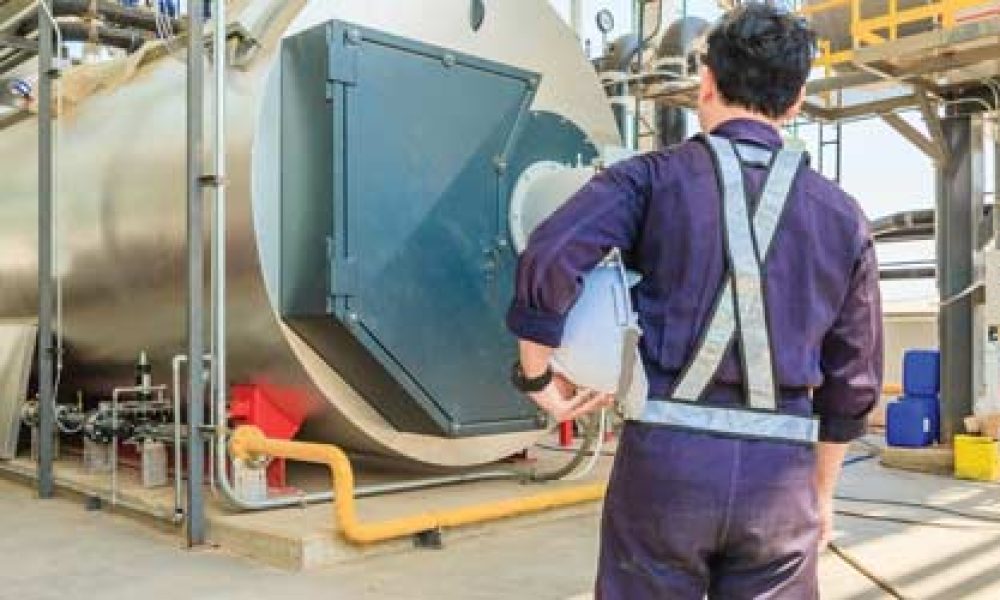
Want to know the crucial role of boiler maintenance in achieving optimal boiler efficiency? If yes, stay connected with this informative guide, as we are going to talk about it. High-efficiency boilers are optimized to ensure that only the minimum amount of energy is used and that valuable natural resources like fuel and water are saved. They are visual in many commercial places, such as office buildings, restaurants, and shops. They create heat, hot water, and steam for various purposes. This informative guide shows how boiler maintenance results in great financial profits and boosts the business.
Why Boiler Efficiency Matters for Boiler Maintenance:
Boiler efficiency shows the energy the boiler provides in the form of heat. A high-efficiency boiler will use less fuel while still being able to create heat, which will help with fuel costs. However, more efficient boilers require less fuel to function, which results in more expenses.
High-efficiency boilers consume less fuel, which in turn lowers business operating costs. They also harness heat from flue gases, which traditional boilers do not. This results in companies being able to cut utility bills and minimize their carbon footprint.
Advantages of High-Efficiency Boilers
Cost Savings:
High-efficiency boilers lessen fuel and water utilization, so their overall energy expenses are low. Companies can save money over time with these boilers.
Improved Performance:
High-efficiency boilers are more reliable and efficient; thus, organizations can optimize their operations processes.
Flexibility:
You can use different fuels, like natural gas, propane, or oil, for boiler cleaning. This makes companies more flexible, as they can choose fuel types depending on availability and price fluctuations.
What Can We Do to Enhance Boiler Efficiency?
Excess air in a boiler is detrimental to efficiency because an increase in heat loss, fuel consumption, and emissions becomes inevitable. The calibration process at different firing levels can be repeated to achieve continuous high efficiency.
Clean the Fireside:
Scrub and monitor the fireside of the boiler tubes often. As carbon accumulates, heat transfer is hampered, and fuel consumption is raised. Maintaining tube cleanliness increases boiler efficiency.
Clean the Waterside for boiler Maintenance:
Good water treatment helps keep the waterfront clean and leak-free. Mud legs or drums should be frequently inspected and washed for enhanced heat transmission. Soft water should be considered, chemicals should be chosen properly, and the boilers should be blown down regularly to prevent scale buildup. If addressed, a significant scale can help performance and result in additional repair and leakage.
Ensure Proper Combustion:
Proper combustion is crucial. A high flue gas temperature leads to boiler inefficiency, as it means that fuel that would have heated water or generated steam is not used. Installing a flue gas economizer will reduce heat loss and boost efficiency by capturing wasted heat from the boiler’s flue gas stream and using it to pre-heat incoming cold water.
Upgrade Insulation
During boiler upgrade, insulating pipes, tanks, and other parts will help the system retain heat and minimize energy losses from its surfaces. Proper insulation also improves the wall temperature and reduces heat loss.
Use High-Efficiency Burners| Boiler Maintenance
High-output burners have been found to utilize less fuel for every unit of heat generated, thereby increasing boiler efficiency.
Measure radiation and convection losses.
Heat is rejected from the boiler surface during operation. Though you can’t stop this, there are two main ways to reduce it: first, through proper insulation of the boiler and the connected piping, and second, by managing air circulation over the boiler surface.
Reduce Excessive Water Levels
Sufficient water levels in the boiler can stop evaporative energy losses and help maintain an efficient system.
Install Heat Recovery Systems
Heat recovery systems extract the residual heat from exhausted gases and circulate it back to the system, increasing the total efficiency.
Wrap up:
Boilers operate for boiler maintenance with different fuels, each with varying degrees of energy content, combustion characteristics, and emissions profiles, affecting boiler efficiency. Hopefully, the information provided in this post on the essential role of boiler maintenance in achieving optimal boiler efficiency will be more helpful to you. Thank you!




