
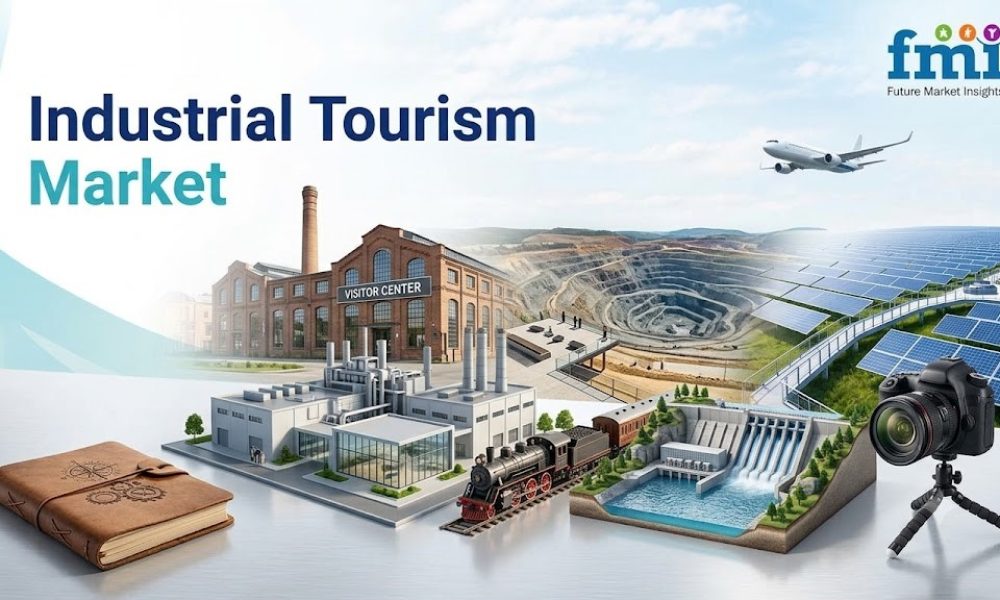
According to the latest market intelligence report published by Future Market Insights (FMI), the global industrial tourism market is estimated to reach USD 19.84 billion in 2026, up from USD 18.4 billion in 2025.
The market is projected to reach USD 42.04 billion by 2036, expanding at a compound annual growth rate (CAGR) of 7.8% from 2026 to 2036. Growth is supported by demand for factory tours, industrial heritage experiences, educational visits, and guided demonstrations that help visitors understand manufacturing processes, industrial history, and craftsmanship.
Factory tours account for 28.9% of demand by experience type in 2026, while educational institutions represent 32.4% of demand by end user. These segments lead their respective classifications as tourism operators organize site access, demonstrations, and group activities around available visitor capacity and operating requirements.
Get detailed market forecasts, competitive benchmarking, and industry insights: https://www.futuremarketinsights.com/reports/sample/rep-gb-16791
Market Size & Growth Forecasts
- 2025 Market Value: USD 18.4 billion
- 2026 Estimated Market Size: USD 19.84 billion
- 2036 Projected Market Value: USD 42.04 billion
- Growth Rate: 7.8% CAGR (2026–2036)
- Incremental Revenue Opportunity: USD 22.2 billion from 2026 to 2036
- Market Expansion Multiple: 2.1x
The industrial tourism market covers paid visits and associated tours involving manufacturing facilities, industrial heritage sites, mining operations, energy facilities, craftsmanship workshops, and maritime industries. The visitor experience varies according to whether a site offers access to active production, preserved industrial infrastructure, or scheduled demonstrations.
Key Market Segments
By Experience Type
- Factory Tours: Account for 28.9% of experience-type demand in 2026, leading the market as visitors seek guided access to production processes and demonstrations. Clear visitor routes, available time slots, and site-specific access arrangements influence the experience offered.
- Industrial Heritage Sites: Provide opportunities to explore preserved factories, machinery, and industrial infrastructure through guided interpretation.
- Mining Tourism: Connects visitors with mining operations, historical sites, and related industrial processes.
- Energy Tourism: Includes visits related to energy facilities and their operating processes.
- Craftsmanship Workshops: Offer opportunities to understand traditional production methods and skilled manufacturing activities.
- Maritime Industry Visits: Connect visitors with maritime-related industrial operations and heritage.
By End User
- Educational Institutions: Represent 32.4% of end-user demand in 2026, supported by the need for organized group visits, guided explanations, and activities that connect industrial processes with learning objectives.
- Cultural Tourists: Seek experiences that explain the history and development of industrial sites.
- Business Travelers: Participate in visits connected with corporate facilities, industrial activities, and business-related itineraries.
- Adventure Enthusiasts: Explore industrial destinations through specialized tours and site experiences.
- General Public: Includes visitors seeking guided factory access, demonstrations, and industrial heritage experiences.
By Other Commercial Categories
The market is also segmented by tourist type, booking channel, age group, and demographic. Tourist types include domestic and international visitors. Booking channels comprise online, telephone, and in-person reservations. Age groups range from visitors under 15 years to those over 55 years, while demographic classifications include men, women, and children.
Country-Level Performance
- China: Projected to register a CAGR of 10.0% from 2026 to 2036, the highest growth rate among the profiled countries. Manufacturing-related visitor experiences and industrial heritage attractions contribute to the country’s market outlook.
- India: Expected to expand at a CAGR of 9.3%, with production-related experiences involving textiles, tea, spices, and automotive manufacturing providing opportunities for educational and guided visits.
- Germany: Forecast to grow at a CAGR of 8.5%. The Zollverein Coal Mine Industrial Complex provides an example of how preserved industrial infrastructure can support heritage-focused visitor experiences.
- Brazil: Projected to record a CAGR of 7.8%, with opportunities involving cachaça distilleries, coffee-related production visits, and craft breweries.
- United States: Expected to register a CAGR of 7.1%. Museums and industrial heritage attractions, including the Boott Cotton Mills Museum in Lowell, provide opportunities to interpret historical manufacturing processes.
- United Kingdom: Forecast to grow at a CAGR of 6.3%, with industrial heritage destinations such as Ironbridge Gorge supporting visits focused on the history of manufacturing and industrial development.
- Japan: Projected to record a CAGR of 5.6%. Manufacturing exhibitions, including those at Toyota Kaikan, provide opportunities to explain industrial processes through visitor-oriented displays.
Major Market Trends & Drivers
- Growing Interest in Industrial Experiences: Guided factory visits and explained production routes give visitors a defined activity. Tourism operators can package these experiences around available slots, site access conditions, and demonstrations that fit normal operating requirements.
- Educational Visits and Group Bookings: Educational institutions account for 32.4% of end-user demand in 2026. Schools and universities need organized schedules, suitable guiding arrangements, and explanations that connect manufacturing processes with learning objectives.
- Industrial Heritage and Demonstrations: Preserved machinery and scheduled demonstrations provide ways to interpret industrial processes without requiring access to active production areas. The Boott Cotton Mills Museum lists weaving demonstrations beginning August 5, 2026, typically lasting 15 minutes, in a setting containing more than 80 historic power looms.
- Heritage Tourism and Site Interpretation: UNESCO documents the Zollverein Coal Mine Industrial Complex in Essen as a preserved industrial heritage site. Such destinations allow visitors to explore industrial history through retained infrastructure and interpretation, with access arrangements differing from those at working factories.
- Operating and Access Constraints: Production changes, restricted visitor routes, safety requirements, and conservation needs can limit the number and type of visits available. Tourism providers must coordinate bookings with actual visitor capacity and the activities a site can deliver.
- Clearer Booking and Visitor Information: Detailed descriptions of schedules, guiding, group arrangements, and accessible areas can help visitors understand what a tour includes. This is particularly important when operators combine industrial visits with transport, admission, or other itinerary services.
Access the Complete Report in PDF Format: https://www.futuremarketinsights.com/reports/brochure/rep-gb-16791
Competitive Landscape
The industrial tourism market includes manufacturers offering corporate visitor experiences, industrial heritage attractions, and booking platforms that connect travelers with organized visits. Competition and differentiation depend on the nature of the experience, site accessibility, the quality of interpretation, booking conditions, and the ability to accommodate groups.
Companies and organizations participating in the market include Volkswagen, Toyota, Heineken, Anheuser-Busch, GetYourGuide, Viator, BMW, and Hyundai.
BMW offers guided museum and plant tours with defined access conditions, while Toyota Kaikan provides manufacturing-related exhibitions. GetYourGuide distributes visitor experiences such as tickets to the Heineken Experience. These examples illustrate the range of offerings within industrial tourism, from corporate exhibitions and guided tours to third-party booking services.
For operators, the ability to communicate the precise experience available is commercially important. A preserved heritage site, a museum exhibition, and a working factory tour offer different levels of access and require distinct visitor arrangements.
Analyst Perspective / Insight
“An industrial visit needs a defined route and activity that the site can deliver within its operating or conservation requirements. A demonstration, a working production area and a preserved heritage complex offer different experiences, so the booking needs to make access clear. Rural tourism can also connect visitors with local production and craftsmanship. Providers give groups a more usable purchase when the schedule, guiding arrangements and visible processes are described together for the actual visit available on the chosen date.”
— Ronak Shah, Principal Analyst, Future Market Insights
About Future Market Insights
Future Market Insights (FMI) is a market intelligence and consulting organization providing research, market forecasts, competitive analysis, and strategic insights across industries. Its coverage spans chemicals, healthcare, food and beverage, technology, packaging, consumer goods, and industrial markets, supporting business planning and investment decisions.
Media Contact:
Corporate Communications Team
Future Market Insights
Email: [email protected]
Phone: +1-347-918-3531



