
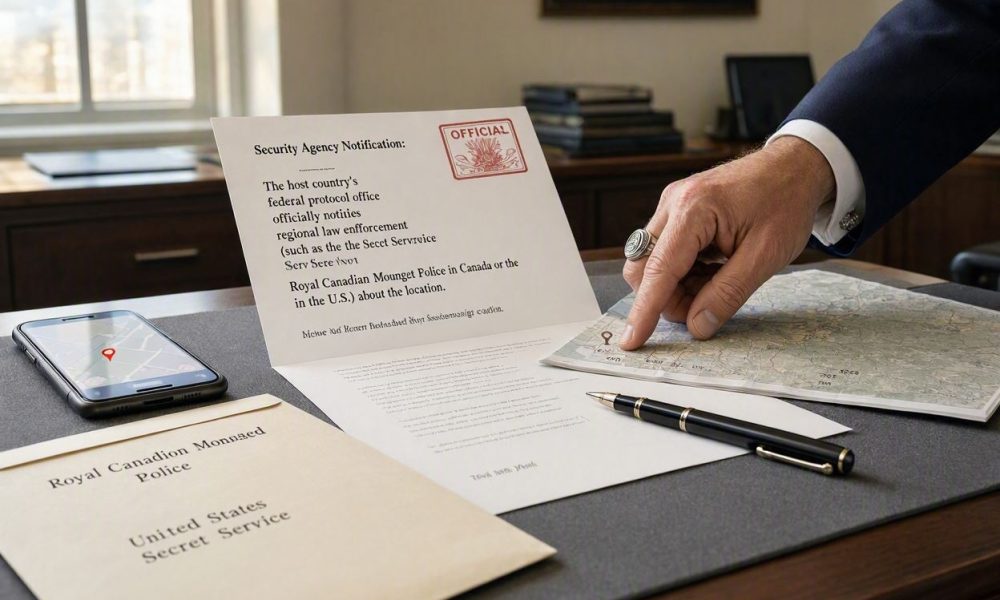
For honorary consuls who maintain active private careers, one of the most important compliance safeguards is preserving a recognizable boundary between official consular functions and commercial activity, including the physical premises, records, communications, personnel, and digital systems used for each role.
WASHINGTON, D.C., September 19, 2026: For an honorary consul who also owns, manages, or works within a private business, one of the most important operational boundaries is keeping official consular activity clearly distinguishable from commercial activity, because the protections associated with consular archives and official acts do not automatically extend to ordinary private business.
The Legal Boundary Begins With Consular Archives
The distinction begins with the Vienna Convention framework, which protects qualifying consular archives while requiring records held by honorary consular officers to remain separate from private correspondence and materials connected with their profession or trade, creating a fundamental boundary between governmental functions and ordinary commercial affairs.
Canada makes this distinction particularly clear through Global Affairs Canada’s rules governing honorary consular appointments, which explain that the inviolability of consular archives kept at a personal residence or business office depends upon those records remaining separate from the honorary consul’s private and professional documents.
The same Canadian framework explains that when official archives are maintained inside a personal residence or commercial office, the entire residence or company office cannot simply be treated as a consulate, because the special legal treatment concerns the qualifying consular archives rather than every room, employee, document, or commercial operation at that address.
A Business Address Does Not Become Diplomatic Territory
An honorary consul may sometimes be authorized to maintain official records or perform approved functions from the same building used for a private company, but sharing an address does not transform the commercial enterprise, its employees, its clients or its ordinary corporate records into protected governmental operations.
The United States likewise requires a sending government seeking approval for an honorary consular post to identify whether the archives and premises will be located at a residence, commercial office, or separate facility, and to clearly identify areas used exclusively for consular purposes when applicable.
That distinction matters because an honorary consul may also be a lawyer, executive, consultant, investor, physician, property developer,r or other professional. However, the official appointment does not convert those private activities into consular functions merely because the same person performs both roles.
Physical Separation Can Be Simple but Must Be Clear
Physical separation does not necessarily require an entirely separate building in every jurisdiction, because governments may permit honorary consular archives to be maintained within an approved private residence or commercial office when appropriate safeguards preserve the identity and integrity of the official material.
A smaller honorary post might therefore use a dedicated office, secured cabinet or clearly designated records area. At the same time, a larger operation might maintain separate rooms or independent premises, depending upon the requirements of the receiving state and instructions issued by the supervising embassy.
What matters is that employees, visitors, regulators and government officials can distinguish the official consular function from unrelated commercial operations without being led to believe that every activity occurring inside the building benefits from consular protection or governmental authority.
Digital Separation Is the Modern Extension of the Same Rule
Although the Vienna Convention predates cloud storage, smartphones, shared servers, and commercial collaboration platforms, the underlying requirement to distinguish official consular archives from private and professional records has clear practical consequences for modern electronic communications and document management.
An honorary consul should therefore avoid allowing official correspondence to disappear into general company email accounts, shared corporate drives or customer-management systems where unrelated employees can access consular information alongside ordinary contracts, invoices, marketing files and private commercial correspondence.
Separate accounts, controlled electronic folders, restricted permissions, secure backups, and documented retention procedures can help maintain the distinction between official and private information while reducing uncertainty if a cyber incident, regulatory investigation, lawsuit, or employment dispute later raises questions about ownership and the legal treatment of records.
Digital separation should therefore be understood as a contemporary operational method for supporting the established requirement that consular records remain distinguishable from private and commercial documents, rather than as a claim that every country has enacted an identical technological rule governing every honorary consulate.
Official Email Should Not Become a Business Marketing Tool
The same principle applies to email addresses, websites and electronic signatures, because communications carrying an honorary consular title can reasonably be interpreted by recipients as governmental or official communications even when the underlying subject concerns an entirely private business transaction.
Government-associated email addresses should therefore be reserved for appropriate official functions. At the same time, private companies should use their normal commercial communications for sales, contracts, investments and professional services without borrowing the appearance of governmental authority merely because an executive also holds an honorary appointment.
An honorary consul who carefully separates those channels protects both roles, because government communications remain recognizable as official. At the same time, customers and counterparties can evaluate private commercial proposals without wondering whether the sending state endorses, guarantees, or participates in the underlying transaction.
The boundary extends beyond office space and records, because official Identification, consular titles, seals, license plates, or similar governmental courtesies should not be used to create commercial leverage when the honorary consul is negotiating private contracts, seeking investment, or conducting unrelated professional activities.
Canada expressly states that recognition documents issued to honorary consular officers may not be used to operate a business. At the same time, its conduct standards require appointees to guard against personal and professional activities that could interfere with the effective and impartial discharge of consular responsibilities.
The practical implication is straightforward: the prestige associated with an honorary appointment must remain connected to genuine consular responsibilities rather than becoming a branding device that makes a private company appear officially backed, diplomatically protected, or commercially endorsed by a foreign government.
Consular Seals and Letterhead Require the Same Discipline
Official stationery, seals and other identifying materials should similarly remain connected to authorized consular functions, because placing a consular emblem or honorary title on an unrelated contract can create confusion about whether the document represents the sending government or merely the private commercial interests of the individual involved.
A private company should consequently avoid presenting ordinary invoices, agreements, financing proposals or investment materials as though they carry diplomatic endorsement merely because a shareholder, director or executive simultaneously serves as an honorary representative of another country.
This separation protects commercial counterparties as much as governments, because customers should be able to understand whether they are communicating with a private company operating under ordinary law or with an authorized representative performing a defined governmental function.
Investigations Have Shown Why the Boundary Matters
The importance of maintaining these distinctions became clearer after ProPublica and ICIJ’s Shadow Diplomats investigation examined hundreds of current and former honorary consuls accused of crimes or controversy, including cases in which investigators alleged that individuals exploited official status for personal or financial advantage.
Those findings should not be interpreted as suggesting that honorary consuls generally misuse their positions, because thousands perform legitimate public functions. However, the documented cases demonstrate why governments and counterparties increasingly scrutinize situations where official titles, private businesses and personal financial interests overlap without clear boundaries.
A well-managed honorary post therefore benefits from making the distinction obvious before questions arise, rather than attempting to determine after a dispute which files, communications or transactions were supposedly governmental and which belonged to the honorary consul’s private professional activities.
Business Employees Are Not Automatically Consular Personnel
Another practical boundary concerns staff, because an employee working for the honorary consul’s private company does not automatically become a consular employee merely because the business and honorary post operate from the same building or share some administrative infrastructure.
Commercial employees should therefore access official records only when properly authorized and when necessary for legitimate consular functions. At the same time, routine company personnel should not casually open, copy, forward, or store protected consular material simply because their employer holds an honorary appointment.
Clear staff instructions become especially important when receptionists, assistants, accountants or information-technology contractors serve both environments, because unclear responsibilities can quickly undermine the separation between government archives and private company records even when no deliberate misuse is intended.
Visitors Should Know Which Office They Are Entering
Public presentation also matters because someone arriving for a commercial meeting should not reasonably believe that they have entered protected diplomatic premises merely because a national flag, coat of arms or honorary-consular sign appears somewhere inside the same building.
Appropriate signage can identify the area used for authorized consular functions while preserving the separate identity of the private business, preventing ordinary customers, creditors, litigants or business partners from assuming that a commercial enterprise itself enjoys governmental privileges.
This distinction becomes particularly important when disputes arise, because a private company cannot convert its contracts, assets, or records into consular material simply by operating near the honorary consul’s official archive or displaying diplomatic-looking symbols within the same property.
Search and Litigation Risks Make Separation Essential
The legal importance of clear record separation becomes particularly apparent during litigation, regulatory inquiries, or lawful searches, because official consular archives may receive protections that ordinary business files do not, provided the protected material has been properly maintained and can be identified as consular documentation.
Canada’s guidance to law-enforcement authorities specifically notes that consular archives held by honorary consular officers should not be searched when they have been kept separate from other office records and clearly identified as consular documents, reinforcing the practical importance of disciplined recordkeeping.
Poor separation can consequently create problems in both directions, because private business records might be incorrectly claimed as protected. In contrast, legitimate consular records can become difficult to distinguish after being mixed indiscriminately with commercial correspondence, accounting material, and unrelated corporate documents.
Honorary Status Is Functional, Not Personal
The broader legal principle behind these rules is that honorary-consular protections generally attach to authorized functions rather than to the individual’s entire personal and professional life, meaning the office does not create a universal shield surrounding everything the honorary consul owns, manages, or does.
Amicus International Consulting has examined this distinction in Diplomatic Passports and Immunity, where the central principle remains that official documents and titles do not independently establish unlimited legal protection outside the recognized diplomatic or governmental status supporting them.
That distinction matters for honorary representatives because many maintain active commercial careers throughout their appointments, so it is necessary to recognize when they are performing an authorized consular function and when they are acting entirely as private professionals.
The Government Appointment Should Not Become a Commercial Endorsement
A company owned by an honorary consul may be respected, successful and entirely legitimate. Still, the appointment itself should not be presented as evidence that the sending government guarantees the company, approves its investments or accepts responsibility for contracts entered into by the individual privately.
Using a government title primarily to increase commercial credibility can blur the very boundary that receiving states seek to preserve, particularly when customers are encouraged to assume that dealing with the company also provides access to foreign officials, diplomatic protection or governmental influence.
The cleaner approach is to disclose the honorary appointment accurately when relevant while making equally clear that unrelated private business remains private, subject to ordinary commercial law and separate from the official functions delegated by the sending state.
Separate Records Protect the Sending Government
Segregating official and private material also protects the appointing government because confidential correspondence, citizen information and communications with an embassy should not become accessible to corporate employees, creditors, purchasers or litigants merely because the honorary consul simultaneously operates a private enterprise.
When records are properly separated, the supervising diplomatic mission can identify what belongs to the consular post, control access where appropriate and arrange the orderly return or transfer of government material after the honorary consul’s appointment ends.
Canada requires the supervising mission to confirm the return of consular archives when an honorary consul’s functions conclude, reinforcing the broader principle that these records belong to the official role rather than becoming part of the former consul’s permanent private business files.
Ending the Appointment Should End Official Use
The end of an honorary appointment makes this separation especially important because official signage, websites, and Identification should be updated so a former representative does not continue to operate a recognized consular office after governmental authorization ends.
Consular archives should be returned or transferred according to the sending government’s instructions. At the same time, business records remain with the private enterprise, creating a clean termination point that prevents old government materials from mixing into the former consul’s ongoing commercial operations.
Without that discipline, a private company could continue displaying outdated references to a government appointment long after recognition ends, confusing customers and potentially suggesting a current governmental relationship that no longer exists.
Status Laundering Can Damage Legitimate Honorary Consuls
The reputational danger extends beyond obvious legal violations because diplomatic titles can provide perceived prestige in ordinary commercial settings, creating opportunities for what might be described as status laundering when governmental association is used to make a private operator appear more authoritative than the underlying business warrants.
Amicus International Consulting’s examination of The State of Diplomatic Passports in 2026 discusses the broader problem of official status becoming confused with personal advantage, particularly when titles or documents imply authority, influence, or protection beyond their actual governmental purpose.
For legitimate honorary consuls, maintaining clear boundaries protects the institution’s reputation, because the public can more easily distinguish genuine government service from situations where diplomatic terminology is used primarily as a private commercial asset.
A Practical Separation Model
A disciplined honorary consular operation should therefore maintain identifiable official records, dedicated communications, restricted access, appropriate signage and documented procedures, while ensuring that its private business continues using separate contracts, accounting systems, marketing materials, correspondence and customer databases.
When physical premises must be shared, the official area and records should remain clearly distinguishable. At the same time, electronic systems should use access controls that prevent consular correspondence from becoming indistinguishable from general company email, shared drives, or ordinary commercial archives.
Employees should also understand which role they are supporting at any given time, because even sophisticated recordkeeping systems can be undermined when staff casually move information between government and business environments without appreciating the legal significance of the distinction.
The NewsTrail Takeaway
The separation between consular space and commercial space is ultimately less about prestige than about legal clarity, because an honorary consul may legitimately maintain a successful private career while simultaneously performing public functions for a foreign government without allowing those two roles to become indistinguishable.
Physical premises may sometimes be shared, and technology may allow official work to be performed from relatively modest facilities, but protected consular archives, official communications, government identification and delegated authority should remain clearly separated from the honorary consul’s ordinary professional and commercial activities.
The practical rule is therefore straightforward: official consular functions should look, operate, and be documented as official consular functions, while private business should remain visibly and operationally private, preventing honorary status from becoming either a shield for commercial activity or a marketing advantage detached from legitimate government service.




