
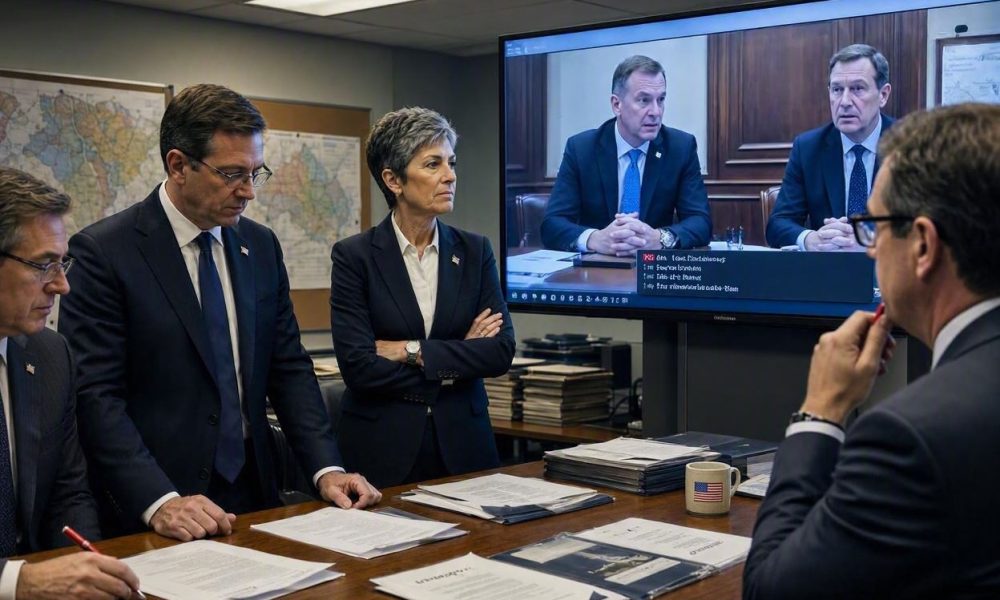
The final Vienna appeals court Judgment does not invalidate America’s corruption indictment. Still, it permanently blocks Austria from surrendering the Ukrainian billionaire and leaves Washington without the defendant required to conduct its long-awaited Chicago trial.
WASHINGTON, D.C., September 1, 2026 — Federal prosecutors have been left empty-handed after Austria’s appellate judiciary declared the extradition of Ukrainian billionaire Dmytro Firtash inadmissible, ending Washington’s twelve-year effort to bring the politically connected gas tycoon before a Chicago federal court.
The legal shockwave stems from diplomatic immunity recognized under international law, which ultimately outweighed earlier Austrian decisions authorizing surrender and turned Firtash’s controversial relationship with a Belarusian diplomatic mission in Vienna into a decisive barrier to American prosecution.
Austria did not declare the United States corruption case itself inadmissible, dismiss the federal indictment, or determine that prosecutors fabricated their evidence, because the court’s ruling concerned whether Austrian authorities could lawfully extradite Firtash while immunity applied.
That distinction matters because the criminal allegations remain pending in Chicago. Yet, the case cannot advance toward trial without Firtash, leaving Washington with legally surviving charges that have lost their immediate operational value.
Firtash continues to deny every accusation and remains presumed innocent. At the same time, the lack of a trial means neither American prosecutors nor the billionaire’s defense can claim a final, merits-based Judgment resolving the disputed bribery, racketeering, and money-laundering allegations.
What Austria Actually Declared Inadmissible
The Vienna Higher Regional Court rejected the prosecution’s appeal challenging a lower court’s refusal to extradite Firtash, making the outcome final within Austria’s ordinary appellate structure and closing the surrender proceedings pursued following his 2014 arrest.
According to an Associated Press report on the final Austrian Judgment, the appellate tribunal found extradition inadmissible because international-law immunity applied. In contrast, an Austrian legal scholar described the ruling as primarily procedural.
The wording does not mean Austrian judges evaluated the American indictment and found its accusations legally inadmissible, because extradition courts generally decide whether surrender requirements are satisfied rather than conducting the criminal trial requested by the charging country.
Austria instead determined that its own authorities could not transfer Firtash to the United States, preventing Chicago prosecutors from acquiring custody while leaving the validity, admissibility, and ultimate sufficiency of their evidence for an American court to decide.
Because Firtash will not presently enter that courtroom, the factual controversy remains unresolved, producing a result that is narrower than an acquittal but practically devastating for the government seeking to prosecute him.
The American Corruption Allegations
The United States Department ofJustice’ss original announcement stated that Firtash and five other foreign nationals were charged in an alleged international racketeering conspiracy involving approximately eighteen-and-a-half million dollars in intended bribes to Indian officials.
Federal prosecutors alleged that participants sought government licenses authorizing the mining of titanium-bearing minerals in Andhra Pradesh, with the proposed commercial operation expected to generate hundreds of millions of dollars through annual international sales.
The indictment characterized Firtash as the alleged enterprise leader who oversaw and directed certain activities. At the same time, charges included racketeering conspiracy, Foreign Corrupt Practices Act violations, money laundering, and interstate travel associated with the purported bribery plan.
Prosecutors contended that titanium products from the contemplated project would be sold to a major aerospace manufacturer headquartered in Chicago, providing an important American jurisdictional connection even though the corporation never completed the proposed transaction.
The company was not accused of wrongdoing, while Firtash challenged the theory that anticipated effects upon a Chicago-based business could justify prosecuting alleged foreign conduct involving Indian officials, Ukrainian and Hungarian participants, and mineral assets located in India.
Why the Indictment Remains Unproven
A federal indictment records allegations approved for prosecution, but it does not establish guilt, replace a trial, or permit news organizations to describe disputed prosecutorial claims as judicially confirmed facts.
Firtash has never appeared before the charging court, entered a plea, confronted government witnesses, challenged admissibility through full pretrial litigation, or presented his defense before jurors responsible for determining whether the evidence meets the criminal standard.
His attorneys have consistently rejected the government’s case, disputed American jurisdiction, questioned prosecution evidence, and alleged that political considerations influenced Washington’s pursuit of a businessman deeply connected with Ukrainian and Russian economic interests.
American authorities deny that characterization through their continued reliance upon the criminal indictment, presenting the matter as an international anticorruption prosecution centered upon alleged payments intended to influence foreign officials and obtain exceptionally valuable mineral licenses.
Austria’s final Judgment resolves neither narrative because diplomatic immunity prevented surrender before an American adversarial proceeding could determine whether the government possessed reliable proof or whether Firtash’s challenges dismantled the case.
The Arrest That Brought Washington to Vienna
Austrian officers arrested Firtash in Vienna in March 2014 after receiving the American request, drawing immediate international attention because his wealth, political relationships, and energy holdings made him one of Ukraine’s most influential business figures.
He was released after reportedly posting 125 million euros in bail, an extraordinary financial guarantee that allowed him to remain outside detention while contesting extradition through Austria’s complex judicial process.
Unlike a conventional hidden fugitive, Firtash remained publicly identifiable in Vienna, appeared through counsel, and openly resisted Washington, making the central question legal authority over surrender rather than law enforcement’s ability to locate him.
His release also allowed an exceptionally well-funded defense operation to continue investigating evidence, developing procedural challenges, examining political circumstances, and pursuing appeals for more than a decade without the pressures of extended incarceration.
The resulting litigation demonstrated how international extradition can become a prolonged contest between sovereign legal systems, especially when the requested individual possesses substantial resources and the underlying prosecution intersects with sensitive geopolitical relationships.
Austria’s First Refusal
An Austrian court initially rejected the United States’ request after concluding that the prosecution appeared politically motivated, giving Firtash an early victory and raising questions aboutWashington’ss motives during a volatile period in Ukrainian politics.
That decision threatened to terminate the case before federal prosecutors could present their evidence to a jury, while reinforcing the defense narrative that Firtash had become a target because of political influence rather than provable criminal conduct.
American authorities maintained that the charges concerned an alleged commercial bribery enterprise. At the same time, Austrian prosecutors challenged the refusal and argued that the lower court had not sufficiently supported its conclusion that the political motivation was impermissible.
A higher Austrian tribunal eventually agreed, reversing the initial decision in 2017 and restoring the legal possibility of transferring Firtash to the United States for trial.
The reversal shifted momentum dramatically toward Washington, suggesting that political arguments would not protect Firtash and that extradition could proceed once the remaining Austrian judicial and executive requirements were completed.
The Justice Department Appears to Prevail
Austria’s Supreme Court upheld extradition during 2019, rejecting a critical defense challenge and confirming that surrender was legally permissible under the evidence, procedures, and international arrangements then examined by the judiciary.
The Austrian justice minister subsequently approved the transfer, apparently completing the principal authorization process and putting the Justice Department within reach of the defendant it needed to activate its Chicago prosecution.
Federal officials possessed an indictment, warrant, international request, appellate authorization, Supreme Court confirmation, and ministerial approval. Yet, they remained dependent upon Austrian authorities physically completing the surrender before additional obstacles emerged.
That transfer never occurred becauseFirtash’ss attorneys continued pursuing authorized challenges, preventing extradition long enough for proceedings to reopen and previously unavailable diplomatic considerations to change the legal landscape.
Washington consequently discovered that winning extradition on paper did not mean obtaining a defendant, because authorization could remain vulnerable until every legal barrier disappeared and physical custody changed hands.
Reopened Proceedings Reverse the Momentum
Firtash’s defense submitted new material and sought to reopen the extradition examination, initiating another procedural struggle after earlier Austrian decisions had apparently settled whether surrender could lawfully proceed.
A lower court rejected reopening in 2022, but a higher tribunal later allowed renewed consideration after finding that additional evidence warranted examination, once again preventing implementation of the American request.
The decision returned the case to a legally unsettled position, providing Firtash with another opportunity to challenge extradition while delaying the transfer Washington had already spent years securing.
Such procedural reconsideration is not automatically an abuse or technical trick, because courts must examine material evidence that could affect surrender, particularly when international prosecution could expose the requested person to permanent and serious consequences.
However, each additional delay increased the chance that witnesses, evidence, diplomatic relationships, immunity claims, or political conditions would change before Austria completed the transfer, creating the vulnerability that ultimately defeated Washington.
The Belarusian Appointment Changes Everything
Firtash reportedly became an adviser connected with BBelarus’spermanent mission to international organizations in Vienna in 2021, taking on a diplomatic role while the American extradition campaign remained unresolved.
The appointment was intensely controversial because Belarus, governed by President Alexander Lukashenko and closely aligned with Russia, selected an internationally wanted billionaire whose political and commercial history intersected with major Ukrainian and Russian interests.
Critics believed the position was designed to obstruct extradition. However, publicly available Austrian findings do not establish that Belarus sold diplomatic status, fabricated Firtash’s duties, or formally violated international rules through the appointment.
Regardless of the undisclosed political motivation, the diplomatic relationship generated a strong immunity claim because Vienna hosts numerous international organizations governed by agreements that protect qualifying representatives, advisers, officials, and mission personnel from specified forms of legal interference.
Firtash’s lawyers turned that status into the decisive argument against surrender, showing how an appointment that initially seemed peripheral could become more important than every factual dispute surrounding the eighteen-and-a-half-million-dollar bribery allegations.
Why Immunity Controlled the Outcome
Diplomatic immunity protects international representatives from coercion by host governments, allowing official missions to function even when political hostility, sanctions, armed conflict, or serious bilateral disputes make relations exceptionally difficult.
These protections can operate before criminal evidence is evaluated, preventing arrest, prosecution, or surrender when international obligations restrict the host country’s authority over an individual possessing qualifying diplomatic status.
Austria therefore considered whether Firtash could legally be extradited while protected, not whether he deserved moral immunity, whether Belarus acted strategically, or whether American prosecutors had convincing evidence of bribery.
Once the court concluded that international-law immunity applied, earlier extradition approvals could not overcome the threshold restriction, because surrender had become legally inadmissible regardless of the unresolved criminal accusations.
Calling this result a technicality understates its importance, since immunity represents a foundational element of diplomatic relations whose consistent application protects legitimate representatives working throughout hostile and politically unstable jurisdictions.
A Controversial Protection With Wider Consequences
The Firtash outcome will encourage scrutiny whenever governments appoint internationally wanted individuals to diplomatic positions after investigations, indictments, sanctions, or extradition proceedings have already commenced.
Western governments may seek stronger mechanisms to challenge questionable credentials. At the same time, prosecutors could argue that strategically timed appointments undermine criminal cooperation and turn diplomatic law into protection for wealthy, politically connected defendants.
Any reform would carry substantial danger, however, because allowing host countries to disregard appointments based upon political suspicion could expose genuine diplomats to selective detention, manufactured prosecutions, and retaliatory withdrawal of immunity.
Courts must consequently distinguish improper manipulation from legitimate sovereign appointments without replacing legal analysis with assumptions about an appointee’s reputation, wealth, political relationships, or hostility toward the requesting government.
Firtash’s case exposes that tension dramatically because the diplomatic role appeared extraordinarily convenient, yet Austria treated its resulting immunity as sufficiently valid and powerful to end a previously authorized extradition.
The Meaning of Being Left Empty-Handed
American prosecutors retain their documents, witnesses, investigative records, indictment, and legal theories, but they lack the defendant whose physical presence is necessary for arraignment and ordinary criminal adjudication.
A prosecution without custody cannot produce a jury verdict, sentence, forfeiture Judgment, or appellate review of conviction, leaving the government unable to transform allegations into enforceable criminal responsibility against Firtash.
Washington may preserve the case indefinitely and monitor his movements. Yet, time can weaken evidence as witnesses become unavailable, memories deteriorate, records grow difficult to authenticate, and changing circumstances complicate future prosecution.
The final Austrian refusal therefore imposes consequences beyond immediate disappointment, because even an unexpected opportunity to arrest Firtash elsewhere could arrive after substantial deterioration in the government’s practical ability to conduct trial.
As Amicus International Consulting’s international legal-risk reporting explains, unresolved charges may remain active for many years while simultaneously restricting mobility, financial access, residency choices, and the ability to conduct ordinary cross-border business.
Firtash Is Protected, but Not Universally Free
Austria’s final Judgment prevents surrender through the concluded proceeding, but it does not create worldwide immunity, erase the American warrant, or require every foreign government to accept Austria’s interpretation.
Another country could evaluate Firtash’s Belarusian appointment differently, particularly if its territory lacks the host agreements governing permanent representations to international organizations operating specifically within Vienna.
Travel beyond Austria may therefore expose him to arrest, provisional detention, sanctions enforcement, immigration refusal, or a separate extradition analysis conducted under different national laws and diplomatic relationships.
His freedom remains geographically conditioned, distinguishing protection inside Austria from unrestricted international movement and ensuring that the pending American case continues exerting practical pressure despite its immediate prosecutorial paralysis.
Other governments may also maintain independent allegations or asset restrictions unrelated to Chicago’s titanium case, meaning the Austrian victory cannot guarantee complete restoration of his financial, political, or commercial position.
The Limits of an American Warrant
An arrest warrant issued by an American court carries domestic legal force. Still, it does not authorize FBI agents to enter Austria, seize Firtash, and transport him to Chicago without Austrian permission.
International extradition depends upon sovereign cooperation, requiring the requested country to apply its statutes, treaties, procedural safeguards, evidentiary standards, human-rights principles, and recognized diplomatic protections before approving transfer.
American authorities can submit evidence, make diplomatic representations, coordinate with foreign police, and challenge unfavorable decisions. Still, they must accept the requested country’s final Judgment even when it destroys a major federal prosecution.
This limitation also protects American sovereignty, because Washington expects foreign governments to respect United States courts when seeking custody of individuals residing or traveling within American territory.
Austria’s refusal therefore demonstrates the structural boundary of American enforcement power, showing how federal prosecutors can build an expansive international case yet cannot overcome a single independent foreign judiciary.
No Evidence of Literal Panic
The final decision unquestionably created a serious Justice Department setback. Still, available public records do not establish that prosecutors panicked, that a Chicago judge condemned Austria, or that federal officials abandoned the indictment.
Sensational language can communicate the magnitude of the loss. Yet, accurate reporting must distinguish inferred institutional frustration from documented statements, especially when no named Justice Department official has publicly described an internal crisis.
Federal prosecutors regularly maintain cases against inaccessible defendants, preserving charges in anticipation that travel, political change, loss of immunity, or cooperation from another jurisdiction will eventually create an opportunity to arrest them.
Firtash may therefore remain a wanted defendant indefinitely, even though the Austrian route has closed and no immediate alternative appears capable of delivering him into CChicago’sjurisdiction.
The government is empty-handed regarding custody rather than evidence or formal charges, a distinction that explains why the prosecution has practically stalled without legally disappearing from the federal docket.
No Ordinary Passport Could Replicate the Shield
Firtash did not defeat extradition simply by obtaining another citizenship, residence permit, investment passport, or immigration status, because those instruments ordinarily provide no diplomatic immunity and cannot cancel foreign criminal proceedings.
Diplomatic accreditation involves separate legal rules, recognition procedures, official functions, host-country arrangements, and international obligations that distinguish it sharply from nationality or ordinary authorization to reside abroad.
Anyone examining lawful international mobility and extradition exposure should reject suggestions that purchasing citizenship can reproduce Firtash’s outcome or guarantee protection against valid warrants in every participating country.
Even recognized diplomats may possess only functionally or geographically limited protections, while immunity can disappear when an appointment ends, credentials are withdrawn, recognition changes, or the individual enters another jurisdiction.
Firtash’s victory arose from highly specialized circumstances involving Belarus, Austria, Vienna-based international organizations, extended litigation, and one billionaire’s exceptional political access rather than an ordinary mobility-planning strategy.
Washington’s Unanswered Questions
The outcome will force American officials to examine why extradition remained incomplete after Austria’s Supreme Court and justice minister had apparently removed the decisive legal barriers to Firtash’s transfer.
Investigators may ask whether the diplomatic appointment was identified early enough, whether its immunity implications were underestimated, and whether procedural opportunities could have been handled differently without violating Austrian law or defense rights.
Public evidence does not establish misconduct by American prosecutors. Still, the institutional failure remains undeniable because favorable decisions accumulated while custody, the only result capable of activating the prosecution, remained unattained.
Future international cases may prompt faster surrender requests after final authorization, closer monitoring of diplomatic credentials, and earlier challenges when wanted individuals receive official appointments during ongoing proceedings.
The Firtash defeat will consequently influence prosecutorial planning far beyond Chicago, particularly in cases involving wealthy defendants who can sustain prolonged litigation and cultivate protective relationships with governments opposed to Washington.
A Legal Ending Without Factual Resolution
Austria has answered whether Firtash can be extradited through the concluded American request, but no court has finally answered whether he directed the bribery enterprise alleged within the federal indictment.
The United States can continue calling him an indicted and wanted defendant. In contrast, his representatives can continue emphasizing that Austrian courts permanently rejected surrender and prevented Washington from placing him on trial.
Neither position supplies a verdict, leaving the public with competing narratives shaped by prosecutorial allegations, defense denials, geopolitical suspicion, diplomatic immunity, and more than a decade of contradictory Austrian proceedings.
Federal prosecutors are empty-handed because they never obtained Firtash, not because Austria declared their corruption evidence inadmissible, dismissed their charges, or determined that the billionaire committed no wrongdoing.
The legal shockwave is nevertheless profound, because one final Austrian Judgment has converted an ambitious American international corruption prosecution into a dormant case whose allegations remain alive while its principal defendant remains legally beyond reach.




