
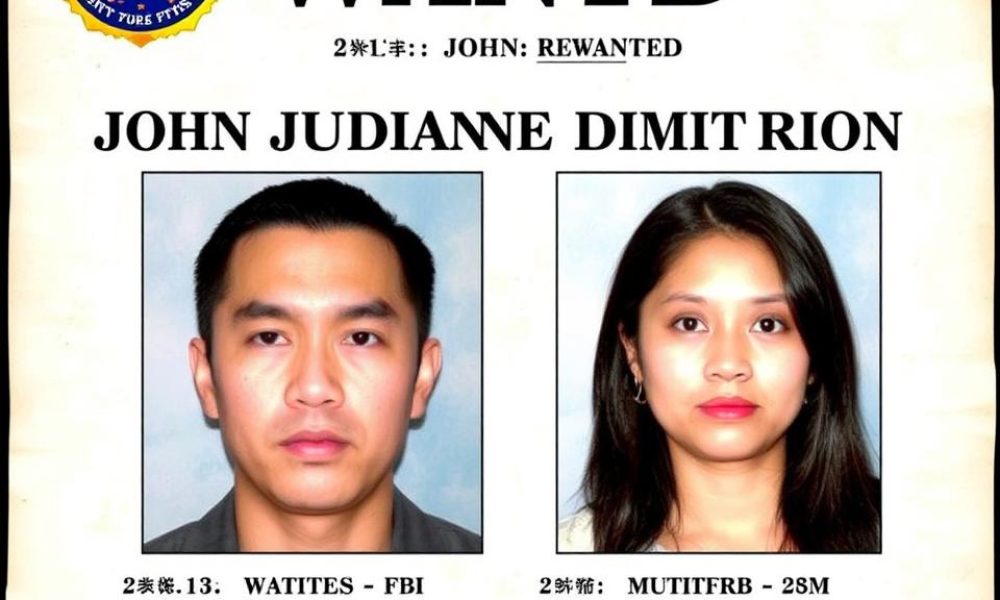
Posing as financial saviors, the couple convinced vulnerable homeowners to relinquish their property deeds under the false promise of saving them from foreclosure.
WASHINGTON, DC, July 3, 2026 — John Michael Dimitrion and Julieanne Baldueza Dimitrion have become symbols of mortgage rescue fraud in Hawaii, where federal authorities say distressed Oahu homeowners were persuaded to surrender property rights under promises of financial recovery that ended instead in devastating personal loss.
FBI Reward Renews Focus on a Foreclosure Fraud Case
The FBI’s wanted notice for John Michael Dimitrion states that he and his wife were indicted in February 2009, pleaded guilty in April 2009, and failed to appear for sentencing in Honolulu on July 6, 2010.
The case received renewed attention after Hawaii News Now reported that the couple had been named to the FBI’s first “Most Wanted Fraudsters” list, bringing new public pressure to a case that has remained unresolved for 16 years.
The False Promise of Saving Homes
Federal authorities say the Dimitrions used their companies to approach distressed homeowners with a message that sounded like a rescue, promising that surrendering homes would improve victims’ financial positions and prevent deeper foreclosure damage.
Instead, prosecutors said the couple promised to invest proceeds from home sales but used victims’ money to fund their own lifestyle, leaving multiple Oahu families without the homes they believed were being protected.
This type of fraud succeeds because it turns fear into leverage, using the threat of foreclosure to make victims believe that a dangerous transfer of property is actually a path toward stability.
How Distressed Homeowners Were Targeted
Homeowners facing foreclosure often confront bank notices, legal deadlines, credit damage, family tension, and public embarrassment, which creates the perfect environment for a confident operator claiming to offer a private solution.
The Dimitrions allegedly positioned themselves as people who understood the system, could manage the crisis, and could transform a homeowner’s financial distress into a controlled recovery plan.
Victims were asked to trust paperwork, promises, and explanations that appeared professional, while the practical effect was that control over valuable property shifted away from families already under pressure.
Why Deed Transfers Are So Dangerous
A property deed is not a casual document because transferring title can permanently change ownership, equity rights, occupancy rights, borrowing capacity, and legal control over a family’s most valuable asset.
Fraudulent rescue operators often describe deed transfers as temporary, technical, or protective, but homeowners may later discover that the transaction has stripped them of rights they cannot easily recover.
That is why no homeowner should sign a deed transfer, sale agreement, equity assignment, or rescue contract without independent legal counsel who has no relationship with the person proposing the transaction.
The Anatomy of a Mortgage Rescue Scheme
Most mortgage rescue schemes begin with emotional reassurance, because victims need someone to ease their panic before they will accept documents that would otherwise seem risky or confusing.
The second stage usually involves urgency, with homeowners being told that foreclosure deadlines, lender pressure, or market conditions require immediate action before they can seek outside review.
The third stage is control, in which the fraud operator gains access to title, proceeds, escrow funds, loan documents, or personal information that can be used for financial gain.
Luxury Lifestyle Built on Victim Losses
The FBI has described John Dimitrion as having expensive tastes in sports cars, clothing, jewelry, high-end personal electronics, and Airsoft replica firearms, while Julieanne Dimitrion was associated with designer goods and costly personal spending.
Those details remain powerful because they show the contrast between homeowners losing shelter and defendants allegedly using victims’ money to maintain an image of wealth, confidence, and social success.
In financial crime, lifestyle evidence often matters because the public can understand the moral difference between a family losing a home and a fraudster enjoying luxury purchased through deception.
Why Victims Believed the Dimitrions
Victims of mortgage rescue fraud are not foolish; they are often rational people making decisions under extreme pressure, with limited time, and in fear of public loss.
A confident adviser can appear credible when the homeowner is exhausted by lender calls, legal notices, complicated forms, and the emotional burden of possibly leaving a family home.
The Dimitrion case shows how fraud can weaponize trust, especially when a business operator appears respectable, knowledgeable, community-connected, and capable of solving problems that ordinary homeowners cannot solve on their own.
The Human Cost of Losing a Home
The loss of a home is not merely a financial event; it affects family routines, children’s stability, neighborhood connections, elder care, credit standing, and long-term emotional security.
For Oahu families, property loss can carry special weight because Hawaii’s housing market is expensive, competitive, and deeply tied to family history, community identity, and intergenerational financial security.
When a home is taken through deception, victims may suffer not only foreclosure damage but also shame, anger, grief, and the lingering belief that they should have recognized the danger earlier.
Red Flags Every Homeowner Should Recognize
A homeowner should treat any guaranteed rescue offer as suspicious when it requires transferring title, surrendering equity, avoiding legal advice, signing quickly, or trusting verbal promises over written protections.
Another warning sign appears when the proposed rescuer claims that the homeowner can stay in the property while someone else temporarily holds title for strategic reasons.
A third red flag appears when sale proceeds are supposed to be invested or managed by the rescue provider, because that structure creates opportunities for misappropriation and delayed discovery.
What Legitimate Help Looks Like
Legitimate foreclosure assistance should involve licensed professionals, written fee disclosures, independent legal review, transparent communication with lenders, escrow accountability, and a clear explanation of all risks before documents are signed.
A responsible adviser will not pressure a homeowner to hide information from lenders, avoid attorneys, ignore court notices, or sign documents that they do not fully understand.
Real help usually feels slower than fraud because it includes verification, documentation, disclosure, and independent review, while fraudulent help often feels fast, comforting, and strangely simple.
Legal Planning Versus Exploitation
The Dimitrion case also illustrates the difference between lawful planning and predatory exploitation, because legitimate advisory work protects client interests through documentation, transparency, and accountable professional relationships.
In private-client matters, firms such as Amicus International Consulting emphasize that lawful cross-border planning, privacy, and relocation strategies must be separated from secrecy, evasion, or unsupported promises that collapse under legal review.
That distinction matters because vulnerable clients may be searching for urgent solutions, and legitimate professionals must never exploit distress by turning uncertainty into control over property, identity, or assets.
Why Fugitive Status Matters
The couple’s failure to appear for sentencing transformed the case from a completed guilty-plea proceeding into a long-running fugitive matter that continues to frustrate victims and investigators.
White-collar fugitives can be difficult to locate because they may avoid public-facing employment, use private support networks, rely on cash, move between jurisdictions, and limit predictable contact with institutions.
For federal authorities, renewed publicity can revive old leads, prompt recognition from acquaintances, and remind the public that financial fugitives do not escape accountability simply because years have passed.
International Mobility and Legal Boundaries
The Dimitrions’ fugitive case also shows why lawful relocation, citizenship, and privacy planning must never be confused with helping defendants escape court orders, warrants, or restitution obligations.
Professional services involving second-passport advisory and relocation planning must operate within legal systems because legitimate mobility is based on compliance rather than concealment.
That boundary protects clients, advisers, governments, and financial institutions, while reinforcing that no private planning strategy can lawfully erase a criminal case or defeat a federal warrant.
The FBI’s Public Appeal
The FBI asks anyone with information about John or Julieanne Dimitrion to contact federal authorities, the nearest FBI office, an American embassy or consulate, or the bureau’s national tip system.
Members of the public should not attempt direct confrontation because fugitive investigations require careful handling, verification, officer safety, and proper documentation of sightings or communications.
Even minor details may matter after many years, including aliases, old phone numbers, unusual travel explanations, financial contacts, private employment, family communications, or stories that seem inconsistent with a person’s claimed background.
Why the Story Still Resonates
The Dimitrion case resonates because it contains three elements that make financial crimes especially painful: vulnerable victims, a trusted promise of rescue, and the permanent loss of something emotionally irreplaceable.
Unlike some investment fraud cases where losses appear abstract, mortgage rescue fraud reaches directly into family life because the asset at stake is the place where people sleep, gather, and build memories.
That human dimension explains why the case remains compelling long after the original guilty pleas, especially as the FBI’s renewed list of fraudsters places the couple back before the public.
Final Analysis
The alleged mechanics of the Dimitrion scheme remain a warning to every distressed homeowner, because foreclosure fear can make dangerous promises sound reasonable when they are delivered with confidence.
The safest rule is simple but often ignored during a crisis, because no deed transfer, equity assignment, home sale, or rescue contract should ever proceed without independent legal review.
For victims, the renewed FBI reward represents another chance for accountability after years of uncertainty, anger, and unresolved harm caused by a scheme that federal authorities say cost multiple Oahu families their homes.
For the public, the lesson is broader and more urgent: anyone offering to save a home by taking control of it should be questioned, verified, and reviewed before a single signature is placed on paper.




