
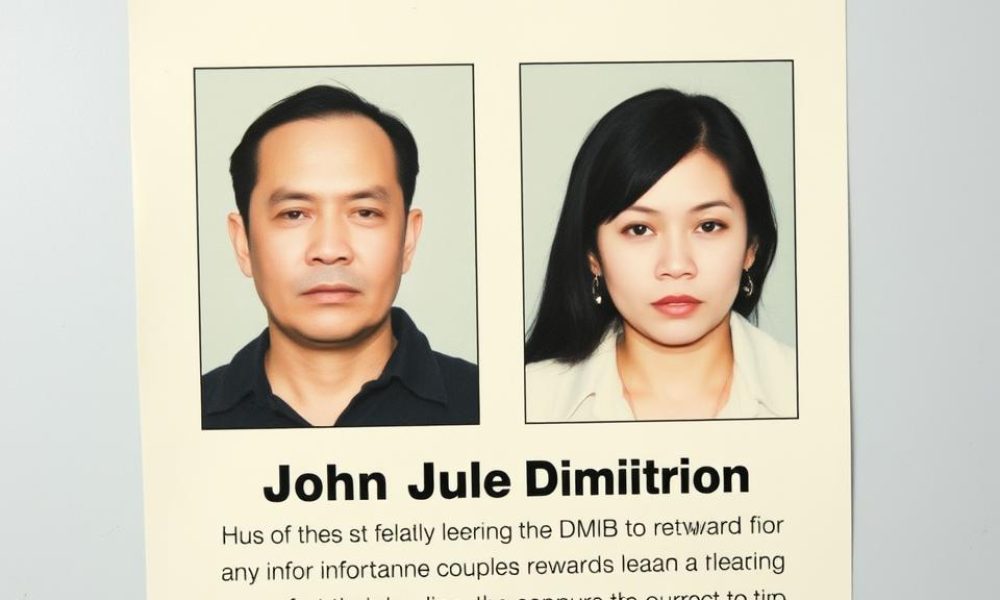
Raised in a wealthy household by a medical doctor, the Punahou-educated fraudster used his privileged background to deceive financially distressed homeowners.
WASHINGTON, DC, July 3, 2026 — John Michael Dimitrion’s story has become one of Hawaii’s most striking white-collar fugitive cases, moving from privilege, private-school credibility, and community respect to federal warrants, mortgage fraud victims, and a renewed national manhunt backed by a $150,000 reward.
FBI Renews Attention on John Michael Dimitrion
The FBI’s wanted notice for John Michael Dimitrion states that he and his wife, Julieanne Baldueza Dimitrion, pleaded guilty in April 2009 to operating a mortgage fraud scheme that caused multiple Oahu families to lose their homes.
The couple’s case returned to national attention after Hawaii News Now reported that the Dimitrions were placed on the FBI’s first “Most Wanted Fraudsters” list, nearly 16 years after they vanished before federal sentencing.
A Privileged Background Became Part of the Deception
According to a retired FBI agent quoted in local reporting, John Dimitrion attended Punahou School and grew up with the advantages of a privileged household, including a father who worked as a medical doctor.
That background mattered because credibility is often the first currency in financial fraud, especially when victims are asked to trust a person who appears educated, polished, connected, and socially respectable.
Dimitrion’s public image reportedly helped him appear trustworthy to homeowners already under pressure, creating a powerful contrast between his presentation as a rescuer and the criminal conduct he later admitted in court.
How the Mortgage Fraud Scheme Targeted Distressed Families
Federal authorities said the Dimitrions used their companies to convince financially distressed homeowners to relinquish their homes, while promising that the arrangement would improve the victims’ financial position and protect them from worsening hardship.
Rather than helping those families recover, the FBI said the couple promised to invest proceeds from home sales, then used victims’ money to fund their own lifestyle while multiple Oahu families lost their homes.
The scheme was especially destructive because it targeted people during moments of fear, confusion, and financial vulnerability, when homeowners facing foreclosure may believe any confident promise that appears to offer stability.
From Community Respect to Federal Fugitive
John and Julieanne Dimitrion were indicted in February 2009, pleaded guilty in April 2009, and were scheduled to appear for sentencing in the United States District Court for the District of Hawaii on July 6, 2010.
When they failed to appear, the case shifted from mortgage fraud prosecution to fugitive investigation, leaving victims without immediate closure and giving federal authorities a long-running case that would later become nationally visible.
Their disappearance has become part of the broader lesson of white-collar crime, because financial criminals can appear respectable until accountability arrives, then rely on resources, networks, and mobility to escape consequences.
The Lifestyle Behind the Fraud Allegations
The FBI has described John Dimitrion as having expensive tastes in sports cars, clothing, jewelry, high-end personal electronics, and a large collection of Airsoft replica firearms.
Those details have remained central to the case because they stand in sharp contrast to the losses suffered by victims, who believed they were dealing with professionals capable of protecting their homes and finances.
Fraud cases often leave lasting public anger when alleged or admitted wrongdoing appears to be connected to luxury consumption, because victims see their hardship reflected in the lifestyles of those who betrayed them.
Why Punahou and Privilege Matter in the Story
Punahou School is widely associated in Hawaii with academic prestige, social access, and community standing, which makes Dimitrion’s alleged use of trust and reputation especially troubling in the context of mortgage rescue fraud.
The point is not that privilege causes crime, but that privilege can become a tool of persuasion when fraudsters use education, family reputation, polished speech, and social confidence to quiet suspicion.
For distressed homeowners, a well-presented adviser may feel safer than an unknown operator, especially when the person appears familiar with finance, law, property records, and professional language.
Mortgage Rescue Fraud Relies on Emotional Pressure
Mortgage rescue fraud succeeds because homeowners facing foreclosure are often trying to preserve dignity while navigating bank notices, legal deadlines, family stress, and the fear of losing everything they worked to build.
Fraudsters exploit that pressure by presenting complicated transactions as lifelines, while encouraging victims to move quickly before they can obtain independent legal advice or fully understand ownership consequences.
In many cases, the documents look official, the language sounds reassuring, and the promise seems humane, yet the transaction quietly transfers control away from the homeowner.
The Red Flags Homeowners Should Recognize
A homeowner should become cautious whenever a rescue provider asks for title transfers, discourages outside counsel, promises guaranteed relief, pressures immediate signatures, or claims that complicated documents are simply routine paperwork.
Another serious warning sign appears when the adviser benefits financially before the homeowner receives verifiable relief, because legitimate professionals should clearly explain fees, risks, conflicts, and ownership consequences in writing.
Families should also independently confirm every statement involving title, escrow, refinancing, sale proceeds, occupancy rights, credit repair, and investment promises before signing documents that could permanently alter property rights.
Legal Planning Is Different From Deceptive Rescue Promises
The Dimitrion case also illustrates the difference between lawful financial planning and fraudulent rescue claims, as legitimate advisers document risks, disclose conflicts, maintain transparency, and never rely on secrecy to evade accountability.
In the broader private-client world, firms such as Amicus International Consulting emphasize that international planning, privacy, and relocation strategies must be built on lawful documentation rather than concealment, evasion, or unsupported promises.
That distinction matters because lawful planning protects clients through compliance and structure, while fraudulent schemes often begin with personal trust, emotional pressure, and explanations that collapse under independent review.
Fugitive Status and International Mobility
John Dimitrion’s fugitive status is also a reminder that lawful mobility should never be conflated with fleeing justice, as relocation planning cannot be used to evade sentencing, warrants, restitution, or court orders.
Professional advisory work involving a second passport and citizenship planning must remain separate from any attempt to help fugitives evade authorities, hide assets, or defeat lawful criminal proceedings.
That boundary protects governments, advisers, financial institutions, and legitimate clients, while reinforcing that citizenship and identity planning must operate within legal systems rather than outside them.
Why the Case Still Resonates in Hawaii
The Dimitrion case remains emotionally powerful in Hawaii because homes carry deep financial, cultural, and family meaning, especially in a market where property loss can permanently alter a family’s future.
When distressed homeowners lose their homes through deception, the damage extends beyond dollars, affecting credit, stability, inheritance, community roots, and the sense of safety that comes from homeownership.
That lasting harm explains why the case continues to attract attention years later, especially now that the FBI has put the couple back before the public through a national fraud fugitive campaign.
What the Public Should Do
The FBI asks anyone with information about John Michael Dimitrion or Julieanne Baldueza Dimitrion to contact federal authorities, an FBI field office, or an American embassy or consulate if the information arises overseas.
Members of the public should avoid direct confrontation because fugitive investigations are safest when tips are documented, specific, and submitted through official channels that allow trained agents to assess credibility.
Even small details can matter after many years, including possible aliases, unusual travel stories, financial activity, employment claims, vehicle interests, family contacts, or sightings connected to high-end electronics and lifestyle patterns.
Final Analysis
John Michael Dimitrion’s fall from privilege to federal fugitive status is a warning about how social credibility can become dangerous when it is used to disarm victims rather than protect them.
His Punahou education, privileged upbringing, and polished presentation allegedly helped create the appearance of reliability, yet federal authorities say the couple’s conduct caused multiple Oahu families to lose their homes.
For homeowners, the lesson is direct and urgent, because no rescue plan should proceed without independent legal review, written verification, and a clear understanding of who receives control, money, and legal benefit.
For federal investigators, the renewed reward sends a clear message that white-collar fugitives can remain enforcement priorities long after they disappear, especially when their crimes left families damaged and waiting for accountability.




