
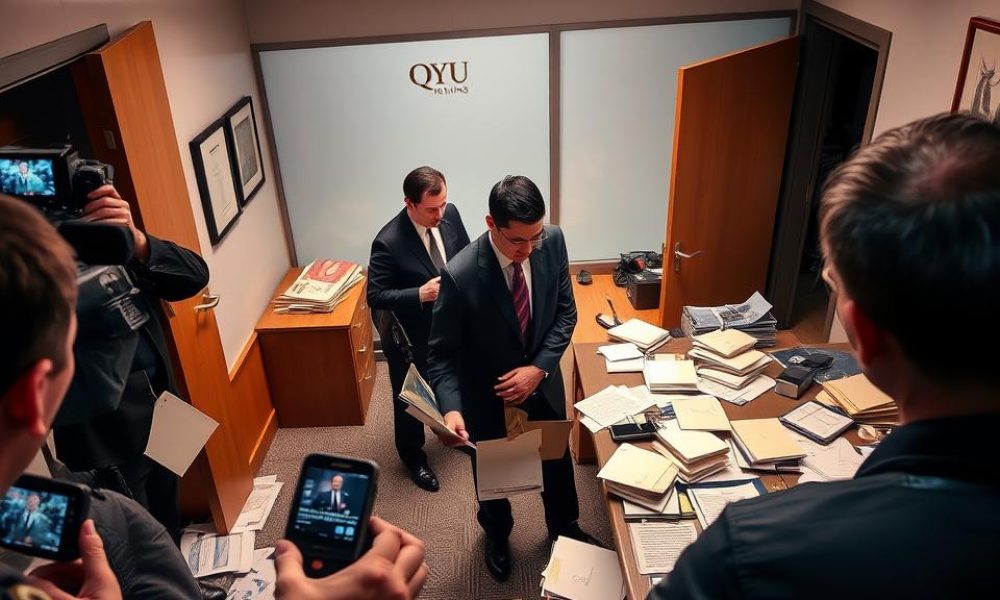
Federal investigators allege incoming investor capital financed distributions, operating expenses, and personal expenditures rather than legitimate foreign exchange trading.
WASHINGTON, DC, June 30, 2026
The QYU Holdings allegations show how investor deposits can be diverted to personal spending when a promoter controls both the money and the story investors are told about the supposed trading activity.
According to the United States Department of Justice, Darren Anthony Robinson was indicted on eleven counts of wire fraud and one count of money laundering after prosecutors alleged that QYU obtained approximately $100 million from investors.
The government’s case describes a purported foreign exchange trading firm that allegedly collected investor capital, issued misleading information, and used funds in ways that did not align with the trading purpose investors believed they were funding.
That alleged gap between investor deposits and actual use of funds is the central warning, because fraud often begins when capital is raised for one purpose and quietly redirected to another.
The Deposit That Became A Risk
For investors, the moment of greatest risk often occurs when money leaves their account and enters a structure controlled by someone else, especially when the investor cannot directly verify custody or trading activity.
In the QYU matter, regulators said participants deposited money into a corporate bank account controlled by Robinson, rather than into a properly carried pool trading account tied directly to verified market activity.
That structure posed a serious risk because the same person promoting the opportunity allegedly controlled investor funds, business spending, account reporting, and the explanation of how returns were supposedly generated.
When one promoter controls too many parts of the process, investors lose the independent checks that normally help prevent misappropriation, false reporting, and hidden personal spending.
Personal Spending Allegations
The CFTC stated that Robinson and QYU misappropriated investor funds for personal expenses, including luxury cruises, airfare, vehicle purchases, real estate purchases, credit card payments, and daily living expenses.
Those allegations are important because they transform the case from a story about missing trading profits into a more direct account of investor capital allegedly funding lifestyle and operating needs.
Personal spending can also reinforce fraud, as visible wealth may make the promoter appear successful, financially sophisticated, and personally credible to investors who mistake consumption for evidence of investment skill.
The danger is that expensive travel, vehicles, property, and polished appearances may not indicate legitimate profits, especially when the same promoter controls the deposits being solicited from new investors.
Earlier Investors And Later Money
The FBI sought information from potential QYU victims after Robinson was charged with wire fraud, reflecting the continuing effort to identify investors and reconstruct what happened to their funds.
Federal authorities alleged that money from newer investors was used to make distributions to earlier investors, creating an illusion of stability while concealing the absence of legitimate trading results.
That pattern is especially dangerous because earlier investors may believe they earned profits, while newer investors may interpret those payments as proof that the opportunity has already been tested and validated.
In reality, Ponzi-style payouts can become marketing evidence within the victim community, causing one group of investors to unknowingly help persuade the next.
Why False Account Statements Matter
False account statements are a powerful tool because they give investors a document to hold, review, and believe, even when the numbers allegedly do not correspond to actual trading performance.
A statement showing profits may reduce skepticism, discourage withdrawals, support reinvestment, and allow the promoter to delay difficult questions from investors who believe their capital is growing.
In QYU, prosecutors and regulators alleged that investors received false statements and fictitious trading data, creating the appearance of profitable foreign exchange activity where little or no meaningful trading allegedly existed.
Investors should always verify account statements directly with regulated custodians or brokers, as documents generated by the promoter may be designed to confirm the story rather than reveal the truth.
The Human Cost Of Redirected Funds
When investor deposits are diverted to personal spending, the harm goes far beyond the numbers, as victims may lose retirement security, family savings, business reserves, medical funds, and confidence in future financial decisions.
The betrayal is especially painful when victims trusted personal referrals, professional presentations, or community relationships that made the opportunity feel safer than an anonymous investment advertisement.
Families may later face delayed retirement plans, postponed relocation, tax complications, legal expenses, and difficult conversations about why money once believed to be secure cannot be recovered quickly.
That emotional damage is one reason financial fraud investigations require careful victim outreach, detailed records, and honest explanations about what happened to investor money.
Why Global Investors Must Be Careful
Cross-border investors face additional risks because international structures, foreign bank accounts, offshore references, and multi-country investor groups can make fraudulent activity appear more sophisticated than it actually is.
A promoter may reference global operations, multiple jurisdictions, and foreign exchange markets to create credibility, while investors struggle to verify registration, custody, account ownership, and actual trading records.
For private clients, Amicus International Consulting emphasizes that lawful international planning should be built on clean documentation, regulated banking channels, and defensible source-of-funds records.
Privacy is valuable when it protects legitimate families and businesses, but it becomes dangerous when investors accept secrecy, vague accounting, or unexplained money movement as normal.
The Due Diligence Standard
Every investor should confirm whether a promoter is registered, whether the investment pool is registered, whether funds are independently held, and whether trading records can be verified directly with regulated institutions.
Investors should also demand audited financial statements, written risk disclosures, account-level reconciliations, tax documentation, and clear explanations of who controls withdrawals before committing significant capital.
If an opportunity depends on personal trust, urgency, secrecy, or fear of missing out, the investor should pause because legitimate financial professionals should welcome careful review.
The strongest protection is a documented process that treats every promise as unproven until an independent professional confirms the account, the trades, the custodian, and the legal structure.
Compliance Consequences Beyond Losses
A fraudulent investment can create future compliance problems because banks, trustees, immigration officers, and tax advisers may later ask detailed questions about transfers connected to the scheme.
Internationally mobile clients may need to explain why money moved into a fraudulent pool, whether any funds were recovered, and whether source-of-wealth records remain complete.
Resources such as Amicus International Consulting’s legal identity and second-passport planning guidance explain why global mobility requires clean records to support banking, residency, tax, and identity reviews.
The QYU case, therefore, serves as both an investor protection lesson and a compliance warning for anyone moving wealth across borders.
What Victims Should Preserve
Victims should preserve wire confirmations, bank statements, subscription documents, account statements, emails, text messages, tax records, promotional materials, withdrawal requests, and communications with recruiters or QYU representatives.
Those documents can help investigators, lawyers, accountants, and recovery professionals determine what was promised, what was paid, where funds moved, and who repeated potentially misleading statements.
Victims should also record any claims about lifestyle, trading success, luxury purchases, property ownership, or prior investor payouts because those statements may have influenced investment decisions.
The more complete the record, the easier it becomes to reconstruct the scheme, support victim claims, and avoid confusion during future tax or banking reviews.
A Final Warning
The alleged flow of QYU funds shows why investors must never assume that a deposit is being used as promised simply because the promoter provides confident explanations and professional-looking statements.
A legitimate investment should have a clear paper trail from the investor deposit to the custody account, trading activity, performance reporting, fee calculations, tax documentation, and withdrawal history.
When that paper trail is missing, incomplete, or controlled entirely by the promoter, investors should treat the opportunity as high risk regardless of apparent returns or personal introductions.
The clearest lesson from QYU is that investor money must be protected before it moves, because once deposits are used for personal spending, recovery is uncertain and the damage can last for years.




