
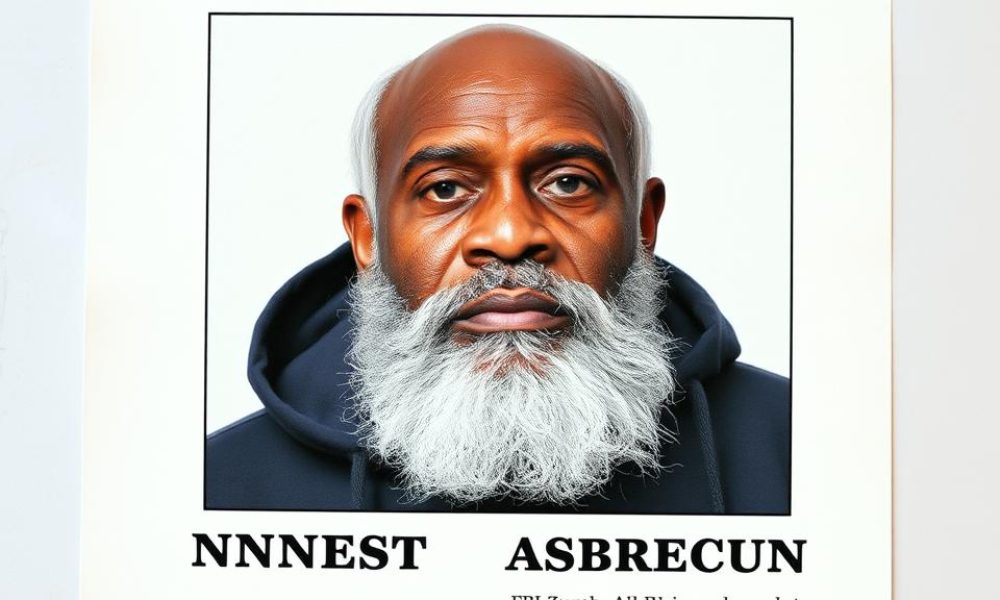
Part 11: The Bounty That Broke the Case
A major FBI reward, a new national fraud-fugitive list, and renewed pressure on Philippine authorities helped turn Herb Kimble’s Manila refuge into a shrinking target zone within days of public exposure.
VANCOUVER, BC, June 29, 2026, Herbert “Herb” Kimble had spent months beyond the reach of a South Carolina courtroom, but the public reward campaign that followed his placement on the FBI’s new fraud-fugitive list changed the pressure around him almost overnight.
The $150,000 reward did not operate like a movie bounty because the FBI was not asking civilians to chase a fugitive, confront him, or take risks that belong only to trained law enforcement officers.
Instead, the reward turned information into leverage, giving people in Manila, Pasig, expatriate circles, service networks, commercial districts, and immigration channels a reason to notice, remember, and report what they knew.
When the FBI launched its Most Wanted Fraudsters list on June 4, 2026, Kimble became one of the most visible financial fugitives in the world.
The list changed the economics of silence.
Fugitives survive through silence because landlords stay quiet, drivers do not ask questions, acquaintances avoid involvement, service providers ignore suspicion, and people around them convince themselves that the matter is distant.
A large reward changes that economy because silence suddenly has a price, while cooperation offers money, protection, official channels, and a way to avoid being pulled into the fugitive’s legal danger.
For Kimble, the reward mattered because he was not hiding in a remote wilderness where no one could see him, but inside an urban environment where ordinary life required repeated contact with people.
Housing, food, transport, phones, medical support, documents, money movement, and daily routines all create human witnesses who may not care until public pressure gives them a reason to care.
That is why the reward was powerful, because it converted routine observation into potential intelligence.
Four days became the political headline.
The Department of Justice later stated that Kimble was apprehended on June 8, just four days after the Most Wanted Fraudsters list was launched, making his capture an immediate proof point for Washington’s new fraud crackdown.
Philippine reporting later described his arrest by immigration agents in Pasig City on June 11 and his deportation on June 18, while also noting that immigration agents had spent months tracking his whereabouts.
Those timelines are not necessarily incompatible because public apprehension, local arrest processing, intelligence development, and deportation logistics can be described differently by different agencies.
What matters for the public story is that the wanted-list launch created a sudden visible escalation, and within days, Philippine cooperation moved Kimble out of hiding and toward U.S. custody.
The reward did not replace months of tracking, but it appears to have intensified the final phase.
The public became part of the manhunt.
The FBI’s wanted-list strategy was designed to push fraud fugitives beyond the agency’s files and into the communities, workplaces, networks, and foreign environments where they might be living.
Kimble’s case fit that strategy perfectly because he was accused of orchestrating a $1.2 billion Medicare fraud scheme, had pleaded guilty, cooperated for years, failed to appear for sentencing, and was believed to be in Manila.
The reward gave the public a clear reason to pay attention, while the wanted profile supplied the face, name, aliases, case background, and warning that made recognition easier.
A fugitive who once depended on the obscurity of complex healthcare fraud was suddenly reduced to a simple public question.
Have you seen this man, and do you know where he is?
Manila became a smaller city.
Manila can look enormous from the outside, with dense neighborhoods, luxury hotels, casinos, business districts, private clinics, call centers, malls, serviced apartments, and expatriate networks spread across Metro Manila.
For a fugitive, that scale can instill confidence, because a city of millions seems capable of absorbing a single foreign defendant who understands the region and knows how to navigate commercial life.
The reward altered that calculation by making each ordinary point of contact more dangerous, including hotel staff, drivers, landlords, restaurant workers, security guards, medical providers, and people from prior business circles.
A large city is useful to a fugitive only while the fugitive remains unimportant to the people around him.
Once money and publicity attach to his name, the same city becomes a network of possible reporting points.
The Philippines connection was already obvious.
Kimble’s presence in the Philippines was not an unpredictable surprise because federal sources had already identified Manila as his possible whereabouts after he failed to appear for sentencing in South Carolina.
His underlying fraud operation also had a connection to the Philippines, because the Medicare brace scheme relied on offshore call-center activity that contacted American beneficiaries and pushed them toward medically unnecessary orthopedic braces.
That history meant investigators and local authorities did not need to search the world at random, because Kimble’s own business geography pointed to the place where he later hid.
The reward amplified that geography by asking people inside the likely hiding environment to provide the details that could turn general suspicion into action.
The public pressure worked because it targeted a region already central to the story.
The reward gave insiders a reason to move first.
A fugitive’s closest risk often comes from the people who know the small practical details, including where he sleeps, which car he uses, how he pays, who visits, and which routines he repeats.
Those people may include loyal associates, disappointed former contacts, paid helpers, cautious business partners, or ordinary service providers who never expected to become part of an international fraud story.
A $150,000 reward creates competition inside that circle because everyone who knows something must wonder whether someone else will report first.
The first credible source may receive attention, while later helpers may face questioning about why they stayed silent after the wanted notice became public.
That pressure can break a fugitive network without anyone publicly naming an informant.
Publicity can be more dangerous than surveillance.
Surveillance is powerful when authorities know where to look, but publicity can be powerful because it expands the number of people who might help identify where to look.
The FBI’s new fraud list made Kimble recognizable to people who would never read South Carolina court filings, Medicare fraud indictments, HHS-OIG notices, or dense federal sentencing reports.
That public simplification mattered because the brace scam involved complex layers of telemedicine, durable medical equipment, prescription sales, call centers, and Medicare billing.
The wanted poster stripped that complexity away and presented the central fact about the fugitive.
Kimble was a man wanted after failing to appear, with a major reward attached to information that could help bring him back.
The Philippine government became the decisive partner.
A GMA News report on Kimble’s capture stated that Philippine immigration agents arrested him in a commercial area in Pasig City, deported him on June 18, and placed him on the Bureau of Immigration blacklist.
That report also stated that immigration agents had spent several months tracking his whereabouts before finally apprehending him, showing that the final capture was not merely a spontaneous response to public publicity.
The reward and wanted list appear to have accelerated and intensified an enforcement environment that already involved local tracking, U.S. pressure, immigration authority, and government intelligence work.
This distinction matters because rewards rarely solve cases by themselves.
They break stalemates, sharpen attention, and give people a reason to share information that investigators can test.
Pasig showed the weakness of normal life.
Kimble was reportedly arrested in a commercial area, which matters because the capture did not require an exotic hideout, a remote island, or a cinematic raid on an underground compound.
The arrest location reinforces the central lesson of the reward campaign because fugitives often rely more on ordinary life than on secrecy.
They visit businesses, use phones, arrange transport, meet people, seek services, and live within patterns that can be recognized once the public knows the fugitive’s details.
A commercial district is not safe when a wanted profile is circulating, and local authorities are already looking.
Kimble’s alleged normality became dangerous because reward-driven attention made normal movement visible.
The bounty turned recognition into action.
Many people recognize something unusual and do nothing, especially when they are unsure whether the information matters or whether reporting will bring complications.
A reward changes the emotional and practical calculus because it signals to the public that the government values the information and wants people to come forward through official channels.
Kimble’s wanted status made recognition actionable because a person who saw him, knew his residence, noticed a pattern, or heard a location detail could understand that the information had immediate federal value.
The reward also reduced ambiguity surrounding the case by clearly identifying Kimble as a high-priority fugitive rather than a distant court matter.
Recognition became useful because Washington made the reward unmistakable.
The list gave informants cover.
A public wanted campaign can make it easier for informants to cooperate because they no longer need to explain why they independently became interested in a hidden legal matter.
Once the FBI publishes a wanted profile, shares photographs, lists a reward, and asks for public help, anyone who reports information can say they were responding to an official request.
That cover matters in expatriate communities, business networks, and foreign service circles where people may fear retaliation, embarrassment, or social consequences for providing information.
The official campaign lends them legitimacy, while the reward provides an incentive.
Kimble’s case shows how public law enforcement messaging can turn quiet knowledge into formal cooperation.
The reward also warned helpers.
The $150,000 reward not only attracted tipsters but also warned anyone helping Kimble that the surrounding environment had changed.
A person providing housing, transportation, medical coordination, financial support, or local introductions had to assume that others knew enough to report the arrangement.
That warning can cause a support network to fracture even before an arrest because helpers become nervous, demand distance, refuse services, or begin protecting themselves.
A fugitive is most vulnerable when the people around him decide that continued association is more dangerous than cooperation.
The reward, therefore, attacked not only Kimble’s location, but the confidence of anyone enabling his continued freedom.
The elderly victims sharpened the public reaction.
Kimble’s fraud case involved Medicare beneficiaries, many of them elderly, who were steered toward orthopedic braces through call-center marketing and telemedicine prescription pipelines.
That victim profile made the reward more emotionally powerful because the public was not being asked to help find a fugitive from an abstract accounting dispute.
The wanted campaign described a defendant tied to a massive healthcare fraud scheme that allegedly targeted Medicare, exploited public trust, and converted patient information into federal billing opportunities.
That kind of case creates public anger because it combines vulnerable patients, taxpayer money, medical necessity, and a defendant who failed to appear after pleading guilty.
The reward campaign, therefore, drew strength from the moral clarity of the underlying harm.
The reward made complexity irrelevant.
Most people cannot explain durable medical equipment billing rules, telemedicine referral structures, Medicare medical necessity standards, or kickback arrangements between marketers and suppliers.
That complexity often helps white-collar fugitives because the public may not understand why the case matters or how much damage was done.
A reward campaign changes the communication problem by reducing the story to a public mission.
This person is wanted, this person is accused of serious fraud, this person has fled accountability, and information leading to arrest and conviction may be worth up to $150,000.
The reward turned complexity into urgency.
The capture validated the new list.
The FBI’s Most Wanted Fraudsters list was new, and new enforcement tools need early results to prove that they are more than public relations.
Kimble’s rapid apprehension yielded the list exactly that result because one of its most significant healthcare-fraud fugitives was found overseas within days of the list’s launch.
Vice President JD Vance publicly credited the list and the task force partnership with helping the Philippine government track Kimble down after authorities had sought him for months.
That statement made Kimble’s capture politically significant by linking a specific fugitive’s capture to the broader White House campaign against fraud.
The reward not only helped catch a fugitive, but it also helped prove a strategy.
The bounty was not vigilante permission.
It is important to state clearly that the FBI reward was for information, not private pursuit, and no civilian should interpret a reward as permission to follow, threaten, confront, detain, or investigate a fugitive independently.
Public tips are valuable because they can be verified by trained authorities who understand officer safety, legal process, foreign cooperation, and evidence preservation.
A poorly handled private confrontation can endanger civilians, alert the fugitive, compromise an investigation, or create legal exposure for the person trying to help.
The proper public role is to provide credible information through official channels, not to conduct amateur surveillance.
The Kimble case shows the power of public participation when it remains disciplined, lawful, and connected to official systems.
The reward worked because institutions were ready.
A reward becomes meaningful only when law enforcement can act on the information quickly, and Kimble’s case had the institutional structure needed to turn tips into action.
The FBI had a publicly available wanted profile, HHS-OIG had documented his history of fraud, DOJ had a broader healthcare fraud enforcement framework, and Philippine immigration authorities had local powers to locate, arrest, deport, and blacklist him.
Those institutions gave any credible tip a pathway toward action, because information could be tested against immigration records, local intelligence, surveillance, and U.S. fugitive data.
Without that structure, a reward can generate noise.
With that structure, a reward can generate the final detail that moves a case from tracking to arrest.
The case became a warning to other fugitives.
Kimble’s capture sent a message to other white-collar fugitives who believe that overseas residence, foreign contacts, and complex financial histories will keep them out of public view.
The message was especially sharp for fugitives who rely on expatriate circles or service providers, because those communities can shift quickly once a reward and wanted profile become widely known.
A fugitive’s foreign network may appear loyal, but many relationships are practical, transactional, and vulnerable to pressure.
The moment a large reward appears, every driver, landlord, broker, acquaintance, and former associate must reconsider the value of silence.
Kimble’s arrest showed that even a sophisticated fugitive can be exposed by ordinary people with the right incentive.
The reward also protected the public purse.
The Most Wanted Fraudsters list was created to support a broader anti-fraud campaign, and Kimble’s case provided that campaign with an example of healthcare fraud on an enormous financial scale.
Federal authorities described the brace scheme as involving more than $1.2 billion in Medicare charges, a figure that turned the case into a symbol of taxpayer exposure rather than a routine criminal docket.
That scale mattered because public rewards can be criticized as expensive until they are compared with the losses they are meant to help address.
A $150,000 reward is large for an individual tipster, but small beside a billion-dollar fraud allegation and the public cost of allowing major fugitives to remain beyond reach.
The reward was therefore both a tool for manhunts and a statement of taxpayer protection.
Kimble’s support circle became unstable.
A fugitive who has been publicly named, photographed, rewarded, and tied to a national fraud campaign must assume that every person around him is under pressure.
People who once helped out of loyalty may fear prosecution; people who helped for money may seek better payment from the government; and people who stayed neutral may decide the risk has become too visible.
This instability is the hidden power of a bounty because it does not need to reveal who cooperated or how information reached authorities.
It simply changes the psychological environment around the fugitive.
Kimble’s circle had to wonder whether someone else had already made the call.
The public wanted closure.
The Kimble case had already frustrated observers because he pleaded guilty in 2019, cooperated for years, remained free on bond, and then failed to appear for sentencing.
The reward campaign gave the public a way to participate in restoring accountability after a plea structure many people already viewed as unusually lenient.
That public frustration mattered because rewards are most effective when people believe the fugitive deserves to be found and returned to court.
Kimble’s no-show history reinforced that belief, as his absence appeared to confirm that earlier trust had been misplaced.
The bounty became a public answer to a public sense of betrayal.
The reward turned Manila into evidence.
Kimble’s presence in Manila was no longer just a location; it became part of the evidence of flight, familiarity, and the failure of his cooperation bargain.
Publicity focused attention on the very geography where investigators believed he had gone, while the reward encouraged people in that environment to share details that could support local action.
The Philippines was not portrayed as the villain because Philippine authorities ultimately became the enforcement partner that helped bring the fugitive chapter to an end.
The story instead showed how a country can become a temporary refuge only until public pressure and local cooperation converge.
Manila became the place where the bounty’s pressure finally met the fugitive’s routine.
The list did not erase due process.
A reward and wanted profile do not replace court proceedings, sentencing, extradition rules, immigration authority, or the defendant’s legal rights.
Kimble still had to be processed, returned, and placed before the legal system that had issued the warrant and pursued the missed court appearances.
However, the reward helped address the practical problem that had to be solved before the legal process could resume.
The defendant had to be found.
In that sense, the bounty did not decide the case, but it helped return the missing defendant to the system so the case could continue.
Lawful privacy remains different from hiding after a warrant.
Kimble’s capture reinforces the distinction between lawful privacy and unlawful evasion: legitimate privacy protects compliant people, whereas fugitive conduct invites public rewards, wanted posters, and international cooperation.
For lawful clients facing harassment, extortion, stalking, doxing, public exposure, or personal-security threats, anonymous living strategies should remain grounded in accurate records, lawful residence, court compliance, secure communications, and truthful disclosure where required.
That lawful approach does not resemble a fugitive hiding from a sentencing hearing after pleading guilty in a major federal fraud case.
Privacy reduces unnecessary exposure for people who comply with legal obligations, while evasion produces maximum exposure through publicity by law enforcement.
Kimble’s bounty proved that hiding can become the most public decision a defendant ever makes.
Identity planning cannot defeat a public bounty.
A defendant’s official obligations follow across foreign residence, private networks, aliases, documents, commercial services, and support relationships once the court record and wanted profile are public.
For legitimate clients seeking continuity of compliant documentation, new legal identity planning must remain government-recognized, truthful, and consistent with all existing legal duties.
No lawful identity strategy can erase a guilty plea, remove a bench warrant, void a sentencing obligation, or stop a wanted reward from turning ordinary contacts into potential witnesses.
The Kimble case shows that identity data, photographs, case summaries, and reward information can move faster than a fugitive can safely relocate.
A new address may briefly hide a person, but a public bounty follows the name, face, and court record.
The final lesson is that pressure breaks refuge.
The $150,000 reward did not single-handedly capture Herb Kimble because Philippine authorities had been tracking him, U.S. agencies had built the fugitive case, and the court record had already made his absence legally urgent.
However, the reward and the Most Wanted Fraudsters list increased public pressure on him, making his Manila environment less comfortable, his support circle less stable, and his ordinary routines more dangerous.
Within days of the list’s launch, U.S. officials were able to cite Kimble’s apprehension as evidence that pressure on public fraud fugitives could yield results when paired with foreign cooperation.
The bounty worked because it transformed information from gossip into evidence, recognition into action, and silence into a financial decision.
In 2026, Kimble’s capture stands as a warning that a fugitive may flee across the Pacific, but once a major reward places value on the truth, the people around him may become the force that brings the hiding to an end.




