
Part 7: The Great Escape
After years of cooperation and freedom on bond, Herbert “Herb” Kimble failed to appear for a critical federal sentencing hearing in South Carolina, leaving prosecutors, the court, and the public confronting a fugitive chapter that stretched from Columbia to Manila.
VANCOUVER, BC, June 29, 2026, Herbert “Herb” Kimble’s great escape did not begin with a dramatic chase, but with an empty space in a South Carolina courtroom where one of America’s most consequential Medicare fraud defendants was supposed to stand.
After pleading guilty in 2019, cooperating for years with federal investigators, and remaining free under a $5 million bond, Kimble failed to appear for sentencing on October 7, 2024, turning a lenient cooperation arrangement into a fugitive crisis.
According to the U.S. Department of Health and Human Services Office of Inspector General’s profile on Herbert “Herb” Kimble, Kimble was last known to reside in Manila, Philippines, after failing to appear for sentencing.
The disappearance changed the public meaning of the case because the man who once helped prosecutors pursue other defendants was now the defendant federal authorities had to find, arrest, return, and finally place before the court.
The courtroom’s absence changed everything.
Kimble’s failure to appear was legally explosive because it came after years in which prosecutors had treated him as a valuable cooperator rather than an immediate prison candidate.
A defendant who misses a routine administrative date can create frustration, but a defendant who misses sentencing after a guilty plea, cooperation agreement, restitution negotiations, and years of court-supervised release creates a crisis of judicial authority.
The court had already given Kimble extraordinary breathing room because his information reportedly helped federal investigators identify other participants in the sprawling brace-fraud network.
That trust depended on one non-negotiable condition, because Kimble had to appear when ordered, answer for his guilty plea, and accept whatever sentence the court ultimately imposed.
When he failed to appear, the cooperation story became a flight story, and the $5 million bond became evidence that conditional freedom had failed.
The Philippines was not incidental.
Kimble’s connection to the Philippines mattered long before he became a fugitive because his Medicare brace operation relied heavily on offshore call-center activity that contacted American beneficiaries at scale.
Federal investigators said Kimble controlled and operated an offshore call center that marketed orthotic braces through television and internet advertising, screened Medicare beneficiaries, and convinced them they needed braces.
The same call center then contacted telemedicine companies whose physicians often issued prescriptions without regard to medical necessity, creating the paperwork that DME suppliers needed to bill Medicare.
That history made his later presence in Manila especially significant, because the country was already connected to the operational geography of the fraud.
The place that helped scale the scheme later became the place where the fugitive chapter unfolded.
The escape exposed the risk of leniency in cooperation.
Kimble’s disappearance became a case study in the risk prosecutors take when they rely on a high-level defendant for cooperation while allowing that defendant to remain outside prison.
The government’s logic was clear because an insider who understood marketers, suppliers, telemedicine companies, invoices, prescription sales, and kickback relationships could help expose a much larger criminal network.
However, the same freedom that allowed him to cooperate also allowed him to remain mobile, maintain foreign ties, and place himself beyond the court’s immediate reach when sentencing approached.
That does not mean cooperation agreements are inherently flawed, because major fraud prosecutions often depend on insiders who can explain complex schemes.
It does mean that leniency for a mastermind can become a public-relations disaster when the defendant uses that leniency to avoid sentencing.
The bond was supposed to secure his return.
Kimble’s $5 million bond was meant to preserve the court’s control, giving the defendant a powerful financial incentive to remain compliant while his cooperation continued.
A bond of that size signaled that the court understood the stakes, because Kimble was not an ordinary defendant facing a narrow or isolated charge.
He had pleaded guilty to conspiracy to defraud the United States after federal authorities connected him to one of the largest healthcare fraud schemes ever prosecuted in America.
The bond was supposed to make absence costly, but money alone cannot guarantee compliance when a defendant decides that distance is more valuable than the financial penalty.
Once Kimble failed to appear, the bond no longer looked like a safeguard; it seemed more like a warning that had not been strong enough.
The judge revoked the bond.
The State reported that U.S. District Judge Joe Anderson revoked Kimble’s $5 million bond after the defendant failed to appear and his lawyer told the court Kimble was in the Philippines.
That revocation marked a turning point because it showed the court no longer trusted the previous structure that had allowed Kimble to remain free.
Bond revocation is not symbolic because it tells law enforcement, prosecutors, and the defendant that conditional liberty has ended and custody is now the court’s priority.
The same court that had tolerated years of cooperation could not tolerate absence from sentencing.
The legal message was clear because a guilty plea may create leverage, cooperation may create leniency, and money may secure release, but none of those things can survive open nonappearance.
The plea deal began collapsing.
Kimble’s flight did more than trigger a warrant; it reportedly led Judge Anderson to void the plea deal that had once put him on track for extraordinary leniency.
Prosecutors had reportedly recommended probation in a 2022 sentencing memo because Kimble had provided substantial help and was expected to make a major restitution payment.
That posture was controversial even before the disappearance because many observers found it difficult to reconcile probation with a Medicare fraud scheme involving more than $1.2 billion in charges.
Once Kimble stopped appearing, the central bargain became harder to defend because the defendant’s cooperation could no longer be separated from his refusal to face sentencing.
The deal that once made him useful to the government became the deal he damaged by leaving the court behind.
The sentence exposure changed.
The collapse of Kimble’s plea posture altered his legal exposure, as the court could now view his nonappearance as an independent failure rather than a minor misunderstanding.
The State reported that after the plea deal was voided, Kimble became eligible for up to five years in prison on the charges to which he had pleaded guilty.
That maximum exposure did not match the massive Medicare loss figure, but it represented the limit tied to the particular plea structure the government had previously negotiated.
The public frustration came from the contrast between the scale of the alleged fraud and the legal ceiling created by the deal.
Kimble’s escape, therefore, intensified attention not only on his location, but on whether the original plea agreement had been too lenient from the beginning.
The government lost immediate control.
When Kimble was in South Carolina and compliant, the government could use court dates, bond conditions, counsel communications, and financial pressure to keep the case moving.
Once he was in the Philippines, the problem changed because the government had to rely on international cooperation, public wanted notices, foreign law enforcement, immigration procedures, and eventual physical return.
That shift matters because fugitive cases are not only about finding a person, but about moving that person through legal and diplomatic systems that can be slower than domestic arrest.
Kimble’s absence converted a sentencing hearing into a cross-border enforcement problem.
The escape did not erase the case, but it made every next step more complicated, expensive, public, and dependent on cooperation beyond the courtroom.
The FBI wanted to narrow the world around him.
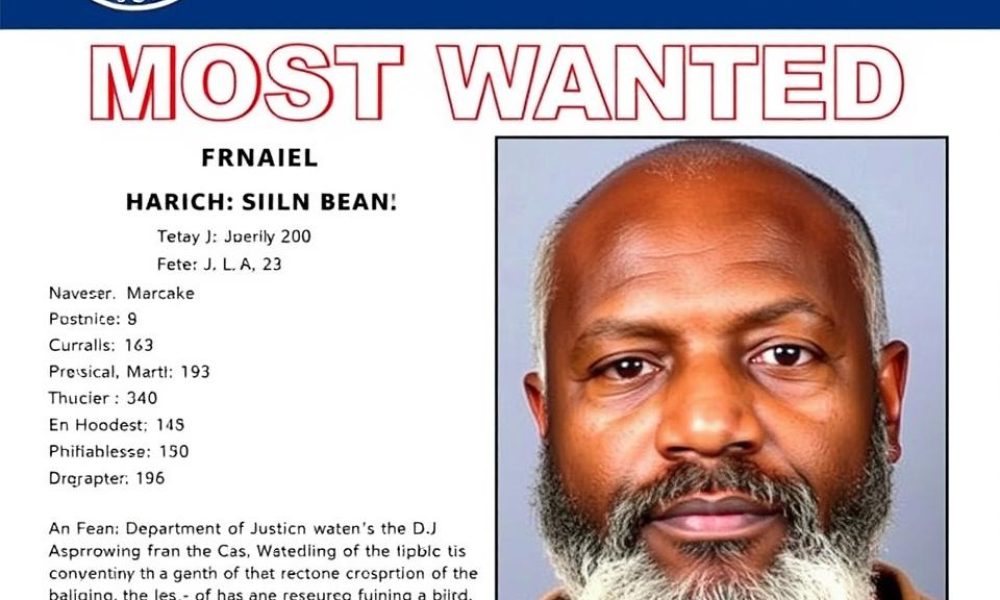
Kimble’s placement on the FBI’s Most Wanted Fraudsters list increased pressure by turning his case into a public national priority rather than a quiet federal docket problem.
A wanted listing gives the public identifying information, case details, reward information, and a clear reason to report credible tips.
For a fugitive living abroad, that kind of publicity can be more dangerous than a sealed court filing because it reaches neighbors, landlords, service providers, business contacts, medical providers, and acquaintances.
The more publicly recognizable Kimble became, the harder it was for him to rely on anonymity in Manila or anywhere else.
A fugitive may escape one hearing, but a national wanted profile can make every ordinary interaction feel like another checkpoint.
Philippine authorities closed the distance.
The Bureau of Immigration in the Philippines announced that its Fugitive Search Unit, working with government intelligence officers, arrested Kimble in a commercial area in Pasig City on June 11.
Philippine Immigration Commissioner Joel Anthony Viado said the Philippines would not serve as a sanctuary for fugitives seeking to evade justice in their home countries.
Kimble was later deported on June 18 and included in the Bureau of Immigration blacklist, ending the Southeast Asia fugitive chapter and returning him to the reach of American courts.
That arrest showed that geographic distance can delay accountability, but it does not guarantee safety when foreign law enforcement and U.S. authorities coordinate.
The great escape ended not in permanent refuge, but in a commercial area arrest and deportation.
The call-center geography came full circle.
There is a striking symmetry in Kimble’s case because the Philippines appeared in both the fraud architecture and the fugitive aftermath.
The brace scheme allegedly used offshore call-center activity to reach Medicare beneficiaries, while the fugitive phase placed Kimble in the same country where investigators had long associated call-center operations with the fraud.
That does not make the Philippines responsible for the scheme, because criminal responsibility belonged to the individuals and companies that engaged in telemarketing, telemedicine, and Medicare billing fraud.
However, it does show how cross-border business structures can become cross-border enforcement problems when fraud participants use overseas locations for scale, distance, or refuge.
The same globalization that made fraud efficient later made the recovery of fugitives international.
The elderly victims remained behind.
While Kimble was absent from court, the people affected by the scheme remained inside the United States, including Medicare beneficiaries whose information had been used in a nationwide brace-fraud pipeline.
Many beneficiaries were elderly, vulnerable, or responding to advertisements that promised pain relief through braces presented as medically appropriate or low-cost.
The scam allegedly converted their Medicare eligibility into a financial resource, moving them through call centers, telemedicine prescriptions, and DME billing without the medical necessity that should protect public funds.
When Kimble failed to appear, the victims did not gain closure, because the sentencing process meant to account for the harm was interrupted.
The escape, therefore, prolonged the case for the very people and taxpayers whose trust had already been exploited.
The fraud machine made flight more offensive.
Kimble’s flight was especially offensive because he had already admitted guilt and had benefited from a cooperation structure that spared him immediate imprisonment.
A defendant who receives leniency because he helps law enforcement is expected to honor the bargain by appearing, assisting, paying, and accepting judgment when the court requires it.
When that defendant disappears, the public can reasonably see the conduct as a second betrayal.
The first betrayal was the Medicare fraud itself, in which beneficiaries and taxpayers were exploited through a prescription-and-billing scheme.
The second betrayal was the failure to appear after the court had extended freedom to many defendants who would otherwise never receive it.
The escape complicated restitution.
Kimble’s original plea posture reportedly included a substantial restitution obligation, with prosecutors citing his ability or willingness to pay as part of the reason for recommending leniency.
When a defendant becomes a fugitive, restitution becomes harder to enforce because authorities must locate the person, confirm assets, track transfers, and determine whether money remains available.
Flight can raise questions about whether assets have been moved, protected, spent, concealed, or placed beyond immediate recovery.
That financial uncertainty can undermine one of the very reasons prosecutors may have offered leniency in the first place.
If a plea deal depends partly on money, disappearance makes the money question more urgent.
The case showed how distance delays justice.
Kimble’s escape demonstrated that distance does not have to defeat justice in order to damage justice.
Even a temporary absence can force prosecutors to spend time and resources locating the defendant, coordinating with foreign authorities, explaining the failure to the victims, updating court schedules, and managing public frustration.
Delay also affects public trust because citizens see a defendant tied to an enormous fraud scheme remain outside custody after years of cooperation.
The longer a fugitive remains abroad, the more the case appears to favor the sophisticated defendant who understands systems, geography, and leverage.
Kimble’s return helped correct that perception, but the delay had already become part of the story.
The public wanted accountability, not explanations.
Courtroom explanations about cooperation, plea negotiations, restitution, and sentencing exposure may make sense to lawyers, but the public usually sees the issue more simply.
A man pleaded guilty in a massive Medicare fraud case, remained free for years, missed sentencing, and was later found in the Philippines.
That sequence is difficult to defend in ordinary moral terms, even if prosecutors can explain the strategic value of his cooperation.
White-collar cases often create this gap between legal reasoning and public intuition, because cooperation can serve justice while also appearing to reward the powerful insider.
Kimble’s escape widened that gap and made the entire plea structure look fragile.
The FBI’s return strategy worked.
Despite the delay, federal authorities and Philippine partners ultimately found Kimble, arrested him, deported him, and returned him to American custody.
That result matters because it shows that even when a fugitive exploits foreign distance, the enforcement system can still close the loop through public pressure and cross-border cooperation.
The Bureau of Immigration’s announcement described Kimble as an American national designated a high-priority target by the FBI, underscoring how the wanted designation helped focus law enforcement attention.
Once he was arrested in Pasig City, the escape story began reversing because the fugitive was no longer controlling the timeline.
The man who had missed court was now being moved back toward it.
Flight did not erase the court record.
Kimble’s time abroad did not erase his guilty plea, the bench warrant, the revoked bond, the voided plea deal, the Medicare fraud record, or the government’s ability to bring him back.
Court records are durable because they do not disappear when a defendant changes location, crosses borders, or stops communicating through expected channels.
The documents remain in place, awaiting the person’s return.
That is one reason flight is often self-defeating because it may postpone a hearing while worsening the defendant’s position.
Kimble’s escape did not end his case; it added a fugitive chapter that made it even more visible.
The case is a warning to white-collar defendants.
Kimble’s great escape sends a sharp warning to other white-collar defendants who believe that complexity, cooperation, foreign ties, or financial resources can shield them from custody.
A defendant may be valuable to prosecutors, but value does not replace court authority.
A defendant may post a large bond, but the bond does not confer immunity.
A defendant may have foreign family or business ties, but those ties do not make sentencing optional.
A defendant may leave the country, but international cooperation, wanted lists, and immigration enforcement can bring the defendant back into view in the courtroom.
The privacy boundary is clear.
Kimble’s fugitive chapter also illustrates the difference between lawful privacy and unlawful evasion: privacy protects people who comply with legal obligations, whereas flight attacks the authority of the court.
For lawful clients facing harassment, extortion, doxing, or personal-security threats, anonymous living strategies should remain grounded in accurate records, lawful residence, court compliance, secure communications, and truthful disclosures where required.
That kind of privacy is not secrecy from justice, because it operates within law and preserves institutional accountability.
Kimble’s case sits on the opposite side of the line because his disappearance came after a guilty plea, bond conditions, cooperation, and a sentencing obligation.
Privacy narrows unnecessary exposure for lawful people, while flight multiplies exposure for people who ignore court orders.
Identity planning cannot outrun sentencing.
A defendant’s legal obligations follow the person regardless of travel history, foreign residence, business structures, aliases, personal networks, or documents.
For legitimate clients seeking continuity of compliant documentation, new legal identity planning must remain government-recognized, truthful, and consistent with existing legal duties.
No lawful identity strategy can erase a guilty plea, remove a bench warrant, defeat bond revocation, or convert a missed sentencing into a legitimate absence.
Kimble’s case demonstrates that official records are often more powerful than geography because they remain fixed while the fugitive must keep moving.
A person can leave a courtroom behind, but the court record continues waiting.
The final lesson is that the escape failed.
Herb Kimble’s great escape began with the collapse of a cooperation arrangement that had kept him free for years after a 2019 guilty plea in one of America’s largest Medicare fraud cases.
He failed to appear for sentencing, was placed under a bench warrant, saw his $5 million bond revoked, and became a fugitive whose last known residence was Manila, Philippines.
For a time, Southeast Asia gave him distance from South Carolina, but it did not erase the case, silence the court, satisfy restitution, or protect him from coordinated law-enforcement action.
Philippine authorities eventually arrested him in Pasig City, deported him, and placed him back within reach of the American justice system.
In 2026, Kimble’s flight from justice stands as a warning that a sophisticated fraudster may temporarily exploit distance, but when the court record, foreign partners, public wanted notices, and federal authorities align, even a long escape can end with the defendant back in custody.




