
How cabins, lounges and deck spaces can provide seclusion without compromising safety, shipboard etiquette or the social norms that keep a working cargo vessel comfortable for everyone.
WASHINGTON, DC, Freighter travel appeals to privacy-minded passengers because the ship’s layout naturally reduces crowds, distractions, and public exposure, creating a quieter form of movement where personal space is protected by design rather than by spectacle.
Privacy aboard a freighter begins with the architecture of limitation.
A cargo vessel is not designed around passenger entertainment, so its spaces are usually smaller, quieter, and more functional than the crowded public areas on cruise ships, airports, or large ferry terminals.
That practical layout can become a privacy advantage because the passenger is not constantly moving through restaurants, shops, theatres, lounges, casinos, excursion desks or other spaces built around visibility and consumption.
The ordinary route of the day may involve only the cabin, mess room, permitted decks, lounge areas, and perhaps a gym or sauna if the vessel provides those facilities for passenger or crew use.
This smaller geography creates a calmer travel experience, because the passenger can move through fewer public zones while still remaining part of a lawful, documented, and professionally managed voyage.
A thoughtful guide to freighter travel, privacy and slow mobility explains why cargo ship travel can support low-profile movement when travelers combine discretion with accurate documents, proper planning, and respect for all port rules.
The cabin becomes the center of restful privacy.
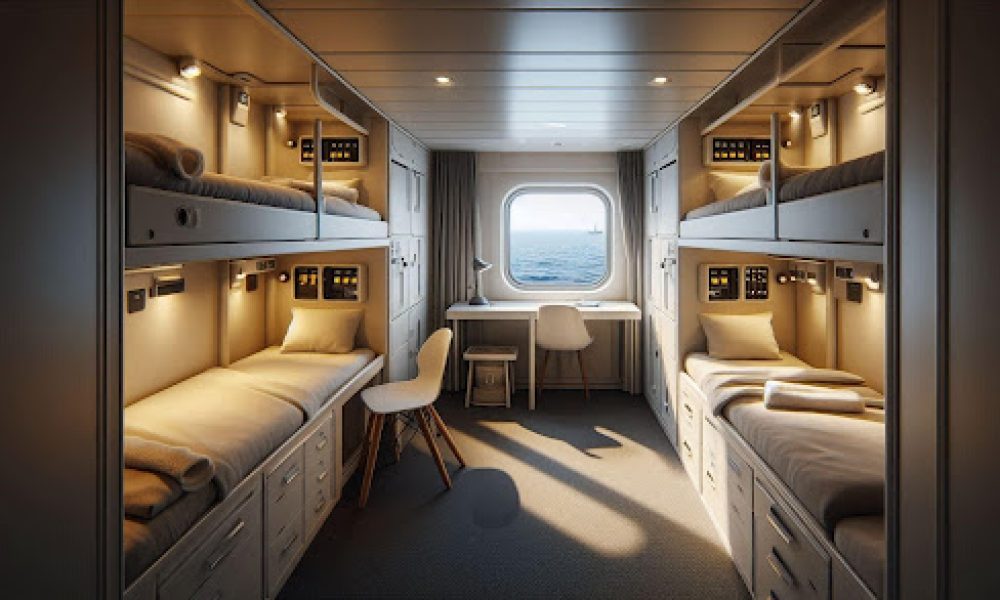
The private cabin is the most important space aboard because it gives the passenger a personal retreat for sleep, reading, writing, planning, and recovery during long days at sea.
A freighter cabin may be plain, practical and modest, but that simplicity can feel deeply restorative because the room is not designed to sell luxury or encourage social performance.
The traveler can organize documents, secure personal items, charge devices, write privately, rest without interruption, and create a small temporary home that remains separate from the ship’s working life.
For passengers using the voyage for sabbatical recovery, lawful relocation planning, private reflection, or burnout relief, the cabin becomes a protected environment where the mind can finally slow.
Privacy comes not from secrecy but from having a door, a desk, a window, and enough uninterrupted time to use the space with intention.
A well-designed cabin supports calm through ordinary details.
Small practical features can matter more than decorative luxury during a freighter voyage, especially when the traveler spends many hours inside the cabin between meals, deck walks, and port calls.
A desk can become a serious writing surface, a window can become a meditative view, a storage cabinet can reduce clutter, and a private bathroom can preserve dignity during a long crossing.
These details provide psychological comfort because the traveler does not need to keep repacking, search for items, or move constantly through shared spaces to manage daily needs.
Passengers who prepare well can enhance this privacy by bringing offline reading materials, personal toiletries, required medications, printed documents, layered clothing, and quiet project materials before boarding.
The cabin then becomes more than a room, because it becomes the stable private base from which the rest of the voyage can be experienced calmly.
Lounges provide social flexibility without forcing constant contact.
Some cargo vessels include passenger lounges, officer lounges, or shared recreational areas where travelers may read, watch the weather, speak with others, or sit quietly outside meal times.
These spaces are valuable because they allow passengers to leave the cabin without entering a crowded public environment or committing to extended social interaction.
A traveler may sit in a lounge with a book while another passenger writes nearby, creating a quiet shared atmosphere that feels companionable without becoming intrusive.
This balance matters for privacy-minded travelers because total isolation can become lonely, while constant social contact can undermine the restorative purpose of the voyage.
The best shipboard layouts allow passengers to move gently between privacy and community, choosing when to engage and when to return to silence.
Deck spaces offer seclusion through scale and horizon.
Permitted deck areas can become the most powerful privacy spaces aboard because the ocean gives the traveler a vast field of attention without the public intensity of land-based movement.
A passenger can walk, think, watch the weather, observe distant vessels, and experience solitude without necessarily withdrawing into the cabin all day.
The horizon creates privacy of another kind, because it gives the mind distance from ordinary concerns while allowing the body to remain present within the ship’s safe permitted zones.
This seclusion works only when passengers respect safety boundaries, because cargo decks, mooring stations, loading zones, and restricted operational areas can be dangerous without permission.
The privacy-minded traveler should enjoy open deck spaces carefully, understanding that solitude is strongest when it does not create additional work or concern for the crew.
Ship layouts protect privacy through boundaries, not invisibility.
A freighter’s restricted areas are not inconveniences, because they are essential safety boundaries that separate passenger access from cargo operations, machinery, navigation duties, and crew-only workspaces.
These boundaries also support privacy by defining where passengers may comfortably remain without wandering into areas where their presence could pose a risk, cause confusion, or attract unnecessary attention.
A traveler who follows posted instructions, asks before entering uncertain areas, and respects crew directions becomes easier to trust within the ship’s small community.
That trust helps preserve personal space because a respectful passenger is less likely to require supervision, correction, or repeated reminders from crew members.
In this sense, privacy is created by predictable conduct, because people who behave responsibly are usually allowed to enjoy the quiet without becoming a problem.
The mess room requires privacy etiquette.
Meals aboard a freighter are often shared, and the mess room can become the main social space where passengers, officers, and crew interact around practical routines.
Privacy-minded travelers should approach these meals with warmth and restraint, participating politely while avoiding oversharing personal details, discussing sensitive matters, or asking others intrusive questions.
This kind of normal, low-key sociability is often more discreet than complete avoidance, because a passenger who is friendly but reserved usually blends naturally into shipboard life.
The goal is not to hide from everyone, but to maintain ordinary courtesy while keeping private matters private.
A respectful meal routine allows the passenger to enjoy community without surrendering the quiet boundaries that made freighter travel appealing.
Low-profile travel depends on lawful documentation.
Freighter travel can reduce unnecessary exposure to airport crowds, hotel lobbies, mass-tourism zones, and high-density passenger environments that make modern travel feel public and pressured.
However, cargo ship passengers still move through regulated systems involving passports, visas where required, carrier approval, passenger manifests, customs inspection, immigration review, and port-security procedures.
The U.S. State Department’s maritime safety guidance reinforces that international sea travel requires preparation, documentation, and awareness of route conditions.
Privacy should therefore be understood as lawful discretion, not disappearance, because the traveler remains accountable to the rules of every port, country, and carrier involved in the voyage.
The strongest privacy profile comes from clean documents, accurate records, calm behavior, and sufficient preparation to navigate official procedures without confusion.
Cabin privacy should be paired with digital restraint.
A private cabin does not protect a traveler’s low-profile journey if the passenger posts real-time updates, publicly shares ship details, or reveals port timing on social media.
Digital restraint is especially important aboard a freighter because the ship’s limited passenger count and distinctive route can make careless sharing more revealing than ordinary travel posts.
Passengers should consider delaying public updates, removing precise location details, and avoiding unnecessary references to vessel names, crew identities, route timing, or sensitive port information.
This is not only a privacy concern, but also because vessel operations and port environments may involve security expectations that passengers should respect.
A quiet voyage works best when the traveler treats digital behavior as part of shipboard etiquette rather than as a separate personal choice without consequences.
Restful travel also depends on respecting other passengers’ privacy.
A freighter voyage can feel intimate because there may be very few passengers, which means everyone quickly becomes aware of one another’s routines, habits and preferences.
That small scale requires tact because privacy is mutual, and a traveler seeking personal space should also avoid intruding on other passengers’ reading, writing, rest, or reflection.
Questions about why someone is traveling, where they are going, or what they do professionally should be asked gently, if at all, because many people choose freighters precisely for a quieter experience.
Shared silence can be one of the most respectful forms of community at sea, especially when people understand that companionship does not require constant conversation.
The social norm that matters most is simple, because everyone aboard deserves enough space to let the voyage work on them privately.
Comfort is strongest when passengers prepare for self-sufficiency.
A passenger who has packed carefully can remain comfortable without repeatedly needing crew assistance, emergency errands, or special arrangements that might draw attention inside a small shipboard environment.
Useful preparations include medications, printed documents, toiletries, comfortable clothing, offline entertainment, backup glasses, charging cables, personal snacks, if permitted, and a compact system for organizing valuables.
Self-sufficiency supports privacy by reducing public friction, last-minute requests, and avoidable movement through shared or operational areas.
It also supports rest because the traveler can remain in the cabin, lounge or permitted deck spaces without constantly searching for missing items.
The quietest journey is often the one that was prepared in detail before boarding, allowing the traveler to disappear into routine rather than into secrecy.
Shipboard privacy should never compromise safety.
A passenger may want solitude, but they must still attend safety briefings, respond to alarms, follow emergency instructions, and remain reachable when the crew needs to confirm procedures or the passenger’s location.
Privacy cannot mean ignoring muster requirements, disabling necessary communications, entering restricted areas alone, or refusing to provide information required for the vessel’s safety.
This principle matters because a ship is a controlled environment where individual behavior affects crew workload and emergency readiness.
The traveler who wants privacy must understand that safety cooperation is the price of being allowed personal space aboard a working vessel.
The most restful voyages are built on mutual confidence, where the crew knows the passenger will follow rules and the passenger knows those rules make quiet travel possible.
Privacy can support longer life transitions when handled responsibly.
Some passengers use freighter travel not only for rest, but also as part of a larger transition involving relocation, retirement, second residence, private mobility, or a more secure lifestyle abroad.
For travelers seeking lawful privacy beyond a single voyage, anonymous living planning can support compliant strategies for reduced public exposure, housing arrangements, and personal security.
That planning matters because a ship can provide a quiet crossing, but it cannot replace immigration status, banking access, health coverage, tax planning, or destination-country compliance.
The voyage may give travelers time to think clearly about those decisions, especially when the cabin and deck spaces create enough solitude to review documents and priorities without daily interruption.
Privacy by design becomes most useful when it supports lawful stability after arrival, not only temporary quiet during the crossing.
The best layout is the one that lets passengers choose their level of visibility.
A restful freighter voyage allows passengers to move between private cabin time, quiet lounge time, structured meals, and open deck observation without feeling trapped in either isolation or exposure.
This flexibility is valuable because privacy needs can change during the voyage, especially as passengers adjust to the ship’s rhythm, weather, social atmosphere, and their own emotional state.
A traveler may want solitude during the first days, more conversation later, then renewed quiet as arrival approaches and practical planning becomes more important.
Good shipboard privacy is therefore not absolute withdrawal, but the ability to choose contact deliberately and respectfully.
That choice is what makes freighter travel feel so different from aviation, where passengers often have little control over proximity, noise, timing, or public exposure.
The bottom line is that freighter privacy is designed through space, conduct and compliance.
Cabins, lounges and permitted deck spaces can make freighter travel unusually restful for passengers who value seclusion, slow movement and a quieter alternative to crowded public transportation.
The ship’s layout favors privacy because it limits unnecessary public circulation, reduces entertainment-driven crowds and gives passengers simple spaces for rest, reflection and controlled social contact.
That privacy works only when passengers respect safety rules, crew boundaries, social norms, digital restraint, port requirements, and the legal framework governing international sea travel.
For privacy-minded travelers, the best approach is to be calm, courteous, and prepared, because low-profile movement is strongest when nothing about the traveler’s conduct appears confused, careless, or evasive.
For the public record, privacy by design aboard a cargo vessel is not about disappearing, but about using cabin comfort, ship layout, and respectful behavior to travel quietly while remaining fully visible where the law requires it.