
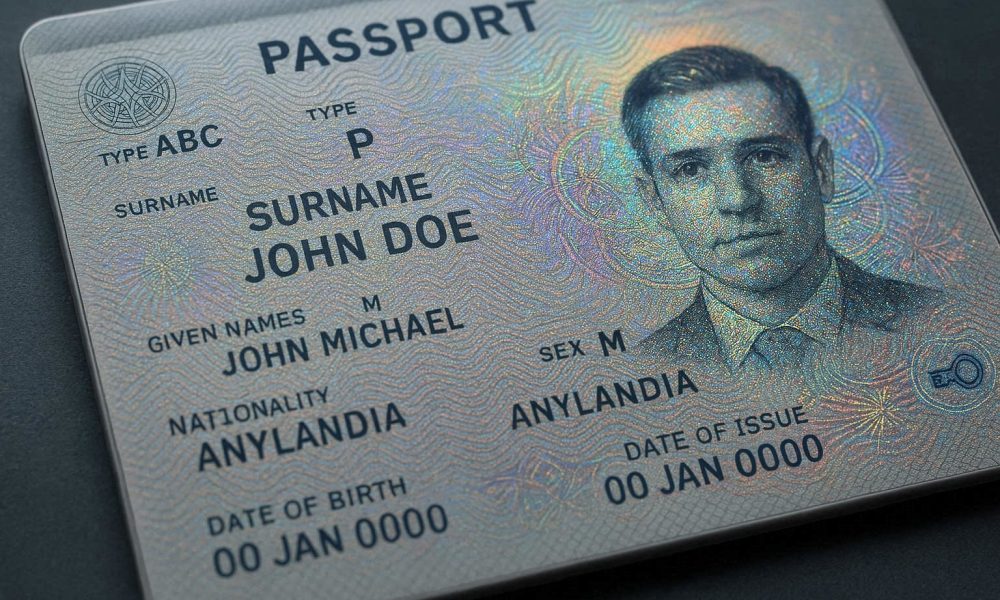
The transition to laser-engraved polycarbonate data pages and how they prevent data alteration and physical tampering.
WASHINGTON, DC, May 8, 2026.
The passport information page has quietly undergone one of the most important security transformations in modern travel, shifting from a printed paper document protected by laminate to a hardened polycarbonate identity platform designed to resist alteration, withstand damage, and detect tampering before a traveler reaches the border booth.
For generations, the passport data page looked like a carefully printed sheet carrying a photograph, name, nationality, date of birth, document number, issuing authority, expiration date, and machine-readable code, yet that familiar paper-based design carried vulnerabilities that criminal networks learned to study, exploit, and manipulate.
The information page became the main target because it carries the traveler’s legal identity.
Counterfeiters have historically focused on the information page because it contains the passport’s core identity claim, making it far more valuable than ordinary visa pages, entry stamps, decorative artwork, or the exterior cover that signals nationality to border officers.
Older data pages depended heavily on printed ink, glued photographs, adhesive films, transparent laminates, and paper substrates, which meant determined fraud specialists could attempt photo substitution, laminate lifting, chemical washing, surface scraping, heat separation, or partial replacement using increasingly advanced tools.
The transition to plastic was not a cosmetic modernization; it represented a fundamental change in how governments protect identity data, replacing surface-based security with a fused structure in which personal information is embedded in the document material itself.
The United States Department of State’s Next Generation Passport guidance describes the move to a polycarbonate data page and laser engraving, reflecting a broader international shift toward documents that are harder to damage, harder to alter, and easier to authenticate.
Polycarbonate changed the passport from a printed record into an engineered object.
Polycarbonate is a durable thermoplastic known for its strength, clarity, impact resistance, and compatibility with laser personalization, making it especially useful for documents that must withstand years of bending, humidity, handling, scanning, security inspections, and international travel.
Instead of treating the information page as paper that needs protection, passport manufacturers now build the page from multiple layers of polycarbonate, each carrying a specific security purpose, before the entire structure is fused together under controlled heat and pressure.
This fusion process creates a single bonded page rather than a stack of separable parts, so anyone attempting to remove, peel, split, or replace a layer risks leaving visible distortion, cracking, bubbling, whitening, or structural damage.
The practical effect is simple but powerful: a paper document can be attacked on the surface, whereas a polycarbonate document forces the attacker to defeat the material itself without disturbing the security artwork, laser engraving, optical features, or electronic data.
Laser engraving places identity data inside the page rather than on top of it.
The greatest advantage of polycarbonate is that it allows laser engraving to personalize the page internally, using controlled laser energy to create text, portraits, numbers, and security images within the plastic rather than printing them on the exposed surface.
This internal engraving makes alteration extremely difficult because the holder’s name, date of birth, passport number, nationality, portrait, and machine-readable data are no longer simply ink marks that can be scratched away, chemically attacked, or reprinted.
A criminal attempting to change engraved data would need to disrupt the body of the page itself, which would almost certainly damage surrounding features, create inconsistent optical behavior, or leave signs visible under magnification, ultraviolet light, or normal inspection.
Laser engraving also produces a distinct monochrome portrait style that is not merely an aesthetic choice, because the face is generated inside the secure material in a way that must align with the chip data, printed fields, and inspection records.
The portrait is no longer just a photograph because it is part of the security system.
In older passports, the photograph was a vulnerable point because it was physically attached, printed, laminated, or protected by surface materials that could sometimes be manipulated by skilled fraud operators with enough patience and technical knowledge.
Modern polycarbonate data pages turn the portrait into a structural element of the document, embedding it through laser personalization and often supporting it with ghost images, secondary portraits, transparent windows, or perforated features that repeat identity information.
This redundancy matters because a fraudster cannot simply replace one photograph and hope to pass inspection, since the face may appear in multiple locations, at different depths, and in different technical formats across the data page and chip.
When border officers or automated gates compare the traveler’s live face against the primary portrait, secondary image, chip-stored image, and machine-readable identity fields, the passport becomes a layered identity claim rather than a single visual snapshot.
The page is designed to fail loudly when someone tries to tamper with it.
A secure passport does not need to be indestructible in the absolute sense, because its most important job is to resist alteration and clearly reveal any manipulation when someone attempts to change the identity data.
Polycarbonate is valuable because tampering tends to produce obvious physical consequences, including delamination marks, burned areas, cloudy patches, structural warping, loss of transparency, inconsistent texture, or damage that disrupts the page’s expected look and feel.
This principle is known as tamper evidence and is central to modern document design because border authorities need to know not only whether a passport appears correct but also whether someone has attempted to tamper with it.
The strongest passports, therefore, combine resistance and visibility, making unauthorized changes difficult while also ensuring that failed manipulation attempts leave traces detectable by trained officers, automated readers, or forensic specialists.
Plastic data pages support the move toward automated border control.
Airports increasingly rely on e-gates, document readers, biometric cameras, electronic travel authorizations, airline pre-screening systems, and entry-exit databases, which means the passport must be readable by both human officers and machines with minimal ambiguity.
A polycarbonate data page supports that environment because the engraved information remains stable, the machine-readable zone stays durable, the portrait resists smudging or fading, and security features can be aligned precisely for optical and electronic verification.
This matters during high-volume travel because a worn paper page, lifted laminate, faded ink, or distorted photograph can trigger manual inspection, secondary screening, delays, and confusion even when the traveler is legitimate.
By contrast, a well-manufactured plastic data page provides inspection systems with a consistent surface, stable data fields, a durable portrait, and greater resistance to environmental damage, helping border systems process genuine travelers more efficiently.
News coverage helped travelers notice a change that governments had been preparing for years.
Many travelers first noticed the change when newly issued passports felt different, with a thicker data page, a more rigid identity section, updated artwork, and a portrait that looked engraved rather than conventionally printed.
Travel industry reporting on next-generation passport design highlighted the public-facing elements of this shift, including the polycarbonate page and enhanced security features that made the document feel more like a high-security identity card inside a booklet.
The public conversation often focused on appearance, yet the deeper story involved a manufacturing philosophy that treats the passport as a layered security product built to withstand pressure from fraud by organized crime, identity thieves, and document counterfeiters.
The change also reflected a practical reality for governments, because passport security must evolve as scanning equipment, image-editing tools, counterfeit materials, and criminal document networks become more sophisticated and globally connected.
The polycarbonate page helps close old attack paths.
A laminated paper data page created several attack surfaces, including the bond between the paper and the laminate, the surface where printed data appeared, the area around the photograph, and the places where heat or chemicals could weaken protective materials.
Polycarbonate closes many of those attack paths by eliminating dependence on traditional laminates, embedding data internally, permanently bonding layers together, and making separation attempts destructive rather than surgically useful for document manipulation.
This does not mean passport fraud has disappeared, because criminal networks still exploit stolen identity information, corrupt intermediaries, false supporting records, breeder documents, synthetic identities, lookalike travel, and weaknesses in upstream civil registry systems.
It does mean the passport booklet itself has become harder to alter after issuance, forcing criminals to attack the identity chain before the document is produced rather than simply modifying a finished passport after obtaining it.
The strongest passport is secure before it is personalized.
The security value of polycarbonate depends on controlled manufacturing, because blank data pages, chips, covers, antenna components, security inks, optical devices, and defective materials must be protected from theft, substitution, or unauthorized access.
High-security facilities treat passport components like controlled national assets, using inventory logs, restricted production areas, staff vetting, audit trails, camera monitoring, waste destruction, serial reconciliation, and secure transport to prevent blank documents from entering criminal markets.
Before a passport is personalized, manufacturers must inspect the blank booklet for bonding quality, page order, chip function, physical defects, optical alignment, artwork registration, and mechanical durability, because a flawed blank can compromise security later.
After personalization, the finished document must be checked again to ensure that the engraved data, chip contents, machine-readable zone, portrait, document number, and issuing record all match before the passport is released.
Plastic data pages make it harder to separate identity information from legal status.
A modern passport is not just a booklet containing a name and a portrait; it represents a government-backed identity record linked to citizenship, nationality, eligibility, biometric enrollment, issuance controls, and international inspection standards.
The polycarbonate page reinforces that legal status by making the physical document harder to manipulate, while the electronic chip, machine-readable zone, and biometric comparison systems reinforce the connection between the person and the issuing authority.
This is particularly important for lawful mobility planning, where legitimate second-citizenship, residency, relocation, and identity-restructuring strategies must align with government records, tax documentation, banking compliance, and border-verification systems.
Professional advisory firms such as Amicus International Consulting operate in this environment by emphasizing lawful pathways, confidentiality, government authorization, and documentation structures that withstand real-world scrutiny by border agencies and financial institutions.
The data page now works with the chip rather than standing alone.
The plastic page is only one layer of modern passport security, as e-passports also include an embedded chip that stores data matching the visible and machine-readable information in the booklet.
When a border reader scans the passport, it can examine the machine-readable zone, access chip data, verify digital signatures, compare the stored portrait, and check whether the physical document aligns with the government-issued electronic record.
This relationship makes physical tampering less useful because a fraudster who changes the visible page still faces the problem of chip mismatch, failed authentication, unreadable data, or biometric conflict during inspection.
The passport, therefore, operates as a synchronized system in which the plastic protects the visible identity page, the chip protects the electronic identity record, and the issuing authority protects the legal foundation underpinning both.
Durability is also a security feature.
Travelers often think durability is a convenience, but in passport security, it is also a protective measure because damaged documents create uncertainty, slow inspection, and provide openings for criminals to disguise tampering as ordinary wear.
A polycarbonate data page resists moisture, abrasion, bending, fading, and surface degradation better than older laminated paper pages, making the passport more reliable after years of travel, storage, handling, and environmental exposure.
Durability also helps border officers because a stable data page preserves the document’s expected appearance, reducing confusion between genuine age-related wear and suspicious damage from attempted alteration.
For frequent travelers, this means the information page is less likely to degrade in ways that interfere with scanning, facial comparison, chip reading, or routine inspection at airports, consulates, hotels, and immigration checkpoints.
The visual design still matters because security must be intuitive.
Although polycarbonate and laser engraving are highly technical, the data page must still communicate trust visually, which is why governments incorporate national artwork, security backgrounds, precise typography, optical devices, microprinting, and tactile details.
A border officer should be able to quickly inspect the page and determine whether the portrait, text, artwork, optical features, page structure, and material behavior appear consistent with a genuine document.
This is why passport design balances beauty and enforcement: national symbols, landscapes, emblems, and background patterns often conceal security features that support authentication without making the document look cluttered or mechanical.
The traveler sees national identity and official design, while the inspector sees alignment, registration, material behavior, hidden text, engraving quality, optical response, and evidence that the passport was produced in a controlled system.
Polycarbonate does not eliminate fraud, but it changes where fraud happens.
The plastic data page has made after-issuance alteration harder, but it has also pushed fraudsters toward earlier stages of the identity process, including false applications, identity theft, corrupt assistance, counterfeit supporting documents, and manipulation of civil records.
That shift is important because the most dangerous form of passport fraud may involve a genuine document issued under a false identity, which can be harder to detect than a physically altered booklet when the underlying records are compromised.
Governments, therefore, increasingly combine stronger documents with stronger application vetting, biometric enrollment, database checks, watchlist screening, facial comparison, and international data sharing to reduce the risk of genuine documents being issued improperly.
The passport information page may be made of plastic, but its value still depends on the truth of the records behind it, the integrity of the issuing process, and the strength of the inspection systems that validate it.
Lawful mobility now depends on records that can survive machine inspection.
For executives, expatriates, politically exposed individuals, high-net-worth families, and people seeking lawful second-citizenship options, the rise of polycarbonate passports underscores a broader compliance reality that cannot be ignored.
Modern travel documents are stronger, but the surrounding identity environment is also stricter, with banks, border agencies, consulates, airlines, tax authorities, and immigration offices increasingly comparing data across separate systems.
A person seeking new citizenship, residency, relocation, or lawful identity restructuring must therefore think beyond the passport booklet and consider whether the underlying records, tax numbers, supporting documents, and banking profile form a coherent verification trail.
This is why second passport and lawful mobility advisory services increasingly focus on compliance, eligibility, documentation integrity, and long-term usability rather than treating the passport as a standalone product.
The future passport will be more plastic, more digital, and harder to fake.
The next generation of information pages will likely include stronger, more transparent features, better chip integration, refined laser imaging, advanced optical structures, machine-verifiable hidden patterns, improved biometric alignment, and closer links to digital travel credentials.
Even as mobile identity systems expand, the physical passport will remain important because it is globally recognized, legally durable, inspectable without a phone, and essential for emergency travel, visa placement, consular support, and international recognition.
The transition from ink to polycarbonate shows that governments are not abandoning the passport, but rebuilding it into a tougher identity platform capable of operating inside a faster, more automated, and more fraud-conscious travel environment.
Your passport information page is now made of plastic because paper can no longer carry the full burden of modern identity security, while laser-engraved polycarbonate can protect personal data, detect tampering, support machine inspection, and link the traveler’s face to a government-issued record with far greater strength.
The result is a document that may still fit inside a pocket, yet now carries the engineering logic of a secure identity card, the legal force of a citizenship record, and the technical resilience required for a world where every border crossing has become a test of truth.




