
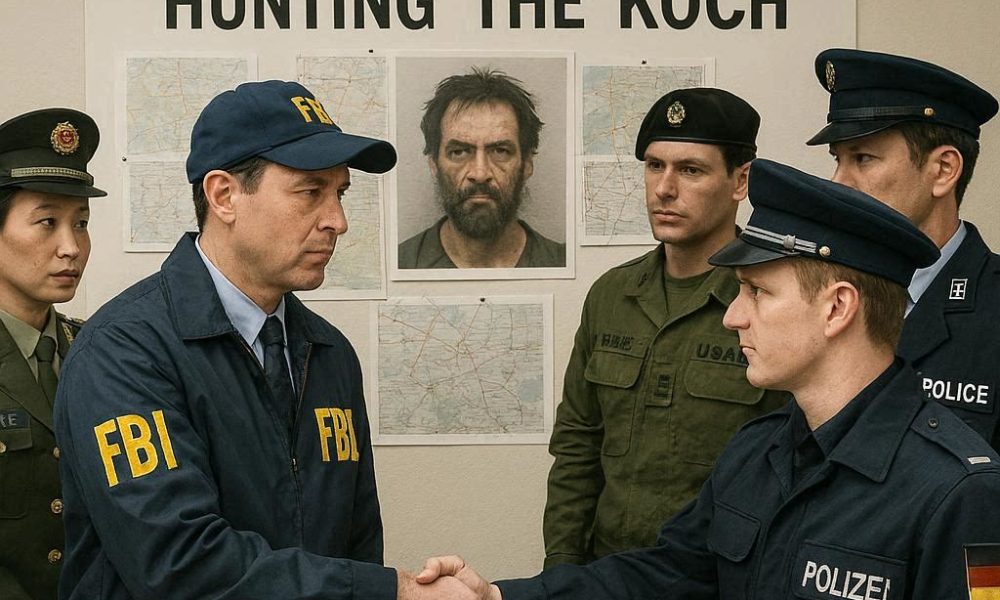
Europol, the DEA, the UK’s NCA, and the Irish Gardaí have joined forces in a historic, borderless intelligence-sharing operation to dismantle the Kinahan empire once and for all
WASHINGTON, DC, May 5, 2026,
The pursuit of the Kinahan Organized Crime Group has become one of the most important organized crime campaigns in Europe because the case has forced police, prosecutors, financial intelligence units, sanctions officials, and border authorities to operate as though national boundaries no longer protect global criminal networks.
For years, the Kinahan network appeared to thrive in the spaces between jurisdictions, with alleged influence stretching from Ireland and Britain to Spain, the Netherlands, Belgium, the United Arab Emirates, and the wider global cocaine economy that increasingly connects ports, shell companies, encrypted communications, and professional service providers.
The new alliance now hunting the KOCG is not a single agency with one badge and one headquarters, but a coordinated enforcement architecture built around shared intelligence, financial disruption, extradition pressure, targeted arrests, and the quiet dismantling of the cartel’s trusted logistics network.
The Kinahan case has become a test of whether modern law enforcement can keep pace with borderless organized crime
The Kinahan organization’s rise from Dublin gangland roots into a transnational crime network shows how modern criminal groups no longer need to control territory in the old-fashioned way, because they can control routes, money flows, safe havens, intermediaries, encrypted channels, and reputational fear across multiple countries.
U.S. officials formally escalated the campaign in 2022 when the Treasury Department designated the Kinahan Organized Crime Group as a significant transnational criminal organization, describing a network involved in narcotics trafficking, money laundering, firearms trafficking, and violence across several jurisdictions.
The official U.S. designation stated that the enforcement action resulted from close collaboration among OFAC, the Drug Enforcement Administration, the State Department, Customs and Border Protection, An Garda Síochána, the United Kingdom’s National Crime Agency, and Europol.
That public naming of multiple agencies mattered because it signaled that the Kinahan case had moved beyond a domestic Irish gangland investigation and into the highest tier of international organized crime enforcement.
The alliance was built because the cartel’s structure was already international
The Kinahan network could not be disrupted by one police force alone because its alleged business model depended on international movement, with drugs sourced abroad, profits laundered through legitimate-looking businesses, associates positioned across Europe, and leadership figures based outside Ireland.
The cartel’s alleged use of Dubai as a facilitation hub became especially significant because Irish authorities historically faced difficult extradition barriers while senior figures lived beyond the immediate reach of domestic arrest powers.
That changed as law enforcement pressure increased, diplomatic relationships matured, and Ireland pursued extradition and mutual assistance channels designed to narrow the space available to senior organized crime figures operating from the Gulf.
The recent arrest of Daniel Kinahan in the United Arab Emirates, reported by The Guardian as part of a wider extradition effort, marked a watershed moment for a campaign that had spent years combining surveillance, sanctions, financial pressure, and diplomacy.
Kinahan has previously denied involvement in organized crime and has not been convicted of the Irish charges he now faces, but his arrest nevertheless represents a defining moment in the international effort to bring alleged cartel leadership into court.
The Gardaí supplied the local memory, while international partners supplied reach
Ireland’s Gardaí brought the historical knowledge that outsiders could not easily replicate, including gangland relationships, feud history, informant networks, domestic murder investigations, local drug distribution structures, and the long trail of violence linked to the Kinahan-Hutch conflict.
That local memory is vital because organized crime cases are not built solely on intercepted messages or financial records, but on years of pattern recognition about who answers to whom, which associations matter, and which apparent business figures carry real operational weight.
Europol added a continental intelligence layer by helping connect European police forces facing the same network from different angles, while the NCA brought the United Kingdom’s experience tracking money laundering, importation routes, and UK-based lieutenants allegedly linked to Kinahan operations.
The DEA’s role reflected the American view that the Kinahan group was not simply an Irish problem, but part of a wider narcotics ecosystem touching international supply chains, financial channels, sanctions policy, and transnational criminal markets.
The sanctions strategy changed the battlefield from streets to bank accounts
The 2022 sanctions action transformed the Kinahan campaign by shifting enforcement away from arrests alone and into the network’s financial bloodstream, where reputation, legitimacy, banking access, and corporate cover became enforcement targets.
The U.S. Treasury announcement on the Kinahan Organized Crime Group sanctions described the cartel as a threat to the licit economy because of its alleged role in international money laundering, cocaine trafficking, firearms trafficking, and violence.
Sanctions can be devastating to a transnational criminal group because they warn banks, companies, investors, insurers, logistics providers, and counterparties that doing business with designated individuals or entities may expose them to legal risk.
That pressure can isolate targets even before arrests occur, because landlords, promoters, bankers, brokers, and commercial partners suddenly face the risk that their ordinary business relationship may become evidence of support for a sanctioned criminal network.
The reward program turned insiders into potential witnesses
The U.S. reward offers targeting senior Kinahan figures added another pressure point, because they gave cartel insiders, former associates, business contacts, or frightened intermediaries a powerful reason to reconsider the cost of silence.
Reward programs are designed to attack trust because organized crime depends on loyalty among people who know routes, bank accounts, encrypted handles, safe houses, payment methods, business fronts, and the personal habits of leaders who avoid direct exposure.
When the reward reaches millions of dollars, the message to the inner circle is direct, because the person who knows the right detail may hold information worth more than continued loyalty to a shrinking and increasingly dangerous criminal brand.
The reward does not need to produce one cinematic betrayal to be effective, because it can generate fragments of intelligence that confirm locations, identify couriers, verify companies, connect associates, or support extradition and arrest planning.
Operation Whitewall showed how the alliance could attack the money layer
The arrest of alleged money figures and associates in Spain, supported by British, Irish, Dutch, Spanish, U.S., and European partners, showed how the wider campaign focused not only on headline leaders but also on the financial and logistical infrastructure beneath them.
Investigators have repeatedly treated money laundering as a central vulnerability because organized crime groups may replace street dealers, couriers, or local enforcers more easily than they can replace trusted financial facilitators who move and disguise proceeds.
The NCA has previously described its support for investigations into alleged Kinahan money laundering as essential because the criminal network transcended national boundaries and required international law enforcement operations to match that structure.
That approach reflects a modern enforcement doctrine because dismantling a cartel now means targeting professional facilitators, corporate fronts, transport channels, cash handlers, communication systems, and reputation shields rather than waiting for a single dramatic raid.
The boxing connection gave the cartel visibility that eventually became a liability
The Kinahan name became globally familiar partly because of its connection to elite professional boxing, where Daniel Kinahan’s role around MTK Global and high-profile fighters drew intense scrutiny from journalists, governments, and sporting institutions.
For a period, the boxing world gave the alleged cartel an unusual form of social camouflage, as association with major athletes, promoters, and lucrative events created an image of legitimacy that stood in sharp contrast to law enforcement allegations.
That strategy became harder to maintain after sanctions, public warnings, and reputational pressure forced commercial partners to reconsider whether associating with Kinahan-linked entities was worth the legal and public-relations costs.
The lesson for organized crime groups is significant: visibility can help launder a reputation for a time, but once international enforcement converges, that same visibility can become a map for investigators, journalists, and compliance departments.
The UAE became the decisive diplomatic front
For years, Dubai was seen by many European investigators as a complicated location where wealthy fugitives, sanctioned figures, and transnational crime suspects could live beyond the easy reach of European warrants.
The Kinahan case helped change that perception because Ireland and the UAE deepened legal cooperation, signed new extradition and mutual assistance arrangements, and showed a growing willingness to pursue serious organized crime suspects through formal channels.
Daniel Kinahan’s arrest within the UAE demonstrated that diplomatic pressure, treaty work, and shared investigative files can matter as much as surveillance or street-level policing in modern transnational crime cases.
The result is a warning to other fugitive networks, because a jurisdiction once viewed as a protective distance can become dangerous when political will, evidence packages, international pressure, and reputational concerns converge.
The cartel’s alleged false identity practices reveal why legal identity systems matter
The Kinahan case also highlights the distinction between lawful identity protection and criminal concealment, as authorities have alleged that senior figures used false identity documents to operate beyond ordinary enforcement visibility.
Amicus International Consulting’s discussion of a lawful new identity illustrates the opposite principle, where identity restructuring must be rooted in government authorization, documented continuity, legitimate purpose, and compliance rather than deception.
That distinction matters because organized crime groups exploit false documents, aliases, and company structures to obstruct accountability, while legitimate privacy planning seeks to reduce exposure without misleading banks, courts, border authorities, or law enforcement.
The modern enforcement environment treats identity as a network of records, including biometrics, travel history, banking relationships, communication patterns, corporate filings, and human associations, which can expose false narratives over time.
Second passports cannot protect a criminal network from coordinated enforcement
International mobility can serve lawful purposes for families, investors, executives, and high-risk individuals, but the Kinahan case demonstrates that passports, residences, shell companies, and safe havens cannot provide permanent protection against coordinated criminal investigations.
Amicus International Consulting’s overview of second-passport planning falls within the lawful mobility conversation, where government recognition, eligibility, tax compliance, and proper disclosure remain essential.
For fugitives and alleged cartel figures, however, additional travel documents or foreign residences may create more records, more intermediaries, more financial relationships, and more points where intelligence partners can connect the dots.
The alliance hunting the KOCG shows that modern enforcement does not depend on a single border checkpoint, as agencies now combine sanctions, extradition treaties, financial monitoring, intelligence sharing, and pressure on facilitators across multiple jurisdictions.
The next phase will focus on succession, assets, and remaining leadership
Even when a senior figure is arrested, organized crime groups do not vanish overnight because lieutenants, financiers, rival gangs, younger associates, and external suppliers may attempt to preserve routes, collect debts, or seize market share.
That is why the alliance must continue after headline arrests, because dismantling a cartel requires sustained pressure on leadership succession, hidden assets, front companies, corrupt facilitators, communications networks, and remaining loyalists who may regroup under new branding.
Irish officials have already warned that organized crime does not disappear when one group is weakened, because enforcement success can create vacuums that ambitious criminal actors try to fill quickly.
The lasting test will be whether the same cross-border intelligence architecture that cornered senior Kinahan figures can also disrupt the replacement networks that attempt to inherit money, routes, fear, and influence.
The KOCG campaign may become a model for future cartel enforcement
The campaign against the Kinahan network is likely to influence future operations because it combines several tools that modern governments increasingly view as inseparable, including sanctions, rewards, extradition, financial intelligence, diplomatic leverage, and multinational police cooperation.
It also shows that law enforcement agencies now understand organized crime as an ecosystem rather than a pyramid, because the goal is not simply to arrest the alleged leader but to make the entire network harder to finance, insure, transport, protect, and legitimize.
That model will matter beyond Ireland because many criminal groups now operate through diaspora networks, international ports, encrypted platforms, professional facilitators, and financial structures that deliberately stretch across legal jurisdictions.
The Kinahan investigation, therefore, represents more than one cartel case because it is a blueprint for how democracies can respond when criminal organizations learn to treat borders as business tools.
The empire is being dismantled by making every border less useful
The alliance hunting the KOCG has succeeded because it changed the cartel’s operating environment, making Dubai less secure, boxing less useful, banks more cautious, associates more exposed, and international movement more legally dangerous.
The alleged empire was built on distance, fear, cash, reputation, and the belief that no single country could bring all the pieces together quickly enough to threaten the leadership structure.
That belief has been weakened by a borderless enforcement response in which Irish investigators, American sanctions officials, British crime fighters, European intelligence coordinators, and foreign prosecutors have all contributed different weapons to the same campaign.
The final outcome will depend on extradition proceedings, prosecutions, asset recovery, witness cooperation, and continued pressure on remaining figures, but the message is already clear to criminal networks watching from abroad.
The Kinahan case has shown that the old sanctuary model is breaking, because when enough governments share intelligence, money flows, warrants, and political will, even a cartel built across borders can find that every border has become a trap.




