
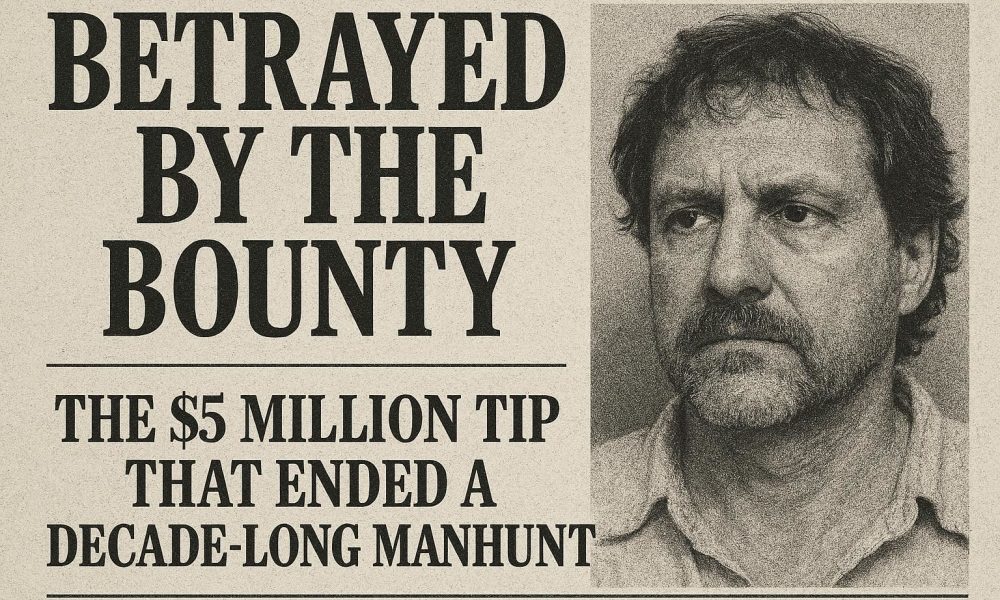
Loyalty has a price, and U.S. reward programs show how money, fear, and self-preservation can turn a trusted confidant into the ultimate informant against a notorious international arms dealer
WASHINGTON, DC, May 5, 2026,
In the world of arms dealers, sanctions brokers, fugitive financiers, and conflict profiteers, loyalty is often described as absolute until a government reward, an extradition threat, or a sealed indictment gives someone inside the circle a reason to calculate survival differently.
The mythology of the untouchable international trafficker depends on silence, because pilots, bankers, lawyers, fixers, suppliers, bodyguards, shipping agents, shell-company directors, and trusted companions must all believe that betrayal is more dangerous than cooperation.
That calculation changes when the United States places millions of dollars on a fugitive’s location, because a reward does not merely invite the public to call in tips; it quietly pressures the fugitive’s inner circle to ask what loyalty is worth.
The bounty is designed to reach the person closest to the door
A multimillion-dollar reward is not only a public notice, because it is a psychological weapon aimed at the weakest point in any fugitive network, which is the human being who knows where the principal sleeps, travels, banks, communicates, or negotiates.
For a decade, an international arms dealer may appear unreachable because he moves through jurisdictions with weak extradition, relies on loyal intermediaries, avoids direct communications, and hides behind business fronts that make criminal intent difficult to prove.
Yet no fugitive lives completely alone, because even the most disciplined trafficker needs trusted people to arrange meetings, secure travel, manage funds, translate risk, handle local officials, and confirm whether a deal is safe enough to pursue.
When a U.S. reward reaches $5 million, the message is unmistakable: the government is not only looking for the fugitive, it is looking for the one person near him whose fear, resentment, greed, or self-preservation finally outweighs loyalty.
The arms dealer’s real shield is not secrecy; it is trust
International arms trafficking cases often involve more than weapons, because they include false end-user certificates, aviation networks, sanctioned entities, correspondent banks, freight forwarders, corrupt facilitators, and brokers who understand how to move dangerous goods through bureaucratic cracks.
The trafficker at the center of that system may be famous, feared, or politically protected, but his real security comes from the belief that everyone around him has too much to lose by speaking.
That belief can hold for years because insiders may be paid well, implicated deeply, threatened personally, or convinced that no government will protect them if they become witnesses against someone with money and reach.
The bounty changes that private math, because it offers both a financial exit and a symbolic signal that the government is prepared to treat actionable information as a weapon equal to surveillance, indictments, sanctions, and undercover operations.
The $5 million figure has become a turning point in fugitive psychology
In modern U.S. enforcement culture, the $5 million reward has become a threshold that can transform a fugitive from a distant target into a business opportunity for someone with access, especially when the target’s own network begins to fracture.
The U.S. State Department has used reward programs against transnational criminals, narcotics figures, terrorism suspects, and proliferation targets, including its public offer of up to $5 million for information leading to the arrest or conviction of Li Fangwei, also known as Karl Lee.
Li Fangwei was accused by U.S. authorities of helping supply Iran’s ballistic missile program through front companies and financial channels, making his case an example of how arms-related networks can blend commerce, sanctions evasion, and national security threats.
Whether a reward produces one decisive confidant or a chain of smaller leads, the strategy is built on a simple insight, because organized criminal networks often survive external pressure but fracture when insiders believe cooperation offers a safer future.
The fall of famous arms dealers shows how isolation becomes vulnerability
The most famous modern arms-dealer case remains Viktor Bout, the Russian businessman known globally as the “Merchant of Death,” whose network and legend made him a symbol of the post-Cold War black market in weapons.
Reuters described Bout as one of the world’s most wanted men before his 2008 arrest, after U.S. authorities pursued allegations that he conspired to sell weapons to people he believed represented a Colombian guerrilla group.
Bout’s capture came through a sting operation rather than a publicly confirmed bounty payout, but the case illustrates a broader truth about fugitives, because even hardened operators can be drawn into controlled meetings when their business ambitions require trusted intermediaries.
The lesson for investigators was clear, because traffickers who avoid borders, bank scrutiny, and formal communications can still be vulnerable when they believe a deal is profitable enough to justify showing up in person.
A trusted confidant can become more dangerous than any surveillance program
Law enforcement agencies can monitor phone records, trace flights, freeze assets, examine companies, and coordinate with foreign partners, but a trusted confidant can provide something more valuable than data: context.
A confidant may know which passport is real, which company is active, which country feels safe, which official is helpful, which hotel is used, which banker is trusted, and which apparent business meeting is actually a weapons negotiation.
That kind of human intelligence can compress years of investigative uncertainty into a usable operational plan, because the insider understands the fugitive’s habits in ways that databases and intercepted messages may never fully reveal.
This is why reward programs can be devastating, because they do not need everyone to betray the target, only one person close enough to convert suspicion into location, location into arrest, and arrest into prosecution.
The betrayal often begins before the final tip
The public imagines betrayal as one dramatic phone call, but informant-driven cases usually develop through gradual disillusionment, financial pressure, legal fear, personal resentment, or the realization that the fugitive’s promises no longer protect anyone nearby.
A trusted aide may first leak small details, then confirm travel plans, then describe communications habits, then identify meeting locations, and eventually provide the missing piece that allows authorities to move at the right time.
The reward may be the headline, but the deeper force is often fear, because insiders understand that when the leader falls, everyone around him may be left carrying documents, accounts, devices, and exposure.
For that reason, the most dangerous moment for a fugitive is not when the bounty is announced, but when the people around him begin quietly asking whether cooperation is the only way to survive.
Money does not buy loyalty when risk becomes personal
A trafficker can pay bodyguards, pilots, lawyers, fixers, and brokers, but money becomes less persuasive when sanctions close bank channels, extradition becomes possible, communications are monitored, or family members become exposed to legal jeopardy.
The confidant who once benefited from the fugitive’s wealth may eventually realize that the same relationship has become a trap, because proximity invites suspicion, travel is limited, assets are frozen, and the possibility of indictment looms.
A $5 million reward can become a lifeline in that situation, because it offers a plausible exit from a collapsing criminal ecosystem where continued loyalty may lead only to arrest, poverty, or abandonment.
This is the brutal arithmetic behind many fugitive betrayals, because loyalty lasts longest when everyone is winning, and ends fastest when one person realizes the leader’s survival plan does not include them.
The informant economy exposes the weakness of the criminal brotherhood
Criminal networks often portray themselves as families, brotherhoods, political movements, or business alliances, but reward programs expose how fragile those identities become when personal consequences arrive.
The same insider who toasted the fugitive in private may become the source who provides travel information, confirms an alias, identifies a courier, or guides investigators toward the meeting that ends the run.
That betrayal is not always noble, because informants may be motivated by money, revenge, fear, or leniency rather than by public duty, but it can still disrupt networks that profit from war, corruption, and sanctioned trade.
For law enforcement, the moral imperfection of informants is part of the reality because people within criminal markets rarely cooperate for purely altruistic reasons, yet their information may prevent future weapons flows or expose dangerous financial channels.
The reward also sends a message to banks, borders, and middlemen
A multimillion-dollar bounty not only pressures human insiders, but it also alerts banks, customs agencies, freight companies, border officials, visa officers, and private intermediaries that a target is no longer merely controversial but operationally dangerous.
That public designation can make life smaller for the fugitive, because hotels become risky, airport movements become harder, banks ask more questions, shipping routes become more exposed, and business partners worry about secondary consequences.
Even without an immediate arrest, the reward can isolate the target by making routine logistics more expensive, more visible, and more dependent on people who may themselves be tempted to cooperate.
In that sense, the bounty becomes part of a wider containment strategy, combining public pressure, intelligence collection, diplomatic coordination, sanctions risk, and the steady erosion of trust inside the fugitive’s support system.
The legal fresh start is the opposite of the fugitive fantasy
The arms dealer seeks a new life through aliases, shell companies, safe houses, false explanations, and loyal intermediaries, but legitimate identity planning must move in the opposite direction, through documentation, compliance, government recognition, and truthful disclosure where required.
Amicus International Consulting’s discussion of a lawful new identity reflects the critical distinction between legal restructuring and fugitive concealment, because real identity change cannot be used to erase criminal exposure or defeat authorities.
A person seeking safety, privacy, relocation, or a new beginning may have legitimate reasons to reduce public visibility, but those reasons collapse when the objective becomes avoiding warrants, sanctions, restitution, taxes, court orders, or accountability.
The fugitive’s mistake is believing that identity is only a document or a story, when modern enforcement sees identity as a network of records, relationships, money flows, travel events, biometrics, devices, and human dependencies.
Second passports cannot protect a person from betrayal
International mobility planning can be lawful and valuable when used for family security, political risk management, access to banking, and long-term resilience, but no legitimate passport strategy can protect someone from criminal allegations or insider cooperation.
Amicus International Consulting’s overview of second-passport planning sits within that lawful mobility framework, where eligibility, documentation, tax compliance, and official recognition matter more than secrecy or speed.
A fugitive may collect passports, residences, companies, and aliases, yet each additional layer creates more people who know something, more records that can be traced, and more pressure points that authorities can exploit.
The lesson is severe because mobility can expand freedom for lawful people, but for fugitives, it can also expand the number of borders, bankers, fixers, and confidants who may one day become witnesses.
The decade-long manhunt usually ends because the circle gets smaller
A long manhunt rarely ends because the fugitive suddenly makes one foolish mistake after years of perfect discipline, because the more common pattern is slow compression, where safe countries shrink, trusted contacts weaken, and financial pathways narrow.
Investigators build timelines, map companies, follow sanctions links, examine travel histories, interview associates, exploit disputes, and wait for the moment when the target must trust someone enough to move.
The bounty accelerates that compression by making every relationship suspect, because the fugitive must wonder whether the driver, translator, banker, girlfriend, lawyer, broker, or old friend has quietly reassessed the price of silence.
That suspicion can become its own prison, because a fugitive who cannot trust anyone cannot move freely, negotiate confidently, or maintain the commercial networks that made him valuable in the first place.
The ultimate betrayal is not emotional; it is structural
When a confidant turns informant, the story may look personal, but the deeper betrayal is structural: criminal systems depend on secrecy, while reward programs depend on making secrecy economically unstable.
The fugitive believes his network is held together by loyalty, fear, shared profit, and mutual exposure, while the government bets that someone inside that network will eventually prioritize money, protection, or reduced risk.
A $5 million reward does not guarantee cooperation, but it changes the atmosphere around the target, transforming every private relationship into a possible vulnerability and every conversation into a potential lead.
For an arms dealer who spent years trading on conflict, corruption, and secrecy, the final irony is that the people closest to him may understand his value more clearly than anyone else.
The bounty turns the hunted man into a commodity
The fugitive arms dealer may have spent years treating weapons, routes, companies, documents, and desperate governments as commodities, but the reward reverses the transaction by turning his own location into the most valuable thing his network can sell.
That reversal is why bounties remain powerful even in an age of encrypted communications, shell companies, cryptocurrency, private aircraft, and fragmented jurisdictions, because human access still matters when the target must eventually sleep, travel, meet, or negotiate.
The trusted confidant who defects does more than end a manhunt because they reveal the central weakness of every fugitive empire built on fear and money.
Loyalty has a price, but so does betrayal, and in the shadow world of international arms dealing, the person who knows the route, the alias, the meeting, and the hotel may become more dangerous than any prosecutor.
The $5 million tip is not just a payment in the fugitive economy, because it is a reminder that no empire of secrecy is stronger than the private calculation of someone close enough to sell the truth.




