
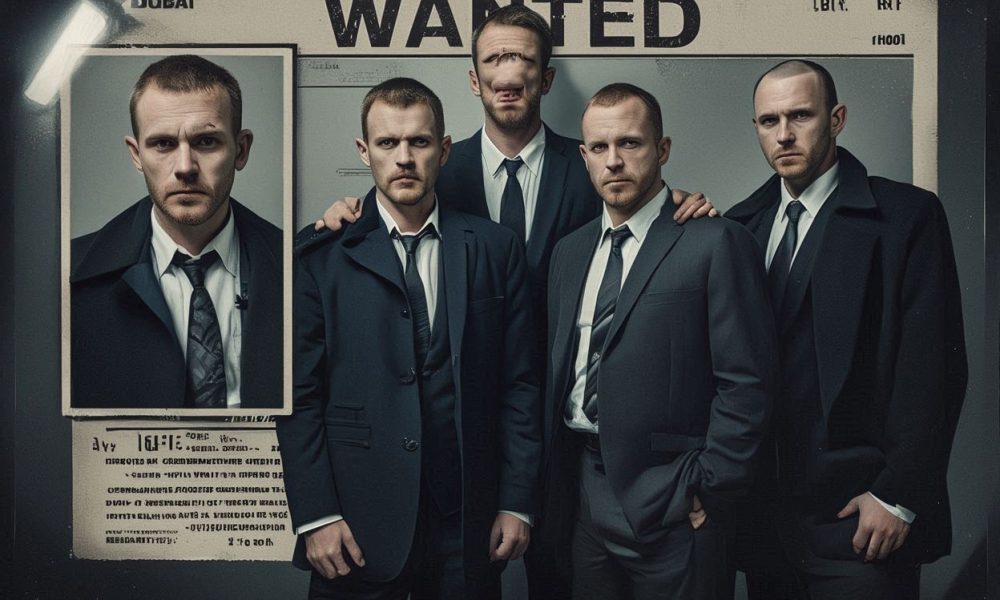
Daniel Kinahan is now detained in Dubai, while Christy Kinahan Sr. and Christopher Kinahan Jr. remain publicly unarrested, yet the broader picture suggests that all three founders have been operating within a shrinking world where comfort, sanctions pressure, and legal exposure now coexist.
WASHINGTON, DC, April 21, 2026.
For years, the Kinahan leadership projected the image of a family that had solved the problem of distance, because Dubai appeared to offer them the rare combination of luxury, business cover, legal friction, and psychological insulation from the immediate reach of Irish criminal process.
That image has now fractured in a way that matters both symbolically and strategically: one founder is in custody, the other two remain publicly free, and all three are now tied to a city that no longer looks like the untouchable sanctuary it once seemed.
The old story was about permanence, wealth, and apparent immunity, but the new story is about narrowing options, sanctions pressure, extradition risk, and the growing possibility that what once looked like a safe haven has become a holding space with fewer exits than the leadership imagined.
Daniel Kinahan is no longer the symbol of untouchable distance.
Daniel Kinahan’s position is the clearest and most dramatic of the three because Reuters identified him as the Irish national arrested in Dubai on April 15, turning years of foreign comfort into a live extradition case and shattering the belief that he could remain indefinitely beyond the practical reach of Ireland.
That arrest matters far beyond one individual, because Daniel had become the most visible face of the cartel’s Gulf-era confidence, moving through the mythology of boxing, high-end foreign residence, and organized crime notoriety as though Dubai had already solved the problem of accountability.
Now, instead of representing strategic insulation, he represents something far more dangerous to the rest of the network: proof that the law can still reach a figure who, for years, appeared to embody the very idea of delayed justice.
The public significance of the detention is therefore easy to understand: a man who once seemed to symbolize the success of foreign sanctuary is now the strongest example of how that sanctuary can fail once treaties, warrants, and state cooperation are sufficiently usable to matter.
Christy Kinahan Sr. remains free, but his freedom looks narrower than before.
Christy Kinahan Sr. remains publicly unarrested, yet the strongest recent reporting no longer supports the image of a relaxed patriarch moving easily through the world, because the weight of sanctions, surveillance, and border risk now appears to have turned the UAE into a far more restrictive environment than it once was.
Recent investigative footage placed him still living openly in Dubai, which is important because it shows he had not fully disappeared into invisibility, and because it reinforces the strange contradiction at the heart of his current status, a man who can still be seen in luxury surroundings while also appearing increasingly unable to move freely beyond them.
That contradiction is one reason the phrase “gilded cage” has become so persuasive: it captures the reality of visible comfort coupled with strategic confinement, with wealth and routine still present even as the legal room for ordinary international movement seems to have narrowed sharply.
A cartel leader does not need to be behind bars to be trapped in practical terms, because a person who fears leaving one jurisdiction for fear of arrest elsewhere is already operating within a far smaller world than the one he once used to project power.
Christopher Kinahan Jr. remains less visible, but still appears central to the structure.
Christopher Kinahan Jr. has not been publicly detained, and he is less visible in the media than Daniel or Christy Sr., yet the strongest public record still places him within the same sanctions regime and the same narrowing Gulf-based orbit, rather than showing a clean break from the family’s operational center.
That matters because public visibility and organizational importance are not the same thing, and quieter figures in transnational criminal structures are often easier to overlook precisely because their value lies in logistics, movement, and administration rather than in symbolic or media-facing power.
The official American view of Christopher Jr. has long been serious, with the U.S. Treasury’s sanctions announcement on the Kinahan Organized Crime Group describing Daniel and Christopher as men who managed Christy Sr.’s trafficking operations, while tying Christopher Jr. specifically to narcotics transportation and distribution linked to the United Kingdom.
That means his current status should not be read as passive or secondary simply because he is discussed less often, because the remaining capacity of the network may depend as much on the quieter operational layer as it ever did on the more visible mythology attached to Daniel.
The founders now occupy different positions inside the same shrinking safe haven.
Taken together, the current picture is striking because the three founders no longer look like a single, protected leadership block operating smoothly from an untroubled foreign base; instead, they look like three men in the same shrinking environment, each experiencing a different version of risk.
Daniel is now in custody and facing the hard procedural reality of extradition, Christy Sr. appears publicly free but strategically boxed in, and Christopher Jr. remains at liberty yet still heavily exposed through sanctions, intelligence attention, and the broader pressure now gathering around the entire leadership circle.
That is a major shift from the years when Dubai could be imagined as a place where all three men had solved the same problem in the same way, because the city now appears to be producing differentiated forms of vulnerability rather than one stable model of safety.
The old advantage of the UAE was that it combined legal friction, premium living, and business normality in a way that made foreign residence look strategic and durable, yet Daniel’s arrest has shown that this formula no longer offers the same certainty to those who remain.
Sanctions still shape the status of all three men, even though only one is detained.
The founders’ current situation cannot be understood without the pressure created in 2022, because the American sanctions and reward measures did more than embarrass the family; they changed the financial, diplomatic, and commercial landscape around them in a way that still defines their room to maneuver today.
Once Washington publicly placed major rewards on Christy Sr., Daniel, and Christopher Jr., and publicly named the organization in the language of trafficking, money laundering, and violence, the family stopped being merely a notorious Irish criminal dynasty and became a globally exposed organized crime target whose movements and relationships carried heavier consequences than before.
That shift did not instantly produce arrests across the board, but it did help create the current environment in which even visible luxury cannot fully disguise strategic weakness, because sanctions make business harder, travel riskier, counterparties more nervous, and foreign refuge less politically comfortable for the jurisdictions hosting them.
In that sense, the status of the founders is not simply a question of who is physically detained and who is not, but of how much practical freedom remains once wealth is still visible, while legal, financial, and diplomatic pressure continues to tighten.
The larger story is that safe havens fail slowly, then suddenly.
What makes the founders’ current status so revealing is that it shows how a criminal sanctuary often decays not through a single dramatic collapse at the beginning, but through a long period in which comfort endures while strategic flexibility erodes, until one arrest finally makes the underlying deterioration impossible to ignore.
That is why Daniel Kinahan’s detention matters so much to the reading of Christy Sr. and Christopher Jr., because it tells the world that the old assumptions about Dubai no longer hold with the same force, and that the men still outside custody are not standing in the same protective light they once enjoyed.
For readers trying to understand why foreign comfort can persist for years and then suddenly seem brittle once treaties, sanctions, and police cooperation begin to align, Amicus International Consulting’s overview of extradition and cross-border surrender mechanics explains why warrants, judicial files, and state-to-state confidence matter more than the mythology surrounding famous fugitives.
The same broader pattern appears in Amicus International Consulting’s broader analysis of shrinking safe havens and international mobility pressure, where the central lesson is that prestige, foreign residence, and visible wealth can preserve the appearance of control even as the real room for movement steadily disappears.
In the end, the current status of the founders is simple only on the surface, because one is in custody, two remain free, but all three now stand as evidence that what once looked like a permanent cartel sanctuary in Dubai has become something much more unstable, a place where comfort survives, but certainty no longer does.




