
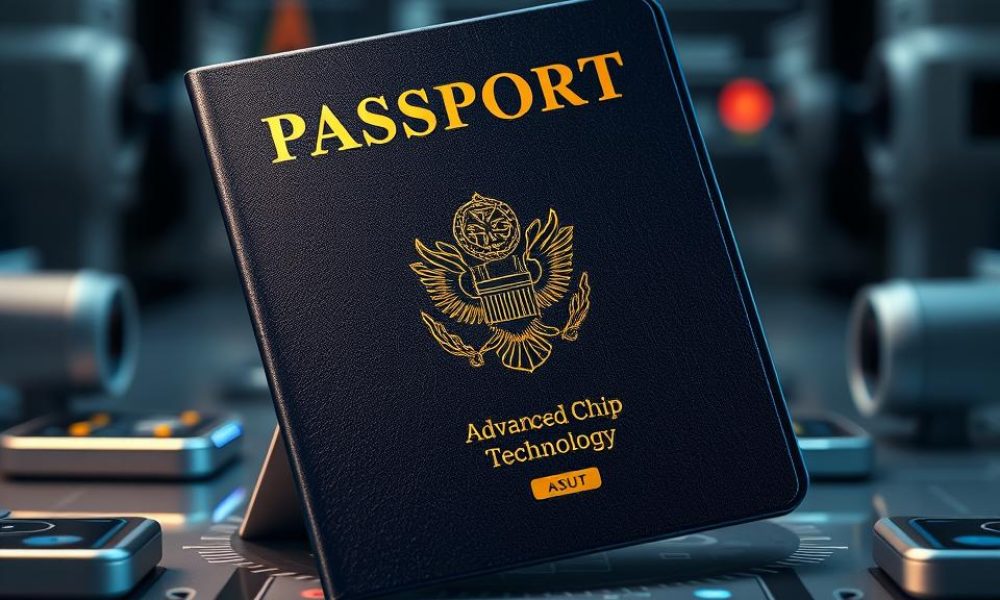
Passport chip technology is now central to faster screening, identity matching, and fraud prevention worldwide, because the modern passport is no longer just a printed booklet, but a layered identity document built for machine-assisted border control.
WASHINGTON, DC, April 15, 2026.
When travelers hear about RFID passport chip security, they often think of it as a small technical detail hidden inside a modern passport, even though it has become one of the main reasons border systems can verify identity faster, compare travelers more consistently, and detect document fraud more effectively than paper-only systems ever could.
The modern e-passport chip now sits at the center of how many states connect a physical travel document to digital identity checks at airports and border crossings, and the basic official explanation can be found in the U.S. State Department’s passport guidance, which explains that the chip stores core identity information, a digital image of the passport photograph, a unique chip identification number, and a digital signature meant to help protect the stored data from alteration.
The passport chip matters because the passport is no longer just paper.
Older passports depended far more heavily on what an officer could see directly, which meant the inspection process leaned on visual judgment, manual reading, and the physical security features of paper, print, laminates, and photographs. A modern passport still uses physical security features, but the chip adds a second layer, providing border systems with a digital record tied directly to the document.
That means a passport can now be judged not only by how it looks but also by how it behaves when it is read electronically. A forged document may still imitate the general appearance of a real passport, but it becomes much harder to make a fake passport behave like a real one once scanners read the chip, validate the data structure, and compare the stored information with the information of the traveler presenting the document.
This is one reason RFID passport chip security matters so much in practice. It raises the standard for authenticity. A passport no longer has to be merely visually convincing. It must also be electronically convincing, and that change has made the modern travel document far more difficult to counterfeit successfully.
The chip is not just storage; it is part of the passport’s anti-fraud logic.
For many travelers, the phrase “passport chip” sounds like little more than digital storage, as though the document simply carries a backup copy of the information already printed on the data page. In reality, the chip matters because the data are protected in a way that helps authorized systems detect whether the information appears authentic and unaltered.
That changes the fraud equation dramatically. In an older document environment, a criminal might focus on altering visible information or producing a visually persuasive fake. In a chip-based environment, the problem becomes much harder because the passport must withstand both physical and digital inspection. The document must look right and behave right.
This is also why modern passport fraud prevention is more system-driven than it used to be. The strongest documents are not merely harder to print. They are harder to fake across multiple layers at once, which means a fraudster now has to defeat the document’s logic, not just its appearance.
Faster screening is a security feature, not just a convenience.
One of the most practical reasons RFID passport chip security matters is that it helps border authorities move large numbers of legitimate travelers through inspection without forcing every interaction back into a slower paper-era process. The chip allows key identity details to be read in a structured format, reducing the need for manual transcription and enabling systems to access the traveler’s data much more quickly.
That speed matters because modern borders are under constant operational pressure. Large airports process huge passenger volumes, and every second saved during document reading can make a meaningful difference once multiplied across hundreds of flights and thousands of travelers. Faster document reading improves throughput, reduces ordinary data-entry mistakes, and helps border systems focus more attention on questionable cases rather than on routine transcription work.
This is one reason passport chip security is not a niche technical issue. It directly affects how long inspections take, how consistently identity information is processed, and how effectively border agencies can combine speed with scrutiny.
The digital photo is one of the most important security features in the chip.
The chip stores a digital version of the passport photograph, and that matters because the passport is no longer just a booklet with a printed photo for an officer to compare by eye. Instead, the document can support facial comparison during inspection, which makes identity matching more disciplined and less dependent on hurried visual judgment alone.
That biometric layer is one of the strongest reasons the chip matters globally. A traveler’s live face can be compared with the digital image on the passport, making simple identity substitution much harder than in older paper-based systems. A fraudster may still try to imitate the booklet, but the passport now undergoes a more rigorous identity test that includes both the document and the person holding it.
This larger trend is visible in modern border operations, including Reuters reporting on the expansion of facial recognition at U.S. borders, which shows how chip-enabled identity documents now feed into broader systems of biometric comparison, travel monitoring, and fraud prevention.
The strongest passports work in layers, not in isolation.
The chip is important, but it is only one part of the passport’s wider security design. A modern passport also depends on physical data-page protection, secure printing, machine-readable text, and document construction features that make tampering more visible and substitution more difficult.
That layered structure matters because security works best when several features reinforce one another. A secure chip inside a weak booklet would still leave opportunities for fraud. A strong booklet without a digital identity layer would still rely too heavily on visual inspection alone. The modern passport works because paper security and digital security support each other rather than existing as separate worlds.
Readers who want a broader background on how these layers fit together can see the same logic in Amicus coverage of electronic passports and e-passport technology, as well as in a separate Amicus explainer on the modern features that make passports harder to forge. Both are useful because they show the chip in its proper role, not as a magical standalone feature, but as one part of a broader anti-fraud system.
Controlled reading matters because security is also about what the chip is not supposed to do.
Public anxiety about RFID often focuses on the fear of hidden reading or passive tracking, which is why the passport chip is best understood as a controlled inspection tool rather than a roaming public beacon. The chip is meant to be read by authorized systems in a specific inspection setting at close range for a defined border-control purpose.
That distinction matters because it explains why passport chip security is about both access and verification. A secure passport system is not only about making the document readable by legitimate authorities. It is also trying to make unauthorized casual access harder when the passport is closed or not being actively used.
This is one of the reasons the chip matters in terms of public trust. Travelers are more likely to accept digital passport technology when it is clear that the document was designed for controlled verification rather than constant exposure. The chip strengthens border control, but it also has to preserve confidence that the document is not simply broadcasting private identity information wherever it goes.
Fraud prevention now depends on the passport being testable in multiple ways simultaneously.
The big change created by RFID passport chip security is that inspection no longer depends on a single kind of confidence. A modern passport can be checked as a physical object, a machine-readable document, a chip-bearing data carrier, and a biometric reference for the traveler’s face. That gives border systems more ways to spot inconsistencies before a fraudulent traveler gets through.
A document that looks genuine may still fail once the chip is read. A passport that contains readable data may still fail if the face does not match the biometric record. A forged booklet may still fail once the digital structure does not align with what an authentic passport is supposed to contain. That is why the chip matters. It increases the number of questions a fake document must answer successfully.
The practical result is that a modern passport is much more difficult to use fraudulently than an older paper-only document. The inspection system is no longer asking only whether the passport looks convincing. It is asking whether the whole identity package holds together under scrutiny.
What matters now is that modern borders increasingly accept chip-based identity documents.
In 2026, RFID passport chip security is not some optional extra added to a few premium documents. It is part of the ordinary architecture of international mobility. Faster screening, identity matching, and fraud prevention increasingly depend on passports that can feed trusted digital data into border-control systems without forcing every traveler back into a slower manual process.
That does not mean the chip solves every problem. Broader concerns about privacy, data retention, and biometric systems remain real, and they are likely to stay part of the public conversation for years. But none of that changes the basic fact that the passport chip now plays a central role in how modern border systems function.
The clearest answer is that RFID passport chip security matters because it makes the passport harder to alter or counterfeit, faster to process, and easier to match to the person presenting it.
The chip stores core identity information in a secure structure, helps verify that the data appears authentic and unaltered, supports biometric comparison using the digital photograph, and allows the passport to be tested across several layers rather than a single layer. That combination is why passport chip technology is now central to faster screening, identity matching, and fraud prevention worldwide.
In the end, RFID passport chip security matters not because it makes the passport futuristic, but because it makes the passport function like a serious modern identity document in a world where border control depends on speed, data integrity, and the ability to tell very quickly whether the document and the traveler still belong together.




