
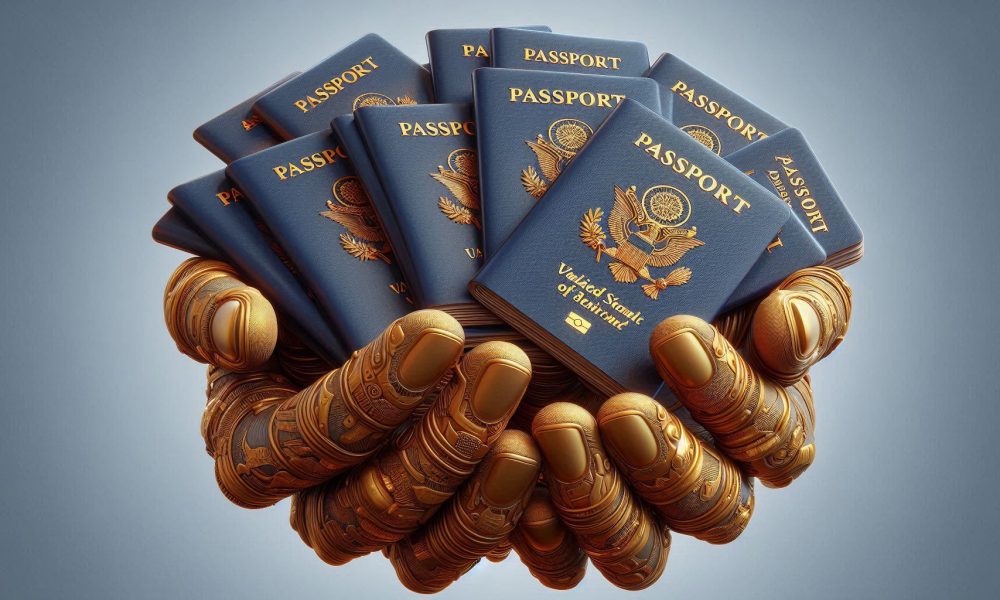
Blue passports became associated with the Western Hemisphere, especially after the United States adopted blue in 1976, but the color’s real meaning is political, regional, and symbolic rather than legally fixed across the world.
WASHINGTON, DC, April 17, 2026.
When people ask what a blue passport means, they are usually noticing a real visual pattern, because blue covers became strongly associated with the Americas and what travel writers often call the New World, even though no international rule says blue belongs only to one region or one category of travel document.
That is the first point worth understanding clearly, because passport color works more like political storytelling than legal classification, which means the cover can suggest history, geography, sovereignty, and national branding without changing the legal force of the passport inside.
A blue passport does not automatically mean stronger citizenship, easier border passage, or greater travel freedom, because those outcomes depend on nationality, visa policy, bilateral agreements, and the status of the bearer rather than on the visible color of the booklet.
Blue became meaningful because passports are political objects before they are design objects.
A passport is one of the few state documents an ordinary citizen physically carries across foreign borders, which means its appearance is never just decorative and almost always carries some message about how a country wants to see itself and how it wants others to see it.
Governments understand that a passport cover will be photographed, recognized, remembered, and handled by foreign officials thousands or millions of times, so color becomes part of the state’s visual language in a way that few domestic documents ever achieve.
Blue proved especially effective because it looks formal without feeling severe, national without feeling excessively ideological, and modern without feeling experimental, which made it ideal for governments wanting a regular passport that felt official, durable, and widely legible.
That combination is one reason blue became such a durable passport color across the Western Hemisphere. It could look patriotic without becoming theatrical, official without becoming intimidating, and international without losing its national tone. For ordinary travelers, it felt like the right shade for a document meant to represent a citizen abroad. For governments, it offered a stable visual language that could survive political changes without losing its authority.
The American shift to blue in 1976 gave the color unusual symbolic force.
The United States did not always use a blue passport, and that history matters because the modern association between America and blue covers was strengthened by a very specific national moment rather than by timeless habit alone.
The modern U.S. passport sits inside a broader official passport tradition described by the U.S. State Department’s passport materials, but the blue cover became especially resonant because the United States adopted it during the Bicentennial era in 1976, which helped tie the color to patriotism, historical memory, and a consciously American visual identity.
That Bicentennial context is important because it turned what might otherwise have looked like a routine design update into a national-symbolic gesture, allowing the blue cover to feel connected to the country’s self-image at a moment when the United States was publicly reflecting on its own founding story.
Once that connection was made, the blue U.S. passport became more than a practical travel booklet and started to function as a recognizable part of American identity abroad, especially because the United States is one of the most visible countries in global travel culture.
Over time, that visibility helped reinforce the broader public sense that blue belonged naturally to the American passport and, by extension, to a wider New World or Western Hemisphere passport aesthetic.
That symbolic force should not be understated. The U.S. passport is not just widely used, but widely seen, which means its design choices echo far beyond American citizens themselves. When one of the world’s most recognized passports becomes firmly blue, the color starts acquiring a stronger public meaning than it might have gained through regional pattern alone.
The idea of a New World passport color is not law, but it is not fantasy either.
Travel coverage has long treated blue as especially common in North America, South America, Central America, and the Caribbean, which is why many travelers instinctively connect blue covers to the Western Hemisphere even when they cannot explain exactly why.
That association is not a treaty rule and should not be mistaken for one, because plenty of non-American countries also issue blue passports, but the regional concentration is real enough that the pattern became culturally visible and easy to repeat.
In other words, blue works as a useful shorthand rather than as a rigid code, because the color tells a general story about the hemisphere without providing a complete or exclusive map of which countries belong to it.
That distinction matters because public conversation about passports often turns tendencies into rules, and once that happens, people start assuming the cover color carries a legal certainty that it simply does not possess in the real world.
The better way to read the color is as a political and visual habit. It tells you something about how states in a particular region often choose to present themselves, but it does not tell you everything, and it certainly does not settle legal questions about the traveler carrying the document.
Blue often signals sovereignty more than integration.
One reason blue feels especially powerful as a passport color is that it often reads as purely national rather than supranational, which helps explain why governments use it when they want the passport to feel closely tied to the state itself.
Burgundy passports often evoke continental integration, especially in Europe, while black passports can suggest diplomatic rank or exceptional official status, and green often carries religious or regional meaning, but blue tends to feel like the ordinary citizen’s passport in a sovereign national framework.
That is why blue works so well in the American setting, because it suggests citizenship and national identity without pulling the document toward the ceremonial distance of black or the bloc identity associated with burgundy in the European context.
The political usefulness of blue became obvious again when the United Kingdom made a public return to blue passports after Brexit, a move described in this Reuters report on the post-Brexit passport change as part of a visible return to national identity rather than just a printing update.
That British example matters here because it shows how passport color can become a sovereignty signal even outside the Americas, confirming that blue has a wider symbolic vocabulary of national self-assertion that governments can tap when they want the passport to embody a political message.
Seen this way, blue does not belong only to the Western Hemisphere. It simply became especially legible there. The same color can still be adopted elsewhere by governments that want the passport to feel national, self-contained, and free from the visual grammar of regional integration.
In the United States, blue came to represent the regular citizen rather than the exceptional traveler.
Another reason the U.S. blue passport became so durable is that it settled into the ordinary-citizenship category rather than being reserved for rare diplomatic or special-passport use, which made the color part of everyday American identity rather than an elite official symbol.
That pattern matters because it helped blue feel democratic in the broadest sense, not as a color of privilege but as the color of the ordinary American traveler leaving the country with the authority of citizenship rather than the authority of diplomatic office.
This is one of the key differences between blue and black in passport culture. Blue usually belongs to the mass public passport, while black often attracts mystique because it is rarer, more formal, and more likely to be associated with diplomatic or special categories.
Readers interested in that contrast can see the broader status discussion in Amicus coverage of diplomatic passports and immunity, which helps explain why black passports trigger so many myths while blue passports, despite being symbolically powerful, usually belong to ordinary citizenship rather than diplomatic privilege.
That distinction is important because public fascination tends to run toward the exceptional document rather than the everyday one. Yet in many countries, and especially in the United States, the regular blue passport is the stronger civic symbol because it represents the ordinary citizen’s relationship to the state. It is not mysterious, but it is deeply national.
The Western Hemisphere reading is strengthened by geography as well as politics.
Blue works especially well in the Americas because it can be read through oceanic geography, Atlantic and Pacific identity, and the broader maritime imagination that surrounds much of the hemisphere’s history, commerce, and outward-facing self-presentation.
A color tied visually to sea, horizon, and distance naturally fits states that see themselves as maritime, migrant, or outward-looking, and that helps explain why blue could take root so successfully as a passport color in a hemisphere defined so strongly by oceanic boundaries and trade routes.
In the U.S. context, those meanings layered on top of the Bicentennial symbolism, creating a color that could feel patriotic, geographic, and widely recognizable all at once, without requiring a complicated explanation every time the document appeared abroad.
This maritime reading also helps explain why blue can feel open rather than closed. A red or black passport may suggest authority in a denser or more hierarchical way, while blue often suggests movement, sea routes, outward travel, and the ordinary mobility of citizens crossing large distances. That does not make blue more powerful in legal terms, but it does make it emotionally resonant in travel culture.
Passport color can be symbolic without being legally meaningful.
This is where readers often go too far, because once a cover starts carrying political meaning, people sometimes assume it must also carry legal effects, yet passport law does not work that way.
A blue passport does not automatically mean visa-free access, faster lines, stronger consular protection, or better treatment by foreign states, because those issues depend on diplomatic relations, travel agreements, nationality law, and border policy rather than on cover color.
That is why color should be read as a signal and not as a legal mechanism. It tells a story about the issuing state. It does not itself create the rights attached to the holder.
This gap between appearance and law is one reason passport symbolism can mislead even attentive travelers. A booklet can look globally recognizable and politically charged while still being governed by the same hard realities of nationality, visas, and border policy that shape every other passport. Color communicates identity. It does not create immunity.
Blue matters more when compared with the other major passport colors.
Red or burgundy often points people toward Europe, institutional continuity, or older continental habits. Green can evoke Islamic tradition, regional identity, or postcolonial symbolism depending on the country. Black often signals rarity, hierarchy, or diplomatic distinction. Blue sits differently inside that palette because it usually belongs to the regular national passport and often suggests a broad, outward-facing sovereign identity.
That relative position is one reason blue passports feel so familiar and so politically stable. They are dramatic enough to be memorable, but not so dramatic that they imply a narrow official status. They are national without feeling overly bureaucratic. They are ordinary without feeling weak.
For readers who want to see how document symbolism and legal meaning are often confused in public discussion, Amicus also offers a separate explainer on passport and document fraud warning signs, which is useful because it reminds readers that appearance can matter greatly without settling deeper questions of status, authenticity, or legal effect.
When placed beside the other three dominant passport colors, blue becomes easier to understand. It is rarely the color of rare diplomatic privilege and rarely the color of explicit ideological messaging. More often, it is the color of the state that says this is the passport of the ordinary national traveler.
The blue passport remains powerful because it condensed an American story into a global object.
Part of the reason the color still resonates is that the U.S. passport became a global carrier of American identity at the same time that international travel itself was expanding, which meant the blue cover circulated through airports, embassies, and border systems as a visible shorthand for the American traveler abroad.
That circulation helped stabilize the public association between blue and the United States, and because the United States sat inside a broader hemisphere where blue was already common enough to feel regionally coherent, the color took on a dual meaning that remains useful today.
It came to mean America in the specific sense of the U.S. passport, and America in the wider hemispheric sense of a New World visual tradition built around blue-covered national travel documents.
That dual meaning is why the blue passport still feels bigger than a design detail. It carries a national story and a hemispheric story at the same time. For many travelers, it looks American even before they see the seal, and it feels Western Hemisphere even before they think about the politics of color directly.
The cleanest answer is that a blue passport usually signals ordinary national citizenship, and in the American setting, it also carries a strong New World identity cue.
That cue became especially powerful after the United States adopted blue in 1976, because the Bicentennial shift helped fix the color in public memory as both patriotic and distinctly American, while the broader use of blue across the Western Hemisphere helped reinforce its association with the New World.
Blue is therefore meaningful, but not exclusive, symbolic, but not legally determinative, and national, but not uniquely American in every case.
So, what does a blue passport mean? In the simplest and strongest sense, it means the issuing state chose a color that projects sovereignty, ordinary citizenship, and, especially in the case of America and much of the Western Hemisphere, a recognizable New World identity signal.




