
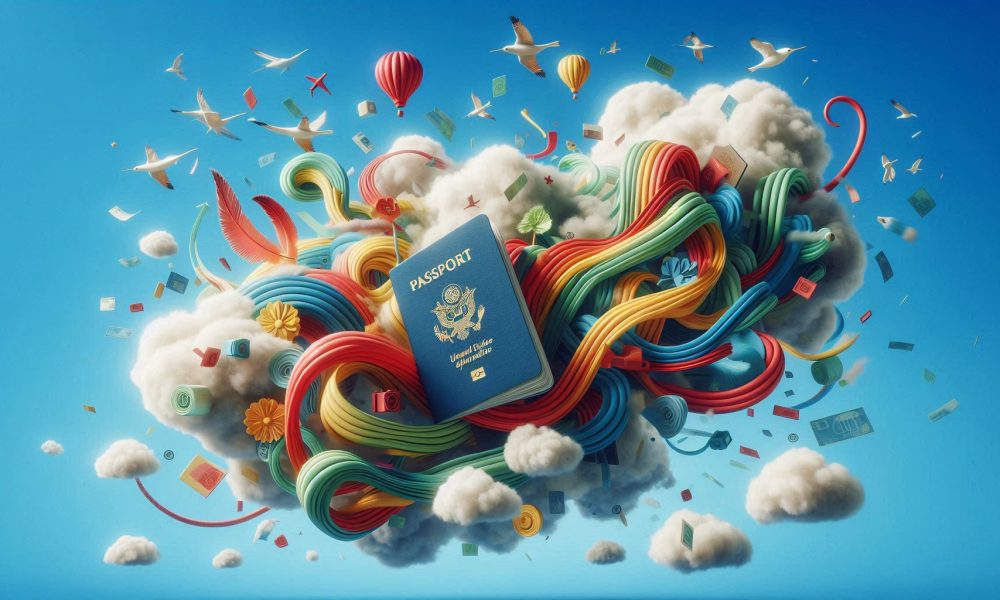
An accessible breakdown of how passport colors signal everything from European identity and New World branding to Islamic tradition, diplomatic hierarchy, and the political stories governments want their travel documents to tell.
WASHINGTON, DC, April 17, 2026.
When people ask what passport colors mean, they are usually noticing a real global pattern, because most passport covers really do cluster around red, blue, green, and black, even though there is no single international rule forcing governments to stay inside those four shades. The deeper reason those colors dominate is that passports are not only travel documents, but also small state objects that carry identity, symbolism, and political messaging every time they appear at an airport counter, embassy desk, or border checkpoint anywhere in the world.
The first thing worth understanding is that passport color is usually symbolic rather than legally determinative, which means the cover can suggest history, region, hierarchy, or ideology without actually changing the legal power of the document inside. A red passport is not automatically stronger than a blue one, a green passport does not automatically come with religious privileges, and a black passport does not automatically create diplomatic immunity just because the cover looks more dramatic than an ordinary civilian booklet.
The cover color is often chosen to say something political before the passport is ever opened.
A passport is one of the few government-issued objects that millions of ordinary people carry across foreign borders, which is why its design naturally becomes part of a country’s visual identity and political self-presentation abroad. Governments know that the cover will be photographed, handled, recognized, and remembered, so the color is rarely just an aesthetic preference and is much more often a compressed statement about belonging, sovereignty, status, or tradition.
That is why the same small group of colors keeps returning across continents and across very different political systems, because red, blue, green, and black all look formal enough to feel official while also carrying strong public associations that can be adapted to national storytelling. A passport must look credible, durable, and state-like, and these colors do that work effectively while giving governments enough symbolic range to tie the document to region, religion, diplomacy, or national identity.
Red and burgundy usually point toward Europe, institutional continuity, or older state tradition.
Red passports, especially deep burgundy ones, became strongly associated with Europe because European Community countries adopted a common burgundy-style format decades ago, turning that shade into a recognizable visual signal of integration and continental identity. That is why burgundy passports still feel European in public imagination, even when the practical and political story behind a specific country’s passport is more complicated than a simple continental label.
The political power of color becomes easier to see once people remember that a passport is often treated as a miniature flag, because the cover can quietly communicate whether a country sees itself as part of a larger bloc, as heir to an older institutional tradition, or as something more distinctly national and separate. In countries where red has remained dominant, the color often carries a sense of continuity, seriousness, and established state authority rather than novelty or visual experimentation.
A useful official example appears in the U.S. State Department’s Romania reciprocity guidance, which notes that Romania uses a red regular passport, a black diplomatic passport, and a dark blue official passport, showing how color can signal both broad regional tradition and internal hierarchy at the same time. That one example captures an important truth about passport color, because governments often use different shades not only to reflect identity abroad but also to sort different classes of official documents within their own state systems.
Blue usually signals sovereignty, maritime identity, or what many people think of as New World branding.
Blue passports often feel national rather than supranational, and that helps explain why so many countries in the Americas and beyond have used blue to project a self-contained state identity tied to oceans, openness, or a distinct national image. The phrase New World branding is not a legal category, but it captures a real visual tendency, because blue has long resonated in places where governments wanted the passport to feel Atlantic, maritime, independent, and visually separate from old European formats.
That symbolism became especially visible in the United Kingdom, where the color of the passport became part of the broader political theatre of Brexit and national identity. As a Reuters report on Britain’s return to blue passports after Brexit showed, the move away from burgundy was framed as a return to an older national look and a more explicit assertion of sovereignty, which proves how emotionally loaded passport color can become when governments want a travel document to stand for something larger than travel.
Blue works so well for this kind of branding because it is simultaneously calm, official, and easy to tie to geography, especially in countries that want the passport to suggest oceans, trade routes, Atlantic belonging, or a newer national story rather than a bureaucratic European inheritance. That is why blue often feels more purely national to the public eye, even though its actual meaning still depends heavily on the country using it and the political story attached to it.
Green often carries religious resonance, regional identity, or postcolonial symbolism.
Green passports are widely associated with Muslim-majority countries because green has long held strong cultural and religious significance in Islamic tradition, and that association has become one of the most persistent color readings in global travel culture. Even when governments do not explicitly explain the cover in religious terms, the color is often understood by the public as invoking Islamic heritage, continuity, and civilizational identity in a way that feels immediately recognizable.
At the same time, green can also point to regional rather than purely religious identity, especially in places where neighboring countries share similar design habits or where a common political history helped normalize that shade across borders. In those settings, green may carry the memory of postcolonial alignment, regional solidarity, or bloc consciousness as much as it carries spiritual symbolism, which is why the same color can mean different things in West Africa, the Middle East, or South Asia without losing its general association with tradition and belonging.
This is one reason passport colors are best understood as tendencies rather than fixed codes, because a green passport may suggest Islam in one country, regional heritage in another, or internal document rank in a third. The color tells a story, but the story is always shaped by national context, political history, and the way a government wants the document to be read both at home and abroad.
Black is the rarest passport color, and that rarity is exactly what gives it so much mystique.
Black passports stand out more than the other three colors because they are less common in ordinary civilian travel, which makes them appear more formal, more secretive, and more closely tied to official state hierarchy the moment people see them. The visual effect is powerful because black suggests gravity, restraint, authority, and a certain kind of distance from everyday civilian movement, which is one reason the public so often associates it with diplomacy, elite status, and special treatment.
In practical terms, black is frequently used to separate diplomatic documents from regular civilian passports, and that is one reason the phrase black passport has become such a durable shorthand in public discussion. The cover looks like it belongs to a narrower and more official lane of international movement, even though the actual legal significance still depends on status, accreditation, and the host country’s recognition of the person carrying it.
That public fascination is one reason discussions of black diplomatic documents keep resurfacing in private-sector commentary, including Amicus analysis of diplomatic passports and immunity and a broader Amicus explainer on diplomatic passports and status. Those discussions are useful because they show how easily people confuse the symbolism of the cover with the much narrower legal structure behind diplomatic status, which is exactly why black passports attract both fascination and misunderstanding.
Color also helps governments separate ordinary travel from official or diplomatic travel.
One practical reason these shades persist is that passport design has always been about fast visual sorting as much as national image, because immigration officials, consular officers, and state personnel benefit from documents that can be distinguished quickly before the inside pages are studied in detail. A black diplomatic passport, a red civilian passport, or a blue official booklet does more than look different, because it helps the state mark out which category of traveler may be standing in front of an official and which protocol lane may apply.
This kind of visual bureaucracy matters more than many travelers realize, because modern states still depend on layers of classification even in an age of chips, machine-readable zones, and digital databases. The cover color is part of that classification system, and the fact that it also carries political symbolism simply makes it more useful to governments that want a passport to speak both administratively and symbolically at the same time.
That dual purpose helps explain why black diplomatic passports remain so captivating in public imagination. They do not just look different, but seem to announce that the bearer is moving inside a narrower, more protected, or more state-centered channel than the ordinary traveler in the next line, even though the actual legal consequences remain more limited and more conditional than the color alone suggests.
What passport color does not tell you is just as important as what it seems to suggest.
The biggest mistake people make is assuming that color equals legal power, because it usually does not. Passport cover color does not determine visa-free travel strength, citizenship value, border rights, or immunity, and it does not tell you automatically whether the holder belongs to a more privileged legal class in the jurisdiction where the passport is being presented. Those questions depend on issuing authority, nationality, document category, recognized status, and host-state rules rather than on the visible shade of the booklet.
This matters especially when people start reading too much into black diplomatic passports, because the dramatic look of the document encourages myths about untouchability, special access, or guaranteed immunity. In reality, a black diplomatic passport is best understood as a visual signal of official category and state hierarchy, while the actual legal protection behind the holder depends on the much narrower framework of diplomatic recognition, official function, and international reciprocity.
The cleanest answer is that passport colors are chosen because they work as symbols.
Passports are red, blue, green, or black because those colors have become durable shorthand for region, ideology, religion, geography, and official hierarchy while still looking serious enough to function as credible state documents. Red often signals European-style institutional continuity, blue often suggests national sovereignty and New World or maritime branding, green often resonates with Islamic tradition or regional identity, and black often marks rarity, diplomacy, or a more elevated official tier.
None of those readings is universal, and none of them works as a hard legal code, yet together they explain why governments around the world keep returning to the same small palette. In the end, passport colors matter because they help states tell a story about who they are, where they belong, and how they want their authority to be seen long before the passport is ever opened, scanned, or stamped.




