
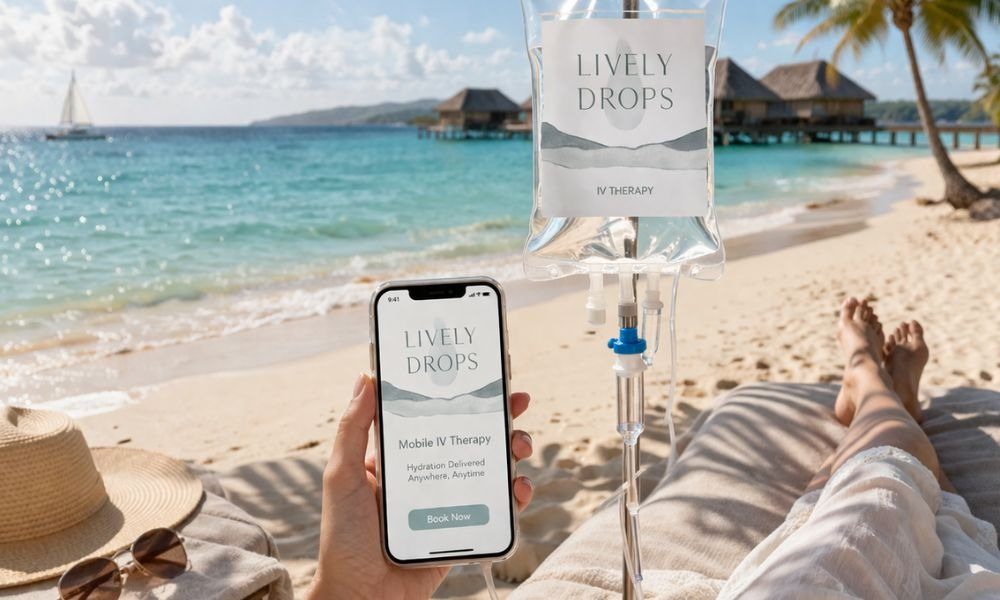
Getting an IV therapy service in Los Angeles has become the go-to move for residents serious about slowing the aging process at the cellular level. NAD+ IV therapy in LA has moved from niche longevity clinics into mainstream wellness, and for measurable biological reasons. Nicotinamide adenine dinucleotide (NAD+) is a coenzyme present in every living cell, directly involved in over 500 enzymatic reactions including DNA repair, mitochondrial energy production, and the activation of sirtuins, proteins that regulate gene expression and cellular aging.
NAD+ levels decline by approximately 50% between ages 40 and 60, a reduction linked by researchers at Washington University School of Medicine to progressive mitochondrial dysfunction and accelerated cellular senescence. IV delivery bypasses oral bioavailability limitations entirely, placing the coenzyme directly into circulating plasma for immediate systemic distribution.
The Cellular Science Behind NAD+ Decline
The primary mechanism of age-related NAD+ depletion involves the enzyme CD38, a glycohydrolase that consumes NAD+ at an accelerating rate as chronic inflammation increases with age. Research published in Cell Metabolism by Dr. Johan Auwerx’s laboratory at EPFL in Switzerland demonstrated that CD38 activity increases four-fold between young adulthood and middle age, directly outpacing the biosynthetic capacity of the salvage pathway that recycles NAD+ from nicotinamide. Separately, PARP enzymes which use NAD+ to repair DNA strand breaks — deplete reserves further during periods of oxidative stress or UV exposure, both constant realities in Los Angeles’s outdoor lifestyle.
The downstream consequences of NAD+ depletion are measurable across multiple systems:
- Mitochondria: Reduced NAD+ impairs the electron transport chain, cutting ATP output per cell and causing the fatigue and mental fog that many adults in their 40s and 50s attribute solely to stress or poor sleep.
- DNA Repair: PARP1, the enzyme that repairs single-strand DNA breaks, consumes three NAD+ molecules per repair cycle. When NAD+ is scarce, DNA damage accumulates faster than repair mechanisms can address it.
- Inflammation: Sirtuin 1 (SIRT1) deacetylates NF-kB, a transcription factor that drives inflammatory gene expression. Without sufficient NAD+ to activate SIRT1, inflammatory signaling runs unchecked at the cellular level.
- Circadian Rhythm: SIRT1 also regulates CLOCK and BMAL1, the proteins that govern the body’s 24-hour biological clock. NAD+ depletion disrupts circadian gene expression, contributing to sleep irregularities and metabolic dysfunction.
Brain Health Applications in Clinical Research
Dr. David Sinclair at Harvard Medical School’s Department of Genetics has published extensively on NAD+ precursors and their role in reversing aspects of neurological aging in animal models. His 2020 paper in Cell demonstrated that restoring NAD+ levels in aging mice reversed vascular degeneration in the brain and improved endurance by 56 to 80 percent. While direct human equivalents remain under active investigation, the mechanistic pathway — NAD+ activating SIRT1 and SIRT3 to improve mitochondrial function in neurons — is consistent across mammalian biology.
Specific brain health outcomes linked to NAD+ restoration in peer-reviewed research include:
- Cognitive Clarity: SIRT3 activation in hippocampal neurons reduces amyloid precursor protein processing, a mechanism studied in the context of age-related cognitive decline at the Buck Institute for Research on Aging in Novato, California.
- Neuroprotection: NAD+ fuels poly(ADP-ribose) polymerase activity in neurons, which repairs oxidative DNA damage before it triggers apoptosis — the programmed cell death pathway implicated in neurodegenerative conditions.
- Mood Regulation: NAD+ is a cofactor in the conversion of tryptophan to serotonin via the kynurenine pathway. Low NAD+ shifts tryptophan metabolism toward quinolinic acid, a neurotoxin, rather than serotonin, directly affecting mood stability.
- Mental Energy: Neurons in the prefrontal cortex are among the highest ATP consumers in the body. Restoring mitochondrial NAD+ through IV infusion directly increases the energy substrate available for sustained cognitive function.
IV vs. Oral NAD+ Supplementation: Why Delivery Method Matters
A pharmacokinetic study from the University of Washington found that a single 500 mg IV NAD+ infusion raised whole-blood NAD+ concentrations by 10-fold compared to baseline, versus a two to three-fold increase seen with high-dose oral nicotinamide riboside (NR) at 1,000 mg daily. This concentration difference is clinically significant because sirtuin activation requires NAD+ to exceed a specific intracellular threshold, not merely be present at baseline levels.
The bioavailability gap between oral and IV NAD+ comes down to three factors:
- First-pass metabolism: Oral NAD+ precursors are converted in the gut and liver before reaching systemic circulation, losing a significant portion of their potency in the process.
- Gastric degradation: NAD+ is hydrolyzed by intestinal enzymes before absorption, meaning the molecule that reaches the bloodstream is often a metabolite rather than NAD+ itself.
- Concentration ceiling: The gut’s transport proteins for nicotinamide derivatives become saturated at moderate doses, capping plasma levels regardless of how much is consumed orally.
IV administration bypasses all three bottlenecks, delivering NAD+ directly into the bloodstream at therapeutic concentrations that oral supplementation cannot replicate regardless of dosage or formulation.
What to Expect From NAD+ IV Therapy at Livelydrops
The Livelydrops Super Drip includes glutathione alongside a comprehensive B-vitamin and mineral profile B12, B-complex, magnesium, taurine, biotin, and vitamin C each of which supports the NAD+ biosynthesis pathway from a different angle. Glutathione regenerates oxidized vitamin C back to its active ascorbate form and directly neutralizes the mitochondrial reactive oxygen species that accelerate NAD+ consumption. Magnesium is a required cofactor for NAMPT, the rate-limiting enzyme in the NAD+ salvage pathway. Sessions are delivered by licensed registered nurses at your West Hollywood home, hotel, or workplace with full vital sign monitoring throughout.
Key practical details for first-time NAD+ IV clients:
- Session length: A full 500 mg NAD+ dose requires 90 to 180 minutes due to the slow infusion rate required for comfort and safety.
- Common sensations: Mild chest pressure, a warm flushing sensation, or nausea can occur if the drip rate is too fast — all resolve immediately when the rate is reduced.
- Frequency: Most longevity-focused clients schedule sessions every two to four weeks, with an initial loading protocol of two to three sessions in the first month to rebuild depleted reserves.
- Add-ons: Glutathione push at the end of a NAD+ session amplifies antioxidant protection and is particularly beneficial for clients with high oxidative stress from exercise, sun exposure, or urban air pollution.
Longevity, Metabolic Benefits, and Who Should Consider NAD+ IV Therapy in LA
NAD+ plays a direct role in glucose metabolism through its function as a cofactor for lactate dehydrogenase and alcohol dehydrogenase, both key enzymes in converting glucose into usable ATP. Restoring NAD+ levels improves insulin sensitivity by activating SIRT1, which deacetylates IRS-1 (insulin receptor substrate 1) and enhances glucose uptake in skeletal muscle. For LA residents focused on body composition, athletic recovery, or long-term metabolic health, this mechanism makes NAD+ IV therapy a functional clinical tool with measurable outcomes.
Candidates who benefit most from NAD+ IV therapy in Los Angeles include:
- Adults over 35 experiencing unexplained fatigue, brain fog, or declining exercise recovery that does not respond to sleep or dietary changes
- Individuals with high oxidative stress loads — frequent flyers, endurance athletes, people in high-pollution urban environments
- Anyone with a family history of neurodegenerative conditions who wants to support neurological resilience proactively
- People recovering from prolonged illness, chronic stress, or burnout, where mitochondrial depletion is a documented physiological consequence
The National Institute on Aging actively funds research into NAD+ precursors as interventions for age-related disease. Livelydrops Mobile IV Therapy in West Hollywood brings this science directly to your door no clinic commute, no waiting rooms. Call (562) 665-2822 to book your NAD+ session today.




