
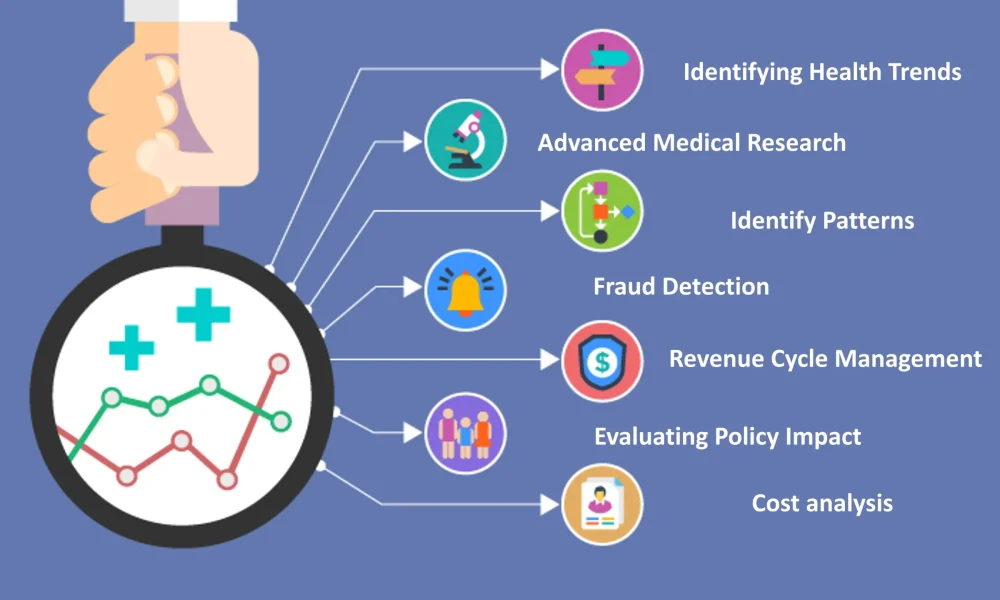
The global healthcare clinical analytics market is experiencing substantial growth, driven by the increasing digitization of healthcare systems and the rising demand for data-driven decision-making. The market size is projected to expand from US$ 15.4 billion in 2026 to US$ 36.7 billion by 2033, growing at a compound annual growth rate (CAGR) of 13.3% during the forecast period. This growth reflects the expanding role of analytics in improving patient outcomes, optimizing operational efficiency, and reducing overall healthcare costs.
Healthcare providers across the world are rapidly transitioning from traditional paper-based systems to electronic health records (EHRs). This shift has enabled the collection of vast amounts of structured and unstructured clinical data. With the help of advanced analytics tools, healthcare organizations can process this data to identify trends, predict outcomes, and enhance clinical decision-making. As a result, clinical analytics has become a critical component of modern healthcare infrastructure.
Download Your Free Sample & Explore Key Insights: https://www.persistencemarketresearch.com/samples/18607
Market Dynamics
One of the primary drivers of the healthcare clinical analytics market is the growing adoption of EHR systems. These systems facilitate real-time data access and integration, allowing healthcare professionals to make informed decisions quickly. Additionally, the increasing burden of chronic diseases such as diabetes, cardiovascular disorders, and cancer is pushing healthcare providers to adopt analytics solutions that can support early diagnosis and personalized treatment plans.
Another key factor contributing to market growth is the rising pressure to reduce healthcare expenditure. Governments and private healthcare organizations are focusing on value-based care models, which emphasize patient outcomes rather than service volume. Clinical analytics plays a vital role in achieving these goals by identifying inefficiencies, reducing hospital readmissions, and improving resource allocation.
However, the market also faces certain challenges. Data privacy and security concerns remain a major issue, especially with the growing use of cloud-based solutions. Compliance with regulatory frameworks and ensuring the confidentiality of patient data are critical for market participants. Additionally, the high cost of implementation and the lack of skilled professionals in data analytics may hinder market growth to some extent.
Market Segmentation
By Platform
The healthcare clinical analytics market is segmented into stand-alone and integrated platforms. Stand-alone platforms are designed for specific analytical tasks and are often used by smaller healthcare facilities. In contrast, integrated platforms offer comprehensive solutions that combine multiple functionalities, such as data management, predictive analytics, and reporting. Integrated platforms are gaining popularity due to their ability to provide a holistic view of patient data and streamline clinical workflows.
By Deployment
Based on deployment, the market is divided into on-premise and cloud-based solutions. On-premise solutions offer greater control over data and are preferred by organizations with strict data security requirements. However, cloud-based solutions are witnessing faster adoption due to their scalability, cost-effectiveness, and ease of implementation. The growing acceptance of cloud technology in healthcare is expected to drive significant growth in this segment.
By End-user
The end-user segment includes hospitals, clinics, insurance companies, government payers, and others. Hospitals represent the largest share of the market, as they generate vast amounts of clinical data and require advanced analytics tools for efficient management. Clinics are also increasingly adopting clinical analytics to improve patient care and operational efficiency. Insurance companies and government payers use analytics to detect fraud, manage claims, and design better reimbursement models.
Get Custom Insights Designed for Your Businecss: https://www.persistencemarketresearch.com/request-customization/18607
Regional Analysis
Geographically, the healthcare clinical analytics market is segmented into North America, Europe, East Asia, South Asia and Oceania, Latin America, and the Middle East and Africa. North America holds the largest market share, driven by the widespread adoption of advanced healthcare technologies and the presence of major market players such as IBM Corporation and Oracle Corporation. The region also benefits from strong government support and favorable regulatory policies.
Europe is another significant market, with countries focusing on improving healthcare quality and efficiency through digital transformation. East Asia is expected to witness rapid growth due to increasing healthcare investments and the adoption of advanced technologies in countries like China and Japan. South Asia and Oceania, including emerging economies, are also showing promising growth potential, driven by improving healthcare infrastructure and rising awareness about data analytics.
Latin America and the Middle East and Africa are gradually adopting clinical analytics solutions, supported by government initiatives and investments in healthcare modernization. Although these regions currently hold smaller market shares, they are expected to grow steadily during the forecast period.
Competitive Landscape
The healthcare clinical analytics market is highly competitive, with several global and regional players striving to strengthen their market position. Key companies operating in the market include Cerner Corporation, McKesson Corporation, Allscripts Healthcare Solutions, Inc., Optum Inc., and Hewlett Packard Enterprise Company. These companies are focusing on strategic initiatives such as mergers and acquisitions, partnerships, and product innovations to expand their market presence.
Innovation plays a crucial role in maintaining competitiveness. Companies are investing heavily in artificial intelligence (AI), machine learning (ML), and advanced data analytics technologies to enhance their offerings. By integrating these technologies into clinical analytics platforms, organizations can provide more accurate predictions and actionable insights.
Technological Advancements
Technological advancements are significantly shaping the healthcare clinical analytics market. The integration of AI and ML has revolutionized the way clinical data is analyzed, enabling predictive and prescriptive analytics. These technologies help healthcare providers identify high-risk patients, predict disease progression, and recommend personalized treatment plans.
Another important trend is the use of big data analytics. With the increasing volume of healthcare data generated from various sources, including wearable devices and remote monitoring systems, big data analytics tools are essential for extracting meaningful insights. Additionally, the adoption of natural language processing (NLP) is improving the analysis of unstructured data, such as clinical notes and medical records.
Checkout Now & Download Complete Market Report: https://www.persistencemarketresearch.com/checkout/18607
Future Opportunities
The healthcare clinical analytics market offers numerous growth opportunities. The increasing adoption of telemedicine and remote patient monitoring is creating new avenues for data collection and analysis. These technologies enable continuous monitoring of patient health, providing valuable data that can be used for predictive analytics.
Another promising opportunity lies in personalized medicine. Clinical analytics can help identify genetic and environmental factors that influence disease, allowing for tailored treatment approaches. This not only improves patient outcomes but also enhances the efficiency of healthcare systems.
Emerging markets present significant growth potential due to improving healthcare infrastructure and increasing investments in digital health technologies. Governments in these regions are implementing initiatives to promote the adoption of clinical analytics, further driving market expansion.
Conclusion
The global healthcare clinical analytics market is poised for significant growth, driven by the increasing adoption of digital technologies and the growing need for efficient healthcare delivery. With a projected CAGR of 13.3% from 2026 to 2033, the market is expected to reach US$ 36.7 billion by the end of the forecast period. While challenges such as data security and high implementation costs persist, ongoing technological advancements and strategic initiatives by key players are expected to overcome these barriers.
As healthcare systems continue to evolve, clinical analytics will play an increasingly important role in improving patient care, reducing costs, and enhancing overall efficiency. The integration of advanced technologies, coupled with the growing emphasis on data-driven decision-making, will ensure that the healthcare clinical analytics market remains a vital component of the global healthcare industry.




