
The global toddler wear market is experiencing strong momentum as parents increasingly prioritize comfort, safety, and style in clothing for young children. Toddler wear includes apparel designed specifically for children aged between one and four years, focusing on soft fabrics, durability, and ease of use. With rising disposable incomes and growing awareness of child-friendly materials, parents are willing to invest in high-quality clothing that ensures both comfort and protection. The market is also influenced by fashion trends, with brands introducing stylish yet functional designs that cater to modern parenting preferences.
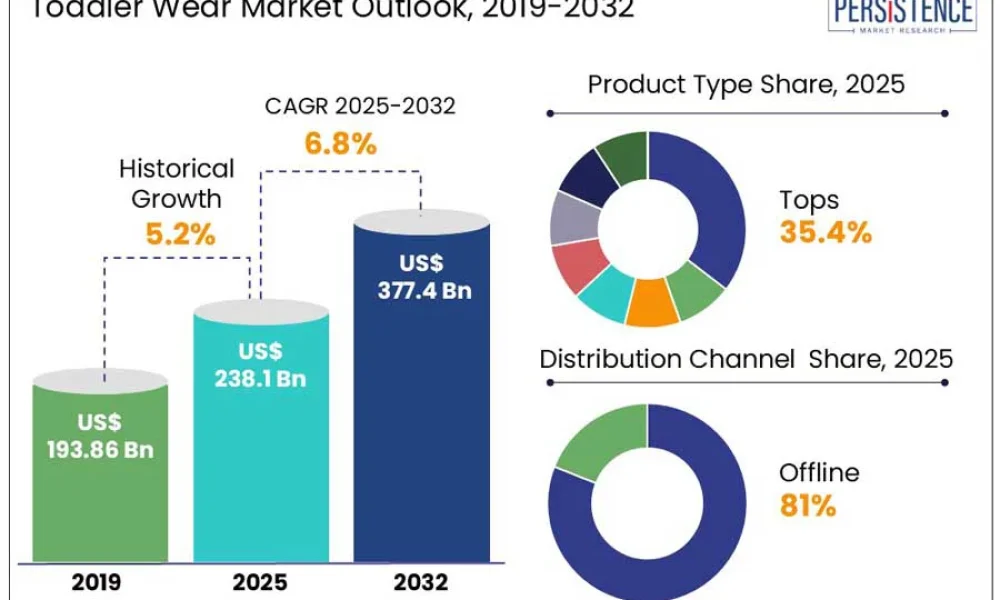
According to Persistence Market Research, the global toddler wear market size is expected to grow from US$ 238.1 billion in 2025 to US$ 377.4 billion by 2032, with a projected CAGR of 6.8%. This growth is driven by changing consumer preferences for comfortable, stylish, and safe clothing for young children. The leading segment is casual and everyday wear, as it fulfills daily comfort needs, while Asia Pacific dominates the market due to its large population base and increasing middle-class spending. Additionally, the rising focus on eco-friendly and organic fabrics is further accelerating demand across global markets.
Download Your Free Sample & Explore Key Insights : https://www.persistencemarketresearch.com/samples/35366
Key Highlights from the Report
➤ The toddler wear market is projected to expand from US$ 238.1 Bn in 2025 to US$ 377.4 Bn by 2032 at a CAGR of 6.8%.
➤ Rising demand for comfortable and skin-friendly fabrics is influencing product innovation.
➤ Increasing popularity of organic and sustainable toddler clothing is reshaping market trends.
➤ Growth in online retail and e-commerce platforms is enhancing product accessibility.
➤ Expanding middle-class population in emerging economies is driving higher spending on kidswear.
➤ Fashion-conscious parents are fueling demand for stylish and premium toddler apparel.
Market Segmentation
The toddler wear market is segmented based on product type, material, and distribution channel. Product categories include tops, bottoms, outerwear, sleepwear, and innerwear. Among these, casual wear dominates due to its daily usage and high replacement frequency. Materials used in toddler clothing range from cotton and wool to organic and blended fabrics. Organic cotton and eco-friendly materials are gaining traction as parents become more conscious about skin sensitivity and environmental impact. These materials offer breathability and comfort, making them highly suitable for toddlers.
In terms of distribution, the market is divided into offline and online channels. Offline stores such as supermarkets, specialty stores, and brand outlets continue to hold a significant share due to the ability to physically examine products. However, online platforms are rapidly gaining popularity due to convenience, wider product variety, and competitive pricing. E-commerce growth has enabled brands to reach a broader consumer base, especially in urban and semi-urban areas, contributing significantly to overall market expansion.
Customize This Report for Your Exact Requirements : https://www.persistencemarketresearch.com/request-customization/35366
Regional Insights
Asia Pacific leads the toddler wear market due to its large population, rising birth rates, and increasing disposable income among middle-class families. Countries such as China and India are witnessing significant growth in demand for toddler clothing as urbanization and lifestyle changes drive higher spending on children’s apparel. The presence of local manufacturers and expanding retail networks further supports market growth in the region.
North America and Europe also represent key markets, driven by high consumer awareness and strong demand for premium and branded toddler wear. Parents in these regions prioritize quality, safety, and sustainability, leading to increased adoption of organic and eco-friendly clothing. Additionally, the presence of established brands and advanced retail infrastructure contributes to steady market growth in these regions.
Market Drivers
The primary driver of the toddler wear market is the increasing focus on child comfort and safety. Parents are becoming more conscious of the materials used in clothing, preferring soft, breathable, and hypoallergenic fabrics. This shift has encouraged manufacturers to invest in high-quality materials and innovative designs that ensure ease of movement and comfort for toddlers. Additionally, growing awareness about skin sensitivity and allergies is pushing demand for organic and chemical-free fabrics.
Another significant driver is the rising influence of fashion trends in kidswear. Modern parents are increasingly interested in dressing their children in stylish and trendy outfits. Social media, celebrity influence, and digital marketing campaigns have played a key role in promoting fashionable toddler clothing. This trend has led to the emergence of premium toddler wear brands offering designer collections, further boosting market growth.
Market Restraints
Despite strong growth prospects, the toddler wear market faces challenges such as high costs associated with premium and organic clothing. Many parents, especially in price-sensitive markets, may find it difficult to afford high-end toddler apparel. This can limit the adoption of sustainable and organic clothing options, particularly in developing regions where affordability remains a key concern.
Another restraint is the frequent replacement cycle of toddler clothing. Toddlers outgrow clothes quickly, which can discourage parents from investing in expensive apparel. This factor often leads consumers to opt for budget-friendly options, affecting the sales of premium brands. Additionally, the availability of counterfeit products and low-cost alternatives in the market can pose a challenge to established players.
Market Opportunities
The growing demand for sustainable and eco-friendly toddler wear presents significant opportunities for market players. As environmental concerns continue to rise, brands that focus on organic materials, ethical production practices, and recyclable packaging are likely to gain a competitive edge. Introducing certified organic clothing lines can attract environmentally conscious consumers and strengthen brand loyalty.
Another promising opportunity lies in the expansion of digital and e-commerce channels. Online platforms enable brands to showcase a wide range of products and reach customers across different regions. Personalized shopping experiences, subscription-based clothing services, and direct-to-consumer models are expected to drive future growth. Emerging markets also offer untapped potential as rising incomes and urbanization increase spending on toddler apparel.
Get Instant Access – Complete Your Purchase : https://www.persistencemarketresearch.com/checkout/35366
Company Insights
Key players operating in the toddler wear market include:
Carter’s Inc.
Gap Inc.
H&M Group
Zara (Inditex)
Nike Inc.
Adidas AG
The Children’s Place
Mothercare plc
Benetton Group
Next plc
Recent Developments
- June 2024: H&M expanded its sustainable kidswear collection focusing on organic cotton toddler clothing.
- October 2023: Carter’s Inc. launched a new line of affordable everyday toddler essentials to strengthen its market presence.
Future Opportunities and Growth Prospects
The toddler wear market is expected to maintain a strong growth trajectory over the coming years, supported by evolving consumer preferences and increasing awareness of child comfort and sustainability. Manufacturers are likely to focus on innovation in fabric technology, design, and functionality to meet changing consumer demands. The integration of eco-friendly practices and materials will play a crucial role in shaping the future of the market.
Furthermore, the expansion of organized retail and e-commerce platforms will continue to drive accessibility and product visibility. As emerging economies witness rising disposable incomes and urbanization, demand for high-quality toddler wear is expected to surge. Companies that invest in sustainable practices, digital transformation, and customer-centric strategies will be well-positioned to capitalize on the growing opportunities in the toddler wear market.




