
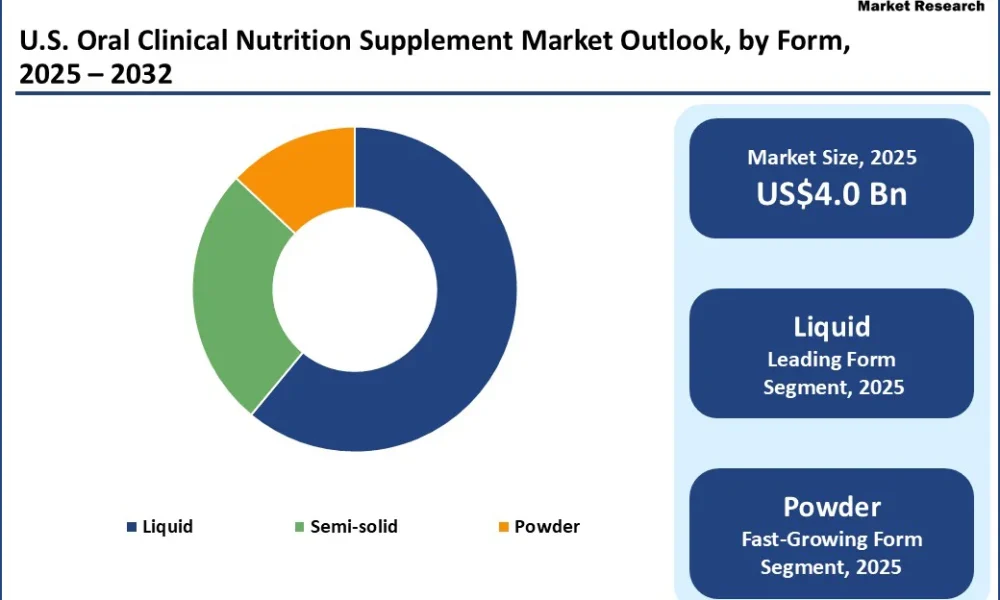
The U.S. oral clinical nutrition supplement market is poised for substantial growth, with an expected valuation of $4.0 billion by 2025 and a projected rise to $5.7 billion by 2032. This growth represents a compound annual growth rate (CAGR) of 5.2% during the forecast period from 2025 to 2032. Key drivers contributing to this growth include the aging population, an increasing burden of chronic diseases, and a growing focus on medical nutrition for patient recovery. Oral clinical nutrition supplements are essential for improving patient outcomes, particularly among those with chronic illnesses, the elderly, and those requiring specialized nutrition during medical treatments.
Market Overview and Key Drivers
The oral clinical nutrition supplement market in the U.S. is experiencing rapid expansion, driven by several macro trends. A significant contributor to the market’s growth is the aging population, with an increasing number of elderly individuals requiring specialized nutritional care due to age-related health conditions. Additionally, the growing prevalence of chronic diseases such as diabetes, obesity, and cardiovascular conditions is further intensifying demand for oral nutrition supplements. The need for long-term nutritional support to manage chronic conditions and aid in recovery from surgeries or illnesses is one of the strongest market drivers. For instance, chronic diseases account for nearly 90% of U.S. healthcare spending, amplifying the need for nutritional interventions that can reduce complications and promote faster recovery.
In terms of market segments, liquid oral clinical nutrition supplements currently dominate the market with a significant share. These supplements are often preferred for their ease of use and high absorption rate, especially for patients with swallowing difficulties, such as the elderly and those undergoing treatments like chemotherapy. Moreover, powdered supplements are emerging as the fastest-growing segment due to their affordability, ease of storage, and growing adoption for home-based care, particularly in chronic disease management.
Download Your Free Sample & Explore Key Insights: https://www.persistencemarketresearch.com/samples/35632
Key Highlights from the Report:
• Market Size in 2025: $4.0 Billion
• Market Forecast in 2032: $5.7 Billion
• CAGR from 2025 to 2032: 5.2%
• Dominant Form: Liquid supplements, with a 61.6% market share in 2025
• Fastest-Growing Segment: Powdered supplements, due to affordability and home-care trends
• Top Distribution Channel: Institutional sales (hospitals, long-term care) driving 50.7% market share
Market Segmentation
The U.S. oral clinical nutrition supplement market can be segmented based on several key categories, including product type, clinical indication, and distribution channels. Each of these categories plays a significant role in shaping the market’s structure and growth trajectory.
Product Type:
The product types within the U.S. oral clinical nutrition supplement market include liquid, powder, and semi-solid formats. Liquid supplements are by far the most dominant, accounting for over 61% of the market share in 2025. This preference is attributed to their ease of use, faster absorption rates, and greater compliance among patients, especially those with difficulty swallowing. They are widely used in hospitals, elderly care facilities, and for patients undergoing chemotherapy or other medical treatments that impact swallowing.
Powdered supplements, while still in a smaller market share, are the fastest-growing segment, primarily driven by the convenience of storage, cost-effectiveness, and increasing adoption in home-based care and chronic disease management. Powdered forms also provide flexibility in dosage, allowing healthcare professionals to adjust the intake according to the patient’s specific needs.
Clinical Indication:
Malnutrition, particularly among hospitalized and elderly populations, is one of the leading clinical indications for oral clinical nutrition supplements. Nearly one in three hospitalized patients in the U.S. is at risk of malnutrition, with older adults being particularly vulnerable due to frailty, reduced appetite, and chronic illnesses. Oral supplements play a critical role in addressing protein-energy deficits, supporting recovery, and improving overall health outcomes.
Other clinical indications driving market demand include cancer, diabetes, and chronic kidney disease. These conditions require specialized formulations tailored to the patient’s unique nutritional needs. For example, cancer patients may require high-protein, energy-dense formulations to counteract muscle wasting, while individuals with diabetes may benefit from low-sugar, controlled-carbohydrate products.
Distribution Channels:
Institutional sales are the largest distribution channel, accounting for approximately 50.7% of the market share in 2025. This is due to the widespread use of oral clinical nutrition supplements in hospitals, long-term care facilities, and for clinical prescriptions. Healthcare institutions represent a large portion of the demand, as these supplements are integral to patient recovery, particularly for those who are hospitalized or undergoing long-term treatments.
However, the market for online sales is expanding rapidly, driven by digital health platforms and patient preferences for home delivery. The growth of subscription models and personalized nutrition solutions has made it easier for consumers to access tailored nutrition from the comfort of their homes, thus providing a significant opportunity for market expansion in the coming years.
Regional Insights
The U.S. oral clinical nutrition supplement market is largely driven by the high demand for healthcare products in North America, specifically within the United States. The U.S. market is witnessing a shift towards more home-based care solutions, with an increasing number of patients preferring to manage their health from home, especially in the wake of the COVID-19 pandemic. This has prompted a surge in demand for online sales of oral clinical nutrition supplements, as consumers look for convenience and customized solutions.
The U.S. also stands out due to its aging population and the prevalence of chronic diseases, which are key drivers for the growth of oral clinical nutrition supplements. While liquid supplements remain the dominant form across North America, other regions such as Europe and Asia-Pacific are also experiencing growth in this market, albeit at different rates and with varying preferences for product types.
Get Custom Insights Designed for Your Business: https://www.persistencemarketresearch.com/request-customization/35632
Market Drivers
Several factors are driving the growth of the U.S. oral clinical nutrition supplement market, most notably the aging population and the high prevalence of chronic diseases. As the baby boomer generation ages, the demand for specialized nutritional products that can support recovery and maintain health has surged. Chronic diseases, such as obesity, diabetes, and heart disease, are major contributors to the growing need for oral nutritional supplements. These conditions often lead to malnutrition, sarcopenia (muscle wasting), and poor recovery from surgeries or treatments, creating a significant demand for supplements that can fill nutritional gaps and improve overall health.
Moreover, the increasing recognition of the importance of medical nutrition in patient recovery and chronic disease management is helping to further drive market growth. Healthcare providers and institutions are more inclined to integrate oral clinical nutrition supplements into their treatment protocols, especially as the evidence supporting their benefits grows stronger.
Market Restraints
Despite the significant growth prospects, the U.S. oral clinical nutrition supplement market faces some challenges. One of the most prominent restraints is the issue of palatability and patient compliance. Adherence to nutritional therapy can be influenced by the taste, texture, and overall sensory experience of the supplements. Many patients, especially those undergoing treatments like chemotherapy, report aversions to certain flavors or textures, which can negatively impact their willingness to consume the supplements regularly.
For example, milk-based flavors are generally preferred over fruit juice or savory versions, with chocolate-flavored supplements being particularly popular among patients. On the other hand, chemotherapy patients often experience taste alterations that can make it difficult for them to tolerate certain formulations, which highlights the importance of developing products that cater to diverse patient needs and preferences.
Market Opportunities
The rising prevalence of chronic diseases presents a significant opportunity for the development of personalized and disease-specific oral clinical nutrition supplements. Patients with conditions like cancer, diabetes, and chronic kidney disease often require specialized nutritional formulations that standard products cannot meet. For instance, cancer patients may need high-protein, energy-dense products, while individuals with diabetes require low-sugar, controlled-carbohydrate options.
Personalized nutrition is becoming a growing trend in healthcare, and manufacturers who can develop disease-specific supplements will be well-positioned to capture a larger share of the market. This opportunity aligns with the broader trend of personalized medicine, where treatments and interventions are increasingly tailored to individual needs. By offering customized formulations, companies can improve patient adherence and clinical outcomes, ultimately driving market growth.
Checkout Now & Download Complete Market Report: https://www.persistencemarketresearch.com/checkout/35632
Company Insights
The U.S. oral clinical nutrition supplement market is highly competitive, with several global players dominating the landscape. These companies are focused on developing disease-specific, high-protein, and plant-based formulations to meet the growing demand for nutritional supplements.
Key Players Operating in the Market:
• Abbott Laboratories
• Nestlé Health Science
• Danone Nutricia
• Fresenius Kabi
• B. Braun Melsungen AG
• Perrigo Company plc
• Reckitt Benckiser Group plc
• Medtrition Inc.
• Hormel Health Labs
• Kate Farms
• Ajinomoto Cambrooke
• Aymes Nutrition
Recent Developments:
In June 2024, Nestlé Health Science launched a comprehensive GLP-1 Nutrition Support Platform in the U.S., aimed at assisting individuals on weight management medications such as Ozempic and Wegovy.
Also in June 2024, Nestlé Health Science acquired global rights to VOWST® capsules from Seres Therapeutics, granting them full control over the development and commercialization of this product.
Conclusion
The U.S. oral clinical nutrition supplement market is on a clear growth trajectory, driven by an aging population, the prevalence of chronic diseases, and the increasing focus on medical nutrition. Liquid supplements dominate the market, while powdered forms are gaining popularity due to their cost-effectiveness and convenience for home-based care. However, challenges related to palatability and patient compliance remain. The rise of personalized and disease-specific formulations presents a significant opportunity for companies to meet the diverse needs of patients and improve clinical outcomes. As healthcare providers increasingly integrate nutrition into patient care, the market for oral clinical nutrition supplements is poised for continued growth.




