
The jewelry market continues to expand steadily as consumers increasingly view jewelry as both a fashion accessory and a long-term investment. Rising disposable incomes, changing fashion trends, and a growing preference for premium lifestyle products are significantly influencing market demand. Jewelry items such as rings, necklaces, bracelets, and earrings are widely purchased for special occasions including weddings, anniversaries, and festivals. The emergence of personalized jewelry and custom-designed pieces has further transformed the industry by offering unique products that reflect individual style and emotional value.
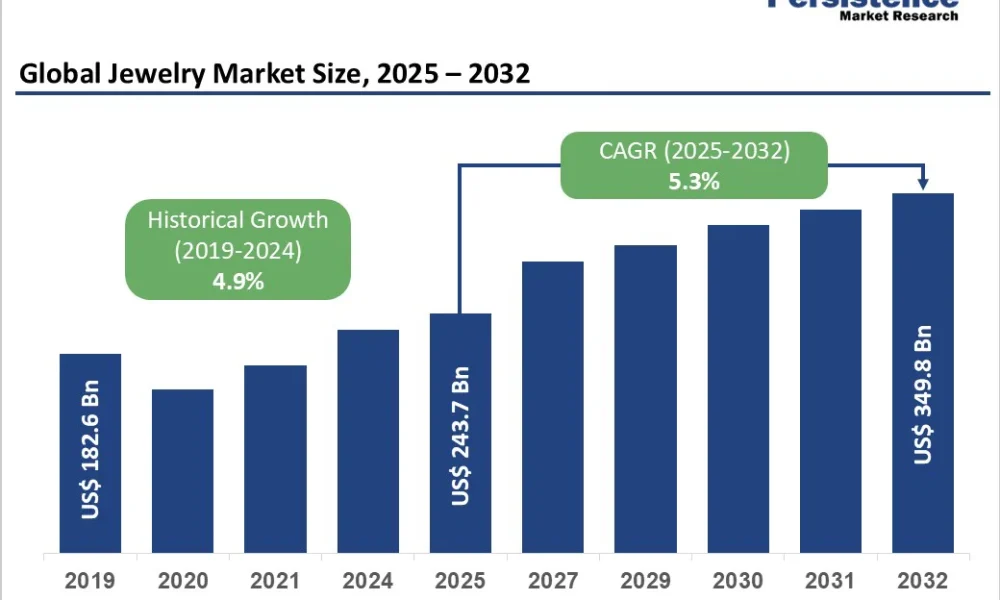
According to Persistence Market Research, the global jewelry market size is expected to be valued at US$243.7 billion in 2025 and is projected to reach US$349.8 billion in 2032, growing at a CAGR of 5.3% during the forecast period of 2025–2032. This growth is largely driven by the rising demand for luxury and personalized pieces, encouraging brands to introduce custom designs, engraved items, and ethically sourced materials. Gold jewelry remains a leading product segment due to its cultural significance and investment value, while Asia-Pacific stands out as the leading regional market supported by strong consumer demand, wedding traditions, and increasing urbanization.
Download Your Free Sample & Explore Key Insights : https://www.persistencemarketresearch.com/samples/35671
Key Highlights from the Report
➤ The global jewelry market is projected to expand from US$243.7 billion in 2025 to US$349.8 billion by 2032.
➤ Rising demand for luxury and personalized jewelry designs is accelerating industry innovation.
➤ Increasing popularity of customized and engraved jewelry pieces is reshaping consumer preferences.
➤ Strong demand for ethically sourced materials and sustainable jewelry production is influencing product development.
➤ Expansion of online jewelry retail platforms is improving accessibility and convenience for buyers.
➤ Growing purchasing power in emerging economies is driving long-term jewelry market growth.
Market Segmentation
The jewelry market can be segmented based on product type, material type, and distribution channels. Product categories typically include rings, necklaces, earrings, bracelets, and other decorative accessories. Rings and necklaces remain among the most popular items due to their association with engagements, weddings, and special celebrations. Jewelry is also categorized by material, including gold, silver, platinum, diamonds, gemstones, and other precious metals. Gold jewelry continues to dominate the market as it is widely preferred for both fashion and investment purposes in many cultures.
From a distribution perspective, jewelry products are sold through offline retail stores and online platforms. Traditional jewelry stores and branded boutiques remain popular because consumers often prefer to examine valuable products in person before making a purchase. However, online retail channels are gaining significant momentum due to convenience, wider product variety, and competitive pricing. Digital platforms also allow brands to offer customization services and virtual try-on experiences, enhancing the overall shopping experience for modern consumers.
Customize This Report for Your Exact Requirements : https://www.persistencemarketresearch.com/request-customization/35671
Regional Insights
Asia-Pacific represents the leading region in the jewelry market due to strong cultural traditions surrounding gold and gemstone jewelry. Countries such as India and China have a long-standing tradition of purchasing jewelry during weddings, festivals, and other ceremonial occasions. Rising disposable incomes and rapid urbanization are also contributing to the increasing demand for luxury jewelry products in the region. The presence of large manufacturing hubs and skilled artisans further strengthens Asia-Pacific’s position in the global market.
North America and Europe also represent significant markets driven by the demand for premium and designer jewelry. Consumers in these regions often seek unique designs, branded collections, and ethically sourced materials. The growing trend of personalized jewelry, including engraved and custom-made pieces, has gained strong traction among younger consumers. In addition, the expansion of online luxury retail platforms has improved accessibility to premium jewelry products across these regions.
Market Drivers
One of the most influential drivers of the jewelry market is the growing demand for luxury and personalized accessories. Consumers increasingly prefer jewelry pieces that reflect their individuality and personal style. Custom designs, engraved pendants, and bespoke engagement rings are gaining popularity as people look for meaningful products that hold sentimental value. Jewelry brands are responding to this demand by offering customization services and advanced design options that allow customers to create unique pieces.
Another major driver is the rising purchasing power and lifestyle upgrades in emerging economies. As middle-class populations expand and disposable incomes increase, more consumers are willing to invest in luxury goods such as jewelry. Weddings, festivals, and milestone celebrations continue to drive strong jewelry purchases worldwide. In addition, the influence of social media and celebrity fashion trends has further encouraged consumers to adopt new jewelry styles and premium collections.
Market Restraints
Despite strong growth potential, the jewelry market faces several challenges that may hinder expansion. One key restraint is the volatility in prices of precious metals and gemstones, particularly gold and diamonds. Fluctuations in raw material prices can significantly impact production costs and retail prices, creating uncertainty for both manufacturers and consumers. Higher prices may discourage buyers from making discretionary purchases during periods of economic instability.
Another challenge is the growing concern over ethical sourcing and environmental impact associated with mining activities. Consumers are becoming more conscious about sustainability and the origin of materials used in jewelry production. Brands that fail to ensure transparent sourcing and responsible mining practices may face reputational risks. As a result, manufacturers must invest in sustainable supply chains and ethically sourced materials to maintain consumer trust and brand credibility.
Market Opportunities
The jewelry market presents strong opportunities through innovation in design and customization technologies. Advanced digital tools, including computer-aided design and 3D printing, enable jewelers to create intricate and personalized designs with greater precision. These technologies allow brands to offer customized pieces while maintaining production efficiency. Personalized jewelry collections are expected to continue attracting younger consumers seeking unique and expressive fashion accessories.
Another promising opportunity lies in the expansion of e-commerce and digital retail channels. Online jewelry platforms enable companies to reach a broader customer base across global markets. Virtual try-on technologies, digital catalogs, and secure online payment systems are improving the convenience of buying jewelry online. As consumers increasingly adopt digital shopping habits, jewelry brands can leverage online channels to expand their reach and strengthen customer engagement.
Get Instant Access – Complete Your Purchase : https://www.persistencemarketresearch.com/checkout/35671
Company Insights
Key players operating in the jewelry market include:
- Cartier
- Titan Company Limited
- Damas Jewelry
- BVLGARI
- De Beers Group
- Malabar Gold & Diamonds
- Pandora
- Kalyan Jewelers
- Swarovski
- LVMH Moët Hennessy Louis Vuitton SE
- Tiffany & Co.
- Signet Jewelers Limited
- Chopard
- Harry Winston, Inc.
Recent Developments
March 2024 – Pandora introduced new customizable jewelry collections focusing on personalized engraving and unique design options.
October 2023 – Titan Company Limited expanded its premium jewelry product portfolio with new designer collections to meet growing consumer demand.
Future Opportunities and Growth Prospects
The jewelry market is expected to witness steady expansion in the coming years as consumer demand for luxury products and personalized accessories continues to grow. Brands that focus on customization, innovative design, and sustainable sourcing are likely to gain a competitive advantage. Increasing consumer interest in unique and meaningful jewelry pieces will further support product innovation across the industry.
Additionally, the expansion of digital retail channels and technological advancements in jewelry design will open new growth avenues for market participants. As emerging economies continue to experience economic development and rising disposable incomes, the demand for premium jewelry products is expected to increase significantly, shaping the long-term growth trajectory of the global jewelry market.




