
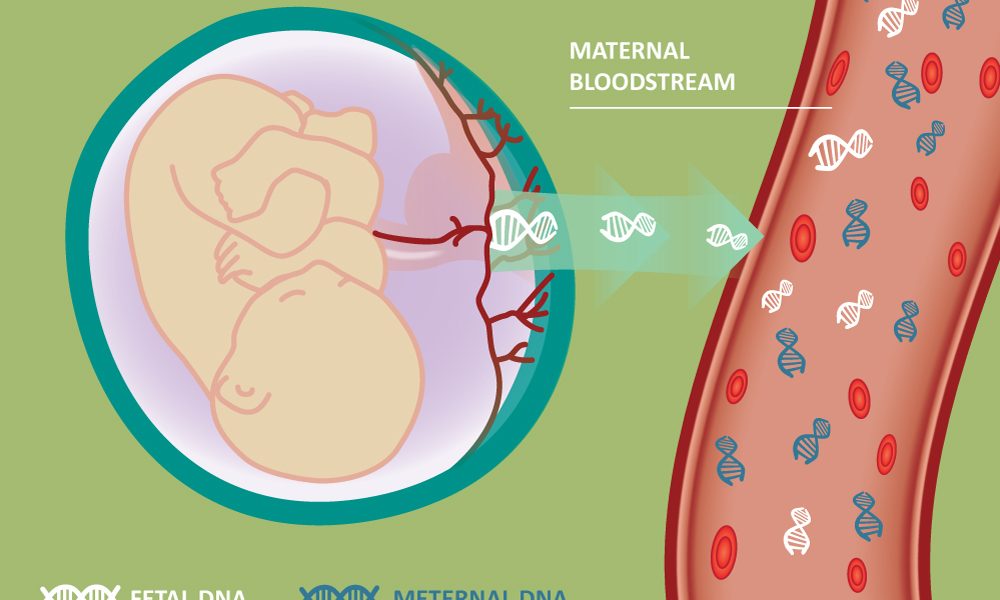
The global cell-free fetal DNA (cfDNA) testing market has emerged as a transformative segment in prenatal diagnostics, driven by advances in genomics and maternal healthcare. Cell-free fetal DNA testing, often performed via Non-Invasive Prenatal Testing (NIPT), allows early detection of chromosomal abnormalities such as trisomy 21, 18, and 13 using a simple maternal blood sample. This non-invasive approach significantly reduces the risks associated with traditional diagnostic procedures like amniocentesis or chorionic villus sampling, which carry miscarriage risks of 0.1% to 0.3%. As a result, cfDNA testing is increasingly being adopted by obstetricians and prenatal care providers worldwide as a first-line or contingent screening tool, supporting safer and earlier prenatal diagnosis.
The market’s growth trajectory is substantial. The global cfDNA testing market is projected to be valued at US$ 1.9 billion in 2026 and reach US$ 3.5 billion by 2033, representing a CAGR of 9.7% between 2026 and 2033. North America currently dominates the market, accounting for approximately 37% share in 2025, driven by favorable regulatory frameworks, robust insurance coverage, and the concentration of biotechnology innovators. In contrast, the Asia-Pacific region is witnessing the fastest growth due to increasing maternal age trends, government-backed NIPT programs, and companies like BGI Genomics developing cost-effective solutions for large populations. NIPT remains the leading test type globally, holding 38% of the market in 2025, owing to its superior detection accuracy and early gestational applicability. The market is also witnessing rising adoption of chromosomal abnormality testing, which is expected to grow rapidly due to technological improvements, artificial intelligence integration, and the increasing demand for comprehensive genetic risk assessments.
Download Your Free Sample & Explore Key Insights: https://www.persistencemarketresearch.com/samples/33956
Key Highlights from the Report
• Global cfDNA testing market projected to grow from US$ 1.9 billion in 2026 to US$ 3.5 billion by 2033.
• North America leads with 37% market share in 2025 due to regulatory clarity and widespread insurance coverage.
• Non-Invasive Prenatal Testing (NIPT) dominates as the preferred test type with 38% market share.
• Chromosomal abnormality testing exhibits the fastest growth driven by technological innovation.
• Expanded genetic screening beyond traditional aneuploidies offers significant market opportunity.
• Asia-Pacific is the fastest-growing region, fueled by large population base and government support.
Market Segmentation
The cell-free fetal DNA testing market is broadly segmented by test type, end-user, and technology platform. Among test types, Non-Invasive Prenatal Testing (NIPT) commands a dominant position, accounting for over a third of the global market in 2025. NIPT leverages next-generation sequencing (NGS) and single-nucleotide polymorphism (SNP) analysis to quantify fetal chromosomal fragments in maternal blood with exceptional precision. Its ability to detect trisomies 21, 18, and 13 with detection rates exceeding 98% has established NIPT as the standard in both high-risk and, increasingly, general-risk pregnancies. Chromosomal abnormality testing is the fastest-growing segment, with technological enhancements enabling earlier detection, higher accuracy, and AI-assisted interpretation of complex genomic data.
In terms of end-users, hospitals and maternity clinics lead the market, representing over half of the 2025 revenue, driven by their comprehensive prenatal care infrastructure and established physician referral networks. Diagnostic laboratories form the secondary segment, providing specialized cfDNA testing services to community clinics and physicians. The fastest-growing end-user segment is specialty prenatal clinics, which are increasingly integrating NIPT and expanded genetic screening panels into personalized care models. These clinics leverage genetic counseling, direct-to-consumer services, and telehealth platforms to differentiate themselves through rapid results, comprehensive patient education, and advanced testing options beyond standard chromosomal screening.
Regional Insights
North America dominates the cfDNA testing market due to advanced healthcare infrastructure, regulatory clarity from the FDA, and extensive insurance reimbursement. The United States serves as the regional leader, supported by companies like Illumina, Natera, and LabCorp offering FDA-cleared NIPT platforms. Widespread adoption of expanded cfDNA panels—including microdeletion screening—combined with telehealth-enabled genetic counseling in rural areas, reinforces North America’s market position. Clinical guidelines from organizations such as ACOG and ACMG further support routine NIPT use, increasing uptake across hospitals and specialty clinics.
Asia-Pacific is emerging as the fastest-growing market, driven by rising maternal age, government health initiatives, and technological adoption. Countries like China, India, and Japan are witnessing rapid penetration of cfDNA testing through collaborations between local diagnostic providers and global companies. Investments in next-generation sequencing laboratories and public awareness campaigns are expanding access to NIPT, while initiatives like China’s National Health Commission strategy on birth defect prevention enhance adoption. Affordability and scalability, particularly through solutions from BGI Genomics, enable widespread utilization in urban and rural populations.
Europe and Latin America are gradually expanding, supported by increasing awareness, growing private insurance coverage, and rising prenatal care standards. While regulatory and reimbursement pathways are more complex in certain regions, clinical guideline endorsements and partnerships with diagnostic companies are facilitating incremental adoption. The Middle East and Africa are in nascent stages, with market growth driven primarily by private healthcare investment and awareness campaigns in urban centers.
Get Custom Insights Designed for Your Business: https://www.persistencemarketresearch.com/request-customization/33956
Market Drivers
The primary drivers behind the cfDNA testing market are rising prevalence of advanced maternal age pregnancies and the superior diagnostic performance of non-invasive technologies. Women increasingly delay childbearing for professional and lifestyle reasons, with pregnancies in women aged 35+ carrying significantly higher risks of chromosomal abnormalities—ranging from 1 in 350 at age 35 to 1 in 30 at age 45. cfDNA testing offers early, non-invasive detection of trisomy 21, 18, and 13, allowing informed decision-making without the miscarriage risks associated with traditional procedures. Regulatory endorsements and professional society recommendations further support adoption, while insurance coverage expansion improves accessibility across both high-risk and general-risk populations.
Technological advances, such as next-generation sequencing and AI-assisted interpretation, have enhanced test accuracy and expanded the range of detectable genetic conditions, positioning cfDNA testing as a superior alternative to conventional serum-based screening.
Market Restraints
Despite its promise, the cfDNA testing market faces restraints stemming from ethical concerns and potential psychological impacts of expanded testing panels. Comprehensive panels detecting rare genetic disorders, microdeletions, or predispositions create complex decision-making scenarios for expectant parents. The abundance of genomic information can induce anxiety, stress, or decisional conflict, particularly when results are uncertain. Ethical questions regarding privacy, selective pregnancy termination, and potential discrimination can further influence adoption rates. Additionally, challenges in obtaining informed consent and providing adequate genetic counseling add to the cautious uptake of expanded panels, moderating rapid market expansion despite clear diagnostic benefits.
Market Opportunities
Significant market opportunities exist in the integration of artificial intelligence and expanded genetic screening capabilities. AI-driven analysis enhances interpretation accuracy, reduces false-positive/negative rates, and enables detection of rare genetic variants at single-base-pair resolution. Strategic partnerships, such as Illumina’s collaboration with Tempus AI in 2025, showcase the potential for AI to expand cfDNA applications across diverse conditions. Similarly, BillionToOne’s UNITY Fetal Risk Screen, launched in May 2025, offers expanded panels covering 14 genes beyond traditional trisomies, including actionable recessive conditions. Opportunities also lie in specialty prenatal clinics and direct-to-consumer pathways, which combine telehealth, genetic counseling, and rapid NIPT delivery, addressing increasing consumer demand for accessible, personalized prenatal care.
Checkout Now & Download Complete Market Report: https://www.persistencemarketresearch.com/checkout/33956
Company Insights
The competitive landscape of cfDNA testing is characterized by continuous innovation, strategic partnerships, and expansion into comprehensive prenatal screening. Key players include:
• Illumina, Inc.
• Natera, Inc.
• F. Hoffmann-La Roche Ltd.
• Laboratory Corporation of America Holdings (LabCorp)
• Quest Diagnostics Incorporated
• Qiagen N.V.
• BillionToOne, Inc.
• Eurofins Scientific
• BGI Genomics Co., Ltd.
• Myriad Genetics, Inc.
• Fulgent Genetics
• Prenetics Group Limited
Recent Developments:
In May 2025, BillionToOne, Inc. launched an expanded UNITY Fetal Risk™ Screen covering 14 genes, including ACOG-recommended recessive conditions and additional actionable conditions for diverse populations.
In February 2025, Yourgene Health introduced the IONA Care + NIPT service in the United Kingdom, integrating direct-to-consumer delivery with specialty prenatal clinics.
Conclusion
The cell-free fetal DNA testing market is poised for robust growth, underpinned by increasing maternal age, rising prevalence of high-risk pregnancies, technological innovations, and expanding insurance coverage. NIPT remains the dominant test type, while chromosomal abnormality testing and expanded genetic panels offer substantial growth opportunities. North America continues to lead the market, with Asia-Pacific emerging as the fastest-growing region. Ethical considerations, psychological impacts, and the need for comprehensive genetic counseling remain key challenges, but advances in artificial intelligence, next-generation sequencing, and telehealth integration are enabling wider accessibility and higher diagnostic confidence. As the market evolves, players focusing on innovation, expanded screening capabilities, and patient-centric service models will likely drive sustained adoption, ensuring that cfDNA testing becomes a central pillar of modern prenatal care.




