
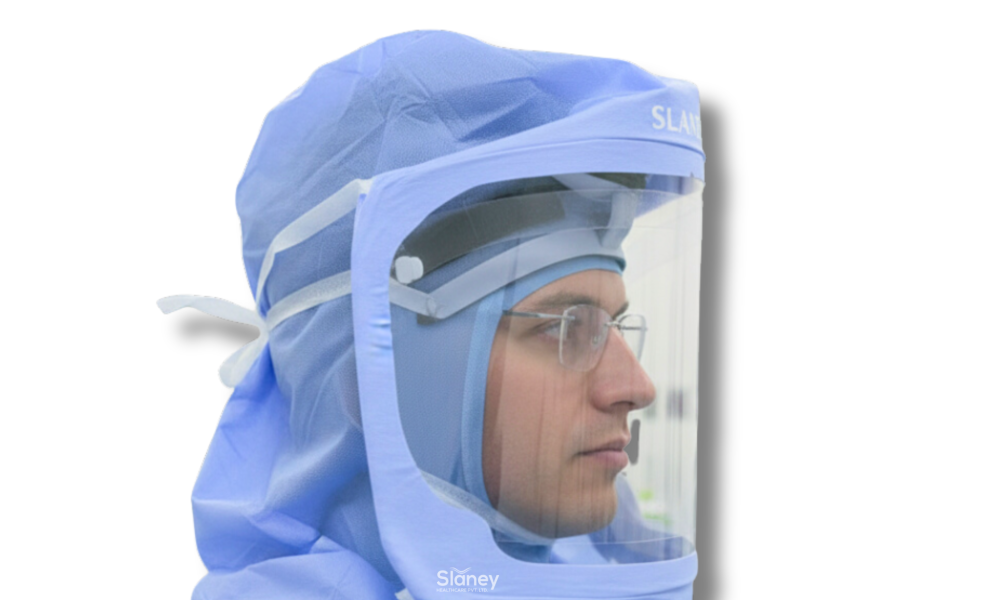
The global surgical helmet system market has been witnessing significant growth, driven by advancements in surgical technologies, increased demand for orthopedic and trauma surgeries, and a growing focus on surgeon safety and infection control. Surgical helmet systems are specialized protective equipment used in surgical settings, particularly in orthopedic and trauma surgeries, to safeguard medical professionals from blood splashes, airborne pathogens, and surgical site contamination. Their importance surged during the COVID-19 pandemic, as healthcare providers sought to enhance safety measures within the operating room. With a projected market size of $1.9 billion by 2033, the surgical helmet system market is expected to grow at a compound annual growth rate (CAGR) of 7.1% from 2026 to 2033.
Overview of the Surgical Helmet System Market
The surgical helmet system market is set to continue its growth trajectory, with the sector projected to expand from $1.2 billion in 2026 to $1.9 billion by 2033. This market’s growth is closely tied to increasing surgical volumes, particularly in orthopedic procedures such as hip and knee replacements. The aging global population, coupled with rising orthopedic conditions, continues to drive the demand for joint replacement surgeries. Additionally, hospitals and trauma centers are becoming more invested in technologies that improve operating room efficiency, enhance visibility, and increase surgeon comfort, all of which are driving adoption of advanced surgical helmet systems.
Surgical helmets equipped with modern technologies such as LED lighting, integrated cameras, and cooling systems are becoming the norm. These enhancements improve operational efficiency, reduce surgeon fatigue, and provide superior illumination for complex surgeries. Furthermore, the demand for protective equipment has been spurred by global health concerns and heightened infection control protocols in medical environments. As hospitals and surgical centers look for better safety standards, the growth of the surgical helmet system market is poised to continue its upward trajectory.
Download Your Free Sample & Explore Key Insights: https://www.persistencemarketresearch.com/samples/27532
Key Highlights from the Report
• The global surgical helmet system market is expected to grow at a CAGR of 7.1% between 2026 and 2033.
• The surgical helmet system with LED segment is projected to hold around 71% share in 2026.
• Hospitals are forecast to represent the largest end-user segment with a 45% market share in 2026.
• North America is expected to dominate the market with an estimated 42% market share in 2026.
• The increasing adoption of LED-equipped surgical helmets is driven by their enhanced visibility and safety features.
• The growing volume of orthopedic and trauma surgeries is a major driver of market demand.
Market Segmentation
The surgical helmet system market can be segmented based on product type, end-user, and geographical region. By product type, the market is primarily dominated by surgical helmet systems equipped with LED lights. These helmets offer superior illumination during complex procedures, reducing dependence on operating room overhead lights and ensuring consistent, clear visibility in deep or confined surgical fields. As the demand for more precise, high-quality surgical tools increases, LED-equipped surgical helmets remain the leading segment in the market.
End-user segmentation highlights hospitals as the largest segment, expected to account for around 45% of the market share in 2026. This is due to the high surgical volumes and specialized procedures, especially in orthopedic and trauma care, performed in hospital settings. Additionally, hospitals are more likely to invest in technologically advanced and durable equipment to meet the regulatory standards and patient safety protocols, further solidifying their role as the leading end-user.
Regional Insights
The North American surgical helmet system market is expected to lead, with the U.S. projected to account for 32% of the global market share in 2025. This dominance is supported by the region’s advanced healthcare infrastructure, high surgical volumes, and continuous research and development efforts in protective equipment technologies. Hospitals in North America prioritize surgical safety and ergonomics, driving the adoption of more sophisticated surgical helmet systems equipped with features like ventilation, cooling fans, and integrated cameras.
Europe follows closely as a significant market, with countries such as the UK contributing a steady portion of the global market share. The region’s focus on healthcare worker safety, coupled with the increasing demand for elective orthopedic procedures, has fostered the growth of the surgical helmet system market.
In Asia-Pacific, the market is expanding rapidly, with China expected to hold a substantial share of the global market. Growing awareness regarding surgical safety and increasing healthcare investments in countries such as China and India are expected to drive demand for surgical helmet systems in the region.
Get Custom Insights Designed for Your Business: https://www.persistencemarketresearch.com/request-customization/27532
Market Drivers
One of the primary drivers of growth in the surgical helmet system market is the increasing volume of orthopedic and trauma procedures worldwide. The global burden of musculoskeletal disorders, particularly within aging populations, continues to escalate, leading to a rise in surgeries like hip and knee replacements. In fact, nearly one million arthroplasty procedures are performed annually in the U.S. alone. As life expectancy increases, more people are seeking joint replacements to enhance mobility and quality of life.
Surgical helmet systems play a critical role in protecting surgeons and medical staff from blood splashes, bone cement aerosols, and surgical contaminants, which are particularly prevalent in high-risk orthopedic and trauma surgeries. Moreover, these helmets help reduce the transmission of airborne pathogens, an essential feature in the wake of the COVID-19 pandemic. In addition to infection control, ergonomic improvements offered by modern surgical helmets enhance surgeon comfort, reduce fatigue, and improve visibility, contributing to longer, more efficient procedures.
Market Restraints
Despite its growth potential, the surgical helmet system market faces challenges, with one of the key constraints being the high cost of advanced helmet systems. These products, particularly those equipped with LED lighting and integrated technologies, can be expensive, which may limit their adoption in low- and middle-income regions. Healthcare facilities in underdeveloped markets often struggle with limited budgets, making it difficult to invest in expensive protective equipment, even though the need for such systems is growing.
Moreover, the high operational costs of maintaining these systems, including cleaning, sterilization, and maintenance of reusable helmets, contribute to the financial burden. In some regions, the lack of sufficient clinical evidence linking helmet use to reduced infection rates further hampers widespread adoption. Healthcare systems in these areas often rely on other, more cost-effective infection control methods, such as enhanced ventilation and standard personal protective equipment (PPE).
Market Opportunities
One of the most promising opportunities for the surgical helmet system market lies in expanding into emerging healthcare markets. Rapid infrastructure development, increased healthcare investments, and growing demand for orthopedic care in regions such as Asia-Pacific, Latin America, and the Middle East present opportunities for manufacturers. In particular, the growing medical tourism industry, especially in countries like India, Thailand, and Mexico, is creating new demand for internationally accepted safety standards.
There is also potential for manufacturers to develop more affordable, lightweight surgical helmet systems tailored to resource-limited settings. By focusing on modular designs, cost-effective materials, and simplified maintenance, manufacturers can address the key barriers to adoption in these regions. As hospitals in emerging markets modernize and infection control standards rise, surgical helmets may become an essential component of operating room safety protocols.
Checkout Now & Download Complete Market Report: https://www.persistencemarketresearch.com/checkout/27532
Company Insights
The competitive landscape in the surgical helmet system market is marked by several key players who are continually innovating to meet the rising demand for advanced protective systems. Key players include:
• Zimmer Biomet
• Stryker
• Beijing ZKSK Technology Co., Ltd.
• Kaiser Technology Co., Ltd.
• THI Total Healthcare Innovation GmbH
• MAXAIR Systems
• AresAir
• Regal Healthcare
• Vizbl brand products (Prodancy Pvt. Ltd.)
• Apex Hygiene Products
• Cardinal Health
• Integra LifeSciences Corporation
Market Segmentation
Product
- Without LED
- With LED
End User
- Hospitals
- Ambulatory Surgical Centers
- Academic & Research Institutes
Regions
- North America
- Europe
- East Asia
- South Asia & Oceania
- Latin America
- Middle East & Africa
Recent Developments
• In March 2025, Stryker launched the Steri-Shield 8 Personal Protection System, marking a significant innovation in surgical protective gear. This system was developed after extensive research and testing, aimed at enhancing surgical safety and infection control during complex procedures.
• In May 2024, MAXAIR Systems unveiled the CAPR SHS Advanced Surgical Helmet System at AORN 2024. This system incorporates enhanced filtration technology to improve the protection of surgical teams against airborne pathogens.
Conclusion
The surgical helmet system market is poised for significant growth, driven by technological advancements, rising orthopedic surgeries, and increasing global awareness of surgical safety. With North America leading the market and Asia-Pacific emerging as a high-potential region, the market is set to experience robust demand in both developed and developing countries. While challenges such as cost constraints remain, emerging healthcare markets present a strong opportunity for expansion. As the market continues to evolve, innovations in product design, affordability, and functionality will further enhance the adoption of surgical helmet systems, ensuring safer and more efficient surgical environments worldwide.




