
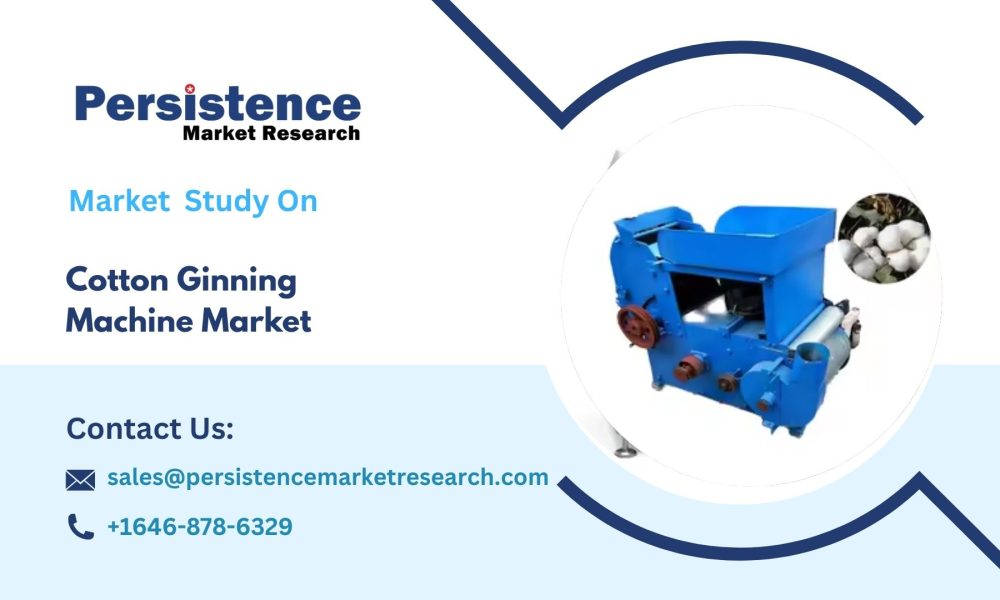
The cotton ginning machine market occupies a crucial position within the global cotton value chain, serving as the bridge between raw cotton harvesting and downstream textile processing. Cotton ginning machines are used to separate cotton fibers from seeds, remove impurities, and prepare lint for spinning and weaving. This process directly influences fiber quality, yield, and overall profitability for cotton producers and processors. As cotton remains one of the most widely cultivated natural fibers globally, the efficiency and reliability of ginning operations have become increasingly important in meeting both domestic and export-oriented textile demand.
From a market size perspective, the global cotton ginning machine market is likely to be valued at approximately US$165.9 million in 2026 and is expected to reach US$202.7 million by 2033, growing at a compound annual growth rate (CAGR) of 2.9% during the forecast period from 2026 to 2033. Market growth is primarily driven by the increasing prevalence of mechanized cotton processing, rising demand for efficient fiber separation in major cotton-producing nations, and advancements in double roller and saw ginning technologies. Among product types, double roller ginning machines represent the leading segment due to their ability to deliver superior fiber quality with minimal damage. Geographically, Asia-Pacific dominates the market, supported by large-scale cotton production, government-backed mechanization initiatives, and a strong textile manufacturing base in countries such as India, China, and Pakistan.
𝐃𝐨𝐰𝐧𝐥𝐨𝐚𝐝 𝐅𝐫𝐞𝐞 𝐒𝐚𝐦𝐩𝐥𝐞 & 𝐂𝐡𝐞𝐜𝐤 𝐭𝐡𝐞 𝐋𝐚𝐭𝐞𝐬𝐭 𝐌𝐚𝐫𝐤𝐞𝐭 𝐀𝐧𝐚𝐥𝐲𝐬𝐢𝐬: https://www.persistencemarketresearch.com/samples/28114
Key Highlights from the Cotton Ginning Machine Market Report
• The global cotton ginning machine market is projected to reach US$202.7 million by 2033 at a CAGR of 2.9%.
• Mechanization of cotton processing is accelerating adoption across major producing regions.
• Double roller ginning machines dominate the market due to better fiber quality and efficiency.
• Asia-Pacific leads global demand, driven by high cotton output and textile manufacturing capacity.
• Demand for high-capacity and low-maintenance ginning machines is increasing worldwide.
• Technological improvements in saw and roller designs are enhancing yield and operational performance.
Market Segmentation Analysis
The cotton ginning machine market is segmented based on machine type, level of automation, capacity, and end-user application, each influencing purchasing decisions and adoption trends. By machine type, the market includes double roller ginning machines, saw ginning machines, and rotary knife ginning machines. Double roller gins dominate the market, particularly in regions where fiber quality preservation is critical. These machines are widely preferred for processing long-staple and extra-long staple cotton, as they reduce fiber breakage and improve lint quality. Saw ginning machines, on the other hand, are used for high-volume processing and are commonly deployed in large-scale ginning plants due to their speed and throughput advantages.
Based on automation level, the market is categorized into manual, semi-automatic, and fully automatic cotton ginning machines. Semi-automatic systems account for a significant share of installations, offering a balance between cost efficiency and productivity. Fully automatic cotton ginning plants are gaining traction, particularly in large commercial operations, as they reduce labor dependency, improve safety, and ensure consistent processing quality. Manual systems continue to be used in small-scale operations but are gradually declining as mechanization becomes more accessible.
In terms of capacity, cotton ginning machines are designed for small, medium, and large-scale operations. Small-capacity machines are commonly used by cooperative societies and local ginning units, while medium- and large-capacity machines dominate commercial and export-oriented processing facilities. The growing demand for high-capacity ginning plants equipped with automatic feeding systems and centralized control units is shaping market dynamics, especially in regions with rising cotton output and export demand.
From an end-user perspective, cotton ginning companies represent the primary consumers of these machines, followed by integrated textile manufacturers and agricultural cooperatives. Large-scale textile manufacturers increasingly invest in in-house ginning facilities to ensure consistent fiber quality and supply chain control, further contributing to market growth.
Regional Insights and Global Market Trends
Asia-Pacific holds the leading position in the global cotton ginning machine market, accounting for a substantial share of overall demand. The region’s dominance is driven by high cotton production volumes, a strong textile manufacturing base, and increasing mechanization across agricultural processing activities. India is the largest market in the region, supported by its status as one of the world’s top cotton producers and exporters. Government initiatives promoting modernization of ginning facilities and improved fiber quality standards have significantly boosted demand for advanced ginning machines. China and Pakistan also contribute notably, driven by domestic textile demand and export-oriented cotton processing.
North America represents a mature market for cotton ginning machines, characterized by large-scale, highly automated ginning operations. The United States leads regional demand due to its extensive cotton farming industry and emphasis on high-efficiency processing technologies. Ginning plants in the region typically utilize high-capacity saw ginning machines integrated with advanced automation and monitoring systems. Replacement demand and technological upgrades continue to support steady market activity.
Europe accounts for a smaller share of the market, primarily driven by cotton imports and limited domestic production. However, countries involved in cotton trading, research, and machinery manufacturing contribute indirectly through technological innovation. Latin America, particularly Brazil, is emerging as a growing market due to expanding cotton cultivation and investments in modern ginning infrastructure. The Middle East and Africa region also shows gradual growth, supported by cotton production in countries such as Egypt and parts of Sub-Saharan Africa, where efforts are underway to modernize ginning operations and improve export competitiveness.
𝐆𝐞𝐭 𝐚 𝐂𝐮𝐬𝐭𝐨𝐦𝐢𝐳𝐞𝐝 𝐌𝐚𝐫𝐤𝐞𝐭 𝐕𝐢𝐞𝐰 𝐢𝐧 𝐎𝐧𝐞 𝐂𝐥𝐢𝐜𝐤 : https://www.persistencemarketresearch.com/request-customization/28114
Market Drivers
One of the key drivers of the cotton ginning machine market is the increasing mechanization of cotton processing across major producing nations. Manual ginning methods are labor-intensive, inconsistent, and inefficient, making them unsuitable for meeting modern quality and volume requirements. Mechanized ginning machines enable faster processing, uniform fiber separation, and improved lint quality, directly benefiting both producers and textile manufacturers.
Another significant driver is the growing demand for high-quality cotton fiber from the global textile and apparel industry. As manufacturers focus on producing premium fabrics and yarns, the need for efficient ginning technologies that minimize fiber damage and contamination has intensified. Advances in double roller and saw ginning technologies, which enhance fiber yield and consistency, are encouraging processors to upgrade or replace outdated equipment. Additionally, the recognition of cotton ginning machines as value-adding assets within the cotton supply chain is reinforcing long-term investment in modern ginning infrastructure.
Market Restraints
Despite steady growth prospects, the cotton ginning machine market faces several restraints that may limit expansion in certain regions. High initial capital investment remains a key challenge, particularly for small and marginal ginning operators. The cost of purchasing, installing, and maintaining modern ginning machines can be prohibitive without access to financing or government support.
Operational and maintenance complexities also pose challenges, as ginning machines require skilled operators and regular servicing to maintain optimal performance. In regions with limited technical expertise or inadequate after-sales support, downtime and maintenance costs can discourage adoption. Additionally, fluctuations in cotton production due to climate variability and market price volatility can impact investment decisions, leading to cyclical demand for ginning machinery.
Market Opportunities
The cotton ginning machine market presents several opportunities driven by technological innovation and evolving supply chain requirements. Growing demand for high-capacity, low-maintenance ginning machines is creating opportunities for manufacturers to develop more durable and energy-efficient designs. Automatic feeding systems, centralized control panels, and modular plant layouts are increasingly sought after by large-scale ginning operators seeking to improve productivity and reduce labor costs.
Another major opportunity lies in emerging cotton-producing regions where mechanization levels remain relatively low. Investments in agricultural infrastructure, coupled with government initiatives aimed at improving cotton quality and export competitiveness, are expected to drive future demand. Technological advancements in roller and saw designs that enhance fiber quality and reduce waste further strengthen the value proposition of modern ginning machines, positioning the market for long-term, sustainable growth.
𝐂𝐥𝐢𝐜𝐤 𝐭𝐨 𝐏𝐮𝐫𝐜𝐡𝐚𝐬𝐞 𝐭𝐡𝐞 𝐅𝐮𝐥𝐥 𝐑𝐞𝐩𝐨𝐫𝐭 & 𝐒𝐭𝐚𝐫𝐭 𝐄𝐱𝐩𝐥𝐨𝐫𝐢𝐧𝐠 : https://www.persistencemarketresearch.com/checkout/28114
Company Insights
• Lummus Corporation
• Bajaj Steel Industries Ltd.
• Nipha Exports Pvt. Ltd.
• Handan Goldenlion Cotton Machinery Co., Ltd.
• Jadhao Gears Pvt. Ltd.
• Mitsun Engineering
• Rotobar Machinery Group
• Eagle Cotton Ginning Machinery
Recent developments in the cotton ginning machine market include increased focus by manufacturers on developing high-capacity machines with automated feeding and cleaning systems to improve operational efficiency. Additionally, several players have expanded their presence in emerging markets through local partnerships and service networks, aiming to address growing demand for modern ginning infrastructure.
Conclusion
The global cotton ginning machine market is positioned for steady and sustained growth, supported by increasing mechanization of cotton processing, rising demand for high-quality fiber, and continuous advancements in ginning technologies. With the market expected to grow from US$165.9 million in 2026 to US$202.7 million by 2033 at a CAGR of 2.9%, cotton ginning machines are increasingly recognized as essential value-adding tools within the cotton supply chain. As producers and processors seek to improve efficiency, fiber quality, and profitability, investment in modern ginning equipment is set to remain a critical component of the global cotton industry’s evolution.




